Uk companies endorse government health plans

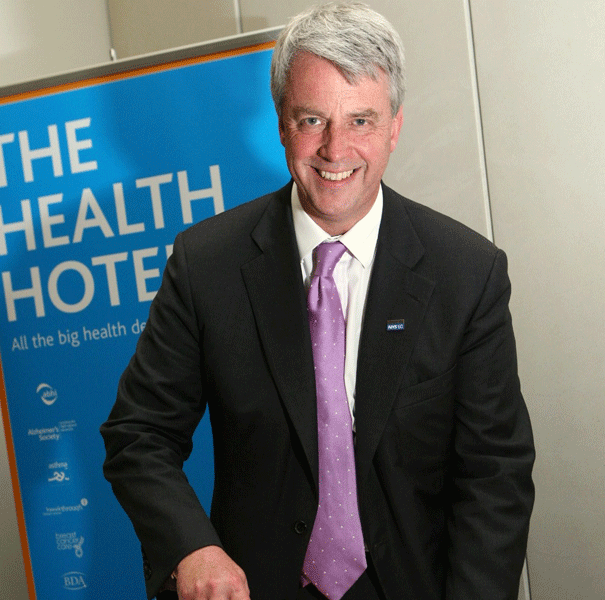
While health organisations have slammed the government's Health Responsibility Deal, the drinks industry seems to have rallied behind it.
Signatories to the deal agree voluntary codes of practice aimed at reducing excessive drinking, excessive calorie or salt intake, improving workplace health and other measures.
Yesterday a group of health bodies including the British Medical Association announced they would not sign on the grounds that government plans do not go far enough.
But more than 150 firms, including Diageo, McDonald’s, Asda, Marks & Spencer, Morrisons, Sainsbury’s, Tesco, The Co-operative and Waitrose and several major food firms have signed.
Asda has pledged to end front-of-store alcohol displays by the end of April, while Heineken says it will cut the alcohol content of one if its major brands – as yet unspecified – by the end of May.
Drink producers including Diageo and Carlsberg have pledged to provide clear unit labelling, support awareness campaigns and develop a new sponsorship code on responsible drinking.
Jeremy Beadles, chief executive of the Wine and Spirit Trade Association welcomed the plans.
Get our daily fine wine reviews, latest wine ratings, news and travel guides delivered straight to your inbox.
He said, ‘The drinks industry is committed to playing its part alongside other stakeholders in tackling alcohol misuse. Today’s announcement marks a positive step in a partnership process designed to ensure that consumers have the information they need to make informed choices. We look forward to making further progress in the months ahead.’
The British Beer and Pub Association said that producers accounting for more than 90% of UK beer sales have signed up to the deal, promising more visible alcohol unit information in British pubs, and to continue funding initiatives for responsible drinking campaigns.
One of the key pledges on the government’s plan is to achieve ‘clear unit labelling on more than 80% of alcohol by 2013.’
Health Secretary Andrew Lansley (pictured) said better labelling and more information for consumers will eliminate the need for tough regulation.
He said, ‘Public health is everyone’s responsibility and there is a role for all of us, working in partnership, to tackle these challenges.’
Written by Adam Lechmere

Adam Lechmere is consultant editor of Club Oenologique among other things.
Formerly launch editor of Decanter.com, which he edited until 2011, he has been writing about wine for 20 years, contributing to Decanter, World of Fine Wine, Meininger’s, the Guardian and many others. Before joining the wine world he worked for the BBC, and as a music and film gossip journalist.