One of Languedoc's newest appellations, Terrasses du Larzac, offered a glimpse of future greatness and largely outperformed the more established Minervois La Livinière in this clash of full-bodied reds from southern France. But it's still a work-in-progress. Read the full report below.
Our tasters each pick their top three wines from the tasting:
Simon Field MW
Field was a buyer for Berry Bros & Rudd for more than two decades. He now works as a consultant in areas which particularly interested him during that time, with the Rhône, Languedoc and Champagne topping the list in France, and Spain and the fortified category also featuring prominently.
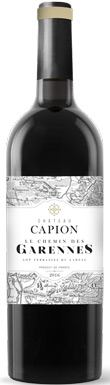
Château Capion, Le Chemin des Garennes, Terrasses du Larzac 2016
The times are a-changing at Capion it seems, and this is a far cry from the varietal domination I recall from way-back-when; changes all for the best judging by this lifted and richly complex wine. 94 Drink 2019-2024
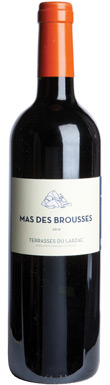
Mas des Brousses, Terrasses du Larzac 2016
A magnificently exciting Terrasses take on a Bandol theme, with its brooding Mourvèdre, dense organic backdrop and very finely honed tannins to complete the picture. 94 Drink 2019-2023
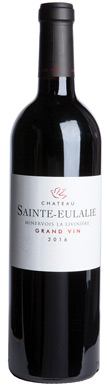
Château Ste-Eulalie, Minervois La Livinière 2016
Open and richly textured – for me an archetype from the appellation – marrying tradition, courtesy of the Carignan, with colour and a fleshy texture, thanks to the Syrah and Grenache. 93 Drink 2019-2023
Justin Howard-Sneyd MW
In 2012 Howard-Sneyd founded The Hive Wine Consulting. His biggest client is Direct Wines, where he previously spent three years as global wine director. He is a DWWA Regional co-Chair for Languedoc-Roussillon, and he also makes wine with his family and partners at the 4ha Domaine of the Bee estate in Roussillon.
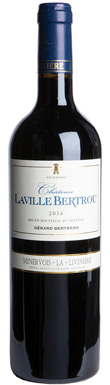
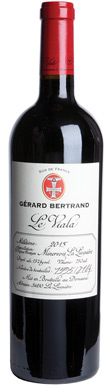
Gérard Bertrand, Le Viala, Minervois La Livinière 2015
Gérard’s wines certainly don’t lack in ambition, with eyebrow-raising pricing and heavy glass bottles, but I can’t help loving the wines too: hugely impressive concentration and complexity, underpinned by minimal intervention production methods and biodynamic farming. 95 Drink 2019-2022
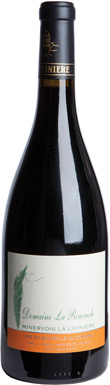
Domaine La Rouviole, Minervois La Livinière 2013
I really enjoyed this more mature wine from an underestimated vintage. Impressive concentration, notes of garrigue herbs and church incense. 94 Drink 2018-2021
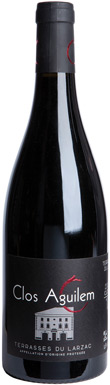
Clos Aguilem, Terrasses du Larzac 2016
A very small and relatively new project, not really showing up on most people’s radar yet. A 6.7ha vineyard owned by 16 wine-loving friends. This shone, with extremely expressive and very ripe black fruit. 93 Drink 2019-2024
James Lawther MW
A contributing editor to Decanter and Regional co-Chair for Languedoc-Roussillon at the DWWA, Lawther is an independent wine writer, lecturer and tour guide based in Bordeaux. A Master of Wine since 1993, he has been writing about the Languedoc-Roussillon for the last 20 years.
Mas des Brousses, Terrasses du Larzac 2016
50% Mourvèdre shapes the dark, firm, complex character of this wine. A percentage comes from massal selection at Domaine Tempier in Bandol, so it’s impeccably sourced. 94 Drink 2019-2023
Château Ste-Eulalie, Minervois La Livinière 2016
The emphasis is on the raw material with an equal blend of old vine Carignan (80-100 years), Grenache (80 years) and some relatively youthful Syrah, bottled early with no oak. Delicious. 92 Drink 2019-2023
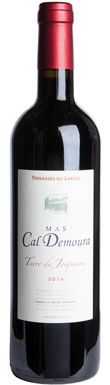
Mas Cal Demoura, Terre de Jonquières, Terrasses du Larzac 2016
The flagship wine from this estate is produced from the five permitted grape varieties and is always dark and intense, the tannins rounded out by ageing in 600-litre demi-muids and larger foudres. 92 Drink 2019-2024
Continue reading below
The summary
Though no wines wowed, our judges found a good range of full-bodied reds, spanning reliably traditional and more modern styles. James Lawther MW reports…
The prospect of two leading lights in the Languedoc, Minervois La Livinière and Terrasses du Larzac, going head to head over two notable years, 2016 and 2015, gave an air of expectancy to this tasting.
The judges’ enthusiasm was palpable, hence the disappointment with the results at the end of the day. The highlights just seemed wanting; the upshot being an absence of any Outstanding or Exceptional wines in either category.
Were the judges over-expectant? Seventeen Highly Recommended (nearly one-third of the wines tasted), with almost two-thirds Recommended is an honourable score, but it was the ultimate lack of excitement that tipped the scales.
One possible reason is that the 2016s, accounting for more than half the wines tasted, are rather firm and reserved at the moment.
I had already heard this explanation from producers, particularly in Terrasses du Larzac, and the theory was supported by the fact that a wine that won Platinum at the Decanter World Wine Awards back in early May only received a Recommended score here.
The 2016 vintage is good but it’s a keeper with marked acidity and structure, so bide your time and enjoy later. Certainly 2016 fared better than 2015, the generosity of the latter seemingly absent.
Minervois La Livinière
As to the individual appellations, Justin Howard-Sneyd MW felt there was probably more consistency in style among the wines from Minervois La Livinière. ‘They tend to be Syrah-dominated and fruit-forward and stylistically more recognisable.’
Simon Field MW, who wrote his Master of Wine thesis on Minervois La Lavinière in 2001, found the standard correct but felt that there hadn’t been much evolution in the intervening years.
All the judges commented on one point: how the winemaking often submerged the terroir. There were definitely a number of wines where over-extraction and the use of (new) oak seemed heavy-handed.
That said, it’s worth pointing out that the highest scoring Minervois La Livinière wine came from an unoaked blend of one-third each of Carignan, Grenache and Syrah.
Terrasses du Larzac
Of the top 20 highest-scoring wines, 14 came from Terrasses du Larzac, the appellation also getting closest to the elusive Outstanding note.
This in itself is recognition of how far this young appellation has come, and reconfirms the positive results seen at the 2018 Decanter World Wine Awards.
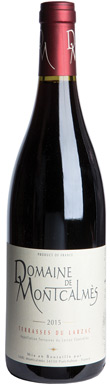
There were plenty of new names sitting alongside the more established domaines like Montcalmès and Mas Cal Demoura. Stylistically, though, there is far greater variability, the wines ranging from elegant to those that are deeper and riper, with some more profound in nature and clearly constructed for ageing.
All this goes hand-in-hand with the extent of the Terrasses du Larzac appellation and the disparity in terroir and blends.
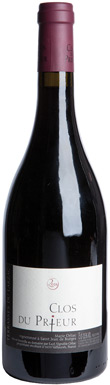
This was highlighted by the profiles of three of the top-scoring wines. Mas des Brousses 2016 includes 50% Mourvèdre and has depth, structure and minty complexity. The multi-blend of Château Capion 2016 (37% Syrah, 25% Grenache, 23% Cinsault, 15% Mourvèdre) offers a slightly riper note but equal depth and reserve, while Clos du Prieur 2016 – from a higher, cooler site with 70% Syrah – is all about elegance and finesse.
The message in the end seems to be to go with Minervois La Livinière for fruit, accessibility and the comfort zone. But if you accept stylistic variability, then Terrasses du Larzac is the one pushing the boundaries.
The scores
58 wines tasted
Entry criteria: Producers and UK agents were invited to submit their latest release reds from the Languedoc appellations of Terrasses du Larzac and Minervois La Livinère
Exceptional 0
Outstanding 0
Highly Recommended 17
Recommended 36
Commended 3
Fair 2
Poor 0
Faulty 0
About Terrasses du Larzac and Minervois La Livinière
The similarity between Terrasses du Larzac and Minervois La Livinière is, initially at least, apparent.
Both are located in the foothills behind the plain in the shadow of a limestone plateau or causse. A Mediterranean climate prevails but, in both cases, the cool night air from the higher causse helps to preserve freshness and acidity in the wines.
With predominantly limestone soils and elevations running from 100m-400m, both appellations require a minimum 60% Syrah, Grenache and Mourvèdre in the vineyards.
Thereafter the subtle differences kick in. Minervois La Livinière established itself as one of the Languedoc’s six crus as long ago as 1999. It’s a fairly compact appellation, the 400ha in production located in a delimited zone that encompasses six villages.
The soils are essentially limestone and, of the various grape varieties permitted, Syrah often plays a dominant role. Climatically speaking the extremes tend to be avoided, allowing greater consistency from year to year.
All this adds up to a reasonably coherent identity, the wines rich and concentrated with darkly fruited, spicy aromatics and tannins that are soft and generally refined.
In terms of production there are some heavy hitters – Gérard Bertrand, Les Grands Chais de France and the Cazes family of Château Lynch-Bages to name a few – but all told the numbers haven’t changed over the last 15 years and you would have to describe the milieu as conservative rather than progressive.
Modern mindset
The opposite is the case in Terrasses du Larzac, where in the last five years 25 new domaines have sprung up.
Since acquiring appellation status in 2014 – even before – Terrasses du Larzac has been the place to be, would-be vignerons attracted by the availability, potential and price of land.
One consequence of the new flow has been the adoption of organics on a large scale, with more than 75% of the vineyard now organically or biodynamically farmed, or under conversion.
Otherwise, the area under vine is wider spread than in Minervois La Livinière, the 568ha presently declared extending through 32 different villages or communes. Certain zones have a mountain feel and the diurnal range of temperature can be as much as 20°C. it makes for a more extreme regime.
Soils are preponderantly limestone with a varying mix of stones or galets roulés, silt and clay. But on the higher slopes in the northwest, schist and sandstone prevail with, in the valley below, a moonscape of volcanic red earth known locally as ruffe. Consequently, there’s perhaps more diversity in blends and styles, though a defining vibrancy and structure is generally present.
Languedoc reds: The facts
Minervois La Livinière
Area under vine 400ha
Production (2016) 1.5 million bottles
Producers 41 including two co-ops
Grape varieties Minimum 60% of Grenache, Mourvèdre & Syrah. Also permitted are Carignan, Cinsault, Terret, Piquepoul, Aspiran
Terrasses du Larzac
Area under vine 568ha
Production (2016) 2.2 million bottles
Producers 92 including five co-ops
Grape varieties Minimum 60% of Grenache, Mourvèdre & Syrah. Also permitted are Carignan & Cinsault
Terrasses du Larzac and Minervois La Livinière: Know your vintages
2017 Frost in some areas. hot, dry summer. Low yields but quality satisfactory. Will open sooner than 2016.
2016 Hot and dry but cool nights. Concentrated wines with marked acidity. Potential for ageing. Low volume.
2015 Warm and dry, but rain when needed. Balanced wines. Quality and quantity.
2014 Hail in parts. Drosophila suzukii fruit fly was also a problem. Mixed results.
2013 Coulure in the Grenache. Later harvest. Carignan, Syrah and Mourvèdre fared best.
2012 A difficult year, with some mildew then a hot, dry summer resulting in uneven ripening. Better in Minervois La Livinière.
Top-rated Languedoc reds from this panel tasting:
You might also like: