Nizza: Six wines to make you think again about Barbera
Get to know the Nizza DOCG, where Barbera is given a chance to shine.


Barbera may never be as highly regarded as Nebbiolo (the grape that makes Barolo and Barbaresco), but in the Asti province of Piedmont it is the lifeblood of local vintners.
For the past five decades, winemakers here have laboured to improve both the quality and reputation of the grape, with the most ambitious and successful enterprise being the creation of the Nizza DOC – originally a subzone of Barbera d’Asti Superiore – in 2000.
Along with well defined boundaries, what makes the wines of Nizza stand out is that the production regulations stipulate low yields – lower even than for Barbaresco.
‘This means that you typically need an old vineyard that produces less quantity’, explains Stefano Chiarlo, director of the Nizza consorzio.
Compared with Barbera d’Asti, which originates from a much broader area, Stefano Gagliardo of Tenuta Garetto explains that: ‘Nizza tends to show a more consistent profile, with greater structure, density and capacity to evolve, expressing a deeper and more complete interpretation of the Barbera grape.’
Nizza: Factbox
A subzone of Barbera d’Asti Superiore until 2000, Nizza was elevated to DOCG status with the 2014 vintage.
Today there are 95 producers that are members of the newly formed consorzio (previously the group was known as the association of Nizza producers).
The wine originates from any of 18 neighbouring communes in the Asti province, including Nizza Monferrato which lends its name to the wine.
The wine must be 100% Barbera. Classic or single-vineyard Nizza must undergo a minimum of 18 months ageing, six of which in oak.
Meanwhile, Nizza Riserva is aged for a minimum of 30 months (at least 12 months in wood).
Mosaic of soils
While Nizza is still in its adolescent stage, communal differences have emerged.
Gagliardo notes that sandy marl soils are typical in Agliano Terme; these tend to produce wines with ‘aromatic precision, freshness and energy’.
Nizza Monferrato, at the centre of the appellation, shows ‘greater diversity in soils and exposure’, resulting in wines that display greater stylistic differences.
The mosaic of soils from Castelnuovo Calcea combine calcareous marls, clays and sandy components.
Gagliardo says that, ‘the balance between these elements often determines whether a wine leans toward power or elegance'.
A matter of wood
While many Nizza producers formerly matured their wines in barrique for a spicier and more vigorous wine, that approach has largely changed.
At Frasca in Agliano Terme, winemaker Matteo Gerbi uses large oak casks of between 2,500 and 4,500 litres.
He says that these casks are, ‘functional in maturing the tannins and smoothing out the edges, without adding too many tertiary notes that are not in line with my idea of Nizza’.
At Marenco, Andrea Costa uses 500 litre French oak tonneaux for his Zana Riserva; among the most refined of all Nizza wines.
‘We thought this size was the optimum compromise for our Zana wine to fix the tannins and still grant the expression of the fruit,’ he says.
However, there are some Nizza producers that still vinify with smaller oak, most notably Prunotto.
Gianluca Torrengo, oenologist and estate director, explains that the estate’s Nizza Riserva ‘Costamiòle’ – named for the eponymous hill in Agliano Terme – was conceived in 1996 with the idea of ageing the wine in barrique.
‘And that vision remains central to its identity’, he says.
For the 2020 vintage, the wine was aged for approximately 12 months in new French barriques.
Torrengo views the role of barriques as contributing structure, complexity and textural depth, while at the same time preserving the freshness and character of Barbera and allowing the wine’s terroir to remain clearly expressed.
‘In short,’ he explains, ‘barriques for Costamiòle are not a stylistic choice dictated by fashion, but a coherent part of the wine’s history, interpreted today with greater sensitivity and precision.’
How does Nizza compare to Piedmont's other Barbera wines?
Noting the difference between a Barbera d’Asti (or even a Barbera d’Asti Superiore) and a Nizza, Torrengo explains that for the latter, yields are lower, ripening is more complete, and the regulations require longer ageing periods.
These are all factors that he believes provide for greater substance, balance and the ability to evolve over time.
‘While Barbera d’Asti is often defined by immediacy and approachability, Nizza aims for a more ambitious, terroir-driven interpretation, combining the natural energy of the variety with the structure of a serious, ageworthy red wine.’
While the most successful markets for Nizza have been Italy and northern Europe, the wine’s identity is not commonplace in other countries.
‘Unfortunately, it is a relatively young denomination and is not yet very well known’, admits Giovanna Garesio of the eponymous winery.
Chiarlo however, has witnessed impressive growth since 2016, when the 2014 Nizza DOCG wines were first released.
He says: ‘Since it was decided to use the Nizza appellation, starting from 30 producers with 30 labels accounting for less than 300,000 bottles sold, we now have more than 100 producers with more than 200 labels, with just over one million bottles sold, of which 60% are in 40 different markets.
'But there is still much more to do in order to create more confidence and familiarity among wine lovers.’
Tom's six Nizza wines to try:
Related articles

Three Barolo producers having a breakout moment
Jason Tesauro highlights three wineries in the Barolo region you may not have heard of...yet

Seven north Italian wine trends to brighten up your tastebuds in 2026
Michael Garner investigates some key wine trends to look out for in 2026 across the country's northern provinces.

Langhe Nebbiolo and Nebbiolo d’Alba: These 25 bottles prove it’s not all about Barolo
Michaela Morris rounds up her 25 must-try wines from the latest batch of releases
Marenco, Zana Riserva, Nizza, Piedmont, Italy, 2021
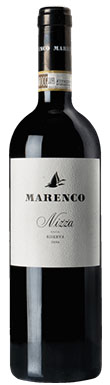

Blackberry, black plum, lavender and grilled meat aromas. Impressive ripeness, excellent depth of fruit, very good acidity and significant persistence; the wood elements are restrained...
2021
MarencoNizza

Michele Chiarlo, La Court Riserva, Nizza, Piedmont, Italy, 2021
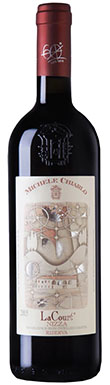
Aromas of wild strawberry, black cherry, coriander, thyme and a hint of cranberry. This has an explosive mid-palate, lively acidity, medium-weight tannins, beautifully integrated tannins...
2021
Michele ChiarloNizza
Prunotto, Costamiòle Riserva, Nizza, Piedmont, Italy, 2020
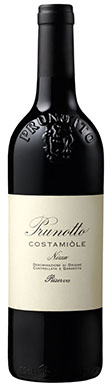
Inviting aromas of black plum, carob, tobacco and hints of dried currant and caramel. Very good ripeness, good acidity, and moderate tannins. Beautifully made, with...
2020
PrunottoNizza
Frasca, La Veja, Nizza, Piedmont, Italy, 2021
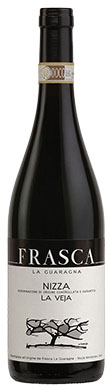
Expressive aromas of black plum, clove, and a hint of dried strawberry. This has delicious fruit expression, good acidity and excellent overall harmony; measured tannins...
2021
FrascaNizza
Tenuta Garetto, Favà, Nizza, Piedmont, Italy, 2020
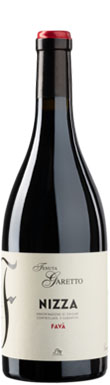
Aromas of sour cherry, stewed tomato and a hint of fennel. Impressive ripeness, good acidity, medium-weight tannins, and distinctive notes of black mint and carob....
2020
Tenuta GarettoNizza
Tenuta Garesio, Riserva, Nizza, Piedmont, Italy, 2016
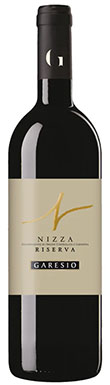
Heady aromas of black plum, blackthorn and purple iris. Quite ripe, with excellent varietal character, this offers intense oak, relatively medium-weight tannins, impressive persistence, and...
2016
Tenuta GaresioNizza
