‘What if Friulano’s true vocation was not as a monovariety at all, but as a component in a blend of local grapes?’
Better than the sum of its parts? Richard Baudains looks at developments in Friulano's heartland of Collio, in northeast Italy. With 20 recommendations of this distinctive white wine.


Tocai Friulano (as the variety used to be called) is not the most planted grape in Collio.
In terms of surface area, it has long since been overtaken by Pinot Grigio, which according to the latest figures represents a 25% share of the grapes grown in the DOC.
‘Tocai’ Friulano, on the other hand, accounts for only 15% of the total, and with its 185 hectares ranks only third in the DOC hierarchy.
However, while it might not stack up the numbers in terms of total surface area, it is the most widely diffused variety – it is the one that every producer has, and the one with which Collio has always identified most closely.
While the Pinot Grigio from Collio travels the world, Friulano is a classic example of what used to be known as a ‘vino tipico’, a wine from a native variety with a long tradition and a distinctive character, but often with the commercial handicap of a predominantly local consumption.
Friulano deserves better, because it has all the positives of a ‘vino tipico’: great personality, great sense of place, and producers who make it with passion and commitment.
A delicate (and confusing) subject
Since 2007, the EU has forbidden the use of ‘Tocai’ in order to protect Hungary's Tokaji wines (see also the old ‘Tokay d'Alsace’ aka Pinot Gris – itself a signature grape of northeastern Italy).
The more accurate, modern name for the grape is simply ‘Friulano’, making no distinction between the grape and wine of the same name.
The Italian National Registry of Grape Varieties still lists the variety as ‘Tocai Friulano’, however.
And while producers in Friuli no longer print the old name on their wine labels, the variety is often still referred to in conversation as ‘Tocai’ or ‘Tocai Friulano’ – a hangover from before the regulation change.
A small number of more bloody-minded producers occasionally use the term ‘jakot’ – ‘tokaj’ spelled backwards.
Friulano's origins
The Italian origins of Friulano are shrouded in mystery, but they are relatively recent.
Little was written about this variety, commonly referred to as ‘Tokaj’ or ‘Tokay’, until the early- to mid-20th century, when it was found growing in the eastern plains of the Veneto and later in the hills of Friuli.
It was only in 1933 that the ampelographer Giovanni Dalmasso proposed the name, ‘Tocai Friulano’, to distinguish it from the Tokaj/Tokay (Friulano) grown in the near-by Veneto (where it is also still grown).
All the texts of the period refer to it as a foreign variety, but none hazard a guess at its origins.
That part of the mystery was resolved in the 1980s by the researchers Antonio Calò and Angelo Costacurta, who discovered that Friulano was none other than the Sauvignonasse or Sauvignon Vert once grown in Bordeaux, but long since abandoned in France.
How it got to Italy, perhaps nobody will ever know.
Style and character
Friulano is a vigorous variety, fairly resistant to most vine diseases, but due to its thin skins is terribly susceptible to harvest-time botrytis in rainy vintages.
It is potentially generous in its yields, and needs to be contained by short pruning and planting on lean hillside sites.
Picked at full ripeness and vinified conventionally, it makes a wine with delicate fruit, floral aromas which recall acacia and lime blossom, and a fingerprint note of bitter almonds.
It tends to have relatively low total acidity and high pH, with medium to high alcohol, all of which combine to give a glossy texture which is balanced by the minerally finish typical of the wines of the Collio.
The variety is very sensitive to location and harvest timing: higher, cooler slopes and earlier picking bring out the fresher, more Sauvignon-like side of its character, while warmer sites favour wines with more richness on the palate.
For the former style, look to producers from villages such as Ruttars and Dolegna; and for the riper, fuller-bodied wines, Capriva and Cormons.
And the perfect balance of the two? Perhaps the hilltop village of San Floriano.
Evolution
Collio is evolving, and Friulano with it. A young generation of producers is coming to the fore, (the newly-elected president of the producers’ consortium, Luca Raccaro, is the youngest ever in the role at 34) bringing with it new ideas.
Some of this change is seen in the new approach to vinification. The use of maceration for shorter or longer periods is increasing and this has prompted the recent decision to introduce the wording ‘Vino da Uve Macerate’ on the label.
The naturally gentle tannins of Friulano make it an ideal candidate for the style.
In another direction, there are producers who are moving to align with contemporary trends, aiming for a more reductive less aromatic style that’s drier, tighter, more mineral, and lower in alcohol.
These examples make a break from the rich and fleshy Friulano of local traditions.
Friulano and friends
But what if Friulano’s true vocation was not as a monovarietal at all, but as a component in a blend of local grapes? In the original DOC of 1968, headline billing was given to Collio Bianco – or simply Collio – a blend of Friulano with fellow native varieties Ribolla Gialla and Malvasia Istriana.
This time-honoured combination saw Friulano contribute the body, Ribolla the acidity, and Malvasia the structure and aroma.
The production norms were liberalised in the 1990s to allow producers to use any blend of non-aromatic grapes in a personalised estate wine, which had a logic in the international super-wine context of the period, but sacrificed any sense of place.
Those same norms remain in place today, but there are moves to find a path back to the original formula.
The impetus has come largely from a group of young producers who have agreed a protocol for a traditional blend consisting of a minimum 50% Friulano, complemented by Ribolla and Malvasia, aged for at least 18 months, and labelled with the phrase ‘Da Uve Autoctone’ (From Local Grapes).
The project currently has a dozen adherents, who between them produce between 110,000 and 120,00 bottles, a number which is beginning to give visibility to the group’s instantly recognisable labels.
Whether as a monovarietal or in a blend that highlights the terroir of the Collio, recent tastings confirm that Friulano has the quality and the character to play a leading role in the future of the DOC, not only at local level, but in much wider contexts.
Get a taste for Friulano with these 20 wines
Damijan Podversic, Nekaj, Collio, Friuli-Venezia Giulia, Italy, 2021
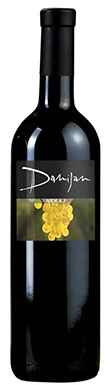

Damijan Podversic is an acclaimed master of the macerated white wines of the Collio, at the top of his game in this vintage. A brilliant...
2021
Damijan PodversicCollio

Tenuta Stella, Friulano, Collio, Friuli-Venezia Giulia, Italy, 2023
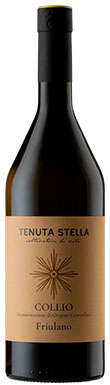
This opens with fresh yellow apple fruit and white blossom before intriguing, slightly furtive leafy notes of wild hedgerows emerge. The palate has a lovely...
2023
Tenuta StellaCollio
Bracco, La Mont-Brach Friulano, Collio, Friuli-Venezia Giulia, Italy, 2022
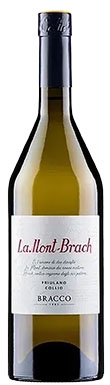
Pale straw, with a delicate but wonderfully complex and refined aromatic profile, with sweet pear and apple peel, acacia and wild thyme which follows through...
2022
BraccoCollio
Korsič, Friulano, Collio, Friuli-Venezia Giulia, Italy, 2024
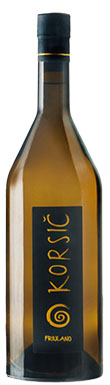
Delicate but precise and very personal aromas of wet stone and fresh herbs unfold. Bone dry without concession on the light and agile palate, but...
2024
KorsičCollio
Muzic, Stare Brajde Da Uve Autoctone, Collio, Friuli-Venezia Giulia, Italy, 2023
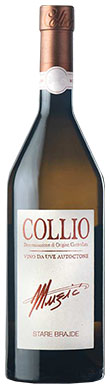
Brilliant mid-straw shade with spicy hints of wood ageing alongside dried apricot, almond and camomile notes. The very reactive palate has depth of flavour, bags...
2023
MuzicCollio
Villa Russiz, Maisha Da Uve Autoctone, Collio, Friuli-Venezia Giulia, Italy, 2023
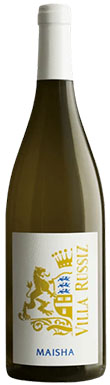
From a blend of native grapes, sourced from some of the best sites in the village of Capriva, this is Villa Russiz’s top selection. Subtle...
2023
Villa RussizCollio
Pascolo, Friulano, Collio, Friuli-Venezia Giulia, Italy, 2024
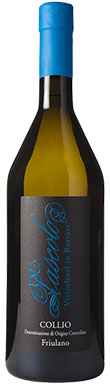
Brilliant, rich straw shade. Bay leaf and apple peel aromas lead into a palate which starts a little shy then opens up to a broad,...
2024
PascoloCollio
Ronco Blanchis, Da Uve Autoctone, Collio, Friuli-Venezia Giulia, Italy, 2023
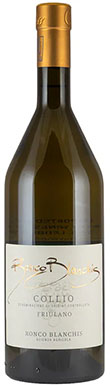
Complex summer meadow aromas are accompanied by a touch of peach skin. On the palate there is the rich, fleshy fruit that is the hallmark...
2023
Ronco BlanchisCollio
Kren, Friulano, Collio, Friuli-Venezia Giulia, Italy, 2024
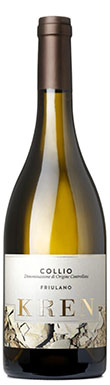
Lovely ripe, fresh apricot and almond scents accompany a soft, mid-weight palate rounded out by partial oak ageing, combining with the perfumed, aromatic finish to...
2024
KrenCollio
Picéch, Athena, Collio, Friuli-Venezia Giulia, Italy, 2021
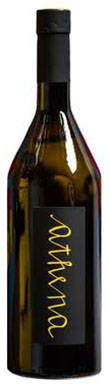
Deep golden straw in colour, this is rich and complex on the nose with leafy, lightly phenolic notes alongside ripe fruit and dark blossoms. The...
2021
PicéchCollio
Russiz Superiore, Friulano, Collio, Friuli-Venezia Giulia, Italy, 2023
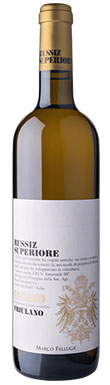
A deep, golden straw shade with aromas of green pear jostling with citrus peel. The palate is round and richly-textured, with a satisfying depth of...
2023
Russiz SuperioreCollio
Gradis'Ciutta, Friulano, Collio, Friuli-Venezia Giulia, Italy, 2024
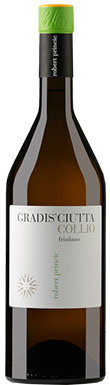
Owner Robert Princic sources his Friulano from multiple sites on the organically grown estate for wines of exemplary balance and character. The herby-floral nose is...
2024
Gradis'CiuttaCollio
Primosic, Skin, Collio, Friuli-Venezia Giulia, Italy, 2021
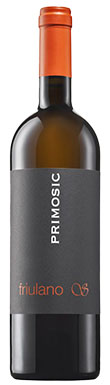
Bright golden straw in shade, this has intense fresh herb and candied fruit aromas on the nose, with a touch of ricotta and a hint...
2021
PrimosicCollio
Raccaro, Rolat Friulano, Collio, Friuli-Venezia Giulia, Italy, 2024
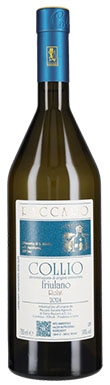
Complex summer meadow aromas are accompanied by a touch of peach skin. On the palate there is the rich, fleshy fruit that is the hallmark...
2024
RaccaroCollio
Toros, Friulano, Collio, Friuli-Venezia Giulia, Italy, 2024
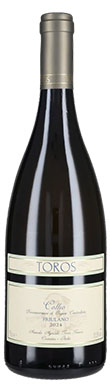
The ripe fruit of the warm run-in to the harvest comes out in the richly aromatic nose, and follows through on the juicy, mid-weight palate,...
2024
TorosCollio
Blazic, Friulano, Collio, Friuli-Venezia Giulia, Italy, 2024
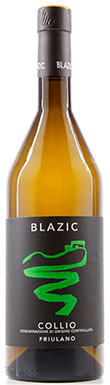
Subtle aromas of aromatic herbs and green apple introduce a mid-weight palate which is dry and savoury, with a fine, chalky texture and a mouthwatering...
2024
BlazicCollio
Venica, Ronco delle Cime Friulano, Collio, Friuli-Venezia Giulia, Italy, 2024
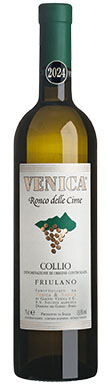
Fresh, juicy fruit salad aromas accompanied by touches of spring blossom introduce a palate which doubles up on the fruit in a long, dry, expertly...
2024
VenicaCollio
Drius, Friulano, Collio, Friuli-Venezia Giulia, Italy, 2021
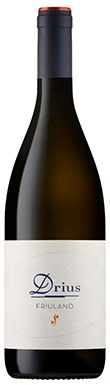
The lively textbook aromas of lime blossom, sage and tomato leaf recall the Sauvignonasse parentage of the Friulano variety, which emerges especially in cooler sites...
2021
DriusCollio
Polje, Friulano, Collio, Friuli-Venezia Giulia, Italy, 2021
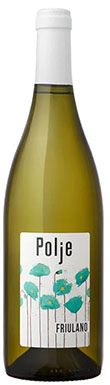
Delicate white currant aromas with the distinctive crusty character of long lees ageing lead into a tight, nervy palate with tangy, slightly introspective intensity and...
2021
PoljeCollio
Vosca, Friulano, Collio, Friuli-Venezia Giulia, Italy, 2024
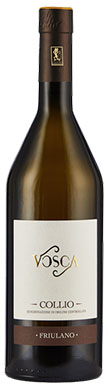
Herby-floral aromas are accompanied by notes of fresh lime blossom and verbena, with the hint of ricotta that comes from partial malolactic fermentation. The palate...
2024
VoscaCollio
