Ageing wine: Double magnum versus bottle


Decanter's content director John Stimpfig investigates the differences between ageing wine in bottle and double magnum, following a recent blind tasting with top Pomerol estate, Château La Conseillante and its new technical director, Marielle Cazeaux.
Cabotte Restaurant in London is best known for its outstanding Burgundy list. But at the end of February it played host to a fascinating blind tasting featuring the top Pomerol estate, Château La Conseillante, whose neighbours include none other than Petrus, L’Evangile and Vieux Château Certan.
Going to Decanter’s Bordeaux Fine Wine Encounter this weekend? Try La Conseillante wines there.
An interesting experiment
From its small and limited annual grand vin production (just 4,000 cases per vintage), the estate had, for more than three decades, kept back an even more limited number of double magnums – some of which are now in conspicuously short supply. However, before they disappeared forever, MD Jean-Valmy Nicolas and La Conseillante’s new Technical Director decided it would be an interesting experiment to compare and contrast how wines of the same vintage have aged in both bottle and double magnum.
Spanning the decades
Generously, they came to London and presented five outstanding vintages from the last four decades to a group of lucky journalists to see if we could spot the difference. Given that La Conseillante has always been one of the top performing and most distinctive Pomerols, this opportunity was simply too good to miss.
The expectation
Logic tells us that the larger format should age more slowly, the colour should be deeper and darker, and aromas should be fresher and less evolved. Similarly, the fruit on the palate should be more primary and the tannins should be a touch more muscular than in the standard bottle. Moreover, these differences should appear most apparent on the older vintages. However, blind tasting is rarely simple or straightforward…
Continue reading below
Related

Credit: www.castellodiama.com
Thirty years of Castello di Ama, L’Apparita
See expert Aldo Fiordelli's favourite wines...

Wine Advice: Drinking windows
Not sure when to open that bottle you've been saving? When's best to drink your Port or Champagne? How does
1985
And so it proved with the first pairing of the tasting, in the form of the stellar 1985. The wine that turned out to be the double magnum was livelier on the nose, but had a lighter hue and less primary fruit. Over time though, the double magnum just got better and better. By the time it was poured with lunch (an hour or so later and nearly three hours after it had been double decanted), it had blossomed beautifully. Alas, this was one of the last remaining double magnums that the estate has in its cellars. I doubt if I have drunk many better bottles than this over the last year.
1990
Next came the two 1990s. Both wines were still powerful, concentrated and dense without being heavy. Both had poise and elegance. To my palate, the first wine had a touch more cocoa powder on the nose and fatness in the mouth, whilst the second wine displayed more florality and freshness. Both were stunning and memorably long. Yet the differences were not glaringly apparent. On balance the second wine seemed more likely to be the larger format.
2001
2001 is another wonderful vintage from La Conseillante – possibly better than the superb 2000. Both bottles are in their pomp right now, with the second wine showing more depth and a touch more red fruit notes. Both had fabulous depth of colour, structure, sweetness and tension, but it struck me that the second glass seemed to have more oomph and staying power. evolving more slowly; and so it proved to be the double magnum.
2005
Given the concentrated character of the 2005 vintage, you would expect the glass poured from double magnum to show more tannic heft. In fact, both wines were sumptuously fine with a spine of acidity and dense, fine-grained tannins supporting a welter of deliciously complex cassis, blackberry and violet flavours. This vintage was one of the earliest vintages of Cazaux’s predecessor, Jean-Michel Laporte, and was aged in 100% new French oak. Both wines were wonderfully complete but it was clear to most of us which of the two was the double magnum. The first wine had more stuffing, purity and primary fruit. And the broader tannic frame was certainly a pointer.
2009
Personally, I found it impossible to separate the two 2009s, which was the last and final pairing. Perhaps unsurprisingly, not enough time had elapsed since this ripe, generous and fleshy vintage was bottled to distinguish between the two. Both wines had wonderful colour, sweetness and impressive elegance – alongside silky, succulent tannins.
Conclusions
What did the tasting prove? I think it showed that the ageing theory held true. Whilst I was unable to differentiate between the last two, I did at least manage to correctly identify the double magnum in the older three pairs (top marks went to Margaret Rand who got all five spot on!).
It’s worth pointing out how good the standard bottles were too – you certainly wouldn’t be remotely disappointed to drink any of these wines in any bottle size.Interestingly, the wines were made by three different winemakers – yet all the wines spoke eloquently of their origin and vintage. But the wine of the tasting was without question the 1985 from the double mag.
The double magnum tasting notes:
Château La Conseillante, Pomerol, Bordeaux, France, 1985

More than three hours after it was opened and decanted, this imperious 32 year old Pomerol had only gained in complexity and depth on the...
1985
Château La ConseillantePomerol

Château La Conseillante, Pomerol, Bordeaux, France, 1990
Wonderful expression on the nose, with black fruit, cocoa powder and a slight hint of reduction which then dissipated. Good colour in the glass, suggesting...
1990
Château La ConseillantePomerol
Château La Conseillante, Pomerol, Bordeaux, France, 2001
A vintage that is just getting better and better, particularly in Pomerol, and it's around half the price of the 2000. There's a sweetness to...
2001
Château La ConseillantePomerol
Château La Conseillante, Pomerol, Bordeaux, France, 2005
As Pomerol in ripe vintages so often can be, this is very 'heady', and undoubtedly a wine for the hedonist. The overt swathes of violet...
2005
Château La ConseillantePomerol
Château La Conseillante, Pomerol, Bordeaux, France, 2009
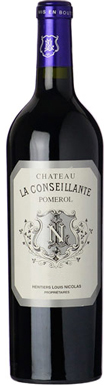
Beautifully ripe plum colour here, this has an opulent texture with creamy fruit and cigar box, with a confident interplay between ripe generous fruits, soft-spoken...
2009
Château La ConseillantePomerol
