Wine Legend: Château Rayas, Réserve, Châteauneuf-du-Pape 1990

Stephen Brook reports on why this wine made into Decanter's hall of fame...
Château Rayas, Réserve 1990 at a glance:
Composition: 100% Grenache
Yield: 18 hl/ha
Alcohol: 14.5%
Release price: About 250 French Francs per bottle (about €53/£44.50 in today’s money)
Price today: £1,741 per bottle (Hedonism)
This Châteauneuf-du-Pape wine is a legend because:
This wine’s legendary status is down to a happy coincidence of factors.
The first was the remarkable quality in general of vintages from this domaine.
Another was the highly eccentric personality of then owner Jacques Reynaud, which often seemed at odds with the stature of the wine. The 1990 vintage played its part too, delivering wines of power, density and succulence.
Today the property is run by Jacques’s nephew, Emmanuel, who has altered little and has maintained the style of the wines.
Looking back
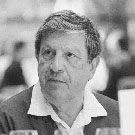
Jacques Reynaud, who died in 1997, inherited the property from his father Louis in 1980.
He was an intensely shy man, and there were stories of visitors seeing him dart into the bushes when a merchant or journalist (even one with an appointment) was heard approaching the winery.
Reynaud was not very forthcoming if one did get to meet him, and there was nothing within the winery to suggest that it was capable of producing drinkable, let alone great wines.
The casks were jumbled, the floor cluttered and the tasting glasses, usually with broken stems, looked no cleaner than the rest of the winery.
Yet there was no doubting the extraordinary quality and personality of the wines – both Rayas itself, white as well as red, the second wine known as Pignan, and even the Côtes du Rhône sold as Fonsalette.
The Châteauneuf-du-Pape 1990 vintage
The summer was very hot and dry, blocking the maturation of the grapes, which ripened slowly, with high sugar.
By mid-September the Grenache, of which Rayas is mostly composed, had potential alcohols of well over 14%, but Reynaud, who always preferred optimal ripeness, delayed picking until late September.
Consequently some tanks showed alcohol closer to 16%. The final wines exhibited density and chewiness, in contrast to the elegant 1989 vintage.
The Rayas terroir
Rayas is a secluded estate northeast of the village, not far from Courthézon.
The vines are almost exclusively Grenache, many aged between 20 and 35 years.
Rayas is renowned for its minuscule yields, which many attribute to the numerous missing vines in the 13 hectares of vineyards rather than to any severe reduction of the crop, even though Reynaud claimed to thin bunches in July to assure a yield of no more than 20hl/ha.
The vineyards were divided into 15 small plots, and soils are varied, though they do not resemble the stoniest sectors of the appellation.
At Rayas there are vines planted on sandy soils, others on clay-limestone. Many face north, which also slows ripening. (Whites account for about one fifth of plantings and production.)
The wine
The winemaking at this time was simplicity itself.
The juice was fermented in concrete vats without temperature control, and transferred to casks of various sizes in the spring.
Bizarrely, given the ramshackle conditions at the winery, it was equipped with a pneumatic press. The press wine was blended in and the wine left undisturbed for about a year, although Louis Reynaud had aged the wine for much longer.
It was then bottled without fining or filtration. Because of the very low yields, there were usually no more than 20,000 bottles of Rayas from any vintage.
The reaction
British wine author and merchant Remington Norman found the 1990 ‘more obviously forward and elegant than the 1989, but with greater weight underneath; very long, complex, opulent. Ultimately, the greater of this remarkable pair’€™.€™
Decanter‘s Michael Broadbent blind-tasted it in 1996: ‘€˜I noted a piquant, high-toned, bilberry-like fruitiness; very sweet, immensely rich, full of fruit.’€™
In 2001 he wrote: ‘Rich spicy, soft, full, fleshy, with a fairly swingeing tannic finish.’€™
More wine legends on Decanter.com:

Wine Legend: E Guigal, La Mouline, Côte-Rôtie 1969
What makes it a wine legend...?

Wine Legend: Dom Pérignon 1975
What makes Dom Pérignon 1975 a wine legend...?

Wine Legend: Weinert, Malbec Estrella, Luján de Cuyo, Mendoza 1977
What makes this a legendary wine...?

Wine Legend: Joseph Phelps, Insignia 1997, Napa Valley, California
Joseph Phelps, Insignia 1997 is a legend because...

Wine Legend: Clos Rougeard, Le Bourg 1990
Clos Rougeard, Le Bourg 1990 is a legend because…

Wine Legend: La Mission Haut-Brion, Pessac-Léognan 1929
Why is La Mission Haut-Brion 1929 a wine legend...

Wine Legend: Klein Constantia, Vin de Constance 1986
Why Klein Constantia, Vin de Constance 1986 is a wine legend...

Wine Legend: Château Lafite-Rothschild 1959

Wine Legend: Marques de Murrieta, Castillo Ygay Gran Reserva Especial 1925
Marques de Murrieta, established by Luciano de Murrieta y Garcia-Lemoine in 1852, was the first Rioja estate to export its

Wine Legend: Wendouree, Shiraz 1990 (magnum) Clare Valley, South Australia
Tony Brady has been crafting intensely flavoured wines from Shiraz, Cabernet Sauvignon, Malbec and Mourvedre (Mataro) since 1974...

Wine Legend: Cockburn’s Vintage Port 1947
What makes Cockburn’s Vintage Port 1947 a wine legend...?

Wine Legend: Meerlust, Rubicon 1995
This ancient property was one of the first in South Africa to offer a high-quality Bordeaux-style blend

Wine Legend: Alvaro Palacios, L’Ermita 1993
Find out why it has legendary status...
