
Barolo 2014: Vintage report and tasting notes


Stephen Brook reports on the tricky 2014 vintage in this renowned appellation. Read on for his top recommendations, plus dozens more tasting notes and scores...
Barolo 2014 at a glance:
After a stormy summer, a fine September saved the vintage, although hail did much damage. Yet top growers produced fine, elegant wines. Better in Barbaresco.
4/5
For growers in the Barolo zone, 2014 would offer a summer of anxiety. Although spring was early, there was little frost. Temperatures were normal in early summer, but there were some spells of localised rain.
In late July, when rainfall was particularly fierce, some vineyards were drenched, while a couple of kilometres away the vines received a mere sprinkling.
Quick link: See all of Stephen’s Barolo 2014 tasting notes

On high alert
The combination of warmth and humidity put great demands on growers, who had to be constantly on the lookout for outbreaks of disease, mildew especially, which had to be fought with timely spraying. Poorly ventilated or overcropped vineyards suffered most.
Conditions improved in the second half of September and into October, with warm days but cool nights. Hail was minimal, mostly confined to Serralunga. Interestingly, despite these difficulties Serralunga seems to have delivered many of the best wines this year.
Yields were generally low, as reported by Roberto Voerzio, who had hail in some vineyards, and Elio Altare, who lost 60% of the crop.
Dr Francesco Baravalle at Elvio Cogno summed up the demanding vintage: ‘You had to work hard in the vineyard to manage leaves and bunches to get the best exposure. You had to work constantly in summer because of the humidity. You also had to sort at harvest.’
How growers responded in this tricky year:
While some growers, such as Giacomo Fenocchio, Boglietti and Paolo Scavino, made their full range of wines, others had to make some big decisions.
Cavallotto declassified all their Barolo to Langhe Nebbiolo (although, mysteriously, some websites seem to be offering some of their 2014 Barolos for sale!).
Others had to pass on some of their cru wines because the crop was too low to justify a separate bottling. Gianluca Grasso says that although the end of the season was fine, it wasn’t good enough for him to produce any of his single vineyard wines, so he blended all the grapes into a single generic Barolo.
Giacomo Conterno says it was crucial to wait into October for full phenolic ripeness, which many growers were reluctant to do, preferring to pick early. Conterno picked selectively, as did some others. Although costly, this helped to eliminate sub-standard fruit.
Exposition and drainage in this hilly region often forced growers into picking earlier than they would have liked, however. Enrico Rivetto, while not dissatisfied with the quality of his wines, wished he could have waited another ten days for more complete ripening, but mid-October rains meant delay was impossible.
Early reports of the poor summer persuaded many journalists to write off the vintage, but it’s clear that many very good wines were made – mostly by leading producers with the means to be highly selective.
Marco Marengo summarised: ‘In Barolo, this was a winemaker’s vintage because of all the decisions that had to be made. You couldn’t leave anything to chance.’
Variation

What makes it a challenging vintage for consumers is the variation in style and quality. Even within a single producer’s portfolio, single-vineyard bottlings can range from the alluring to the humdrum.
Mario Andrion, winemaker at Castello di Verduno, noted that the rain led to thin skins for the Nebbiolo, so long macerations weren’t possible. This led to a lack of extraction and density.
Some winemakers reduced the ageing period in casks for fear of drying out the wine, yet Vittore Alessandria of Fratelli Alessandria points out that polyphenol and tannin levels were surprisingly high.
While some wines show astringency and leanness, the best have aroma, purity of fruit, fine acidity and enough structure to ensure medium-term ageing. It’s not a great or immensely ripe vintage, but it shouldn’t be underestimated.
Some wines can be broached within a year or two and will give great pleasure; others will surely improve over the next 5-10 years. Only a handful of wines will benefit from extended cellaring.
It would be advisable to purchase and taste a single bottle before splashing out on a case, so striking are the variations in quality. And the wines need to be offered at sensible prices, especially with the more promising 2015s waiting in the wings.
Stephen’s top picks of Barolo 2014:
An update of Stephen’s Barolo 2014 preview, published in late 2017
Back to our Piedmont new releases homepage
Aldo Conterno, Bussia Romirasco, Barolo, Monforte d’Alba, Piedmont, Italy, 2014
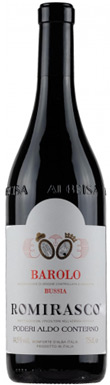

The nose is dense, brooding and spicy, with splendid fruit expression. Rich and suave, this is admirably concentrated in the mouth, with amazing vividness of...
2014
Aldo ConternoBarolo

Gaja, Sperss, Barolo, Serralunga d’Alba, Piedmont, Italy, 2014
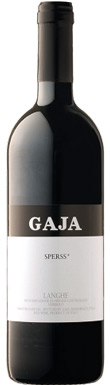
Sperss comes from two crus in Serralunga, and like Gaja's Barbarescos it's aged in a combination of barriques and large barrels. As so often is...
2014
GajaBarolo
Paolo Scavino, Bric del Fiasc, Barolo, Castiglione Falletto, Piedmont, Italy, 2014
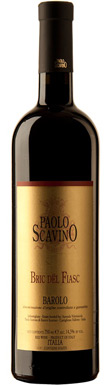
Scavino produced wines from most of their single vineyards in 2014, and this, from Castiglione Falletto, is the finest of them all. The raspberry-scented nose...
2014
Paolo ScavinoBarolo
ArnaldoRivera, Vigna Rionda, Barolo, Serralunga d’Alba, Piedmont, Italy, 2014
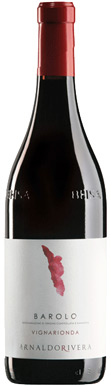
Arnaldo Rivera is a small private cooperative, named after Arnaldo Rivera who founded the Terre del Barolo cooperative in 1958. This Barolo comes from the...
2014
ArnaldoRiveraBarolo
Gianni Gagliardo, Lazzarito Vigna Preve, Barolo, Serralunga d’Alba, Piedmont, Italy, 2014
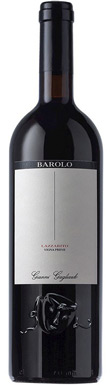
In 2014 this estate decided to age its Barolos only in large casks. The nose is sweet, intense and floral, with pure red fruit aromas....
2014
Gianni GagliardoBarolo
Elio Altare, Cannubi, Barolo, Barolo, Piedmont, Italy, 2014
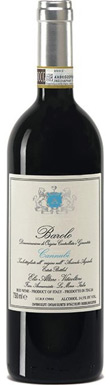
The elegant Altare style has been established for decades now, but at present this 2014 is still backward. The nose is perfumed, intense and elegant,...
2014
Elio AltareBarolo
Aldo Conterno, Bussia Cicala, Barolo, Monforte d’Alba, Piedmont, Italy, 2014
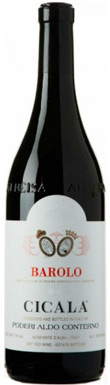
Firm, dense red fruits on the nose are followed by a rich and creamy palate backed by robust, fine-grained, textured tannins. This has depth, concentration...
2014
Aldo ConternoBarolo
Poderi Luigi Einaudi, Cannubi, Barolo, Barolo, Piedmont, Italy, 2014
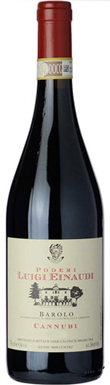
This historic estate was founded in 1915 by banker Luigi Einaudi and today produces wines from various regions and zones. Cannubi is one of Barolo's...
2014
Poderi Luigi EinaudiBarolo
Sandrone, Aleste, Barolo, Barolo, Piedmont, Italy, 2014
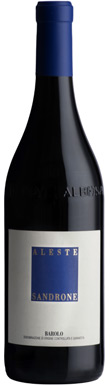
Aleste used to be known as Cannubi Boschis, its vineyard of origin, but has been renamed in honour of Luciano Sandrone's grandchildren Alessia and Stefano....
2014
SandroneBarolo
Giovanni Rosso, Serra, Barolo, Serralunga d’Alba, Piedmont, Italy, 2014
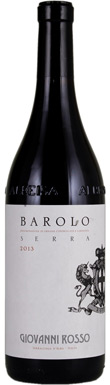
All Rosso's top Barolo crus are in Serralunga and they are aged traditionally. The nose is lean, perky, and piquant, with cranberry aromas. The palate...
2014
Giovanni RossoBarolo
Raineri, Monserra, Barolo, Piedmont, Italy, 2014
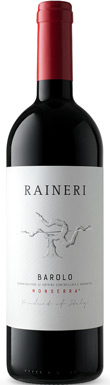
In 2005 three friends teamed up to create a wine estate based in Novello. This particular Barolo is a blend of fruit from Santo Stefano...
2014
RaineriBarolo
Davide Fregonese, Prapo, Barolo, Serralunga d’Alba, Piedmont, Italy, 2014
Prapo gives a more austere wine than the more supple Cerretta, also in Serralunga, as this pair from newcomer Fregonese amply demonstrates. The rich raspberry...
2014
Davide FregoneseBarolo
