1995 vs 1996 Champagane
(Image credit: Getty Images / Maria Korneeva)

For all but the most obsessive – and patient – Champagne collectors, the question of assessing whether 1995 or 1996 turned out to be a better vintage might seem like purely an academic one.

Dig a little deeper, however, and there is much to learn for any Champagne or wine lover.


Scroll down for notes and scores for a clutch of 1995 and 1996 Champagnes


1996, together with 2015, can be considered one of the most significant turning points in modern Champagne.

Through the unexpected development of 1996 wines initially heralded as exceptional, the Champenois’ understanding of their climate, ripeness and flavour took a huge leap forward.

Ripeness signals

Although 1996 and 2015 are in some ways polar opposite vintages, they share a common thread: if you picked your grapes based on traditional notions of ripeness, you were probably picking too early.

It’s for this reason that Moët et Chandon cellar master Benoît Gouez called 1996 the ‘most overrated vintage ever’ in 2016, during the launch event of the Grand Vintage 2016.

This was the moment Champagne learnt that merely reaching 10 degrees of potential alcohol on paper did not mean the wines would taste ripe.

This turning point is recognised by Louis Roederer’s Jean-Baptiste Lécaillon, who credits the success of 2008 – similar to 1996 in terms of weather – to the lessons learned in 1996.

‘If 2008 is great today, it’s because all the cellar masters were also there in 1996, and they knew the mistakes they made’.

The growing seasons

On paper, neither of these growing seasons were extreme. That being said, 1995 was undoubtedly more complicated due to warm and wet spells in the late spring and early summer. This initiated a fight against downy mildew that favoured more resilient Chardonnay.

Despite more than 500ha of Champagne being hit with frost in 1995, yields in both years exceeded 10 tonnes per hectare.

The real difference between 1995 and 1996 emerged over the mid summer.

In 1996, cool and cloudy weather kept acidities high. Yet a mild and clement September, with little disease pressure, little dilution and strong, dehydrating winds, resulted in an exaggerated concentration of sugar (which, in hindsight, led to early harvesting).

While 1995’s complications with mildew tarnished the feeling around the vintage, the relatively modest sugar accumulation was not accompanied by any lack of ripe flavour thanks to spells of warmth during critical periods in June and August.

The wines today

Acidity is certainly sky-high in the 1996s. However, as tastings over the last few years have shown, this is not, in my view, the chief issue with some of the wines.

Jancis Robinson MW wrote a decade ago that ‘the fruit was falling away’ in the 1996 Champagnes. That process today is even more evident.

In fact some of the wines – despite being harvested at pleasing sugar levels when acidity had dropped to an acceptable range – show a muted, green-toned fruit that proves that the flavours in the grapes simply weren’t ripe by modern standards.

When you add to that high dosages, prominent lees ageing and malolactic creaminess (which was common in this high acid year), plus a tendency to oxidise, the 1996s today too often come across as extreme, unbalanced and angular.

The 1995s, on the other hand, failed to excite at harvest because the grapes, on paper, were not exceptionally ripe – just 9.2% potential alcohol. By today’s standards this would be disappointing.

The wines, however, have told a different story, offering up-front pleasure, solid structure and good balance, if not the sort of electric acidity or dramatic palates of 1996s. Nonetheless, the 1995s are still in the running for the top wines of the decade.

The exceptions

Although the reputation of 1996 still suffers today, it’s certainly not a write off.

Indeed, Decanter contributor Charles Curtis MW writes in his book Vintage Champagne: ‘Connoisseurs are still arguing about 1996, but I refuse to come down on the side of the haters. Frankly, I have had too much pleasure from too many wines to rank this as anything but five-star status’.

In fact, among the wines tasted side-by-side for this article, the 1996 vintage was preferable in the case of Bollinger’s RD and Louis Roederer’s vintage cuvée.

Further experiences with 1996 buck the trend, including a delicious Pol Roger in magnum and a fabulous Billecart-Salmon Clos St-Hilaire tasted at the estate last year.

Unfortunately, there is not a huge amount of 1995 and 1996 Champagne left on the market. What’s more, there can of course be huge variability with Champagnes of this age due to the vagaries of storage conditions and cork quality.

In short, it’s a lottery, yet overall there are more hits from 1995 today. It will be 1996, though, that remains the more famous of the two – as well as the most controversial.


Tasted and rated: 1995 vs 1996 Champagnes

Many of the wines reviewed below were tasted at a vertical organised by Bordeaux Index in London. Prices and stockists have been listed where available.


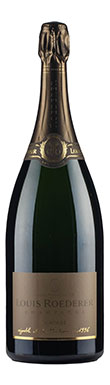
Louis Roederer, Late Release (Magnum), Champagne, France, 1996

My wines
Locked score

A fine example of just how elevated vintage-level releases can become with time. Louis Roederer's Late Release 1996 in magnum was disgorged at the same time as the main release (2004), yet aged in the Roederer cellars on cork until its release in 2022. The vintage's stunning energy and acidic drive are unusually well integrated here. Explosive gunflint-reduction aromas meet maturing complexity of charred lemon, toffee apple and sourdough bread. Piercing, driving and silky, it's a hugely engaging wine that makes the most of the slow ageing magnum format. Like most Roederer vintages currently released, this is exclusively Pinot Noir from Verzy and Chardonnay from Chouilly.

1996

ChampagneFrance

Louis Roederer

Decanter Premium logo

Join Decanter Premium to unlock all our wines tastings and notes

Join Now

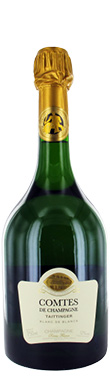
Taittinger, Comtes de Champagne, Champagne, France, 1995

My wines
Locked score

A warm and wet spring preceded an early budbreak and flowering in 1995. The weather remained relatively warm and rainy during the growing season, leading to unprecedented mildew problems. Because of this, the thick-skinned Chardonnay generally did better than the Pinot Noir. 1995 is a marvellous vintage for Chardonnay, and the best wines continue to be very youthful. A recent bottle had a lemon-yellow colour and somewhat advanced aromas of baked apple and brioche nose with a caramel edge. As with many bottles of Comtes from this vintage, a very pronounced autolysis adds depth and weight.

1995

ChampagneFrance

Taittinger

Decanter Premium logo

Join Decanter Premium to unlock all our wines tastings and notes

Join Now

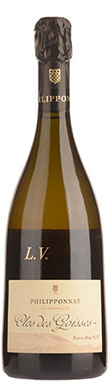
Philipponnat, Clos des Goisses LV, Champagne, France, 1995

My wines
Locked score

I have always had a soft spot for the 1995 Clos des Goisses, and in this tasting it’s the finest of the 1990s, showing a bold, rich depth of fruit that’s veering towards a golden maturity, yet backed by a prominent acidity that keeps it focused and tense. It finishes with long length, vivid in its intensity of flavour, and today it feels fully evolved, not past its best but probably not benefiting from further ageing. Disgorged: May 2013.

1995

ChampagneFrance

Philipponnat

Decanter Premium logo

Join Decanter Premium to unlock all our wines tastings and notes

Join Now

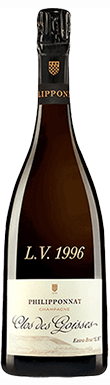
Philipponnat, Clos des Goisses LV, Champagne, France, 1996
My wines
Locked score

Next to the equilibrium of the 1995, the 1996 Clos des Goisses exhibits more of the extremities of the year's harvest, as well as showing more evolution. There are notes of cooked lime, sherbet, dried apple and pear, and an intriguing counterbalance of taut acids and leesy and lactic weight. It's a mature Goisses, but slightly misses out, on this showing, on a full-voiced expression of this great vineyard.

1996

ChampagneFrance

Philipponnat

Decanter Premium logo

Join Decanter Premium to unlock all our wines tastings and notes

Join Now

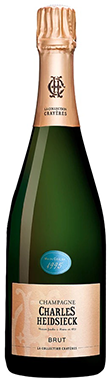
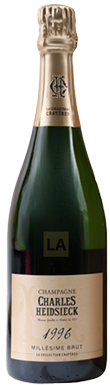
Charles Heidsieck, La Collection Crayères, Champagne, France, 1995

My wines
Locked score

Tasted from magnum, the 1995 vintage, stored in the house's cellar until a late disgorgement in 2021, is wonderfully showy and decadent today, without any signs of tiring. Showing vivid, sweet greengage, lime and bergamot fruit, it's wrapped up in almond croissant richness and dotted with delicious complexities of rose petal and toasted nuts. Fleshy, accessible yet precise and silky, it's an instant charmer even if not bestowed with electric energy or definition on the palate.

1995

ChampagneFrance

Charles Heidsieck

Decanter Premium logo

Join Decanter Premium to unlock all our wines tastings and notes

Join Now

Charles Heidsieck, La Collection Crayères, Champagne, France, 1996

My wines
Locked score

Tasted from magnum, the 1996's bristling, reductive and edgy energy is certainly on show next to the more settled, expressive 1995 Collection Crayères. Notes of lime, smoky embers and almond pastry lead a palate of punchy citrus and sweet-sour tangy stone fruit. This has been softened and mellowed by time, showing caramelised richness, yet never sheds the angularity of the vintage. It's a dynamic, intriguing Champagne but, as with Heidsieck's Blanc des Millénaires, markedly superior in 1995.

1996

ChampagneFrance

Charles Heidsieck

Decanter Premium logo

Join Decanter Premium to unlock all our wines tastings and notes

Join Now

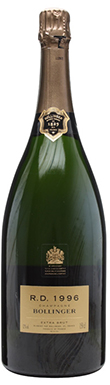
Bollinger, RD, Champagne, France, 1995
My wines
Locked score

Tasted side-by-side with the 1996, Bollinger's RD 1995 bucked the trend of the 1996s feeling less assured than the 1995s. It's a reminder, too, that bottle condition can play a defining role at this age. Nevertheless it's a vinous, savoury Champagne full of ageing characters like roasted plums and lemons, dried mushroom, powdered ginger and musky notes. The palate shows honey-nut richness, chewy apricot skin and slightly slack energy. It's deep and complex, yet, at least in this bottle, tipping to over-maturity.

1995

ChampagneFrance

Bollinger

Decanter Premium logo

Join Decanter Premium to unlock all our wines tastings and notes

Join Now

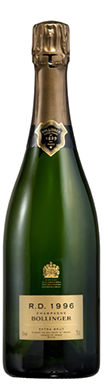
Bollinger, RD, Champagne, France, 1996
My wines
Locked score

While the 1996 vintage is often fading ahead of the 1995 in Champagne, this proved to be a 1996 cuvée that boasted the very best of the year. Mature and rich in oxidative ageing characters, as Bollinger of this era commonly is today, this is nevertheless punchy and expressive with deep dried apple, dried mango, maple and cocoa notes. The palate is forceful and long but without any of the pinched or green energy the vintage sometimes falls into. Some musky, leathery notes are present, but not overwhelming. A rewarding, complex and detailed vintage.

1996

ChampagneFrance

Bollinger

Decanter Premium logo

Join Decanter Premium to unlock all our wines tastings and notes

Join Now

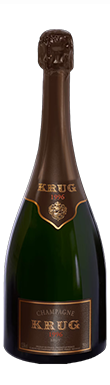
Krug, Champagne, France, 1996

My wines
Locked score

Whether it's down to the individual bottle or the generally faster-evolving nature of the vintage today, Krug's 1996 on this occasion was second to the 1995 in enjoyment factor, although still displaying plenty of the imperious, firm acidic backbone the vintage is famous for. Full of briny, nutty and oxidative development, it showed Seville orange, herbal bitters, roasted apple and plenty of cheesecake-like creamy richness, caramelising and softening with age. It's a striking bottle that, at this grand age, will certainly show some variation due to storage and cork.

1996

ChampagneFrance

Krug

Decanter Premium logo

Join Decanter Premium to unlock all our wines tastings and notes

Join Now

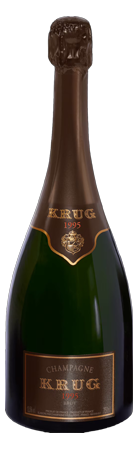
Krug, Champagne, France, 1995

My wines
Locked score

Although overshadowed by the 1996 in general, at a recent side-by-side tasting the Krug 1995 was the better aligned and more perfectly aged of the two vintages. It shows a deep maturity yet still plenty of detail in dried apple, pine, pot pourri and musky complexity. There's a mellow and rather soft character on the palate, but with an enveloping, savoury and rewarding aromatic breadth and calm mousse. Perhaps the higher Chardonnay content here has injected a little dash of longevity and energy? Not in need of further cellaring, this generously spirited original release is peaking in expressiveness.

1995

ChampagneFrance

Krug

Decanter Premium logo

Join Decanter Premium to unlock all our wines tastings and notes

Join Now
Tom Hewson writes about Champagne and sparkling wine. He authored the Tim Atkin Champagne Special Report in 2022, featuring over 600 wines and insights from five weeks spent in the region. As well as writing freelance, reviewing and presenting sparkling wines, Tom runs his own newsletter Six Atmospheres, reaching Champagne and sparkling wine enthusiasts all over the world every week.