Anson: A vertical of Château Bélair-Monange
'This is a wine that is starting to justify the hype' says Jane Anson...


The buzz around Château Bélair-Monange is becoming increasingly audible, making this vertical tasting one of the most exciting that I’m likely to do this year.
For a start, this is a property sat on one of the most alluring spots in Bordeaux, up at 90m on the limestone plateau of St-Emilion, joining châteaux such as Canon, Troplong Mondot, Beauséjour Bécot and others who are all busy making their own noise and drawing the wine world’s attention to the potential of this location.Since 2012 it has been the amalgamation of two of the plateau’s most fascinating properties, both premier Grand Cru Classé since the first classification in 1955, Château Magdelaine and Château Belair. Unlike in the Médoc, bringing two classified properties together in St-Emilion is not a given. It is something that could only be achieved by getting the National Appellations’ body (the INAO) to agree that 100% of its soils were of similar type and quality – neatly drawing attention to the fact that terroir, not just car parks and Parker points, counts in the St-Emilion ranking and thereby giving the beleaguered classification some rare positive press.
Christian and Edouard Moueix, who jointly run Ets JP Moeuix today, bought Belair in 2008, and immediately re-christened it Bélair-Monange after Christian’s grandmother Adèle Monange, who was the first of the Moueix family to live in St-Emilion when the family moved from Corrèze to Bordeaux.
They made clear from the start that they had big plans for the property, but much of the initial investment was sunk into emergency restoration work on the miles of underground quarries that were, it turned out, close to collapse. And then just four years later, they almost doubled its 12.5ha size with the addition of the 11ha of Château Magdelaine, an estate that had been owned by Moueix since 1952. They have also since bought Clos la Madeleine which for now has been kept separate.
Plenty of people were sad about Magdelaine disappearing in 2012 (Jean-Claude Berrouet among them, and me for what it’s worth), but Edouard was always sure that it was a good idea. ‘Even if it took me a few years to convince everyone involved,’ he says now.
What is certain is that it gave them more flexibility during the extensive vineyard work that has been carried out over the past ten years, and has meant access to a complexity of soils that is reflected in the construction and aromatic breadth of the wine, particularly over the last few vintages.
The estate is now comprised of 7.5ha on the high plateau with hard limestone soils extremely close to the surface, 8ha on the high slopes and another 8ha on south-facing côtes where there are Molasses de Fronsadais soils with more clay cover.
Château Belair has spots of blue clay on its slopes that Magdelaine, which is a particularly interesting soil that offers power and concentration, but both are exceptional terroirs. Also worth noting that because both are 100% classified, they could be used in their entirety to furnish one single wine. As St-Emilion classifies only the best terroir, many classified properties do not enjoy the ranking across their entire vineyard holdings.
However, from 2014 the Moueix family introduced Annonce de Bélair-Monange as a second label, not something the family does often, by the way, with just Trotanoy and Bélair-Monange having second wines out of their portfolio. A new cellar is due over the next few years.
You just have to look at the number of bottles produced to realise that this is a work in progress – 18,000 bottles in 2012, 31,000 in 2014, 17,000 in 2013, 28,000 in 2015 – but the direction of travel is becoming clear.
This is a wine that is starting to justify the hype, and I’m all in to see what the next decade brings.
Figures
23.5ha, Asteries limestone on plates, blue clay over limestone on slopes.
90% Merlot, 10% Cabernet Franc planted.
Haute Valeur Environmentale 3
Soil tilling, optical and manual sorting.
50% new oak for first wine, 30% for second wine.
Haut Plateau 7.5ha, Terraces 8ha, Cotes 8ha. (Terraces means upper slopes)
Château Bélair-Monange, St-Émilion, 1er Grand Cru Classé B, Bordeaux, France, 2009

This was the first year that the Moueix family was in charge from beginning to end. They had changed the name for the 2008 vintage from Belair to Bélair-Monange, but had only overseen the harvest. Immediate changes included manually working the soils, ploughing by hand to move the roots deeper down - former owner Pascal Delbeck didn't use chemicals but was a fan of fertiliser. They also increased the green harvest, dropping the crop to concentrate flavours until they could make more fundamental improvements to the vineyard. The results are enjoyable, with an attractive floral edge to the wine and rich raspberry, black cherry and blackcurrant coulis flavours helped by the natural power of the vintage. It doesn't have the concentration of some of the more recent vintages, but this is a lovely 2009. They were still vinifying and ageing in the former underground cellars of Belair at this point.
2009
Château Bélair-MonangeSt-Émilion

Château Bélair-Monange, St-Émilion, 1er Grand Cru Classé B, Bordeaux, France, 2010
An exceptional vintage, clearly, the 2010 has power, depth and concentration that's far more evident than in the 2009, dominated by rich, brambly fruits, liquorice root and dark spices. At this point in time, the vineyard work was starting to reap rewards. A number of difficult plots had been pulled up and the new owners had begun to understand better the needs of the vineyard. 'We were learning how to work with the difference between the austerity of the limestone plateau and the more powerful clay on the slopes', is how Edouard Moueix puts it. It's perhaps not yet fully expressing the lyricism of the limestone as it does in more recent years, but there's an awful lot to celebrate here. It needs double-decanting to really show itself, but is definitely at the start of its drinking window.
2010
Château Bélair-MonangeSt-Émilion
Château Bélair-Monange, St-Émilion, 1er Grand Cru Classé B, Bordeaux, France, 2011
This was the last vintage that Belair Monange and Magdelaine were separate properties, and ironically this wine was made in the Magdelaine cellars because work was ongoing at Belair. This is a gorgeous wine with clear minerality and energy - a lyricism that shows the benefits of limestone in a dry year like 2011. The tannins are a little more angular than the 2010 but there's so much to enjoy in the softer raspberry and redcurrant flavours and peony edging. It's certainly beginning to open up for drinking, particularly if given a few hours in a carafe.
2011
Château Bélair-MonangeSt-Émilion
Château Bélair-Monange, St-Émilion, 1er Grand Cru Classé B, Bordeaux, France, 2012
A warm and welcoming claret with attractive richness, elegance and length on the palate, but not the class of a better vintage. This was a work in progress for the Moueix family. Their fantastically well-placed property has soared higher since.
2012
Château Bélair-MonangeSt-Émilion
Château Bélair-Monange, St-Émilion, 1er Grand Cru Classé B, Bordeaux, France, 2013
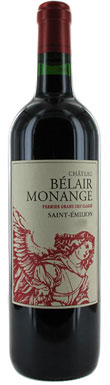
This is fruit-forward, with raspberry and redcurrant notes and a beautiful smoky edge. 2013 was the most challenging vintage of recent years, and yet this is gulpable stuff. It's extremely good for the year, helped by the complexity of the vineyard. Although the limestone plateau found it tough to ripen, the south-facing slopes were warmer and therefore the grapes for this wine were largely drawn from there. It was also helped by the fact that behind the scenes they were working on the creation of a second wine - the first commercial release of which was 2014 - allowing for greater selection in the grand vin at this point.
2013
Château Bélair-MonangeSt-Émilion
Château Bélair-Monange, St-Émilion, 1er Grand Cru Classé B, Bordeaux, France, 2014
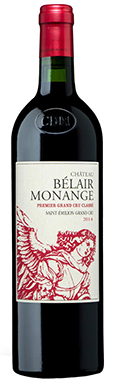
This was the first official vintage where the grand vin was joined by second label Annonce de Bélair-Monange, and they had also had three years of sourcing grapes from across both estates at this point. This is seriously good, with rich liquorice and fresh mint notes, well balanced but with punch, showing crushed raspberry fruits and a saline finish that I get in pretty much every recent vintage of Bélair-Monange. Its great persistency, richness and texture are testament to the success of their strategy here. 31,000 bottles produced - a good yield.
2014
Château Bélair-MonangeSt-Émilion
Château Bélair-Monange, St-Émilion, 1er Grand Cru Classé B, Bordeaux, France, 2015
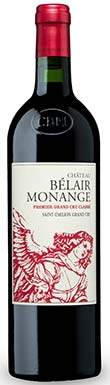
A delicious depth of damson fruit with a striking liquorice edge; complex and spicy with bold, muscular tannins.
2015
Château Bélair-MonangeSt-Émilion
Château Bélair-Monange, Annonce de Bélair-Monange, St-Émilion, Grand Cru, Bordeaux, France, 2014
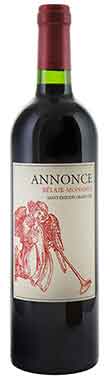
2014 was the first vintage of the estate's second wine, Annonce, and it finds its feet immediately. Its composition is decided by tasting during blending rather than drawing from specific plots in the vineyard. In 2014 there was less rain during harvest in St-Emilion than in Pomerol, which meant the grapes had a little longer to ripen, and the result here is extremely enjoyable. It's easy to approach with a sweetness to the fruit, showing round touches of blackberry and brambles, reflecting the high levels of Merlot. 30% new oak.
2014
Château Bélair-MonangeSt-Émilion
Château Bélair-Monange, Annonce de Bélair-Monange, St-Émilion, Grand Cru, Bordeaux, France, 2015
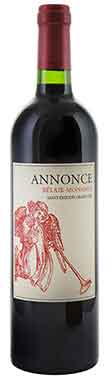
Clearly a bigger and more structured wine than the 2014, this has blackberry and fig notes along with a lick of minerality, suggested by both the texture and the gunsmoke edge to the finish. It's enjoyable and approachable, although still young. The alcohol levels are high in 2015, but the St-Emilion plateau is a relatively forgiving spot for generous alcohols because there's a natural minerality and freshness from the limestone. 30% new oak.
2015
Château Bélair-MonangeSt-Émilion
Château Bélair-Monange, Annonce de Bélair-Monange, St-Émilion, Grand Cru, Bordeaux, France, 2016
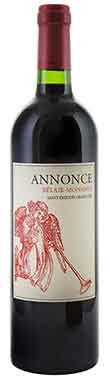
It's hard to believe that this is a second wine and it would certainly stand up confidently against many grand vins, even in this excellent quality vintage. More serious than the 2015, it has more depth to its dark fruits with swirls of liquorice and smoke adding interest to the finish. I would give it a few years before opening - although it tasted great when this same bottle was tried again after 48 hours - and it has real potential for ageing. The definition of an insider wine and definitely worth getting hold of. 30% new oak.
2016
Château Bélair-MonangeSt-Émilion
