
Corsica: Wines from the granite island
A new generation of innovative winemakers has transformed Corsica’s wines over the past 20 years, says Stephen Brook, who discovers exquisite Vermentinos and impressive reds from native varieties...


When I first visited this exquisitely beautiful island in the late 1970s, wine was not the high point of the experience. We tourists mostly drank rosé, which cut through the richness of the cuisine, but a lot of it was rustic: coarse and high in alcohol. Today tourist demand means even more rosé is being churned out, but quality has soared. The wines tend to be pale peach and pink in colour, suggesting that Côtes de Provence is the benchmark.
Nonetheless I wouldn’t recommend Corsica’s rosés in preference to its other wines. Pierre Acquaviva of Domaine d’Alzipratu is typical of many producers when he says: ‘I don’t find rosé particularly expressive of variety or terroir, so I’d rather make white or red wines.’
Scroll down to see Stephen Brook’s top picks from Corsica
Corsica’s white variety, almost to the exclusion of all others, is Vermentino, which gives outstanding results here. Yves Canarelli, a top producer in the Figari region, notes: ‘We have varied soils and expositions here, yet Vermentino delivers wonderful wines wherever it is planted.’
Corsican Vermentino doesn’t seem to have a single defining character: it can be citric, but can also display more appley or exotic fruit aromas. The finest examples have a delicate minerality and length of flavour, while other versions are exuberantly fruity and refreshing.
Almost every grower reports a gratifying increase in demand for Vermentino, so it seems that the many visitors to the island have been discovering its exceptional quality. The veteran producer Christian Imbert of Domaine de Torraccia declares: ‘Corsica produces the best white wines of the Mediterranean.’ And although one could make a convincing case for Assyrtiko from Santinori and Carricante from Etna, it’s hard to disagree.
Yet the reds are impressive too, and as open to stylistic interpretation as the Vermentino. There’s a sprinkling of southern French varieties such as Grenache, Carignan and Cinsault (a contributor to rosé), but the two local varieties are Niellucciu and Sciaccarellu (neither easy to pronounce or even remember).
Niellucciu is said to be the same as Sangiovese, but even in Tuscany that variety can taste very different from region to region and producer to producer. It’s the same in Corsica. Found mostly in the northern half of the island, it can be perfumed but is essentially robust and quite full-bodied. Very ripe versions can easily have 14.5% alcohol, although there are plenty of balanced and polished examples at around 13%. Many experienced producers believe it benefits from two years in bottle to soften its tannins.
In the south you’re more likely to come across Sciaccarellu, an aromatic variety that’s lighter in body than Niellucciu. Imbert detects a lacy character in the wine, while Gilles Seroin of Sant Armettu admires its refined tannins and surprising capacity to age in bottle. It’s excellent for rosé, though often blended with Niellucciu or other varieties, and can deliver very elegant reds.
A land transformed
Since my last tour of Corsica’s wine estates in 1999, the industry has been transformed, as a new generation takes over family estates, rapidly correcting the errors of the past by planting to higher densities, moving towards organic or biodynamic farming, experimenting with co-fermentation of different varieties (as at Torraccia), and bringing new equipment into once rather rustic cellars. Camille-Anaïs Raoust of Maestracci told me she only invested in temperature control over the past couple of years, as her recently retired father was reluctant to spend the money.
Some of the bigger estates can produce rather dull wine, at least at entry level, but overall quality is high, and the grim and rather oxidised wines of 30 years ago seem to have vanished. Given the hordes of tourists that occupy coastal resorts in the summer, it’s surprising how many estates focus on export markets. The UK seems strangely indifferent to the charms of Corsican wine, but wine bars and sommeliers in Hong Kong, Belgium and New York, plus the wine monopoly importers of Canada, are welcoming these wines with open arms, despite the challenge that grapes such as Sciaccarellu must offer to oriental (and other) tongues.
Part of that appeal surely lies in the willingness of many top estates to innovate. Canarelli’s regular wines are very good, but his entirely biodynamic range includes a daring red blend from traditional varieties, fermented in clay jars, then aged in large casks, and bottled without any sulphur dioxide. In short, a natural wine, and one that had ripe, juicy, upfront fruit, if less persistence than I would have liked. Canarelli insists it will keep three to five years without oxidation.
He and Antoine Aréna from Patrimonio pioneered the revival of a traditional white variety, Bianco Gentile, which is growing in popularity, although it can be disappointingly soft and lacking in the zip that is almost always present in Vermentino. Canarelli explains: ‘That’s often true, but that’s because it’s being picked too ripe. If it already tastes fully ripe at harvest, you’ve left it too late, and the acidity will be slumping.’ He has also revived the robust, chewy red called Carcajolo Neru (‘CN’ on the label, as the variety is not yet authorised) that has real personality.
Canarelli’s most intriguing wine comes from Bonifacio in the far south of the island, where he has found pre-phylloxera vines from which he produces costly whites and reds called Tarra d’Orasi, wines with exceptional depth of flavour.
Jean-Charles Abbatucci in the Ajaccio appellation is even more iconoclastic – he left the AC system a few years ago and has since released all his wines as plain Vin de France. His father revived 18 traditional varieties, and studied them to recommend the ideal rootstocks, sites and trellising to give the best results. The fact that most of these varieties are unauthorised explains why Abbatucci left the AC fraternity. His vineyards are entirely biodynamic, and only diluted seawater is used to treat the vines – no sulphur or copper. He plants rootstocks, leaves them for two years to develop root systems, then grafts the vines onto them. ‘If you take one step towards nature, then nature will respond by moving 10 steps closer to you,’ he told me. His top three wines, known as Cuvée Collection, are expensive but complex blends from indigenous varieties, but his regular bottlings such as Faustine – the red a Niellucciu-Sciaccarellu blend, the white a Vermentino – are first-rate too, the latter with splendid tension and minerality.
See also: Corsica wineries: Where to taste
The new Corsica
Over in Calvi, Pierre Acquaviva farms his vineyards organically and uses concrete eggs and terracotta jars to ferment and age some of his wines. These too are of high quality, although his entry-level series, Fiumeseccu, is less exciting.
Wines from domaines such as these are the new face of Corsican wines, although more traditional producers such as Comte Peraldi, Orenga de Gaffory and Torraccia should not be overlooked. The rigour of the climate keeps yields for AC wines low, and most wineries are now well equipped. About half the island’s vineyards are organic, and the ever-present gnarly undergrowth called maquis provides a natural biodiversity. The climate is essentially dry and disease levels are low, although mildew can be a problem, as can stray cows chewing up the vines.
I find regional typicity elusive: Patrimonio has some limestone soils, but most other vineyards are on decomposed granite. There are too many variations in soil, exposure and elevation to make regional typicity easy to pin down. Styles seem based on personal choice as much as differences in terroir. The tall, imposing Etienne Suzzoni at Clos Culombu in Calvi makes big powerful rosés and reds that seem to reflect his personality, whereas Gwenaele Boucher at Domaine de Granajolo in Porto Vecchio makes delicate, suave wines with immediate appeal though some ageing potential too.
Corsica’s remaining cooperatives operate mostly along the eastern coastal plains and produce wines from traditional as well as international varieties, all to a sound if rarely exciting level. The husband and wife team of Eric and Marie-Brigitte Poli are at the opposite extreme, embracing risk-taking at their exceptionally arid, remote vineyards at Casta in Patrimonio. She produces Clos Teddi, his vines furnish Clos Alivu, and I find it hard to choose between their mouthwatering Vermentinos and polished, spicy reds.
With few exceptions, it’s worth paying more for top bottlings that focus on vine age and more sophisticated winemaking. More basic wines tend to be aimed at a mostly undemanding tourist clientele seeking wines ready to drink on release. Such wines can be very good but are rarely memorable.
It’s now high time for savvy British wine lovers, who admittedly are spoilt for global choice, to realise what they and others have been missing.
See Stephen Brook’s top picks from Corsica
You may also like
Treasure islands: Five wine regions to visitAnson: Wines to drink in Corsica – ‘Land of legends and magic’
Clos Alivu, Patrimonio, Corsica, France, 2015
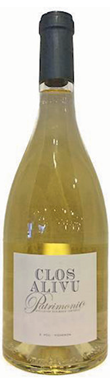

Rich, floral, apple-compote nose. The palate is full bodied, spicy and lively, with fine acidity. This has great complexity for an unoaked Vermentino, and it’s...
2015
Clos AlivuPatrimonio

Domaine Saparale, Corse Sartene, Corsica, France, 2015
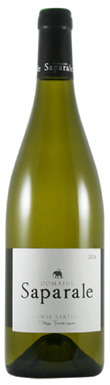
This pure Vermentino has a bracing saline nose, with intense lime fruit. The attack is crisp and fresh, with lively acidity. It’s not a wine...
2015
Domaine SaparaleCorse Sartene
Maestracci, Calvi, Corsica, France, 2015
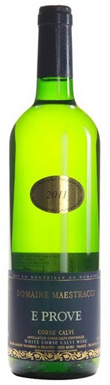
A Vermentino that’s made from a massal selection from old vines. Vivid apple and citrus aromas, while the palate is brisk and moderately concentrated. There’s...
2015
MaestracciCalvi
Canarello, Cuvée Figari, Figari, Corsica, France, 2014
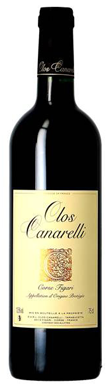
Discreet but fragrant raspberry nose, with exemplary elegance. Yet the attack is quite tannic and concentrated, showing raspberry and plum flavours with fine underlying acidity....
2014
CanarelloFigari
Alzipratu, Pumonte, Calvi, Corsica, France, 2014
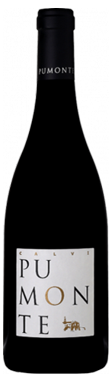
The aromas are spicy and hefty, though there’s a slightly sweaty aroma that should burn off with time in the glass. It’s quite rich on...
2014
AlzipratuCalvi
Clos Culombu, Calvi, Corsica, France, 2015
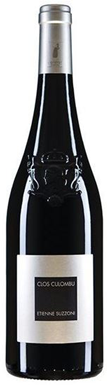
Beguiling nose with juicy cherry and raspberry fruit. This is rich, suave and rounded – a ripe style backed by tannins. Accessible now but has...
2015
Clos CulombuCalvi
Orenga de Gaffroy, Felice, Patrimonio, Corsica, France, 2013
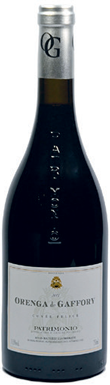
A parcel selection of Nielluccio – very fragrant with crushed herbs and red fruits. It’s juicy and concentrated, supported by light tannins. The finish is...
2013
Orenga de GaffroyPatrimonio
Sant Armettu, Corse Sartene, Corsica, France, 2015
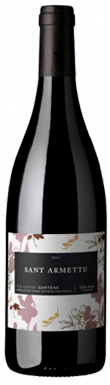
Pronounced herbal aromas from the Corsican flora and cherry and blueberry fruit from the dominant Sciaccarellu grape. It’s medium-bodied and supple on the palate –...
2015
Sant ArmettuCorse Sartene
