
Domaine du Closel Clos du Papillon: Vertical tasting
An eye-opening vertical tasting highlighted the recent work carried out by winemaker Evelyne de Pontbriand, reports Yohan Castaing...


Evelyne de Pontbriand is a dynamic, enterprising wine producer with a passion for history and literature. She personifies the fighting spirit of a French family of aristocratic origin seeking to preserve the treasured traditions of its estate – in this case located in the Savennières appellation in the Loire Valley – all the while adding the benefits of contemporary innovations.
A brief history
Domaine du Closel – Château des Vaults has its origins in the 15th century. The family archives attest to the presence of a vineyard, an orchard and a garden on the site as far back as 1495. Later, in the 19th century, the property passed into the hands the family of Emmanuel de Las Cases (1776-1842); naval officer, atlas-maker, but best known as biographer of Napoleon with whom he spent time during the emperor’s exile on the island of St-Helena.
Since then, the estate has been run by descendants of the Las Cases family, and in particular, by a series of women, starting with Marque de Las Cases, wife of Bernard Barbat du Closel, who was for a long time the mayor of Savennières.
Biodynamic approach
Evelyne de Pontbriand took over the estate in 2001, bringing a new lease of life to a property considered one of the most traditional in Savennières. By studying the terroirs of Savennières and meeting many of its winegrowers, she became one of its specialists, but she also learned the value and benefits of good environmental practices. She began to convert her vineyards to organic farming in 2006, and in 2015 switched to biodynamics.
‘Being as close as possible to the rhythms that affect both the vine and the wine produced from it, helping the vine to help itself, to use living things to perpetuate life, seemed to me to be the path to excellence,’ she explains.
This type of viticulture is so demanding and so meticulous that it can be described as haute couture. It helped her to better understand the ripening phase of her grapes: traditionally, grapes in this appellation are picked at the limit of when noble rot begins to make its appearance, and even with some grapes affected by it, even when destined for dry wines. Today, she picks earlier than before in order to avoid the onset of noble rot altogether, noting that ‘we are trying to respect that terroir character’.
Savennières
The only authorised grape variety in the Savennières appellation is Chenin Blanc, producing both dry and sweet wines. The total surface area covers some 170 hectares, worked by 34 winegrowers and, as de Pontbriand points out, nearly 80% of the area is organically farmed.
As for Domaine du Closel itself, it owns nearly 15 hectares that have the advantage of comprising the three classic types of terroir found in the appellation: the slatey schist-rich hillsides, the schist and sandstone plateau, and the pockets of fractured volcanic rock, schist, Aeolian sand and sediment that slid down the hillside during the Quaternary Period.
Three different wines embody these differences: La Jalousie comes from three parcels of vines on the domaine’s slate hillside, while Les Caillardières is made with grapes from the schist and sandstone plateau. Finally, Clos du Papillon, the flagship wine, is from the sector of ‘coulee’ soils.
The wines of Domaine du Closel have the classic typicity of Savennières. They have good body and texture as well as the usual bracing acidity of the Chenin grape (which is related to the Savagnin variety of the Jura) thanks to the two passes – or tries – in the vineyard during the harvest period, ensuring grapes are picked at just the right time for optimal ripeness. Aged separately on the lees in barrels for 11 to 18 months, depending on the vintage, the wines from these two passes are then blended together in vats before being bottled.
It was the Clos du Papillon that was the subject of a tasting at the Loire Wine Fair in February 2020, during which Evelyne de Pontbriand talked about her winegrowing philosophy, and notably, the transition to biodynamic farming.
Clos du Papillon
The Clos du Papillon is a 3ha plot, but only half is currently in production. It is situated in a small valley, located mid-slope, on soil composed of rhyolite, schist and quartz. The topsoil layer is very thin, about 60cm, providing perfect drainage.
The tasting was eye-opening, as it highlighted the recent work carried out by Evelyne de Pontbriand and her team, especially since the introduction of biodynamic farming. From the 2015 vintage, the wines have become fresher, livelier and more precise in profile. The structure is still just as imposing as in the past, but the finer underlying acidity allows it to be integrated in perfect balance. (The severe weather conditions in 2012 meant that no Savennières was produced in that vintage, across the region.)
Clos du Papillon vertical: 2009-2018
You may also like:
Loire Sauvignon Blanc: Panel tasting results
Jacky Blot: Domaine de la Taille aux Loups & Domaine de la Butte
Sancerre to drink in 2020
Domaine du Closel, Clos du Papillon, Savennières, Loire, France, 2009
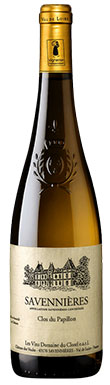

Very hot year leading to high alcohol levels and low acidity. Slight hint of truffle, some hazlenut, butter, flint, and honey. Balanced palate, quite elegant...
2009
Domaine du CloselSavennières

Domaine du Closel, Clos du Papillon, Savennières, Loire, France, 2010
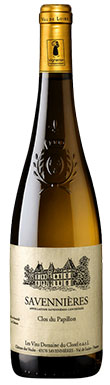
Warm autumn, cold and dry winter, followed by an ideal summer with alternating hot and mild periods, then a harvest of ripe, healthy grapes. Pronounced...
2010
Domaine du CloselSavennières
Domaine du Closel, Clos du Papillon, Savennières, Loire, France, 2011
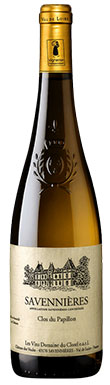
A complex vintage that started well but became difficult to manage, especially during the harvest. The dry wines were more successful. Complex nose, mixing notes...
2011
Domaine du CloselSavennières
Domaine du Closel, Clos du Papillon, Savennières, Loire, France, 2013
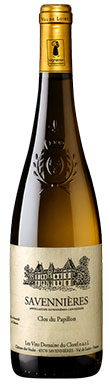
Spring and summer were cold and rainy, but the end of the season was quite pleasant. A late harvest took place around mid-October. Aromatic profile...
2013
Domaine du CloselSavennières
Domaine du Closel, Clos du Papillon, Savennières, Loire, France, 2015
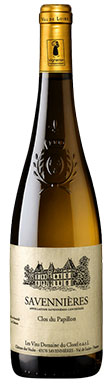
A vintage of low temperatures and the start of the harvest on 21 September. Acetic acid bacteria affected some the grapes.Lovely flint-infused nose with spicy,...
2015
Domaine du CloselSavennières
Domaine du Closel, Cuvée le Grand Gel, Savennières, Loire, France, 2017
100% of the vineyard was struck by frost. With a yield down to 0.9 hl / ha, only 1,700 bottles were produced for the whole...
2017
Domaine du CloselSavennières
Domaine du Closel, Clos du Papillon, Savennières, Loire, France, 2018
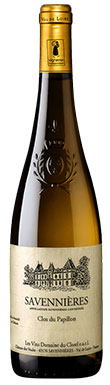
Drought and scorching heat during the summer marked this very interesting vintage. Bottled in January 2020. A bit of grassiness as well as menthol and...
2018
Domaine du CloselSavennières
