
Jefford: South Africa – Shocks, surprises and inspiration
Andrew Jefford reports on a season of drama....


I returned to the windy, peak-scattered, crystal-lit Cape for the first time in almost five years in late February. Harvest was in full swing for some, and had finished for others.
Astonishingly enough, will our children come to regard February in the southern hemisphere, and August in the north, as the harvest month? If you believe that phenolic maturity is the key to flavour development and that there is an optimum period (neither too long nor too short) over which it might be acquired, such early harvest dates cannot be welcomed.
‘No country outside Europe has made more progress on complex wine blends than South Africa.’
Nor was this the only climate-related shock the 2018-19 season in the Cape had produced. Yields for some varieties (notably Chardonnay and Merlot) have been hugely variable this year, principally due to an extraordinary heatwave which coincided with flowering, with temperatures of 40°C during the second week in October. ‘Any temperature over 35°C at flowering will sterilise the pollen,’ pointed out Simon Grier of Villiera.
The season was then relatively cool after the spring heatwave but that, in yet another climate paradox, added to seasonal precocity. Why? Most seasons are now hot and in such seasons, heat pulses block maturation and slow the pace of ripening. These signs of discomfort provide every reason, as I have written elsewhere, to keep an open mind about the development of new varieties and strains of existing varieties.
Another fascination of a harvest-time visit to the Cape is the shocking spectacle of its virus-infected vineyards: the russet leaf discoloration exhibited by vines infected by leaf-roll virus makes the extensive infection levels increasingly plain to see as autumn draws on.
This group of viruses, vectored by mealybugs, slows ripening and reduces colour, acidity and tannin in wines. It also shortens the lifespan of affected vines, though it doesn’t kill with the swift certainty of phylloxera. Virused vineyards are undesirable because a sick vine is unable to perform optimally, and the grower will never discover the quality and terroir potential which comes with old-vine fruit. And replacing vines early is a significant added cost.
Physically eliminating the virus, though, is unthinkable in South Africa. Those who don’t have virused vines (like Glenelly in Stellenbosch, planted by May-Eliane de Lanquesaing from scratch) have to inspect every vine after harvest each year and replace at the slightest untoward sign. Any vineyard with typical levels of virus would need a 10-year break from all productive activity, to completely remove the vines and sterilise the soils, and then be left fallow before replanting.
I should also say that some of the finest wines I tried did come from vineyards with virus in them. Anthony Hamilton Russell likes the restraint he finds in fruit from his virus-affected vines, and he also likes the lower alcohol levels they deliver over a longer season – ‘young, healthy vineyards are galloping sugar factories,’ he says. Reyneke’s superb wines also come from vineyards with virus in them, though Johan Reyneke finds he can keep mealybug out of his vines by encouraging dandelions in his vineyards.
A final shock was to see so many fire-scoured hillsides and mountains on this visit. Hamilton-Russell in particular flirted with fire catastrophe on 11 January this year. Readers won’t need reminding that vineyard fires are now a global problem, with Europe’s Mediterranean vineyards and California in the front line alongside most Southern Hemisphere wine-producing countries. No one should plant vines in these locations without assessing and addressing the now-acute fire risks.
Despite all these challenges, my visit was also an inspiring one in terms of the aesthetic progress that has been made in Cape wine creation, as I hope the following notes will make clear. Although my selections are mainly of wines based on one or two varieties, no country outside Europe has made more progress on complex wine blends than South Africa.
The nation’s work on terroir units (a concept developed at Stellenbosch University) puts it at the forefront of conceptualisation and analysis of terroir data. Leading South African wine creators of the younger generation start from a presumption of non-interventionist winemaking, and no Southern Hemisphere country has a more creative or, crucially, tougher-minded experimental vanguard. Its human resources, both within the wine world and without, are as rich as its biotope. Don’t leave South Africa’s ever-stimulating, rarely predictable wine scene unexplored.
Andrew’s top picks from South Africa:
See also:
Cape Town: Top restaurants and wine bars
Ten top South African wines worth seeking out
David & Nadia, Elpidios, Swartland, South Africa, 2016
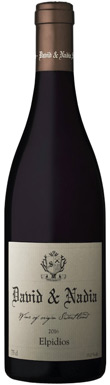

With the 2016 vintage, David & Nadia reduced the time spent maturing Elpidios in oak barrels from 17 months to 12 months, but extended bottle...
2016
David & Nadia

Keermont, Reserve Red, Stellenbosch, South Africa, 2013
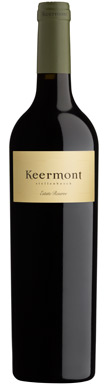
The fruit for this wine comes from remote, high-sited vineyards on the shoulder of land between Stellenbosch Mountain and the Helderberg. Winemaker Alex Starey crafts...
2013
Keermont
Newton Johnson, Seadragon Pinot Noir, Upper Hemel-en-Aarde Valley, Walker Bay, South Africa, 2017
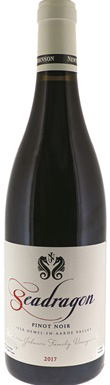
Newton Johnson is a family owned and operated winery located in the Upper Hemel-en-Aarde Valley, established in 1995. The Seadragon Pinot Noir is sourced from...
2017
Newton JohnsonUpper Hemel-en-Aarde Valley
Hamilton Russell, Pinot Noir, Hemel-en-Aarde, Walker Bay, South Africa, 2017
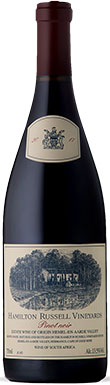
After the uncomfortably warm 2016 season, 2017 was more balanced and temperate in Walker Bay and its three key Hemel-en-Aarde wards, of which this is...
2017
Hamilton RussellHemel-en-Aarde
Keermont, Riverside Chenin Blanc, Stellenbosch, South Africa, 2017
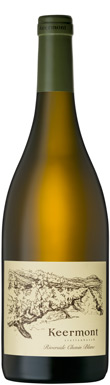
From vines planted at 250m next to the Blaauwklippen River back in 1971, this undemonstrative but utterly convincing Chenin needs a little time in the...
2017
Keermont
Reyneke, Syrah, Stellenbosch, South Africa, 2017
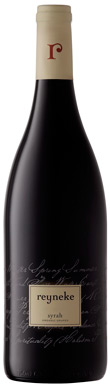
Wines from the Southern Hemisphere which display tannic structures with genuine kinship to those in many of Europe’s great fine wines are rare, but that’s...
2017
Reyneke
David & Nadia, Chenin Blanc, Swartland, South Africa, 2017
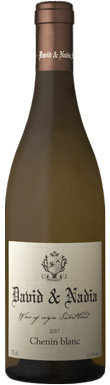
It’s tempting to recommend David and Nadia Sadie’s white blend Aristargos, or one of the single-vineyard Chenin Blancs such as the driving Skaliekop or the...
2017
David & Nadia
Glenelly, Lady May, Stellenbosch, South Africa, 2013
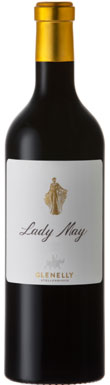
Cabernet Sauvignon is now down to 85% in this wine, joined by 7% Cabernet Franc and 4% each of Petit Verdot and Merlot. As opposed...
2013
Glenelly
Springfontein, Limestone Rocks Whole Lotta Love, Walker Bay, South Africa, 2015
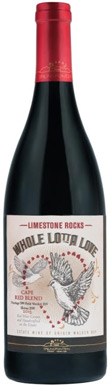
There’s nowhere quite like Springfontein. This is a limestone estate (extremely unusual in the Cape), close to the Klein River and its associated mountains. It...
2015
Springfontein
Almenkerk, Syrah, Elgin, South Africa, 2014
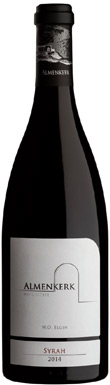
Is any Cape winery working with quite as much energy and attention to every detail as Almenkerk? Perhaps – but not many. This brisk, bright,...
2014
Almenkerk
