Jefford: South Africa – Shocks, surprises and inspiration
Andrew Jefford reports on a season of drama....
Get our daily fine wine reviews, latest wine ratings, news and travel guides delivered straight to your inbox.
You are now subscribed
Your newsletter sign-up was successful
I returned to the windy, peak-scattered, crystal-lit Cape for the first time in almost five years in late February. Harvest was in full swing for some, and had finished for others.
Astonishingly enough, will our children come to regard February in the southern hemisphere, and August in the north, as the harvest month? If you believe that phenolic maturity is the key to flavour development and that there is an optimum period (neither too long nor too short) over which it might be acquired, such early harvest dates cannot be welcomed.
‘No country outside Europe has made more progress on complex wine blends than South Africa.’
Nor was this the only climate-related shock the 2018-19 season in the Cape had produced. Yields for some varieties (notably Chardonnay and Merlot) have been hugely variable this year, principally due to an extraordinary heatwave which coincided with flowering, with temperatures of 40°C during the second week in October. ‘Any temperature over 35°C at flowering will sterilise the pollen,’ pointed out Simon Grier of Villiera.
The season was then relatively cool after the spring heatwave but that, in yet another climate paradox, added to seasonal precocity. Why? Most seasons are now hot and in such seasons, heat pulses block maturation and slow the pace of ripening. These signs of discomfort provide every reason, as I have written elsewhere, to keep an open mind about the development of new varieties and strains of existing varieties.
Another fascination of a harvest-time visit to the Cape is the shocking spectacle of its virus-infected vineyards: the russet leaf discoloration exhibited by vines infected by leaf-roll virus makes the extensive infection levels increasingly plain to see as autumn draws on.
This group of viruses, vectored by mealybugs, slows ripening and reduces colour, acidity and tannin in wines. It also shortens the lifespan of affected vines, though it doesn’t kill with the swift certainty of phylloxera. Virused vineyards are undesirable because a sick vine is unable to perform optimally, and the grower will never discover the quality and terroir potential which comes with old-vine fruit. And replacing vines early is a significant added cost.
Physically eliminating the virus, though, is unthinkable in South Africa. Those who don’t have virused vines (like Glenelly in Stellenbosch, planted by May-Eliane de Lanquesaing from scratch) have to inspect every vine after harvest each year and replace at the slightest untoward sign. Any vineyard with typical levels of virus would need a 10-year break from all productive activity, to completely remove the vines and sterilise the soils, and then be left fallow before replanting.
Get our daily fine wine reviews, latest wine ratings, news and travel guides delivered straight to your inbox.
I should also say that some of the finest wines I tried did come from vineyards with virus in them. Anthony Hamilton Russell likes the restraint he finds in fruit from his virus-affected vines, and he also likes the lower alcohol levels they deliver over a longer season – ‘young, healthy vineyards are galloping sugar factories,’ he says. Reyneke’s superb wines also come from vineyards with virus in them, though Johan Reyneke finds he can keep mealybug out of his vines by encouraging dandelions in his vineyards.
A final shock was to see so many fire-scoured hillsides and mountains on this visit. Hamilton-Russell in particular flirted with fire catastrophe on 11 January this year. Readers won’t need reminding that vineyard fires are now a global problem, with Europe’s Mediterranean vineyards and California in the front line alongside most Southern Hemisphere wine-producing countries. No one should plant vines in these locations without assessing and addressing the now-acute fire risks.
Despite all these challenges, my visit was also an inspiring one in terms of the aesthetic progress that has been made in Cape wine creation, as I hope the following notes will make clear. Although my selections are mainly of wines based on one or two varieties, no country outside Europe has made more progress on complex wine blends than South Africa.
The nation’s work on terroir units (a concept developed at Stellenbosch University) puts it at the forefront of conceptualisation and analysis of terroir data. Leading South African wine creators of the younger generation start from a presumption of non-interventionist winemaking, and no Southern Hemisphere country has a more creative or, crucially, tougher-minded experimental vanguard. Its human resources, both within the wine world and without, are as rich as its biotope. Don’t leave South Africa’s ever-stimulating, rarely predictable wine scene unexplored.
Andrew’s top picks from South Africa:
See also:
Cape Town: Top restaurants and wine bars
Ten top South African wines worth seeking out
David & Nadia, Elpidios, Swartland, South Africa, 2016
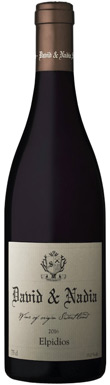
With the 2016 vintage, David & Nadia reduced the time spent maturing Elpidios in oak barrels from 17 months to 12 months, but extended bottle ageing to 18 months. It was also the first vintage to feature Amorim's non-detectable TCA corks. Costing three-times as much as a standard natural cork, each cork is individually screened and guaranteed against cork taint. Red and blue fruits lead into a tight, drying mid-palate with plenty of rich texture, followed by textured tannins. Although full, it seems leaner and more acidic than the 2015.
2016
SwartlandSouth Africa
David & Nadia
Keermont, Reserve Red, Stellenbosch, South Africa, 2013
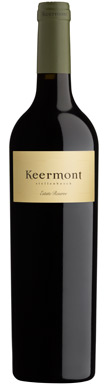
The fruit for this wine comes from remote, high-sited vineyards on the shoulder of land between Stellenbosch Mountain and the Helderberg. Winemaker Alex Starey crafts impressively complex, detailed wines which age superbly from it – as this 2013 blend of Cabernet Sauvignon and Merlot with lesser quantities of Cabernet Franc, Malbec, Syrah, and Petit Verdot proves. It’s sweetly beguiling, but not merely that. There are plant and soil scents as well as something more exotic and incense-like. On the palate the wine is packed with dry currant and plum. It’s open, faintly exotic as the nose was, softly chewy, gently balanced, expressive and articulate - a genuinely gastronomic, quietly beautiful Cape red.
2013
StellenboschSouth Africa
Keermont
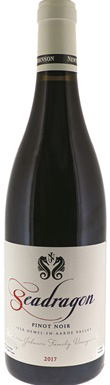
Newton Johnson, Seadragon Pinot Noir, Upper Hemel-en-Aarde Valley, Walker Bay, South Africa, 2017

Newton Johnson is a family owned and operated winery located in the Upper Hemel-en-Aarde Valley, established in 1995. The Seadragon Pinot Noir is sourced from the oldest vines on the estate grown on a single-hectare vineyard, sitting on a north-facing slope on clay and granite soils. Only the ripest bunches are used, with around 20% used as whole bunches. The Seadragon is aged for 11 month in oak, and is bottled unfiltered.
2017
Walker BaySouth Africa
Newton JohnsonUpper Hemel-en-Aarde Valley
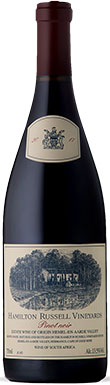
Hamilton Russell, Pinot Noir, Hemel-en-Aarde, Walker Bay, South Africa, 2017

After the uncomfortably warm 2016 season, 2017 was more balanced and temperate in Walker Bay and its three key Hemel-en-Aarde wards, of which this is the lowest and most maritime. The wine is translucent red in colour, with dark, alluring plum and raspberry fruits and soft spice. On the palate the wine is intense, vivid and fresh, with the lyricism and lift which should always characterise this variety, and without the over-dry, abrupt finish and lingering fruitless warmth which can often creep into Pinot produced under very sunny skies. You find ample gathered intensity and energy of fruit here, but no clumsiness. That finesse lasts through to a graceful, stealthy finish. In contrast to other producers, Anthony Hamilton Russell doesn’t believe in cherry-picking individual parcels for a series of special cuvée wines, so this is a synopsis of the best of the estate’s Pinot fruit.
2017
Walker BaySouth Africa
Hamilton RussellHemel-en-Aarde
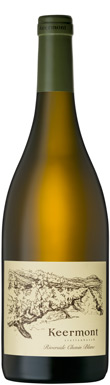
Keermont, Riverside Chenin Blanc, Stellenbosch, South Africa, 2017

From vines planted at 250m next to the Blaauwklippen River back in 1971, this undemonstrative but utterly convincing Chenin needs a little time in the glass to unfold, like a fern in spring. When it does, you’ll find classic wet stone and apple aromas with a lick of honey. The palate is intense, deep and stony, subtle in articulation with a beeswax richness haunting its orchard fruit, while its vinosity brings food-friendliness. It's hard to better this for purity and classicism.
2017
StellenboschSouth Africa
Keermont
Reyneke, Syrah, Stellenbosch, South Africa, 2017
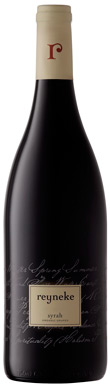
Wines from the Southern Hemisphere which display tannic structures with genuine kinship to those in many of Europe’s great fine wines are rare, but that’s what you’ll find in this pure, biodynamically-grown Syrah. It's made with 30% whole-bunch fruit, crushed by foot in concrete Nomblot eggs with the grape balance being added on top. A wild-yeast fermentation follows with gentle punch downs and pump overs. Malo is in third-fill or older French barriques and larger oak vessels, where the wine ages for 14 months followed by three months in steel. It smells of dark, glowing embers - a campfire blown about by the wind at night. There’s splendid granite purity here too: it's smoky, a touch rasping, grippy and chiselled. The Cape in liquefied form. The 2016 Reserve Red, by the way, is also pure Syrah and delivers a more polished, slightly more oaky wine which is also distinguished by the magnificent quality of its tannins.
2017
StellenboschSouth Africa
Reyneke
David & Nadia, Chenin Blanc, Swartland, South Africa, 2017
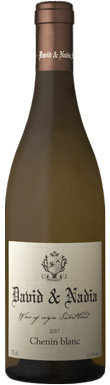
It’s tempting to recommend David and Nadia Sadie’s white blend Aristargos, or one of the single-vineyard Chenin Blancs such as the driving Skaliekop or the wonderfully complex Hoë-Steen, but this classily labelled entry-level Chenin offers such wonderful value that it would be a crime to overlook it. It’s drawn from the fruit of seven different vineyards, all planted with unirrigated bush-vine Chenin, aged between 36 and 50 years. 60% is organically grown. Look out for scents of sweet blossom and the orchard in autumn. It has flavours of apple, pear and quince, but also stone, a lick of honey and the sinew of vinosity, with some soft acids. There’s all the length and breadth you might want, yet it’s fresh and darting too. Wines like this make a more than convincing case for Chenin as South Africa’s greatest variety.
2017
SwartlandSouth Africa
David & Nadia
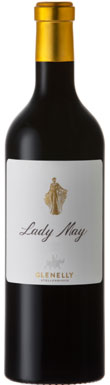
Glenelly, Lady May, Stellenbosch, South Africa, 2013

Cabernet Sauvignon is now down to 85% in this wine, joined by 7% Cabernet Franc and 4% each of Petit Verdot and Merlot. As opposed to the hot, ripe 2012 vintage this was a much more Bordeaux-esque one, with a cold wet winter, a long, cool spring and then a warm, dry summer. Picked a little earlier than normal to avoid overripeness, this is reflected in the wine, which has wonderfully vibrant acidity, firm tannins and integrated spiced oak to support a generous core of bright purple-berried fruit. Inky, juicy and supple this is still very youthful, with only the merest hint of savoury umami characters coming through. Very characterful.
2013
StellenboschSouth Africa
Glenelly
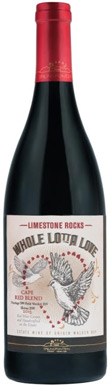
Springfontein, Limestone Rocks Whole Lotta Love, Walker Bay, South Africa, 2015

There’s nowhere quite like Springfontein. This is a limestone estate (extremely unusual in the Cape), close to the Klein River and its associated mountains. It lies about half an hour inland from Hermanus in the Walker Bay area, but is more exposed to the sea breezes than the Hemel-en-Aarde vineyards. The estate was created by German engineer Johst Weber on near-virgin land, agriculturally abandoned for nearly a century. He first heard about Springfontein via a small advert in Decanter magazine! For the last seven vintages the winemaker has been the experienced but fiercely inquisitive Zimbabwean Tariro Masayiti, aided by viticulturist Hildegard Witbooi and now Johst’s partner Jeanne Vito, an entrepreneurial Frenchwoman with extensive Japanese experience who is also establishing a vineyard in Togo. It all adds up to a highly creative mix. There have been setbacks along the way, and not every wine is equally successful, but they are all packed with interest. This Cape blend (an informal term meaning a blend based on 30-70% Pinotage) combines 59% Pinotage with 21% Petit Verdot and 20% Shiraz, the latter part-dried on the vine. All three varieties were barrel-fermented, the Shiraz as whole-bunch, while the other two varieties were destemmed and cold-macerated in open barrels. Rich, dark fruits mingle with earth, plant and some peaty notes, while the palate has deep-pile yet finally velvety textures and vivid, brightly defined acidity. The plum and elder fruits command the palate, though some of that smoky complexity creeps in towards the end. 'A lot of people are afraid of skin maceration for Pinotage,' says Tariro. 'I look at the skins and see terroir. That’s where you find the terroir.'
2015
Walker BaySouth Africa
Springfontein
Almenkerk, Syrah, Elgin, South Africa, 2014
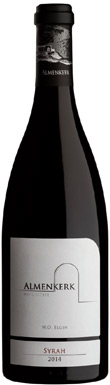
Is any Cape winery working with quite as much energy and attention to every detail as Almenkerk? Perhaps – but not many. This brisk, bright, pungent Syrah would make a challenging ringer in a Northern Rhône tasting - it’s elegant and fresh to its toes, with just a dusting of sweetness from oak. It was interesting to learn from Joris and Natalie van Almenkerk that Elgin’s vineyard plantings are beginning to shrink, despite the district’s compelling points of difference, as local farmers can now make three-times as much money from apples and pears as they can from wine. With ten vintages behind them, though, the van Almenkerks are in for the long term.
2014
ElginSouth Africa
Almenkerk
Andrew Jefford has written for Decanter magazine since 1988. His monthly magazine column is widely followed, and he also writes occasional features and profiles both for the magazine and for Decanter.com. He has won many awards for his work, including eight Louis Roederer Awards and eight Glenfiddich Awards. He was Regional Chair for Regional France and Languedoc-Rossillon at the inaugural Decanter World Wine Awards in 2004, and has judged in every edition of the competition since, becoming a Co-Chair in 2018. After a year as a senior research fellow at Adelaide University between 2009 and 2010, Jefford moved with his family to the Languedoc, close to Pic St-Loup. He also acts as academic advisor to The Wine Scholar Guild.
Roederer awards 2016: International Wine Columnist of the Year