
Producer profile: Château-Grillet
It’s one of those memorable names that leaps out when you’re poring over wine maps, but those lucky enough to taste it can count themselves in a grateful wine-loving minority. Discover what lies behind this legendary northern Rhône white


What do I need to know about Château-Grillet?
Back in the 1930s, the celebrated French writer and gastronome Curnonsky identified five white wines as the finest in the world.
Naturally, they were all French: Le Montrachet in Burgundy’s Côte de Beaune, Château d’Yquem in Sauternes, Château-Chalon in Jura, Clos de la Coulée de Serrant in Savennières (Loire), and Château-Grillet near the top end of the northern Rhône.
The last two on the list have had their ups and downs in the intervening years, but after considerable investment over the past decade, Château-Grillet is once again deserving of its place on such a list.
Scroll down to see tasting notes and scores for a selection of Château-Grillet wines
If Le Montrachet is the summit of Chardonnay, then Château-Grillet is definitely the vertex of Viognier.
It’s a tiny appellation of just 3.5ha embedded at the heart of the larger Rhône appellation of Condrieu. Like Condrieu, Château-Grillet is made purely of Viognier, but unlike Condrieu all of the land in the appellation is owned by a single estate, a property which shares the name of the appellation.
The estate’s winemaking history goes back much further than the 1930s. Written references to wines made at the property can be traced back to the mid-1600s, but winemaking in the wider area goes back even further still, to the ancient Romans. In 1827, the estate was bought by the Neyret-Gachet family who retained it until 2011 when it was acquired by François Pinault, founder of luxury group Kering and owner of Château Latour in Bordeaux, Clos de Tart and Domaine d’Eugénie in Burgundy, as well as Eisele Vineyard in Napa, California.
Under Pinault’s ownership, the vineyard has been restructured and converted to biodynamics, and the cellar entirely refurbished. He installed the talented Jaeok Cramette as technical director in 2019, and she now looks after viticulture and vinification.
Château-Grillet: the facts
Appellation established 1936
Communes Straddles St-Michel-sur-Rhône and Vérin
Ownership Estate bought by François Pinault as part of his Artémis Domaines group in 2011
Organic Certified in 2016
Range All wines 100% Viognier – includes Château-Grillet, Condrieu La Carthery, Côtes du Rhône Blanc
Vines Average age 45 years; average yield 19hl/ha
Production Average 8,500 bottles

How did this tiny estate acquire its own appellation?
When the appellation was granted to Château-Grillet in 1936, the official regulations were rather different. If a property had at least two turrets (and could therefore be designated a ‘château’) and its vineyards surrounded it in a single block, the owners could apply for an appellation all of their own. The proprietor at that time, Henri Gachet, did exactly that and his application was successful. No doubt the history and quality of the wines were also pivotal factors.
Historically the estate only produced one wine – its appellation contrôlée Château-Grillet. But recently two more cuvées have been added. The first is a second wine, bottled under the generic AP Côtes du Rhône, introduced from the 2011 vintage. And 2017 marks the first vintage of an AP Condrieu named La Carthery, from vines that lie outside but share a border with the official AP Château-Grillet growing area.
How is Château-Grillet different to a typical Condrieu?
Globally speaking, there are more similarities between these two appellations than there are differences. The terroir isn’t wildly different, and the official appellation rulebooks are very similar in their stipulations.
When you pour a glass of Condrieu, the first thing you’re likely to notice is its wild, exuberant aromatic display, which can encompass violets, peaches and ripe apricots. It’s usually very generous, almost glutinous, on the palate, and acidity is low. The best wines make up for this with a mineral spine that helps to create a sense of structure and freshness.
Château-Grillet tends to be less aromatically effusive and marginally less full-bodied than most Condrieu, but it has an even greater sense of salinity, intensity and tension on the palate. Cramette says that this is due to ‘the lack of water, the poor soil, and to the fact that the vines are planted in the bedrock’.
The largest part of Château-Grillet’s vineyard is a steep, south-facing amphitheatre, a little nook residing within Condrieu that climbs from 150m to 250m altitude. There are 104 granite terraces, with individual vines growing up wooden stakes. This is a particularly hot microclimate, facing the sun and sheltered from the north wind.
Does Château-Grillet deserve its own appellation?
There is no definitive answer. In some ways, Château-Grillet is best described as one of the greatest lieux-dits of Condrieu, along with the Coteau de Vernon and the Coteau de Chéry. Granting Château-Grillet its own appellation would be akin to giving the lieu-dit La Landonne its own appellation within the broader appellation of Côte-Rôtie. But you could argue the case for that too. There’s no denying, however, that Château-Grillet’s history and heritage make it one of the most notable wine estates of France.

What is the estate’s track record?
Decidedly mixed. In 1787, it was famous enough for Thomas Jefferson to organise a visit. It was considered good enough for the court of King George IV of England. We know how highly the ‘Prince of Gastronomes’ Curnonsky rated it in the 1930s. But in the latter half of the 20th century, quality began to stall.
Vintages in the 1960s to 1980s were notoriously unreliable, some excellent, others disappointing. The 1990s saw something of an uptick in quality when the estate passed from André Canet in 1994 to his daughter Isabelle Baratin-Canet. The arrival of Denis Dubourdieu (of Château Doisy Daëne in Bordeaux) as consultant winemaker in 2000 marked another step towards Château-Grillet reclaiming its former glory.
When the estate was bought by Pinault in 2011, one of his first actions was to convert to organic viticulture and to restructure the vineyards. The 2014 vintage was a turning point. Quality since then has been reliably excellent, with some vintages promising to be very long-lived.
I thought Viognier didn’t age well?
It doesn’t as a rule, due to its mild acidity. But Viognier grown in its original heartland performs differently to most other Viogniers found around the world. The grape variety does have a bearing on a wine’s longevity, but so do other elements of terroir. The salinity and intensity the granite soils bring creates the freshness and structure, and the best can develop for 20 years or more, taking on flavours of roasted nuts, gingerbread and saffron.
With such a small production, even finding any for sale isn’t easy. So fans will be pleased to hear the estate has planted a further 0.25ha, which is due to come into production in 2021. Demand has always far outstripped supply – all it takes is a glance at the price to appreciate by how much.
Château-Grillet: a selection of haute-couture Viogniers
Related content
Château-Grillet: How recent releases compare to other top Rhône Viogniers
Walls: My top 10 Rhône wines of 2021
Château-Grillet, Château-Grillet, Rhône, France, 2020
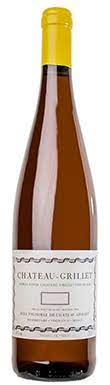

With 10% new oak, it’s more noticeable here than on the Condrieu, but this should settle - the score assumes that it will. Rounded, with...
2020
Château-GrilletChâteau-Grillet

Château-Grillet, Château-Grillet, Rhône, France, 2019
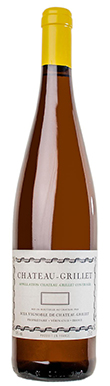
A real burst of fresh apricot and peach, lemon verbena and green tea. Impressively full-bodied and round in the mouth, this has the real salt...
2019
Château-GrilletChâteau-Grillet
Château-Grillet, Château-Grillet, Rhône, France, 2017
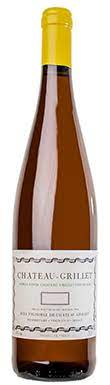
Complex aromas of honeysuckle, lemon verbena and citrus lead onto a full-bodied and fairly opulent palate. It begins richer than a typical vintage of Château-Grillet,...
2017
Château-GrilletChâteau-Grillet
Château-Grillet, Château-Grillet, Rhône, France, 2016
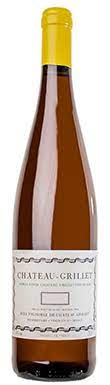
There's a hint of petrol on the nose, reminiscent of Riesling, and high-toned florality too. While it's generous on the tongue, being full-bodied but not...
2016
Château-GrilletChâteau-Grillet
Château-Grillet, Château-Grillet, Rhône, France, 2015
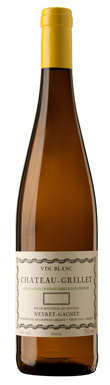
A generous and opulent style, with ample glycerol roundness countered by pleasingly assertive acidity, considering the heat of the vintage. It retains that salty, mineral...
2015
Château-GrilletChâteau-Grillet
Château-Grillet, Château-Grillet, Rhône, France, 2014
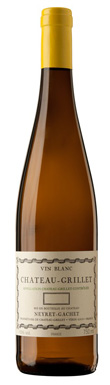
A very floral style with hints of lime and some petrichor notes. The sensation of acidity is good, it feels decidedly focused then leads to...
2014
Château-GrilletChâteau-Grillet
Château-Grillet, Côtes du Rhône, Rhône, France, 2020
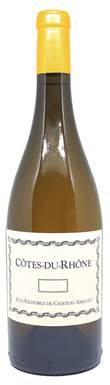
A distinctly bright and citrusy style of Viognier, but with all the puppy fat you'd expect. The acidity is fairly low, but not troublingly so...
2020
Château-GrilletCôtes du Rhône
Château-Grillet, Côtes du Rhône, Rhône, France, 2017
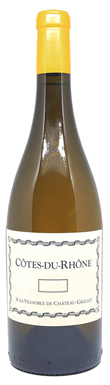
A copper tinge to the colour of the wine in the glass. The nose is discreet, with warm apricot fruits. It’s then full on the...
2017
Château-GrilletCôtes du Rhône
Château-Grillet, Côtes du Rhône, Rhône, France, 2016
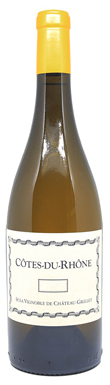
Stone fruits on the nose. Rounded and fresh to begin, with an inner salinity that becomes more pronounced on the finish. It’s not that long,...
2016
Château-GrilletCôtes du Rhône
Château-Grillet, La Carthery, Condrieu, Rhône, France, 2019
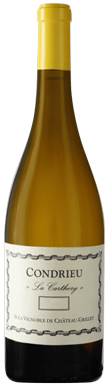
A bit more immediately fruity than the Château-Grillet, with notes of apricot and peach. The palate is round, generous and fat with a glycerol texture....
2019
Château-GrilletCondrieu
Château-Grillet, La Carthery, Condrieu, Rhône, France, 2020
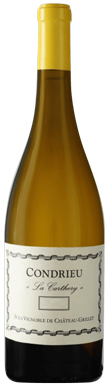
Some green hints to the colour this year. Good concentration of white peach character, this is rounded but not overly fat. It has more complexity,...
2020
Château-GrilletCondrieu
