
Led by Fabien Teitgen, the estate’s charismatic head winemaker and general manager, the session showcased the evolution of one of Bordeaux’s premier Pessac-Léognan properties.
Teitgen, with his deep-rooted passion for precision and sustainability, guided us through eight wines – starting with three vibrant whites and culminating in five grand vin reds (two from magnum) – revealing how the estate’s unique Günz gravelly terroir shapes wines that balance power, elegance, and longevity.
Scroll down to see tasting notes and scores for all eight wines from the Château Smith Haut Lafitte masterclass
A legacy reborn: The Cathiard era at Smith Haut Lafitte

Château Smith Haut Lafitte’s story is one of enduring legacy and bold reinvention.
Situated in the Graves sub-region of Bordeaux, just south of the city, the estate traces its roots to 1365 when the noble House of Bosq first cultivated vines on its gravelly slopes.
The name ‘Smith’ emerged in the 18th century when Scottish wine merchant George Smith acquired the property, exporting its wines to England and lending his moniker to the château.
Through the centuries, it passed through notable hands, including Lodi Martin Duffour-Dubergier, a Bordeaux mayor who elevated its reputation in the 19th century. Classified as a Grand Cru Classé de Graves in 1953, the estate truly flourished under its current owners, Daniel and Florence Cathiard, who purchased it in 1990.
The Cathiards, former French Olympic skiers (Daniel competed in the 1968 Winter Games), brought a fresh energy to Smith Haut Lafitte after successful careers in business, including owning a chain of supermarkets.
They invested heavily, transforming it into a multifaceted destination that includes the luxurious Les Sources de Caudalie hotel and spa, which uses grape-based products for vinotherapy.
Their daughter Mathilde and son-in-law Bertrand Thomas later founded the Caudalie cosmetics brand, further integrating the family’s entrepreneurial spirit with the vineyard.
Today, the one-block, 87-hectare estate (67ha red, 11 white, with the rest for second wines) emphasises quality over quantity. The Cathiards’ philosophy?
To honour the land while pushing boundaries, as Teitgen echoed during the masterclass: ‘We are more than just wine producers; we have the idea of sharing good food, enjoying good times with good people,’ – the estate has exceptional tourism facilities which welcome guests for tours and tastings all year long.

The magic of Günzian gravel: Terroir and vineyard practices
At the heart of Smith Haut Lafitte is its exceptional terroir, a hallmark of Pessac-Léognan. The name ‘Lafitte’ derives from the Gascon ‘la hite‘, meaning small hill, referring to the gentle, gravelly rises that define the landscape.
These Günzian gravel soils – deep layers of pebbles over clay and limestone – provide excellent natural drainage, reflecting heat to ripen grapes while retaining freshness. Reds thrive on the warmer, gravel-dominant plots with Cabernet Sauvignon (around 60% of blends), Merlot (30%), Cabernet Franc, and Petit Verdot adding spice and structure.
Whites, from cooler clay-limestone parcels, feature Sauvignon Blanc (90%), Semillon, and Sauvignon Gris for aromatic complexity.
Teitgen emphasised how this terroir imparts a signature ‘saline minerality’ and ‘salty, chalkiness’ a thread running through the tasting.
Sustainability is woven into every aspect of viticulture at Smith Haut Lafitte, a commitment Teitgen described as ‘bio-precision’ – a blend of organic, biodynamic, and high-tech practices.
Certified organic since 2019, the estate eschews chemicals, using herbal teas, compost from grape pomace, and horse-drawn ploughing in sensitive areas to preserve soil health.
Bio-precision in action: harvesting and plot selection
Drones and NDVI (Normalised Difference Vegetation Index) mapping, as Teitgen explained in the masterclass, allow precise harvesting: ‘We pick by hand and we select the picking with a new tool which is a NDVI map – we can see the difference within the blocks and decide to separate the picking.’
This ensures uniform ripeness, adapting to climate change by selecting drought-resistant rootstocks and adjusting canopy sizes.
Teitgen noted the estate’s forward-thinking approach: ‘In the future, we may have to change some varietals…perhaps we have to grow some Grenache, some Syrah,’ while currently experimenting with Malbec.
The in-house cooperage crafts barrels from French oak sourced from specific forests like Tronçais and Jupilles, with toasting tailored to each vintage – a ‘serious game’ that enhances the wines’ texture without overpowering the fruit.
Artistry in the cellar
Winemaking at Smith Haut Lafitte is a meticulous art, balancing extraction with elegance. Reds are hand-harvested in small crates, triple-sorted (including optical sorting), and fermented in wooden vats with gentle punch-downs and infusions rather than aggressive pumping.
Teitgen said: ‘We do all the extraction by punching down by hand then turn to maceration and more of an infusion rather than dynamic extraction.’
Ageing occurs in 55-60% new French oak for 14-18 months, with malolactic fermentation sometimes in barrel.
Whites undergo similar precision: whole-cluster pressing, fermentation in barrel (with some new oak), and lees ageing for creaminess. The estate produces second wines like Le Petit Smith Haut Lafitte (more approachable) and Les Hauts de Smith (a third wine ideal for restaurants), ensuring only the finest lots make the grand vin.
Teitgen’s philosophy shines through: ‘The more the vinification is simple, the less you will transform the berries and you will keep the characteristics and the true quality of the berries for the wine.’
The tasting

The tasting began with whites, setting a fresh tone. The Petit Smith Haut Lafitte Blanc 2023, a Sauvignon Blanc-dominant blend, burst with citrus, green apple, and herbal notes, its vibrancy reflecting the estate’s cooler plots. Teitgen highlighted its accessibility, as it’s designed for earlier drinking.
The Château Smith Haut Lafitte Blanc 2021 followed, from a challenging vintage marked by frost and rain, yet showcasing remarkable poise with citrus fruit, white flowers, and a mineral edge – proof of the team’s adaptive viticulture.
The 2013 Blanc, now maturing gracefully, offered richer layers of honeyed brioche, vanilla, and flint, its acidity preserving freshness after a decade.
These whites exemplified the terroir’s ability to yield complex, age-worthy Sauvignon-based wines, often rivalling top Burgundies in texture.
Transitioning to reds, the 2018 Château Smith Haut Lafitte opened with ‘sun-kissed fruit and a liquorice backbone’ as Teitgen described, comparing it to the cooler 1988: ’18 is a lovely vintage… a bit more cubic, a bit more dense.’
The 2015, a warm vintage with a special black label commemorating the estate’s 650th anniversary and the Cathiards’ 25th year, seduced with gorgeous Cabernet aromas and rich fruit but no heaviness.
Teitgen noted its evolution: ‘When they are young, they are very primary and focussed on the fruit, after some years, that decrease a bit and you have more depth and mintiness.’
The 2010 impressed with real concentration on the mid-palate.
From magnum, the 2005 revealed incredible complexity with smoky notes and fine tannins.
Finally, the 2000 from magnum, a ‘tricky vintage’ saved by an Indian summer recalled Tietgen, had lost its baby fat with mature fruits and structure.
Looking ahead
Reflecting on rising alcohols, he said: ‘Today, the wines have more sugar compared to the past so we’re reducing the size of the canopy to reduce this quantity of sugar.’
There is constant adaptation including using different rootstocks to cope better in drought and ripen slightly later.
But it’s not a one size fits all. Speaking candidly, he said: ‘To be honest, every year it’s a gamble and a challenge to understand if the weather will be very warm or will be rather cool, so we have to be more active than ever in the vineyards.’
Throughout the masterclass, Teitgen’s anecdotes – from hosting King Charles III (during his September 2023 state visit to France) to Napa influences (the family also own Cathiard Vineyard in Napa Valley) – added warmth and context, underscoring the family’s global vision.
This masterclass wasn’t just a tasting; it was a testament to how terroir, stewardship, and innovation create timeless wines.
As Teitgen invited at the end of the masterclass: ‘You are all welcome at Smith Haut Lafitte.’
For Bordeaux enthusiasts, it’s an estate that rewards patience, much like its vintages.
Tasting Château Smith Haut Lafitte:
Wines are listed in the order they were tasted
Related content
Four decades of Château Margaux: A Decanter Fine Wine Encounter Masterclass
A St-Emilion story: Château Pavie profile
Bordeaux 2005: 23 top wines tasted two decades on
Uncover hidden gems: Affordable Bordeaux and Burgundy wines for your Christmas feast
Château Smith Haut Lafitte, Le Petit Smith Haut Lafitte Blanc, Pessac-Léognan, Bordeaux, France, 2023
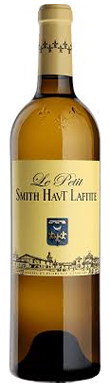

A gorgeous fresh and zesty white with a juicy and lively core full of citrus zest and tropical pineapple fruit with green apple alongside a hint of orange peel bitterness which adds a pleasant accent.
2023
Château Smith Haut LafittePessac-Léognan

Château Smith Haut Lafitte, Blanc, Pessac-Léognan, Bordeaux, France, 2021
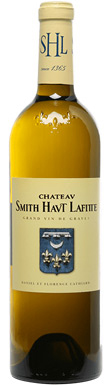
Cool and crisp, this delights from the first sip with juicy lemon - clean and precise. Still youthful but giving so much pleasure with a bitter bite alongside the piercing acidity and wonderful mineral finish. A brilliant white from the 2021 vintage.
2021
Château Smith Haut LafittePessac-Léognan
Château Smith Haut Lafitte, Blanc, Pessac-Léognan, Cru Classé de Graves, Bordeaux, France, 2013
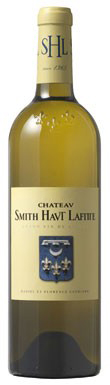
What a treat to taste a Bordeaux white at 12 years old, and from 2013 which tends to be written off as the reds fared worse than the whites. This was full of honeyed brioche elements with lovely preserved lemon touches, nuts, caramel and a hint of toast. Such a long-lasting, saline-touched finish with clear complexity, layers of flavour and finesse. Feels like a great time to drink this.
2013
Château Smith Haut LafittePessac-Léognan
Château Smith Haut Lafitte, Pessac-Léognan, Cru Classé de Graves, Bordeaux, France, 2018
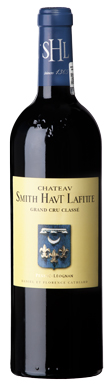
The masterclass crowd were expecting a Petit Smith Haut Lafitte rouge 2018 to showcase the brilliance of the estate's second wine but instead got the grand vin. A masterpiece in both concentration and elegance - this combines warming dark fruit, liquorice, toast and saltiness with sleek tannins - almost a tight frame - as well as crisp edges. It carries power and poise. This still needs a good airing if drinking soon or it'll continue to age well. Great personality and character showcasing the winemaking skill of the team.
2018
Château Smith Haut LafittePessac-Léognan
Château Smith Haut Lafitte, Pessac-Léognan, Cru Classé de Graves, Bordeaux, France, 2015
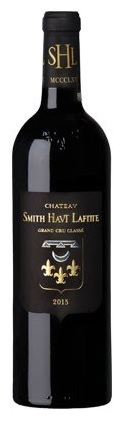
The 25th vintage of owners Daniel and Florence Cathiard. This is delicious - smooth and juicy with chalky tannins and such a perfumed personality - gorgeous Cabernet Franc aromas. Full of spiced dark berry fruit, liquorice, gravelly touches yet juicy, clean and lifted. Still young and a touch tight on the finish suggesting this has a lot further to go. 2% Petit Verdot completes the blend.
2015
Château Smith Haut LafittePessac-Léognan
Château Smith Haut Lafitte, Pessac-Léognan, Cru Classé de Graves, Bordeaux, France, 2010
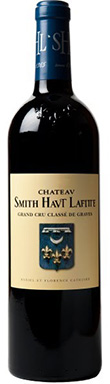
A heady and intoxicating wine from the lauded 2010 vintage. Deep aromatics with floral touches, bramble fruit and soft spices on the nose. The palate is juicy with red fruits dominating the expression. Clean and precise, this has such focus and drive and despite the concentration there's so much energy on offer. Bright, full of life, structured and long. What a wine. 1% Petit Verdot completes the blend.
2010
Château Smith Haut LafittePessac-Léognan
Château Smith Haut Lafitte, Pessac-Léognan, Cru Classé de Graves, Bordeaux, France, 2005
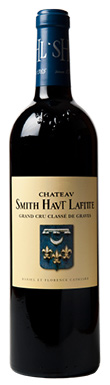
Tasted from magnum, the tertiary notes are starting to come through with leather and forest floor. This is lively and bright with great acidity. Lean and streamlined at first then widens as the time goes on. This has lost some fat but gained in layers of complexity as well as a senses of precision. A wine to sit with and contemplate. I feel this would have been even better coming back to it the next day... 1% Petit Verdot completes the blend.
2005
Château Smith Haut LafittePessac-Léognan
Château Smith Haut Lafitte, Pessac-Léognan, Cru Classé de Graves, Bordeaux, France, 2000
Such great aromatics from the off - wild flowers, leather, tobacco, cigar smoke and red fruits. This is a real wine to have with food - juicy and fun with such lifted energy but keeping depth. There's such detail and a sense of construction to this that it's more than just an easy-drinking, enjoyable wine at this point. Feels like a great time to approach this to get a sense of the winemaking philosophy at the estate - creating ageable wines with a real sense of place and purpose.
2000
Château Smith Haut LafittePessac-Léognan