
Uruguay’s great ascent
Revisiting the country after two decades, Tim Atkin MW reflects on the remarkable progress made by Uruguay’s winemakers and profiles the regions, grapes and styles to look out for...


The parallels are seductive, yet ultimately misleading. There are certain similarities between Uruguay and Argentina, neighbouring countries that face each other across the broad Río de la Plata estuary – a love of football, tango, thick steaks and yerba mate infusions – but they are very different places.
It’s not just a question of size. Uruguay is the second-smallest country in South America after Suriname; Argentina is the second biggest after Brazil. It’s also about culture, politics, economics and, generalising slightly, national character. Both are countries of immigrants, largely from Europe, but if Argentina is more ‘Mediterranean’ in terms of its landscape and the temperament of its inhabitants, Uruguay is ‘Atlantic’: greener, wetter, more reflexive, even a little mournful. Sometimes, it feels like Brittany, Galicia or the Portuguese Minho.
Uruguay is a Latin American success story. The Economist has rightly called it ‘an island of calm in a tumultuous region’. It is prosperous, liberal, secular and democratic, with an independent press and judiciary, free healthcare, and education and corruption levels that are almost on a par with Switzerland’s. No wonder Jorge Drexler, Uruguay’s most famous singer, dubs it a ‘forgotten Eden’.
The Uruguayans are enthusiastic wine drinkers: per capita consumption is the highest in the world outside Europe, at 22 litres, even if most of what’s swallowed locally is pretty ordinary, often based on Black Muscat and sold as vino común (VC). As it is in Argentina, wine is part of everyday life – an alcoholic beverage drunk with a meal. The more ambitious stuff – labelled as vino de calidad preferente (VCP) – accounts for about 20% of production, but is growing in importance and quality.
New plantings
Earlier this year, I went back to Uruguay after a gap of two decades. Some things were the same – too much indiscriminate use of American oak – but way more had changed for the better. I’ll get to that in a minute. First, let’s look at a few statistics. Uruguay’s wine industry is small compared with Argentina’s and Chile’s. It has 6,144ha, 1,271 registered vineyards (73% of which are of less than five hectares) and 211 bodegas, of which about 40 export. Most wineries are family-owned, reflecting the way the industry developed, especially after phylloxera, with a lot of wine made for home consumption.
Uruguay grows grapes in 15 of its 19 departments, but the majority of the vineyards are located in just five of them: Canelones (65.9%), Montevideo (12%), Maldonado (6.4%), Colonia (6%) and San José (4.8%). Proximity to Montevideo, home to more than 40% of the country’s population, has always been and remains important. At one point in the mid-1950s, Uruguay had 19,000ha, but these were dominated by the native American variety Isabella (called Frutilla locally) and various hybrids, mostly used to produce pink wines. Since the 1980s, Uruguay has been actively engaged in reconverting its vineyards with Vitis vinifera grapes, according to Reinaldo De Lucca of De Lucca Wines.
Tannat, unsurprisingly, is Uruguay’s most planted variety, accounting for 26.6% of the area under vine. After that, it’s a very mixed bag: Black Muscat (18.9%), Merlot (11.2%), Ugni Blanc (10.5%), Cabernet Sauvignon (6.5%), Cabernet Franc (3.9%), Marselan (2.6%), Sauvignon Blanc (2.1%), Chardonnay (1.7%) and Isabella (1.1%). Further down the list, in order of importance, are Albarino, Syrah, Viognier, Petit Verdot, Tempranillo, Semillon, Torrontés, Riesling, Nebbiolo, Roussanne, Marsanne, Chenin Blanc, Garnacha, Mourvèdre and Barbera. Quite the United Nations.

Warm and dry
If Uruguay’s vineyards are diverse, its climate is considerably more homogenous. Mild and humid, Uruguay is mostly flat – its highest point is a distinctly un-Andean 513m – characterised by inland rivers, green fields, rolling hills and the odd beach. Rain varies between 950mm in the south and 1,400mm in the sub-tropical north bordering Brazil. The southern wine-growing areas, namely Canelones, Montevideo and especially Maldonado, are also cooler because of their proximity to the Río de la Plata and the Atlantic ocean, while the further west and north you move towards Colonia, Paysandú, Durazno and Rivera, the warmer the summer and the earlier the harvest.
The other important factor in Uruguay is wind, a constant companion if you are visiting many of the country’s vineyards. As Santiago Deicas of Familia Deicas told me, standing in the middle of his stunning new Cerro del Guazuvirá vineyard in Lavalleja, ‘wind is more relevant than altitude’.
Uruguay’s climate is changing because of global warming. Some argue that this will alter the character of the country’s wines, with higher alcohol levels and softer tannins. Uruguay still has its share of very wet vintages – 2001, 2007, 2019 and especially 2014 – but 2013, 2015, 2016 and 2018 were all hot and dry and seem to be part of a trend.
Will this be too much of a good thing? Everything is relative. Montevideo isn’t Mendoza. As Martín Viggiano of Cerro del Toro puts it: ‘Uruguay is all about freshness, rather than concentration.’ Even with more sunshine, it will remain what expat Kiwi winemaker Duncan Killiner calls a ‘warmer version of Bordeaux in many ways’. And, as in Bordeaux, the best vintages are arguably those that are dry and cool: 2002, 2011 and especially 2017.
All about Tannat
Uruguay’s soils are diverse, with 99 different types. The ones closer to rivers are more alluvial, those in the centre of the country drier and poorer and, most distinctive of all, those in Maldonado and Lavalleja, two of the most exciting regions in South America, are granite-based. The majority of the vineyards, however, are on clay and calcium carbonate soils in the hills to the north of Montevideo – Tannat country par excellence.
For the wines, it makes sense to start with Tannat, Uruguay’s signature grape, grown here since 1871, when it was imported from Argentina by the Basque Pascual Harriague. The grape of Madiran in France has a chewy, protein-friendly image, but produces wines of differing styles in its adopted home. Tannat can certainly make structured, toothsome reds that age brilliantly – I had a delicious Cerro Chapeu, Tannat del Museo 1979 during my trip – but in the right hands it can also yield juicy, comparatively supple wines.
Nor does it have to be heavily oaked. The theory in some quarters is that the variety needs time in barrels, especially American barrels with their more open pores, to polymerise its tannins. But it all depends on how much you extract in the first place. As Gabriel Pisano of Viña Progreso puts it: ‘People think Tannat needs lots of oak, but it’s not true.’ I agree. Look out for unwooded examples from Pisano, as well as Familia Deicas, Pizzorno and Viñedo de los Vientos, among others.
Tannat also needs to be handled carefully in the winery. One way to open it up is micro- oxygenation, a system invented by Patrick Ducournau in Madiran that bubbles oxygen through the wine during maturation. Some wineries use this in Uruguay – Giménez Méndez is one – but others argue that it can diminish overall complexity as well as softening Tannat’s rougher edges. Open fermenters and regular racking are regarded as preferable by some winemakers.
The other way to tame Tannat is by blending. During my visit I tasted cuvées that married Tannat with all sorts of things – not just the usual Bordeaux suspects of Cabernet Franc, Cabernet Sauvignon, Malbec, Merlot and Petit Verdot, but also Marselan, Pinot Noir, Sangiovese, Souzão, Syrah, Tempranillo, Touriga Nacional, Viognier and Zinfandel. It’s a very adaptable grape that works well with a variety of partners. It is also, in the right spot and with the right viticulture and winemaking, capable of producing world-class wines on its own.

Other varieties
Tannat and Tannat blends accounted for most of the top reds I sampled in Uruguay, but I’d also point you in the direction of Garzón’s Cabernet Franc and Petit Verdot, Bouza’s Merlot, Giménez Méndez’s Malbec and Viñedo de los Vientos’ Nebbiolo. Tannat is king, but it has lots of courtiers and even the odd pretender to its throne, particularly Cabernet Franc.
Reds outnumber whites by a factor of four to one in Uruguay, but the latter are worth a detour, too. The most planted white grape is the neutral Ugni Blanc, much of which comes from lesser, low-lying zones. Much better are the wines made with Chardonnay (Bodega Oceánica, Bouza and Viña Edén), Marsanne (De Lucca), Petit Manseng (Bodegas Carrau), Sauvignon Blanc (Garzón, Giménez Méndez and Pizzorno), Torrontés (Pisano Wines), Riesling (Bouza) and Viognier (Viña Progreso), and the impressive blends from Bizarra Extravaganza, Bouza, Cerro Chapeu, Familia Deicas and Viñedo de los Vientos.
For all that, the best whites I sampled were the Albarinos from Bouza, Cerro del Toro and Garzón. This grape is comparatively young in Uruguay, planted as recently as 2001 by the Bouza family, who were familiar with the grape due to their Galician roots. Even today, there are only 58ha in the whole country, 35ha of which are on the Garzón estate. Eduardo Félix, the viticulturist in charge of this world- class property, predicts that: ‘Within five years, Albarino will be an iconic grape in Uruguay. You can see that it feels perfectly at home in our Atlantic climate.’ It does indeed.
Twenty-one years after my first visit, the country’s wine industry remains comparatively small, but Uruguay wines have improved immeasurably. A generation of younger winemakers has injected new energy, as has the development of the Maldonado region and the investment of Garzón. More consistent harvests thanks to warmer temperatures have also helped, as has less reliance on new wood in lieu of grape quality. Uruguay – proudly different from its much larger neighbour to the south – is making the best wines in its history.
Atkin’s pick: six top Uruguay wines to try
See also: Anson: How Uruguay could be the new Jura
Cerro del Toro, Albariño Sobre Lías, Maldonado, Uruguay, 2019
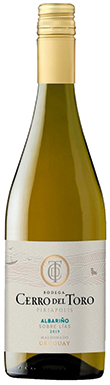

If you want to make great Albarino in Uruguay, it helps if you’ve spent two years working in Galicia, as Martín Viggiano did. This superb...
2019
Cerro del Toro

Bouza, Monte Vide Eu, Montevideo, Uruguay, 2018
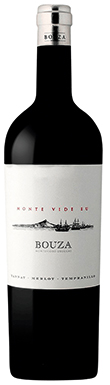
On current form, this is Uruguay’s best red blend, a world-class cuvée of Tannat with 35% Merlot and 20% Tempranillo. Aged in 90% new oak,...
2018
Bouza
Familia Deicas, Extreme Vineyards Cerro Guazuvirá, Uruguay, 2018
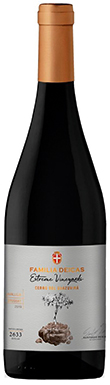
Cerro Guazuvirá is an incredible site at 400m on granite soils, planted as recently as 2015. This is an intensely focused red blend of half...
2018
Familia Deicas
Bodega Garzon, Reserva Tannat, Maldonado, Uruguay, 2018
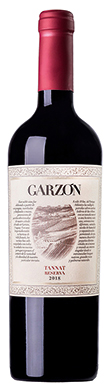
The focus here, as it is with all of the Garzón wines, is on fruit expression and terroir rather than wood. It’s a wonderfully stylish...
2018
Bodega Garzon
Viña Progreso, Underground Barrel-Less Tannat, Uruguay, 2019
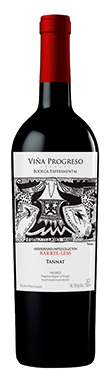
‘A wine of the vintage,’ according to Gabriel Pisano, but this is no Beaujolais Nouveau. In fact, this brilliant unwooded Tannat from one of Uruguay’s...
2019
Viña Progreso
Viñedo de los Vientos, Nebbiolo Crudo, Uruguay, 2019

There isn’t a whole heap of competition, but this is Uruguay’s best Nebbiolo, an interpretation of the grape that compares well with anything beyond Piedmont....
2019
Viñedo de los Vientos
