
Valdarno: Tuscany off the beaten track
Diverting from the usual wine routes in Tuscany, Stephen Brook finds a warm welcome in a low-key region that is home to some high-profile names. He introduces an area that may be unfamiliar to many Chianti lovers, and recommends wines from four of its top producers


‘Don’t forget my shoe size!’ shouted my wife, as I left home on my way to Heathrow airport for my flight to Florence. This unusual injunction was occasioned by the fact that three out of the four estates I was about to visit were owned by fashion tycoons, and two of them by shoe designers.
Valdarno di Sopra (Valdarno for short) is a relatively new Tuscan DOC that was approved in 2011. It lies just east of the Chianti Classico zone, stretching across the Arno river in the direction of Arezzo. It is the first Italian DOC to be composed entirely of organic estates.
It’s a region of mystery, as I discovered when spending an hour with the secretary of the DOC. Its potential surface is an impressive 2,200ha, but only a fraction of that is declared as Valdarno, since many growers sell their crop to large producers such as Antinori. Some of those who do sell their wines in bottle prefer to use the Chianti DOCG or the Toscana IGP. I wanted to know how many hectares are actually declared as Valdarno wines, but no figures are available. However, by the end of 2019, some 300,000 bottles carried the DOC label. The rules are not exacting: a wide range of grape varieties is permitted, and yields are the same as for Chianti. Nor are there any rules about the use of wood. So growers can do pretty much as they please.
‘The DOC,’ explained the secretary, ‘is a work in progress. It is not a cage.’
That also means it is not that well known. Fortunately the four largest producers in the region all validate the DOC, even if not all their wines bear the Valdarno name.
Il Borro
Probably the best-known property here is Il Borro, which is the country retreat of the Ferragamo family from Florence. When I first visited the hamlet in 2000, it was a sleepy little place dominated by a large villa that had been reconstructed after German forces blew it up towards the end of World War II. A few dozen modest stone houses straggled up the hillside. A few years later, the Ferragamos converted it into a luxury resort. Salvatore Ferragamo told me the remaining residents had been given accommodation in a town nearby, and only one family wanted to return to Il Borro, the rest having grown accustomed to the supermarkets and laundromats of the town.
There are 45ha of vineyards, and the first bottled wine was produced by 1998. Consultant oenologist Stefano Chioccioli urged Ferragamo to farm organically, and the estate was certified in 2015. Guests at the resort also benefit from the organic chickens, eggs and other produce served in the restaurants.
The winery is well equipped, with cold chambers used to chill the grapes overnight, optical sorting, and vessels including barriques, amphorae and tanks used to age the wines. The range of wines they produce is wide, and I expect sales at the resort account for much of the turnover. My favourite wines were a very lively if simple Sangiovese rosato, a crisp and juicy unoaked Chardonnay called Lemelle, the majestic and textured Alessandro dal Borro Syrah (bottled solely in magnums), and the flagship Il Borro, a barrique-aged blend of Merlot, Cabernet Sauvignon and Syrah. Particularly intriguing was the elegant Bolle di Borro, a metodo classico Sangiovese that spends 60 months on the yeasts.
Il Carnasciale
A very different operation, Il Carnasciale is run by Paris-based shoe designer Moritz Rogosky and his Berlin-based mother Bettina. The remote farmhouse was bought by the family in 1972 and vineyards were gradually planted from 1986 to 2013, either around the house or close to the local town of Montevarchi. The oenologist Vittorio Fiore advised them to plant Caberlot, an obscure crossing of Cabernet Sauvignon and Merlot, which had been identified first near Padua in the 1960s.
To complicate matters further, the first vineyard was planted with bush vines to a [high] density of 11,000 vines per hectare. The risk of excessive shading makes it a tricky vineyard to manage. Caberlot is not an officially recognised variety in Italy, so the wine was to be labelled as IGT. Bottled only in magnums, it has become a costly cult wine, with a maximum production of 3,500 magnums. It’s aged for 22 months in mostly new barriques, then rested for a further 18 months before release. It ages well, and can be a wine of great splendour, concentration and energy.
Petrolo
Il Carnasciale is located in the hills close to Chianti, in contrast to Il Borro, which is on the other side of the river Arno and closer to Arezzo. ‘Just like Bordeaux,’ says Luca Sanjust, the urbane owner of Petrolo, close to Il Carnasciale near the village of Mercatale Valdarno, ‘we have our right bank and our left bank. The right bank around Il Borro and Sette Ponti has deep sand soils, whereas Carnasciale and Petrolo have soils that resemble those of Chianti Classico.’
Il Carnasciale is a modest farmhouse, but Petrolo, which lies closer to Montevarchi town, is a splendid 18th-century villa bought in 1947 by Sanjust’s grandfather. The simple Chianti its vineyard produced brought in little money, so in the 1980s Luca and his mother decided they had to strive for high quality, banking on their vineyards to deliver it.
Their friend Denis Durantou from Pomerol was convinced that the bands of clay in some vineyards would be ideal for Merlot, and the Sanjusts followed that hunch. Today there are 31ha under vine at up to 480m. They are mostly planted with Sangiovese, but the flagship wine has long been Galatrona, which is a pure Merlot.
Petrolo’s other wines include Bòggina, with a white – Bòggina B (for Bianco), made of Trebbiano vinified in French oak barriques and tonneaux, and aged sur lie over two years – and Sangiovese made in two versions: C (Classic), aged in barrels of 700 litres and 40hl, and A, vinified and aged on its skins in terracotta amphorae. The two reds are sold at the same price and each has its following. I prefer the wooded version, although both are very good.
Torrione is Sangiovese with about 15% Merlot plus Cabernet Sauvignon. It resembles a good Chianti from, say, Castelnuovo Berardenga, where the climate is similar to Petrolo’s. Sanjust also has a covert enthusiasm for Campo Lusso, a Cabernet Sauvignon from bush vines planted on rocky, sandy soils. And to gild the lily, there’s an extreme, viscous vin santo called San Petrolo, aged for 11 years in small (50-litre) caratelli casks; it’s up there with the best Tuscan versions of this style.

Sette Ponti
The hospitable proprietors of Valdarno somehow decided that the only sensible way for me to discover their wines was during the course of three-hour meals. So a leisurely lunch at Petrolo, attended by most of the other owners, was succeeded by an equally leisurely dinner at Sette Ponti, next door to Il Borro on the right bank. Once more the proprietors gathered, each bringing a magnum of an older vintage to justify their presence.
Tenuta Sette Ponti belongs to the Moretti family, prominent in fashion. As at Petrolo, they are advised by consultant Carlo Ferrini. They also own wine estates in Franciacorta, the Maremma, Scansano and Sicily. Until the 1980s, the wine made in Valdarno was sold off. Today there are 60ha under vine, on varied soils, and farming is organic. Since the late 1990s, quality has leaped forward.
The range is extensive. Crognolo is a barrique-aged Sangiovese with a dollop of Merlot, but their top Sangiovese is Vigna dell’Imperio, produced from vines planted in 1935. Their flagship wine is Oreno, with 50% Merlot, 40% Cabernet Sauvignon and 10% Petit Verdot. It’s powerful, weighty and very rich, yet shows elegance, too, despite the high alcohol.
Communal spirit
For all the financial muscle of the owners, these properties are run on a familial scale. A Moretti aunt cooked the ‘primo’ at Sette Ponti: gnocchi baked with four rich cheeses, a splendid dish that probably reduced our life expectancy. All the proprietors were proud to show me their vineyards (and in Il Borro’s case, their chicken runs, too) and to pull out mature vintages for us all to share. It felt more like a gastronomic festival than a wine tour, but when it ended I felt I’d been thoroughly immersed in what Valdarno had to offer.
It will be a while before the DOC wins the same kind of recognition as Brunello or Montepulciano, and the process will be made more difficult by the latitude given to producers in terms of grape varieties and production methods and styles. Moritz Rogosky is a supporter of the DOC, even though his Caberlot doesn’t qualify for it.
For now, individual estates carry more cachet than the appellation, and that’s likely to continue, with consumers seeking out Il Borro, Galatrona or Oreno as brands rather than as examples of Valdarno wines. The producers seem to find a family resemblance between their wines, for all their differences, but it’s early days.
There’s not a lot in common between left- bank and right-bank wines from Valdarno. There are too many variables: grape varieties, soil types, elevation and winemaking techniques. Yet it doesn’t matter. Valdarno offers all these estates a promotional umbrella, and the quality of most of their wines speaks for itself.
Best of the top Valdarno estates: Brook’s pick
Il Carnasciale, Il Caberlot, Toscana, Tuscany, Italy, 2013
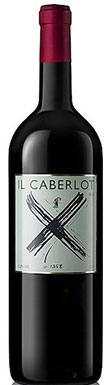

To most wine lovers, Caberlot is an unknown grape, and indeed plantings are minuscule. Here it delivers a formidable wine, very deep in colour,...
2013
Il CarnascialeToscana

Petrolo, Galatrona, Valdarno di Sopra, Tuscany, Italy, 2016
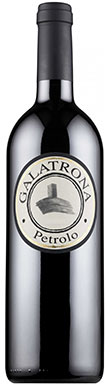
Much Tuscan Merlot is overblown, but the clay parcels among the Petrolo vineyards are ideal for this variety, and Galatrona rightly enjoys a legendary reputation...
2016
PetroloValdarno di Sopra
Il Borro, Toscana, Tuscany, Italy, 2015
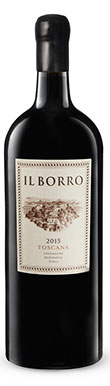
This blend of 50 per cent Merlot and 35 per cent Cabernet Sauvignon seems entirely appropriate in this Tuscan context, giving both richness and backbone....
2015
Il BorroToscana
Tenuta Sette Ponti, Oreno, Toscana, Tuscany, Italy, 2016
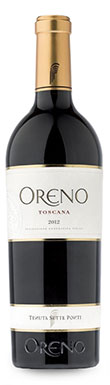
This is the best-known wine from Sette Ponti, and it pulls out all the stops, using three Bordeaux varieties to give it structure as well...
2016
Tenuta Sette PontiToscana
Il Borro, Alessandro dal Borro Syrah, Toscana, Tuscany, Italy, 2012
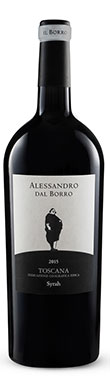
Syrah does well in this part of Tuscany, and Il Borro began producing this wine in 2011. It is only released in magnums. Deep in...
2012
Il BorroToscana
Tenuta Sette Ponti, Vigna dell’Impero, Toscana, Tuscany, Italy, 2015
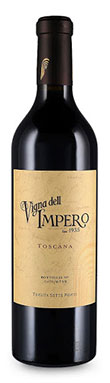
Sette Ponti is especially proud of its parcel of Sangiovese that was planted in 1935. The wine is perfumed and elegant, with sour-cherry aromas. The...
2015
Tenuta Sette PontiToscana
Il Carnasciale, Carnasciale, Toscana, Tuscany, Italy, 2016
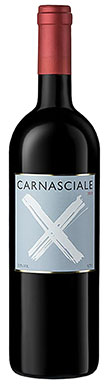
After the blend for the Caberlot bottling has been finalised, the Il Carnasciale winemakers assemble the second wine. The nose is headier, fruitier and sweeter,...
2016
Il CarnascialeToscana
Petrolo, Torrione, Valdarno di Sopra, Tuscany, Italy, 2016
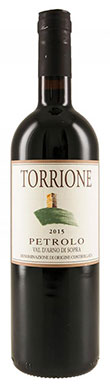
This Sangiovese-dominated blend is a reminder that the Petrolo vineyards are very close to Chianti Classico. It used to be a barrique-aged wine, but today...
2016
PetroloValdarno di Sopra
