
Top multi-vintage blends: Wines of many years


Multi-vintage blends may sound like a novel idea, but they’re part of a long tradition. What’s more, says Anthony Rose, they offer creative freedom for innovative winemakers...
Where would wine be without its vintages?
Vintage is a great hook: the key to the values of fine wines in the marketplace, the cheat’s guide to wine, a vertical stroll through the back pages of fine wine. Without vintages, there would be no vertical tastings, no heated debates about the weather and no guessing the-year-games in blind tastings.
So is wine without a vintage a lost soul?
Scroll down for Rose’s top multi-vintage blends
Not for Krug or the purveyors of multi-vintage Champagne blends. Not for Sherry bodegas with their solera fino, manzanilla, palo cortado and oloroso. Not for mature 20-, 30- and 40-year-old tawny Ports, whose harvest years blend as symphonically as an orchestra to turn the notion of vintage on its head in favour of consistency of style and quality.Only in the category of still wines is the lack of a vintage on the label typically accompanied by stigma in the consumer’s mind. What, no vintage? Suspicion thereby lurks.When Peter Gago created g3, a blend of three vintages of Penfolds’ Grange, he was fully aware that the absence of a vintage on the label would create a stir.
You might even say that it was a badge of pride, the marketing persona whispering in his ear, pace Gerald Ratner, that all publicity is good publicity.
The creative Gago emphatically denied that this limited-edition, multi-vintage blend of Penfolds’ top wine was a gimmick.
Before g3 was even a twinkle in his eye he had thought about making a sparkling Shiraz, but then thought to himself: ‘Why sparkle it up?’
But with blended sparkling wines in mind, he started to wonder whether a blend of three vintages of Grange might not produce a wine that was greater than the sum of its parts; a timeless distillation of the Grange style.
It won’t have escaped his attention – he is after all one of Australia’s more thoughtful winemakers – that a multi-vintage Champagne, such as his favourite Krug Grande Cuvée, is the classic end-product of time-honoured techniques that eschew the vintage-dated label.
Inspired by history
Gago didn’t think of g3 as an innovation so much as taking a step back in time. Given his breadth of experience, you wouldn’t bet against Vega Sicilia’s Unico Reserva Especial as the model.
‘In the past it was common in Spain to produce wines from multiple vintages,’ says Vega Sicilia technical director Gonzalo Iturriaga who, after taking the helm in 2015, is embarking on the blend of the next Reserva Especial.
We don’t know when the famous Ribera del Duero bodega’s first Unico Reserva Especial was made, but Iturriaga believes that this most traditional style was created soon after its 19th-century establishment.
Reserva Especial is made when the winemaker believes that a blend of three – or in some cases, only two – vintages can transcend Unico, Vega Sicilia’s top vintage wine.
Mirroring Gago’s thought processes, Iturriaga explains: ‘Reserva Especial is about distilling the best of different vintages and blending them together in a style that represents the essence of what Vega Sicilia is about.’
Small quantities of wine otherwise destined for Unico are set aside after a year in barrique, then blended with the next excellent vintage to come along. ‘What you lose in the sense of vintage,’ says Iturriaga, ‘you gain in complexity and drinkability.’
In neighbouring Rioja, Sierra Cantabria’s Marcos Eguren holds similar views about the creation of his multiple-vintage Sierra Cantabria Cuvée. He points out that multivintage wines were once common practice and that they only really started to disappear in the 1970s.
‘In exceptional vintages, nature may trump man,’ he says, ‘but in most years, blending will enhance the characteristics of the wine, complementing the identity of the vineyard.’
Of course the fact that each harvest is characterised by the weather conditions of the particular year is the key to why it was once common practice to blend vintages, and why, thanks to a perfect scientific storm of improved cellar equipment, savoir-faire and climate change, blending vintages is no longer the insurance policy it once was.

Vintage variation
While Chris Howell of Cain Vineyard & Winery in Napa Valley admires the focused blending of Anselme Selosse in Champagne and Marcel Deiss in Alsace, the inspiration for Cain Cuvée came from needs-must, across-vintage blending in 1980s Bordeaux.
Since creating Cain Cuvée as a blend of 1997 and 1998, Howell saw that blending two vintages could help build complexity and harmony, while compensating for vintage variation.
His aim is to make an intentionally lighter and fresher alter ego to Cain Five by identifying specific vineyard lots from Spring Mountain and the heart of Napa, harvesting a fraction earlier, and vinifying elements that are lighter in extract and lower in alcohol.
A similar rationale lies behind Opus One’s Overture, the multi-vintage, Bordeaux-style estate blend first produced in Napa Valley’s Oakville by Tim Mondavi and Patrick Léon. When Opus One was first created at the new winery in 1991, there were inevitably off-cuts that didn’t make the grand vin.
Instead of producing a second wine, however, those small lots were held back in the cellar, and subsequently blended together to make Opus One’s second wine. When the remaining lots are given additional time in French oak casks, coupled with the flexibility of blending across multiple vintages, the result, for Chris Barefoot of Opus, is elegance and complexity without any loss of terroir.
Specific style
While Overture was a natural extension of Opus One, another Californian wine, Marietta Cellars Old Vine Red, has always been a multi-vintage blend of Zinfandel, Syrah, Petite Sirah, Carignan and occasionally small doses of Barbera and Montepulciano, specifically fermented and aged separately in order to have blending options across both variety and vintage.
Meanwhile Sokol-Blosser’s Evolution Red commenced in 2008 as an approachable counterpoint to its estate-grown Oregon Pinot Noir, a multiple-vintage blend of Zinfandel, Merlot, Syrah, Sangiovese, Nero d’Avola and Montepulciano designed to produce a ‘house style of something jammy, rich and easy to drink’, according to Alex Sokol-Blosser.
Xavier Vignon, a consultant based in the southern Rhône, has called on his experience of Champagne to create La Réserve, a multi-vintage blend of the best barrels of his Châteauneuf, Cuvée Anonyme.
The first, VII IX X, is a blend of 2007, 2009 and 2010, and the most recent release – X XII XV – yes, you guessed it, a blend of 2010, 2012 and 2015. While he blends old-vine varieties across the four Châteauneuf terroirs of La Crau, Les Galets Roulés, Les Urgoniens and Les Sables, his use of multiple vintages is aimed at combining signature vintage elements – ‘saltiness’ in 2007, ‘opulence’ in 2009 and ‘acidity’ in 2010 – to achieve a sum-of-theparts richness and complexity, with no loss of terroir focus.
A similarly meticulous selection of vintages and varieties for complexity is made by Bodega Norton’s David Bonomi to produce Quorum, now in its fourth edition, in Argentina.
In contrast, other multi-vintage blends owe their existence more to accident than design. Peter Stolpman’s decision, for instance, to create the barbecue-friendly La Cuadrilla Red NV, a blend of 2010 Syrah and Sangiovese with 2011 Syrah, was a result of frost damage in California in 2011 and ‘keeping the bonus cheques healthy’ for full-time workers.
Because the yields were low, Karim Mussi of Altocedro in Argentina created Alandes Paradoux Blend, a multi-vintage, Bordeaux style blend from Maipú from the best lots of the 2013, 2014, 2015 and 2016 vintages.
Valdivieso’s Caballo Loco in Chile originated as a ‘lucky strike’ when winemaker Luis Simian held back 60 barrels of mixed varieties and vintages that were too oaky to bottle as vintage wines, but too good to lose. They ended up as a ‘fun blending exercise’ that created the first of 17 popular editions.
Creative expression
While the reasons behind multi-vintage blends vary, a common thread uniting them is the relish creative winemakers derive from the freedom to express themselves beyond any preconceived or regulatory framework.
At Hiyu Wine Farm in Washington, Nate Ready creates a distinctive solera, layering vintages of co-fermented Pinot Noir and Pinot Gris that macerate in cask over the winter before pressing the following spring.
According to Ready, the wine, Hiyu The May I, is ‘almost like crossing Cornelissen Magma with Giuseppe Rinaldi [Barolo] and old Camille Giroud [Beaune]… an attempt to use this very beautiful grape to express our site over time: allowing ourselves the freedom to work free from increasingly limiting definitions of what Pinot Noir should be.’
‘In a perfect world, every wine should be a blend,’ says Mussi, tongue half in cheek.
Outside his terroir-driven projects – Altocedro in La Consulta and Abras in Cafayate – he says, ‘Alandes is the only winery where I have the freedom to go beyond those limits.’ According to Valdivieso’s chief winemaker Brett Jackson: ‘While there is huge emphasis on single-site wines today, Caballo Loco is a classic example of the fact that there are other ways of finding and creating unique wines with character and quality.’ He adds that the extended ageing before bottling ‘allows us to capture a complexity of texture, flavours and aromas’.
For Howell in Napa, the importance of multi-vintage blending lies not so much in the method as the context: ‘Which vineyards, which wines, which vintages, what is the intent, what is the outcome? Done with care and precision, and within specific limits, a blend most certainly can amplify the signal of the site.’
He concedes that blending vintages is not yet well understood and, when carried out as a commercial expedient, can produce predictable, even mediocre results. But where winemakers have gone out on a limb, the results can be exciting, even if that route necessarily involves communicating why the whole can be greater than the parts.
Rose’s top multi-vintage wines to try:
Anthony Rose is the wine correspondent for the Independent and i newspapers, and the DWWA Regional co-Chair for Australia.
Penfolds, g3, South Australia, Australia
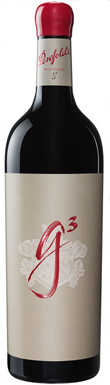

This new wine from Penfolds is a super-blend of Grange from casks of the 2014 and 2012 vintages, and the 2008 from bottle, matured together...
Penfolds

Xavier, La Réserve VII IX X, Châteauneuf-du-Pape, Rhône, France
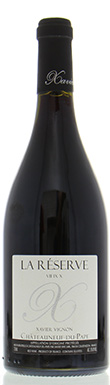
Fragrant red fruits and classic spice. Lovely complexity: full-bodied, with richness, great concentration and texture. Very complete; still full of youthful vigour but almost ready.
XavierChâteauneuf-du-Pape
Xavier, La Réserve X XII XV, Châteauneuf-du-Pape, Rhône, France
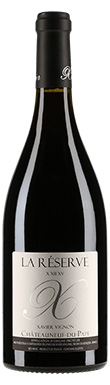
Rich and concentrated blackberry fruit, with a ripe, sweet middle. Full-bodied and opulent red fruits with real vigour and youthful muscle. Needs time to soften.
XavierChâteauneuf-du-Pape
Cain Vineyard & Winery, Cuvée NV12, Napa Valley, California, USA
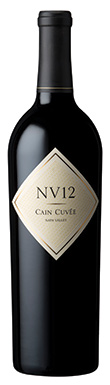
92
This shows polished vanilla and cassis notes on the nose with a truffley undertone. The deliciously elegant cassis fruit is shot through with a refreshing streak of acidity for an elegantly restrained, almost Bordelais style.
Cain Vineyard & WineryNapa Valley
Opus One, Overture, Napa Valley, California, USA
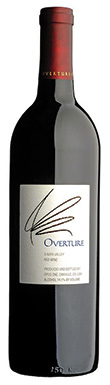
Stylish aromas, with vanilla oak and the fragrant trappings of class. Glossy, opulent and silky with lovely cassis fruit richness, albeit in a full-bodied, powerful...
Opus OneNapa Valley
Alandes, Paradoux Blend, Mendoza, Argentina
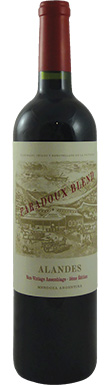
This is a counterpoint both to Malbec and to Uco Valley where Karim Mussi makes his Altocedro La Consulta Select. Bordeaux meets-Mendoza: notes of vanilla,...
Alandes
