Young guns of Italy: The winemakers to know about
The next generation of Italian winemakers are taking up the mantle of their predecessors, but also want to carve new paths. Michaela Morris highlights a dozen young individualists whose innovation, energy and commitment are leading their country’s wines into the future


Much deference is paid in Italy, justifiably, to the matriarchs and patriarchs who broke the mound and have long been crafting quality wine. Yet the wine scene is far from static here. Established estates evolve as the next generation takes over, and new trailblazing wineries are constantly popping up, too.
Italy currently boasts an abundant crop of dynamic young wine personalities. The faces on these pages are among the country’s brightest, and are representative of many more. They range in age from 30 to mid-40s. Some were sure of their path from a young age, while others took longer to find their footing.
Many, like Angela Fronti and Riccardo Baldi, run their own properties rather than rely on outside consultants. Some had the same mentors – both Dario Pieropan and Cristiano Garella reference Paolo di Marchi, for example. Others, such as Carlotta Rinaldi and Lorenzo Piccin, went to school together.
Above all, they value working together to exchange ideas, taste wines and promote their regions. The future of Italy’s wine is securely in their hands.
Riccardo Baldi
La Staffa – Casteli di Jesi, Le March (born 1990)
The youngest of these young guns, Riccardo Baldi expresses himself with the confidence and composure of someone who has decades of experience. To his credit, Baldi already has 11 harvests under his belt, having started his own winery at the tender age of 19.
Yet rather than viticulture or oenology, Baldi studied economic science, as he wasn’t sure how long he would enjoy making wine. ‘After a year, I was in love and knew I would continue this work,’ he says.
Baldi credits Lucio Canestrari from the neighbouring winery of Fattoria Coroncino for teaching him that crafting quality wine requires bold choices. For Baldi, this meant farming organically from the start. ‘Ten years ago, it was a decision that went against the norm.’ He also waits a few years after harvest to release his Riserva. ‘It’s the only way to make people understand that Verdicchio is capable of making ageworthy wine.’
Finally, he favours spontaneous fermentations, despite recognising the risk – particularly for someone who hasn’t studied oenology. ‘The wine is more complex and more representative of its terroir,’ he argues.
Baldi’s greatest desire is that his wines will not only help improve Castelli di Jesi’s reputation, but that the region will become recognised as one of the world’s great white wine zones.

Cristiano Garella
Consultant – Piedmont (born 1984)
No one knows Alto Piemonte better than local consultant Cristiano Garella. He is also among the greatest champions of this long-forgotten area far north of the famed vineyards of Barolo and Barbaresco. Though only 36, Garella’s CV reads like it belongs to someone with a lifetime of experience. And essentially, he has. At the age of 12, he started reading the great Luigi Veronelli’s wine publications. He was inspired then to buy his first bottle and began visiting legendary producers such as Angelo Gaja, Bartolo Mascarello and Matteo Correggia. ‘They were all very welcoming,’ he reminisces.
By 14, Garella landed a job in his resident region of Bramaterra, helping an elderly gentleman with his vineyard. He spent five years ‘learning from the old guard’ prior to starting university. Garella didn’t even finish his oenology degree, as he was headhunted by the historic Tenute Sella estate, where he served as winemaker for more than six years.
‘I am not a great oenologist,’ says the ever-humble Garella. ‘I am good at picking the right wineries to work with.’ He insists on estate-owned, well-managed, organically farmed vineyards.
Besides consulting for a dozen producers in Alto Piemonte, he has his own label with long-time friend Giacomo Colombera, called Colombera & Garella. He is also winemaking partner at Le Pianelle, founded by Alto Adige producer Peter Dipoli and German importer Dieter Heuskel. ‘Le Pianelle does not have family or historical roots,’ explains Garella. However, the team is recovering abandoned vines and applying old winemaking techniques to breathe new life into Alto Piemonte’s historic vineyards.
Francesco Cambria
Cottanera – Sicily (born 1978)
Francesco Cambria’s wine calling came later in life. When his father passed away suddenly in 2008, he gave up his law practice in Milan and returned to his family’s estate on Mount Etna. ‘I never thought I would do this,’ he admits. ‘But I wouldn’t change anything.’
Together with his siblings, he picked up where his father left off. ‘He was fixated with Nerello Mascalese,’ says Cambria, explaining that his father’s project to make a massal selection from a plot of 70- to 80-year-old vines was cut short. ‘My brother and I continued this work and finished the plantings that he had planned.’
Cambria readily admits he is ‘not a winemaker’. However, he collaborates closely with consultant Lorenzo Landi, who has worked with Cottanera since 2002. Under Cambria’s direction, Cottanera has come out with a number of new bottlings crafted from different Etna districts, or contrade. ‘It is still early days, but from my limited experience, I am sure this is the future of Etna wines.’
Angela Fronti
Istine – Chianti Classico, tuscany (born 1981)
‘When I was younger, I completely rejected agriculture because everyone in my family worked in farming,’ confesses Angela Fronti. She eventually surrendered to her roots and completed her studies in viticulture and oenology. Even then, she didn’t return to her family’s Chianti Classico property until she was in her 30s. ‘I thought: if I don’t do it now, I will never do it.’
As the Fronti family previously sold wine in bulk to larger wineries, the first vintage under the Istine label was 2009. Fronti was adamant about converting to organic practices, is equally committed to indigenous varieties, and has completely embraced her particular corner of Chianti Classico. ‘I love Sangiovese from Radda in Chianti, because here Sangiovese really shows the territory,’ she enthuses. She has also chosen to manage all aspects of the winery herself rather than hire a consultant. ‘It’s exhausting, but marvellously rewarding.’
Despite Fronti’s initial hesitation to produce wine, hers are unequivocally decisive and sing beautifully of their origins. There is no doubt she has followed the right path.

Francesco Ripaccioli
Canalicchio di Sopra – Montalcino, Tuscany (born 1987)
The youngest of three siblings, Francesco Ripaccioli started working at his family’s 19ha estate at the age of 20. He immediately started travelling abroad to rekindle relationships that were neglected after his grandfather’s failing health forced him to retire in 1999. Ripaccioli and his brother Marco (who is responsible for viticulture) come together in the cellar, allying their respective market and vineyard expertise.
Ripaccioli’s youthful enthusiasm is offset by a mature business sense – he studied economics and commerce. ‘We have a responsibility when we put a Brunello on the market. It isn’t only Canalicchio di Sopra, it also represents the territory.’ For Ripaccioli, this applies equally to Rosso di Montalcino. When he started in 2007, the winery was only producing 2,000 bottles a year. Now the annual production is 40,000 bottles. While the Rosso has become fundamental in preserving the high quality of Canalicchio di Sopra’s Brunello, Ripaccioli also considers it an accessibly priced ambassador for the region. ‘Rosso represents the wine of our generation,’ he asserts.
Marta & Carlotta Rinaldi
Guiseppe Rinaldi – Barolo, Piedmont (born 1985 & 1988)
When Giuseppe Rinaldi passed away in 2018, he left the estate in the hands of his two highly capable daughters, Marta and Carlotta.
‘I was hooked as soon as I started studying at the oenology school in Alba at 14,’ says Marta. She began working alongside her father in 2009. Carlotta came around to wine more slowly. She had considered becoming a doctor but eventually settled on agricultural sciences. She spent some time working abroad, which included a stint at Felton Road in Central Otago. ‘My father taught me to have passions beyond wine,’ Carlotta shares. The lesson that stuck for Marta was ‘to have faith in the history and use it as a structure’.
Giuseppe’s daughters are as strong in their convictions as he was. They still fervently oppose the mapping of Barolo’s Menzioni Geografiche Aggiuntive, particularly the compromise with the cru of Cannubi, which was enlarged beyond its historical boundaries to include the adjoining subzones of Cannubi Valletta, Cannubi San Lorenzo, Cannubi Muscatel and Cannubi Boschis. They are equally outspoken about the region’s failure to prohibit herbicides. ‘It is unacceptable that Barolo hasn’t taken a decisive position,’ declares Carlotta. ‘This would be an example for all the other zones.’
At their own estate, however, Marta and Carlotta are not mounting a revolution. In the last few years, they have made small tweaks such as improvements in pruning techniques and upgrades in equipment technology. ‘But in terms of vinification, the spirit remains the same,’ Marta reassures me.
Priscilla Incisa della Rocchetta
Tenuta San Guido – Bolgheri, Tuscany (born 1975)
Sassicaia’s staggering success surely comes down to decades of consistently outstanding quality. However, the Incisa della Rocchetta family’s efforts to disseminate the unique story of its revered San Guido estate cannot be underestimated.
The modern-day face of Sassicaia is Priscilla Incisa della Rocchetta. A bona fide princess (she married German prince Heinrich zu Sayn-Wittgenstein-Sayn in 2003), she studied art history in London before joining the family business. ‘I wanted to gain experience abroad, improve my English and study something that had always fascinated me,’ she explains.
In 2006, she started accompanying her father Marquis Nicolò Incisa della Rocchetta on his travels abroad. The commercial guru behind Sassicaia, Nicolò was Tenuta San Guido’s brand ambassador until he handed over the reins to his daughter in 2012. ‘We rely heavily on continuity across generations,’ she says. The task now is properly preparing the next generation to take over.
Incisa della Rocchetta also works alongside Albiera Antinori of Guado al Tasso and Cinzia Merli, owner of Le Macchiole, in managing Bolgheri’s wine consortium. Of this female powerhouse, she suggests: ‘Women offer a different point of view than men. And perhaps we are better at working as a team.’

Lorenzo Piccin
Grifalco – Vulture, Basilicata (born 1988)
Lorenzo Piccin grew up in the vineyard. His parents founded the Salcheto estate in Montepulciano just after he was born, then sold it and moved to the Vulture, establishing Grifalco in 2004. After high school, Piccin left Basilicata to study winemaking and work in other wineries. ‘I wanted my own personal experience beyond what my father taught me,’ he says. Alas, his father became ill, and Piccin returned home at the age of 23. ‘I took over everything,’ says Piccin, who now has help from his younger brother Andrea.
Piccin was quick to adopt his father’s experimental nature. ‘In life, you only have the opportunity to make perhaps 50 harvests, which isn’t many.’ He is grateful to his father for having acquired vineyards in various communes throughout Vulture. ‘It is a zone with infinite potential,’ says Piccin. He aims to express the Vulture’s diverse terroir through separate cru bottlings.
At the same time, Piccin is well aware of the relative obscurity of the Basilicata region. ‘But Vulture has the same potential as Montalcino or Barbaresco, and Aglianico is among Italy’s most noble grapes.’ Piccin has banded together with other like-minded young producers in the zone to spread the word.
Andrea & Dario Pieropan
Pieropan – Soave, Veneto (born 1977 & 1978)
Despite an 18-month age gap, brothers Andrea and Dario Pieropan are like twins and speak on behalf of each other. ‘Growing up in the wine world, it was impossible to think of doing anything else,’ says Dario, who studied agriculture at school, then switched to oenology in university. ‘Andrea did the opposite,’ he continues. ‘We both started working in the winery officially in 2003,’ adds Andrea.
Founded in 1880, Pieropan is the oldest family-owned estate in Soave and has passed from generation to generation. ‘I had the greatest white wine teacher I could have dreamed of,’ says Dario of his father Leonildo Pieropan, who is widely considered the father of the denomination.
While Leonildo had to contend in the past with the poor reputation of Soave, the challenges his sons face are different. Quality has improved and competition has increased. ‘Now we need to make people understand the difference between a good wine and an authentic wine that reflects the terroir,’ says Andrea.
Caring for the environment is equally a priority. Dario and Andrea were instrumental in achieving organic certification for Pieropan’s entire wine production. However, their search for even greener solutions continues, including experimenting with disease-resistant hybrid varities that don’t require any sprays.

Kristian Keber
Edi Keber – Collio, Friuli-Venezia Guilia (born 1987)
Kristian Keber was born into a pioneering family. His grandfather was among the first in the zone to bottle wine in 1957. His father Edi started working almost exclusively with indigenous grapes in the 1980s when French grapes were much more fashionable.
When Keber joined his father in 2008, they made the decision to shift from varietal wines to one single white – a blend of native Tocai Friulano, Malvasia Istriana and Ribolla Gialla grapes. ‘It was foolish from a marketing perspective because clients want monovarietal wines. But blends are historical here.’
For Keber, who is now fully in charge of the winery, this return to the past is about elevating the region of Collio. But it is difficult to sell a terroir that isn’t known: Collio doesn’t have the recognition of Bordeaux or even Soave. Nevertheless, Keber features the name of the region prominently on the label, believing that the concept of terroir is a wine’s strength. ‘It takes into account the land, the best varieties for that area and the tradition to make a wine in a certain style.’
Keber also makes wine in Slovenia with a similar approach. He inherited a 1.7ha vineyard from his maternal grandfather in Brda, just minutes away from the property in Collio. The two areas are akin in terroir and grapes, but separated by a political boundary. ‘I would like the two territories to be united,’ says Keber, who dreams of a cross-border denomination. This is a crusade he may be fighting with the next generation.
Top wines to try from these Italian winemakers
Tenuta San Guido, Sassicaia, Bolgheri, Sassicaia, Tuscany, Italy, 2016
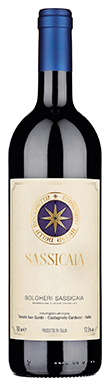

One of the secret of Bolgheri’s mediterranean and windy climate is to turn pyrazines from the Cabernets into extra-dimensional scents of citron and leafy aromas. Sassicaia has been producing Cabernet-based wines here since 1968, which are typically marked by this fresh character on the nose. There's a note of kiwi peel that's particularly intense in this 2016, along with some cedar. In this vintage, its character is - if possible - more restrained than usual and definitely more so than the exceptional 2015. Small dark fruits lurk in the depth of the super-youthful nose, while on the palate the wine is not completely ready to drink - despite the good integration of oak, the tannins are still crunchy, perfectly ripe yet chewy, pushed by a lively acidity. An extremely elegant Sassicaia with a refined finish, this is built for the long haul and is possibly the best of this decade.
2016
Tenuta San GuidoBolgheri

Colombera & Garella, Pizzaguerra, Lessona, Piedmont, Italy, 2016
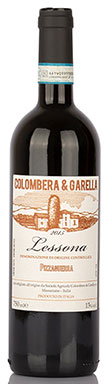
Based in Bramaterra, the Colombera family has recently expanded its vineyard holdings to neighbouring Lessona. Upfront, evocative fragrances of wild ripe red berries, dried mint and sous-bois echo clearly on the palate. The tannins are fine but decidedly vertical, acidity is vibrant and there is an appetising saltiness. A thrilling tug-of-war between alpine woods and sandy beaches.
2016
Colombera & GarellaLessona
Giuseppe Rinaldi, Tre Tine, Barolo, Piedmont, Italy, 2015
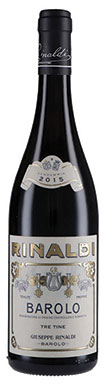
2015 was warm: even during harvest temperatures reached 35°C, according to Marta. She did a shorter maceration than usual, only 20-24 days. Immediately expressive with gorgeous aromas of ripe summer berries on a background of balsam herbs, mint and moist earth. Gracefully proportioned, charming with succulent acidity yet still very tight on the finish. Nebbiolo’s grippy tannins sneak up. Needs a couple of years to reveal its nuances.
2015
Giuseppe RinaldiBarolo
Pieropan, Vigna Garzon, Amarone della Valpolicella, Veneto, Italy, 2015
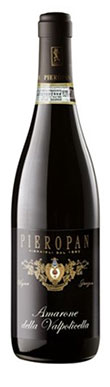
Pieropan’s Amarone saw its first commercial release in 2006. Enticing plummy prune aromas, sweet spice and macerated cherry tinged with vanilla. Dense, plush fruit is reined in by gently assertive tannins, notes of mint and pepper lending freshness. Slightly warming on the finish.
2015
PieropanAmarone della Valpolicella
Istine, Le Vigne Riserva, Chianti Classico, Tuscany, Italy, 2016
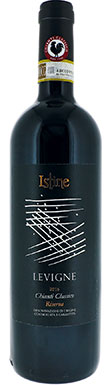
An intricacy of apple, pomegranate, cherry and liquorice dancing together with a lively acidity and delicate yet sustained tannins.
2016
IstineChianti Classico
Grifalco, Damaschito, Aglianico del Vulture, Basilicata, Italy, 2015
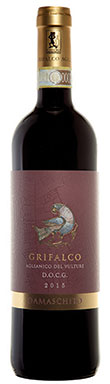
From a plot of 80-year-old vines in Maschito, where iron- and manganese rich red sand prevails, and made with long maceration and fewer pump-overs for a gentler extraction. Seductively pungent rose aromas with nuances of new leather and blackberry. Succulent and tangy with plenty of depth, elegant tannins.
2015
GrifalcoAglianico del Vulture
La Staffa, Rincrocca Verdicchio Riserva, Verdicchio dei Castelli di Jesi, Classico, Le Marche, Italy, 2016
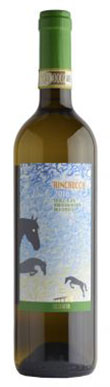
Rincrocca is selected from a 1.5ha plot sitting at 450m and planted in 1972. Fermented and aged in cement vats for 12 months, it offers subtle pastry notes, blanched almond and preserved lemon peel. Beautifully textured and concentrated without being heavy, its steely backbone carries the palate through to a long, saline finish. Don’t be afraid to tuck a couple of bottles away to see how it ages.
2016
La StaffaVerdicchio dei Castelli di Jesi
Edi Keber, K, Collio, Friuli Venezia Giulia, Italy, 2017
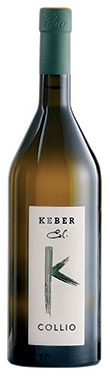
Tocai Friulano blended with Malvasia Istriana and Ribolla Gialla, fermented spontaneously with indigenous yeasts, aged in cement. Earthy rather than fruity with a smoky flintiness. Delicate alpine shrub scents yet intense and sturdy in structure: cleansing, tactile, punctuated by quince and stone, then a subtle but lingering finish.
2017
Edi KeberCollio
Cottanera, Etna Bianco, Etna, Sicily, Italy, 2018
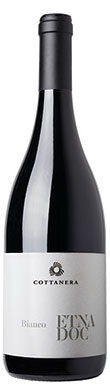
Cottanera first produced a Carricante in 2009 and has slowly been replacing plantings of international reds with this indigenous white variety. Aged on the lees in stainless steel for six months, the wine boasts a heady nose of a dewy spring morning. Lemon verbena, fleshy stone fruit and pear emerge from the mouth-watering, juicy core and a mineral-like sensation kicks in on the finish.
2018
CottaneraEtna
Canalicchio di Sopra, Rosso di Montalcino, Rosso di Montalcino, Tuscany, Italy, 2018
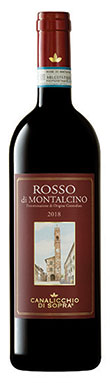
Sourced from the estate’s youngest vines and aged in a combination of large-format Slavonian oak casks and small French oak barrels. A delightful, mid-weight red with strawberry, red cherry, Mediterranean herbs and underlying black tea. Crunchy and carried by lively, refreshing acidity. Recently bottled, this needs a few months to come together.
2018
Canalicchio di SopraRosso di Montalcino
