Younger generations: Château Coupe-Roses & Boschkloof
In wine, it’s never a given that the younger generation will take the reins from their parents. Or that it will run smoothly if they do. In this final instalment, Natalie Earl and Malu Lambert present the last of our new winemaking faces, this time in Minervois and Stellenbosch.

Mathias Paicheler & Sarah Frissant
Château Coupe-Roses, Languedoc, France

A narrow road winds up to the medieval village of Minerve, tracing the lip of a limestone gorge carved by the Cesse river. The village emerges, perched on a rocky spur at the confluence of the Cesse and the river Brian.
This region bristles with history. Once a Cathar stronghold, Minerve was besieged by Simon de Montfort’s troops during the Albigensian Crusades of the early 13th century.
Further on, around several more bends, the village of La Caunette unfurls below a towering cliff, and above it on the causse – the limestone plateau – lie the vineyards of Château Coupe-Roses.
At 250m-400m elevation, this Minervois micro-terroir is distinct from the plains below, and it’s one that owners Mathias Paicheler and Sarah Frissant hope will one day earn cru status. The siblings took over from their parents Françoise and Pascal Frissant in 2017, becoming the 13th generation to lead the estate.
After studying oenology and working internships, Mathias returned in 2013 with a vision that diverged from his parents’ style. He started small, fermenting small batches with indigenous yeasts and no addition of sulphur dioxide, while also learning their approach.
Françoise may not have liked his early wines, but that was ok – they have different tastes.
Given free rein
Today, the wines are made with little or no SO2, with spontaneous fermentation and less extraction. The challenges have been in retaining the market in light of these changes, and maintaining alcohol balance amid hotter, drier growing seasons.
Biodynamic conversion started in 2019, inspired by a course on bio-indicator plants and soil health. ‘It convinced me that I needed vines on living soils,’ Mathias says.
The groundwork, though, had been laid before: their parents had farmed organically, guided by renowned soil consultants Claude and Lydia Bourguignon. Pascal, once director of the Ribaute cooperative, had pushed every grower towards organics back in the 1980s.
‘We simply pushed things further,’ says Mathias. Sadly, Pascal passed away in August this year, but his vision remains a great inspiration. ‘He taught us that it’s important to have a beautiful vineyard to make good wine,’ says Sarah.
‘It’s about harmony,’ adds Mathias, ‘when the whole system is greater than the sum of its parts.’ By 16, Sarah knew she wanted to make wine with her brother. Like him, she trained in oenology – ‘just in case we didn’t agree’.
She needn’t have worried. They work well en famille. ‘We had open, active, dynamic parents,’ she says, ‘our mother built the brand, and the market for it.’
She observes that other young people in the Minervois aren’t quite so lucky: ‘Their parents are much more conservative, they don’t like change.’
Now they’re planting trees around the vineyards, and co-planting ancient drought-resistant varieties: Grenache, Aramon, Ribeyrenc, Piquepoul Noir, Cinsault.
Their partners, Caroline and David, even quit their jobs to join the business. ‘Not for the money, but for the lifestyle’, says Sarah. ‘It must mean we’re doing something right.’
Reenen Borman
Boschkloof, Stellenbosch, South Africa
By Malu Lambert

His family winery, Boschkloof, sits on the western fringe of Stellenbosch in the Polkadraai Hills, a known sweet spot for Syrah – the estate covers 24ha of which 17ha are planted to vines, about 30% being Syrah.
At less than 400ha, the rolling slopes of the hills are rippled with granite, inviting comparisons to the northern Rhône. A growing number of South Africa’s leading winemakers battle over parcels here, and it’s Boschkloof’s reputation for high quality, chiselled Syrahs that first drew them.
Jacques Borman founded Boschkloof in 1995 after nearly two decades at La Motte and a subsequent tenure at Rupert & Rothschild. From the outset, he envisioned it as a family legacy.
His younger son Reenen joined the estate in 2010. By 2012, aged just 25, he took over winemaking. ‘You can’t have two winemakers,’ reflects Reenen. ‘My father understood early on he had to step aside. In most family businesses it isn’t this easy.’ He concedes there were ‘a few healthy arguments’ in the beginning.
Reenen recalls visiting the La Motte tasting room as a child, and sipping leftover wine. ‘It was probably a sign that winemaking was in my future,’ he laughs.
After studying at Elsenburg Agricultural Training Institute, Reenen gained experience at L’Ormarins in Franschhoek and in 2010 at Domaine des Martinelles in the Rhône valley.
The single-vineyard Syrah Epilogue soon cemented his reputation, with the 2014 vintage becoming the first South African red to be rated at 98 points by an internationally recognised critic. Under other auspices, Reenen also makes the acclaimed Patatsfontein white as well as the cult-like Syrah, Sons of Sugarland.
Natural progression
In Boschkloof’s cellar, the use of new oak has been drastically brought down, with open-top concrete and larger oak vessels favoured for vinifying multiple components separately.
‘My dad’s more of a perfectionist than me,’ admits Reenen. The balance between instinct and precision has become a defining generational difference. Where Jacques embodied structure and polish, Reenen gravitates to wines that are aromatic, textural and fine-boned.
Bordeaux blends, by contrast, he says he approaches with the discipline inherited from his father. ‘My father and grandfather laid the foundation. My contribution is planting healthy vineyards for my boys.’
The next generation seems almost pre-ordained – both of his sons (six-year-old Jacobus and Petrus, three) were born auspiciously during harvests. True to his word, Reenen has already replanted half of the estate with virus-free stock.
With Reenen and his boys at the helm, you get the feeling that long will the Sons of Sugarland rule these granite hills.
Wines from a new generation:
Related content
Meet the next generation at four legacy Napa wineries
From Pauillac to Stellenbosch: Celebrating May-Eliane de Lencquesaing at 100
Champagne Dhondt-Grellet: The young grower at the top of his game
Château Coupe-Roses, Karst, Minervois, Languedoc-Roussillon, France, 2024
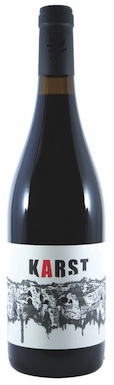

I tasted this just before it was bottled, and it was heaving with gorgeous berry aromas, pure fruit in abundance. There's power and tannic structure, and great waves of acidity, making it fresh and energetic, the finish zesty and almost piquant. From co-planted vines of Grenache, Aramon, Ribeyrenc, Piquepoul Noir and Cinsault, grown up on the limestone plateau at 300m altitude.
2024
Château Coupe-RosesMinervois

Boschkloof, Epilogue, Polkadraai Hills, Stellenbosch, South Africa, 2023
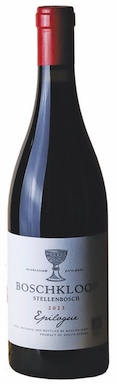
From a single block planted with the aromatic SH99 clone on decomposed granite soils. Flying on gossamer wings of violet and rose, the ethereality is magnified by 60% wholebunch, layering in fresh balsam, fennel and shiver of cayenne. Medium-bodied with effortless intensity of black plums-cherries coated in fine, powder-fresh tannins. Concrete-aging enhances cool boned, yet savoury acidity, carrying spice, fruit, tannin into a precise, drawstring finish.
2023
BoschkloofPolkadraai Hills
