Douro Boys masterclass: five of the best wines


John Stimpfig was greatly entertained by the Duoro Boys at their masterclass at the Decanter Spain and Portugal encounter. Here are his top five wines from the tasting.
The Douro Boys hit town with a midday Masterclass by its Fab Five members: Cristiano van Zeller, Francisco Ferreira, Dirk Niepoort, Francisco Olazabal and Tomas Roquette. And as always, the result was compelling, entertaining and illuminating. So much so that the allotted hour and a half flew by far too quickly.
The ‘boy band’ of wine
Cristiano van Zeller kicked it off by explaining the background to this brilliant winemaking ‘boy band.’ He said, ‘Essentially we are a group of close friends from five Douro properties and five families, with several interconnections. We all go back a long way. Some of us can trace our roots to the early 17th century.’
Dirk Niepoort also pointed out that the Douro Boys ‘don’t sell wines together. So there’s no economic or commercial link. Moreover, we are five producers that are making very different wines. That’s important because we are not trying to make a single style. We each want our own personality.’
‘And we all share a vision of how we see the future of the Douro,’ added van Zeller. ‘Back in the 90s we realised that we needed to move into dry table wines as well as sweet fortified wines.’
Of course, it’s tempting to think that dry wines are new in the Douro. But Van Zeller quickly dispelled the myth. ‘For its first 175 years, the Douro only produced dry fortified wines. It only turned sweet in the in the nineteenth century.’
He also pointed out the intense challenges of making any style of wine in the Douro. ‘We have steep hills, 100 plus varieties, very hot summers (up to 51C!) and cold winters. ‘The extreme climate has been described as nine months of winter and three months of hell. But this climate, combined with our unique topography and schist-based terroir gives us the potential to make extraordinary wines.’
Here are five of my favourites from the masterclass:
See photo highlights of the Decanter Spain & Portugal Fine Wine Encounter
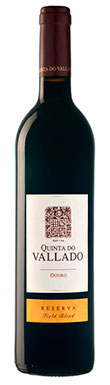
Quinta do Vallado, Reserva Field Blend, Douro Valley, Portugal, 2013
91
This glorious 2013 is a mind-boggling field blend of 30 different varieties including Tinta Roriz, Tinta Amarela and Tourigas Franca. Deep colour and a beautiful black fruit nose leads on palate warming notes of bramble, liquorice, smoke and coffee. It is full bodied, but not overblown because the tannins are sensuous and ripe. 70% of the wine has been aged in new oak and the rest in 2nd and 3rd fill barrels. It is sensationally accessible now and will only get better.
2013
Quinta do Vallado
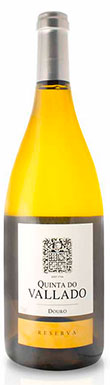
Quinta do Vallado, Branco Reserva, Douro Valley, Portugal, 2014
90
On the nose, a whiff of hay bale and stoney fruits. The Quinta do Vallado Branco Reserva 2014 has been fermented in used 500L oak barrels which adds structure, but not oak flavour. Lees stirring during the elevage has also added yet more complexity and mouthfeel. What I particularly like is the interplay here between fatness and acidity. It’s a blend of four indigenous white grape varieties: Gouveio, Arinto Viosinho and Rabigato which combine to produce gentle quince, apricot and peach flavours with a long savoury finish. Delicious.
2014
Quinta do Vallado
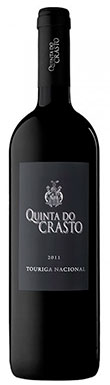
Quinta do Crasto, Touriga Nacional, Douro Valley, Portugal, 2012
92
According to Tomas Roquette, Quinta do Crasto was first mentioned 400 years ago in 1615. Today it has 220 ha situated between Regua and Pinhao. Quinta do Crasto Touriga Nacional 2012 is a special single varietal wine from the old Touriga Nacional clone and is taken from 40 year old vineyards. ‘It’s a tiny production and in some years, we don’t make this wine. But when we do, the results are always good,’ Roquette added. Each parcel is vinified separately and the wine has been aged for 16 months in French 225L barriques. Broodingly opaque, it has a typically floral Touriga nose. In the mouth, the wine is very complete with real palate presence, acidity and structure. There’s also a complex flavour spectrum from sweet, creamy blackberry to lush Morello cherry with a twist of bitter chocolate and crushed velvet tannins. The finish is imperiously long.
2012
Quinta do Crasto
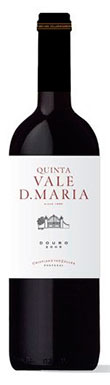
Quinta do Vale D Maria, Douro Red, Douro Valley, Portugal, 2013
93
Cristiano van Zeller told us that he and his wife bought this property from her family. ‘At the time it was in ruins. So we built a house and winery and revived the vineyard. Now, we have 45 ha of vines.’ Quinta do Vale D Maria Douro Red 2013 is a field blend of 41 grape varieties comprising different parcels and exposures. Harvested by hand (it has to be round here), the fruit was then foot trodden in traditional lagares and aged for 22 months in oak. Of course, you can’t taste the oak in the wine. Mainly because it has been subsumed by the spicy, creamy sloe and damson fruit. The whole ensemble is intense, vibrant and exquisitely balanced.
2013
Quinta do Vale D Maria
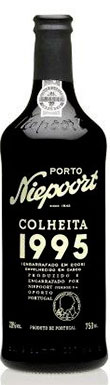
Niepoort, Colheita, Port, Douro Valley, Portugal, 1995
95
And just in case, anyone had forgotten that the Douro happens to make a little-known fortified wine called Port, Dirk Niepoort dazzled us with this textbook tawny. Niepoort Colheita Port 1995 brimmed with seductive complexity comprising a panoply of taste sensations: coffee, nuts, molasses, raisins, toffee and caramel. Fresh, viscous and sumptuously sweet, it is now in its pomp and will remain so for many years yet.
1995
NiepoortPort
