

Sponsored Content
Rosemary George MW explains why she thinks Languedoc is the most exciting wine region in France right now, and picks four key trends that every wine lover needs to know about.
The region never stands still and the variety is enormous. You can find just about every style of wine that you might wish for, through the entire flavour gambit of red, white and rosé, sweet and dry, still and sparkling, table wine and fortified wines.
The region covers a vast swathe of vineyards stretching from Corbières in the south to the Rhône Valley in the west, and within that area there are several wines that are establishing an exciting identity for themselves.
Four Languedoc wine trends to watch:
1. New appellations
New appellations have been created, for example:
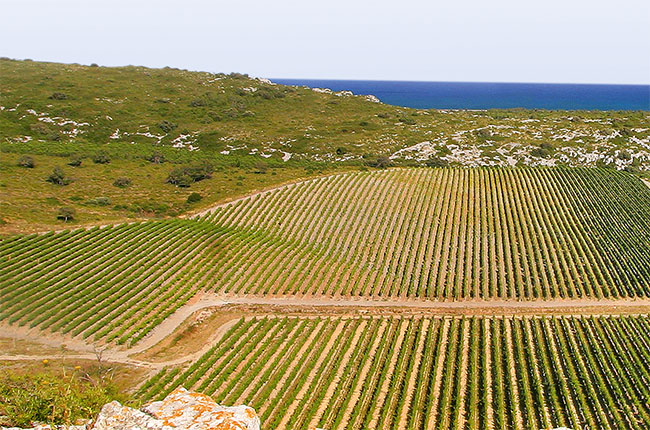
- La Clape with vineyards on the massif outside Narbonne
- Picpoul de Pinet with vineyards by the oyster
beds of the lagoons; - Terrasses du Larzac on the higher, cooler land in the most northern
part of the region. Ten years ago we had hardly heard of the Terrasses du Larzac; in contrast today it produces some of the most exciting wines of the region; red, white and rosé.
2. The rise of Languedoc white wines
I am convinced that the potential of the Languedoc for white wines is unexplored.
The introduction of grape varieties such as Marsanne, Roussanne and Rolle (also known as Vermentino) has had a dramatic impact on flavour, as well the reassessment of previously neglected grape varieties such as Bourboulenc, Grenache Blanc and Gris, Carignan Blanc and Terret Blanc.
3. Carignan could be the future of Languedoc
As for red wines, Carignan, that once much-scorned grape variety, is making a serious comeback. Vinified properly, with lower yields, it could be the future of the Languedoc.
There are other varieties worth trying, too. Cinsault is not just for rosé and there are vignerons re-establishing forgotten varieties such as Oeillade and Ribeyrenc.
4. A new generation
It is the people who are fuelling the development of the region.
There is a new generation of growers and winemakers who are questioning established practices with new eyes.
They have travelled the world, and they do not necessarily originate from the Languedoc, but have chosen it in preference to anywhere else.
This content originally appeared in the free Languedoc supplement with Decanter magazine’s June issue. This content was sponsored by the Conseil Interprofessionel des Vins AOC du Languedoc (CIVL) and the IGP wines of Sud de France.


-
 The South of France wine quiz – test your knowledge
 -
 Brief guide to Languedoc wine vintages
See this bitesize guide to recent Languedoc vintages...
-
 The new Languedoc: Shifting landscapes
 -
 What does Languedoc rosé wine taste like?
A brief guide to the Languedoc rosé style...
-
 Wine lover’s guide to the Languedoc
Home to outstanding food and wine, this southern French region offers tourists a wealth of options...


