
Argentina’s wine revolution: the time is ripe for white


Understandably associated with Malbec, it’s in white wine that Argentina is really making strides, with winemakers across the country now producing a broad variety of fascinating and fruit driven styles. Andy Howard MW is impressed on a recent visit...
Wines of Argentina recently hosted a visit to this dynamic country, inviting 41 Masters of Wine from around the world for the first such tour since 1988. I was fortunate enough to be included in the number. Having been a retail wine buyer for many years, it was an ideal opportunity to see whether there had been any changes since my last visit six years ago. The answer was that Argentina’s wine industry has made huge steps forward, with a reinvention of wine styles, development of exciting new areas, and major investment in modern facilities.
Times are certainly changing here. Since my previous visit, the growth in Malbec plantings (and volume of wine produced) has moved from rapid to stratospheric. Introduced to Argentina in 1860, plantings had peaked at 60,000ha by 1960. Between 1970 and 1990 this declined to 20,000ha, yet today the area under Malbec is more than 40,000ha. Of the new plantings, 88% are in Mendoza, and Malbec is now Argentina’s most widely planted variety. Malbec has become to Argentina what Sauvignon Blanc is to New Zealand – and in Argentina, too, there are exciting alternative wine choices that wine lovers should consider.
Fresh thinking
Despite the perception of many consumers that Argentina is primarily a producer of reds, some of the most exciting developments relate to white wines. Just a decade ago, most professional buyers would not have considered Argentina as a source of anything but cheap, wholesome wines made predominantly from Chenin Blanc, or hefty, oaky Chardonnay modelled on Californian wines in the 1980s. Since then, wine producers have pushed the boundaries with plantings in new sites, often in areas considered unviable for production 10 years ago. At the same time, wine styles have radically changed.
Scroll down for Howard’s pick of cutting-edge Argentinian white wines
Chief agronomist at Grupo Colomé, Javier Grane, says: ‘Traditionally wines were fermented at high temperatures with high extraction, which collided on the palate like a fruit bomb.’ Daniel Pi, chief winemaker at Grupo Peñaflor and Argentinian wine guru, confirms how white wine styles are changing: ‘They are moving from ripe (or overripe) characters and heavy oak use to less alcohol, more acidity, less oak character and more of a sense of place.’ Madeleine Strenweth MW (an industry expert on Argentinian wines) observes that: ‘Ten years ago, producers were still playing it too safe with white wines. Cabernet Sauvignon and Chardonnay were seen as the only way forward to become accepted internationally, with Bordeaux and California the obvious benchmarks’.
A number of factors have brought these changes about. In many countries, consumers have moved away from hefty, ripe and oakdriven wines and are now demanding a crisper, more linear and mineral style. In Argentina, this has corresponded with an increased understanding of the local terroirs; the establishment of sub-regional geographical indications (GIs); modern techniques for viticulture and vinification; and the expansion of planting in extreme areas. Although the key driver here is increased altitude (in many cases up to 2,000m), it is not the only factor, as illustrated by the expansion of vineyards at sea level close to Buenos Aires, as well as other developments in Chubut in the far south of Patagonia. What characterises all of these is cool-climate winemaking.

Chardonnay revitalised
Mendoza remains the hub of wine production, with traditional areas to the east of the city marked by lower altitudes and warm temperatures. To its southwest, the area of Luján de Cuyo remains very important as the location for some of the country’s most famous producers. However, it is in areas further afield where the most exciting developments are taking place.
In the Uco Valley – a large geographical area divided politically into Tupungato, Tunuyán and San Carlos – altitude is the key factor. Whereas plantings to the east of Mendoza lie at around 700m above sea level, in Uco Valley the range is generally from 1,000m-1,200m with some vineyards now established at 1,600m. Plantings have increased by 96% to 28,000ha in the past 15 years.
In this cool, arid, semi-desert area, managing irrigation from the meltwater of the Andes is a vital skill, and another factor where modern science is playing a part, whether in drip irrigation or maximising the benefits from more traditional flood irrigation. Within the Uco Valley, key areas are La Consulta, San Pablo, Paraje Altamira and Gualtallary.
Although red wine production dominates, white wines are rapidly gaining traction, with Chardonnay the driving force. Laura Catena (MD of Catena Institute of Wine) is a huge advocate for both Chardonnay and Uco Valley, stating: ‘Chardonnay clearly suits the coolclimate areas of Gualtallary, El Cepillo and Parajé Altamira.’ And Pi explains that Argentinian winemakers ‘have made great improvements in Chardonnay, looking for fresher styles with less oak impact’.
Catena goes further: ‘Chardonnay is a variety that expresses terroir, and the thousands of microclimates that exist between Salta in the north and Patagonia in the south show different expressions in the variety. I am particularly excited about the Parcelas wines from Adrianna Vineyard, where the climate is close to Burgundy but with a bit more sunlight and a longer ripening season.’
A new direction for Chardonnay can be seen in the exceptional wines being fermented and matured in concrete, with Sebastián Zuccardi one of the leading exponents. At the newly opened Zuccardi winery in San Pablo, fine wines are produced with amazing purity and terroir expression. Another rising young winemaking star, Matias Riccitelli produces outstanding Chardonnays, with his Viñedos de Montaña sourced from Gualtallary vineyards at 1,700m. These are Chardonnays which are hugely different to those produced in Argentina just 15 years ago – fresh, mineral and pure, with undoubted capacity to age.
Prime candidates
It is not just Chardonnay that is making waves. Argentina’s most common white variety is Torrontés, and winemakers are now understanding how to get the best out of this unique floral variety. Yields have been heavily reduced, and with improved canopy management providing much needed shading, many producers are achieving exceptional balance. The breathtakingly high-altitude vineyards at Colomé in Salta Province, along with those in neighbouring Cafayate Valley, seem the optimum source for Torrontés. Alejandro Papa, winemaker at El Esteco in Cafayate, explains: ‘Production per hectare was reduced by 50% and clusters were better positioned, leading to better aromatic concentration and balanced maturity.’ Colomé’s Grane agrees: ‘Lower temperature fermentation resulted in milder, deeper extraction, changing the aggressive character of traditional Torrontés for a structured style, delicate and elegant.’
Semillon is another variety with great potential, particularly due to the prevalence of old vines and its historical importance. Strenweth is a strong advocate: ‘The old Semillon vineyards are being revived, as they produce beautiful fruit with acidity and texture at modest alcohol levels. It also adds so much interest to a blend.’
Sauvignon Blanc – never a strong point for Argentina in the past – is also making positive strides, with great potential in cooler sites such as San Pablo (Uco Valley); Neuquen and Chubut (Patagonia); and the newly emerging area of Chapadmalal on the Atlantic coast, close to Buenos Aires, planted by Trapiche 10 years ago and now producing fragrant dry whites from Sauvignon Blanc, Riesling and Albariño. Although currently at a very low production level, the latter undoubtedly has a bright future when planted in the right sites.
Argentina is also carving a niche for itself with top-quality blends, and many winemakers believe this is where the greatest potential lies, both for whites and reds. Paz Levinson, this year’s Regional Chair for Argentina at the Decanter World Wine Awards, is a big fan: ‘Different regions have different styles with different blends. So Gualtallary could be more Chardonnay, Sauvignon Blanc and Riesling, influenced by limestone soils, with Altamira and La Consulta Semillon and Torrontés-based’.

Whites to excite
Argentina is moving forward rapidly in terms of top-quality white wines, produced in a fresh, mineral style from cool-climate vineyards located at high altitude, or close to the ocean, or in the extreme far south. Experimentation with maturation in concrete tanks and amphorae, along with orange wines, natural yeasts and flor styles are all now starting to appear. Wine consumers should certainly look to Argentina as a source of innovative and exciting white wines, although the industry is still at an early stage.
Summing up the situation, Laura Catena says: ‘Aromatic and mineral white wines will help Argentina’s regions to be appreciated for complex, well-balanced and ageworthy wines. We are currently in the understanding phase. High-altitude Chardonnay from Argentina can be extraordinarily elegant. Now we need to understand more of the why.’ Zuccardi agrees: ‘We still have a lot of work to do. We are at the starting point of a path full of diversity.’
Argentina: know your vintages
2017 A classic, high-quality vintage, with low yields but very healthy grapes. Some great Chardonnays with balance, intense white flower aromas, finesse and the ability to age.
2016 An El Niño year, with a warm, wet spring requiring lots of work on the canopy to avoid health issues. Late frosts affected the harvest in Uco Valley, Mendoza. Lower alcohols than normal with very fresh acidity.
2015 A warm year, but higher rainfall and humidity presented challenges. Sites with better drainage performed more strongly.
2014 Late spring frosts reduced some Chardonnay yields by 50%. Very high early summer temperatures were followed by cool, wet weather. A long ripening season saw very good freshness and aromatics.
2013 High quality. A cool spring, followed by mixed summer weather which then turned cool for the ripening period. Lower alcohols and greater freshness from natural acidity.
Argentina’s white grape variety plantings (2017)
- Torrontés Riojana 8,200ha
- Chardonnay 6,100ha
- Moscatel 2,650ha
- Sauvignon Blanc 2,100ha
- Ugni Blanc 1,550ha
- Viognier 780ha
- Semillon 750ha
See Howard’s pick of 8 cutting-edge Argentinian white wines
Catena Zapata, Adrianna Vineyard White Bones Chardonnay, Uco Valley, Gualtallary, Uco Valley, Mendoza, Argentina, 2015
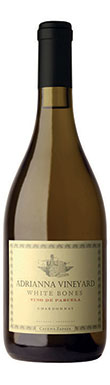

Extraordinary quality that rivals many grand cru Chablis. This is an intense, focused Chardonnay sourced from a 2-hectare site, growing on limestone-rich soils located at...
2015
Catena ZapataUco Valley

Riccitelli, Old Vines from Patagonia Semillon, Río Negro, Patagonia, Argentina, 2016
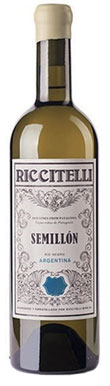
This fine-boned Semillon is from old vines at 300m in Patagonia: the intense southern sunlight and cold nights promote slow ripening. Skin maceration over 48...
2016
RiccitelliRío Negro
Rutini, Antología XLV, Uco Valley, Gualtallary, Uco Valley, Mendoza, Argentina, 2015
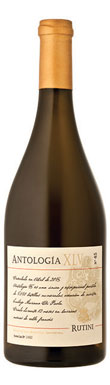
Made from a blend based on 80% Chardonnay with 10% Gewürztraminer and 10% Semillon. Top-end producer Rutini has crafted an intriguing blend that has great...
2015
RutiniUco Valley
Zuccardi, Fósil, Uco Valley, Mendoza, Argentina, 2016
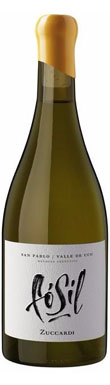
A terroir-driven Chardonnay from the dynamic Sebastián Zuccardi. The vineyard is located in San Pablo at 1,400m, on alluvial soil lying on a bed of...
2016
Zuccardi
Bodegas Salentein, Finca San Pablo Single Vineyard Chardonnay, Uco Valley, Mendoza, Argentina, 2015
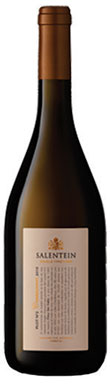
A single-vineyard wine grown on a cool 1.5ha site, located at 1,600m up in San Pablo. With high-density planting and cropping at ultra-low yields, Salentein...
2015
Bodegas SalenteinUco Valley
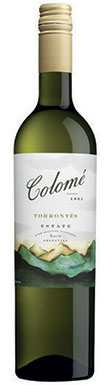
Bodega Colomé, Torrontés, Calchaquí Valley, Salta, Argentina, 2017
93
A benchmark Torrontés with an intense, perfumed nose followed by a balanced palate that’s full of concentrated ripe fruit and freshness. Zesty notes of grapefruit are apparent, combining with subtle floral hints and crisp citric acidity to create a very fine example, which emphasises how special Calchaquí is for this variety.
2017
Bodega ColoméCalchaquí Valley
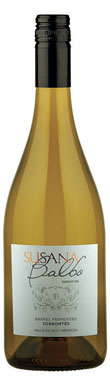
Susana Balbo, Barrel Fermented Torrontés, Uco Valley, Altamira, Uco Valley, Mendoza, Argentina, 2016
92
Classic Torrontés on the nose, this barrel-fermented example is made by master winemaker Susana Balbo – who put this uniquely Argentinian wine back on the map. Ample weight and richness are evident on the palate but the oak is restrained and adds to the subtlety of this slightly smoky wine.
2016
Susana BalboUco Valley
