
Our expert’s 10 favourite Chassagne-Montrachet premiers crus in 12 wines
Our Burgundy expert Charles Curtis MW selects his 10 favourite premier cru sites from the appellation's 55, explaining what makes each one special and why they're flying under the radar (or deserve more attention on your wishlist).

Chassagne-Montrachet is most famous as one of the three great white wine villages in the Côte de Beaune known as The Golden Triangle, along with Puligny-Montrachet and Meursault.
Understanding the true value of Chassagne is more complex, however, given the diverse range of delicious wines in both red and white.
Scroll down for 12 delicious Chassagne-Montrachet 1er cru wines to seek out
The reds are not as well-known as the whites today, but not so long ago, there was much more red wine produced here than white.
In the 1855 vineyard classification work by Dr Jules Lavalle, the fame of the village rested firmly on its red wine, and when the appellation was created in 1936, just 25% of the wine produced was white.
By 1982, that proportion had risen to 48%. Today, it is 74% overall and 84% for wines classified as premier cru.
What you need to know
Chassagne, like Chablis, makes use of porte-drapeau (standard bearer) appellations – a premier cru can be labelled with the name of its lieu-dit or can be grouped with one of the eight umbrella appellations, which include several different lieux-dits. Some have further subdivisions, producing a confusing welter of 55 potential premiers crus in total.
My 10 favourite premiers crus
Blanchot Dessus
Blanchot Dessus is one of four small premiers crus that surround the grands crus, producing wines that can be rich and buttery, with some of the density of their grand cru neighbours; all lie north of the Route Nationale, near Puligny.
Blanchot Dessus is located to the south of its illustrious neighbour Montrachet, up the slope from Criots-Bâtard-Montrachet. This well-located premier cru should not be confused with the village-level Blanchot Dessous, which lies just downslope in heavier soils and also borders grand cru Criots-Bâtard-Montrachet.
Dent de Chien

Dent de Chien (meaning ‘dog’s tooth’ in French) is a patchy appellation – much of it is scrub land with soils too thin to plant. What is planted, however, can be superb (part of it touches Montrachet).
Nearly a half-hectare of Dent de Chien was reclassified as Montrachet in a 1921 court case, and the wines are undeniably lush and dense. Don’t confuse this appellation with the St Aubin premier cru Les Murgers des Dents de Chien (‘stone walls made of dog’s teeth’), which is above the unplanted part of Montrachet.
Dent de Chien is further up the slope than Blanchot Dessus, and the wine is a bit edgier, with more tension but less richness.
Les Chaumées
At the northern edge of the village, the premiers crus face east and north; they have more in common with St Aubin than with the rest of Chassagne. At the top of the slope lies Les Chaumées (not to be confused with Les Chaumes, which is at the other end of the village in the Boudriottes subdivision of Morgeot).
These are wines that can be lemony, mineral and bright with elegance and finesse. Of particular note is a clos called Clos de la Truffière, planted with very old vines.
It is farmed by Domaine Michel Niellon and Domaine Jouard; Domaine Jean-Noël Gagnard has also resumed farming a small parcel here that will go to the new domaine of Philippe Lestimé, son of owner Caroline Lestimé.
Les Chenevottes

The vineyards below Les Chaumées are given over to the lieux-dits Les Chenevottes and its umbrella, mostly sold as Chenevottes, and the stand-alone Les Macherelles. This section of Chassagne is less steep than Les Chaumées, and the wines are typically softer, more floral, and often lighter.
As with Les Chaumées, the vineyard is planted exclusively with Chardonnay. At more than 10ha, it is a large vineyard producing a range of styles and qualities.
I was seduced recently by a Chenevottes from Pierre-Yves Colin-Morey with a few years of bottle age that was sublime.
Clos Saint-Jean
Clos Saint-Jean owes its name to its original owner, the abbey of Saint-Jean-le-Grand in Autun founded in the 6th century. The vines of the clos are located just above the village of Chassagne itself. They are planted with a mix of red and white varieties.
The red wines can be very elegant and balanced. They are often not as powerful or full-bodied as those from Maltroie, which is down the slope from the village and do not display the rustic tannins that Chassagne is sometimes accused of producing. The whites here can strike a deft balance between richness, finesse and tension.
Champs Gains
The climat Les Champs Gain (as it appears in the cadastre, or land registry; many variant spellings exist) is located at the base of the premier cru slope just south of Maltroie and the village of Chassagne proper.
It is mostly planted to Chardonnay today, although Caroline Morey produces a delicious version in red, as do several other members of her extended family.
Given the clay-rich soils at the base of the slope, it is a logical choice, but the whites are also very fine. A version from Armand Heitz is rich and Meursault-like, while the one produced by Marc-Antonin Blain (from vines that are at the foot of the Caillerets premier cru just bordering Champs Gains up the slope) drinks more like a Puligny.
La Romanée
La Romanée is among the most spectacular vineyards at the top of the slope. It is a part of the umbrella climat of La Grande Montagne. Here, the thin limestone soils and high elevation combine to make a perfect place to produce electric, lemony white wines.
At 3.35ha, La Romanée is the largest lieu-dit in La Grande Montagne; several producers use this latter name, although many prefer La Romanée. Both are worth exploring, along with the other lieux-dits here, including Grandes Ruchottes, En Virondot, and two small patches that can be called Tonton Marcel.
These lively, vivacious wines are almost pungent with citrus aromas, even in hot years, and can potentially live for decades.
En Cailleret
En Cailleret is a lieu-dit and a climat of its own, distinct from neighbouring Cailleret (without the ‘En’), which is an umbrella composed of Vigne Derrière, Les Combards and Chassagne.
You will often find the appellation spelt in the plural as Les Caillerets. Located at the southern end of the village, this is an exceptional sector for white wine, with the vines stretching to the top of the slope in thin, rocky soils rich with white marl.
The wines, like those of nearby La Grande Montagne, are tense, linear and packed with exciting freshness.
La Boudriotte
Lieu-dit La Boudriotte itself is fairly small – 2.2ha. There are, however, many vineyards that can be labelled as La Boudriotte: six lieux-dits totalling 15.6ha.
Boudriotte itself lies at the centre, with the other lieux-dits stretching up and down the slope, running from thin, rocky Grande Montagne down to the richer, heavier soils of the village-level band at its base.
This diversity means there are both superb whites and reds to be found here, though sorting them out can be daunting. One example is Domaine Ramonet, which produces a delicious, finely chiselled white labelled La Boudriotte from vines in lieu-dit Les Fairendes, and an equally delicious but hearty, tannic red from lieu-dit Boudriotte itself, which the domaine labels as Clos de la Boudriotte.
Les Brussonnes
Located at the base of the slope at the southern end of the village, Brussonnes (like La Boudriotte) forms part of the larger Morgeot and is itself composed of seven lieux-dits. Red and white wines are both produced here with remarkable success.
Some feel the fairly dense clay soils are better suited to growing Pinot Noir. The enchanting white produced by Céline Fontaine at Domaine Fontaine-Gagnard, however, gives the lie to those who would exclude Chardonnay here, although note that she labels her version simply as Morgeot blanc.
The impressive range of white wines from Chassagne accounts for the village’s renown in today’s market, but the red wines, particularly from Clos Saint-Jean, La Maltroie and greater Morgeot, are among the region’s finest.
Although they fly under the radar, they keenly merit your attention.
Chassagne-Montrachet: 12 top premier cru wines
Related articles
- Chassagne & Puligny-Montrachet 2024: The ‘irresistible’ wines to have in your cellar
- Three white Burgundies under £25 that overdeliver
- Marsannay under the microscope: A look at this underrated region as premier cru promotions beckon
Domaine Bruno Colin, Chassagne-Montrachet, 1er Cru Blanchots Dessus, Burgundy, France, 2023
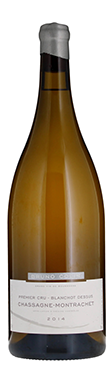

Creamy and dense, the Blanchot Dessus from Bruno Colin offers aromas of ripe pear and greengage plums with hints of butter and spice and a...
2023
Domaine Bruno ColinChassagne-Montrachet

Domaine Morey-Coffinet, Chassagne-Montrachet, 1er Cru La Dent du Chien, Burgundy, France, 2022
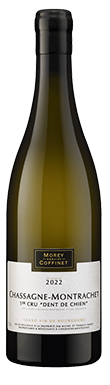
Tropical and dense, this opens with notes of passionfruit and Mirabelle plum on the nose that expand on the palate to complement the texture that...
2022
Domaine Morey-CoffinetChassagne-Montrachet
Domaine Jean-Noël Gagnard, Chassagne-Montrachet, 1er Cru Les Chaumées, Burgundy, France, 2023
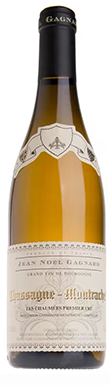
The 2023 Chaumées from Caroline Lestimé at Domaine Jean-Noël Gagnard opens with profuse aromas of mandarin and nectarine, with an edge of floral notes. The...
2023
Domaine Jean-Noël GagnardChassagne-Montrachet
Domaine Lamy-Pillot, Chassagne-Montrachet, 1er Cru Clos St-Jean, Burgundy, France, 2023
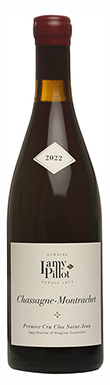
The red Clos Saint-Jean from Lamy-Pillot is perhaps the most elegant red in the range, with ripe mulberry fruit, hints of earth and a savoury,...
2023
Domaine Lamy-PillotChassagne-Montrachet
Domaine Caroline Morey, Chassagne-Montrachet, 1er Cru Les Champs-Gains, Burgundy, France, 2023
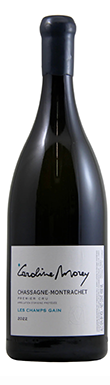
Caroline Morey is one of the rare producers of red wine from Champs Gains (her brother Sylvain is another). The wine is elegant and silky,...
2023
Domaine Caroline MoreyChassagne-Montrachet
Domaine Morey-Coffinet, Chassagne-Montrachet, 1er Cru La Romanée, Burgundy, France, 2020
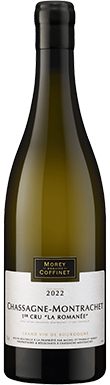
The forward aromas of nectarine and grapefruit from Morey-Coffinet's La Romanée are surprisingly intense; with time they take on notes of butter, spice and beeswax...
2020
Domaine Morey-CoffinetChassagne-Montrachet
Domaine Marc-Antonin Blain, Chassagne-Montrachet, 1er Cru Morgeot, Burgundy, France, 2024
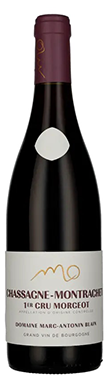
Marc-Antonin Blain is among the rare vignerons as adept with red wine as he is with white. His Morgeot is a wine of complexity and...
2024
Domaine Marc-Antonin BlainChassagne-Montrachet
Domaine Simon Colin, Chassagne-Montrachet, 1er Cru Morgeot Les Brussonnes, Burgundy, France, 2023
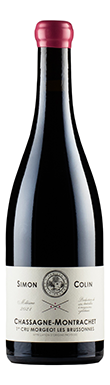
Simon Colin’s premier cru Brussonnes is a wine of impressive depth. Tasted on several occasions, this wine already offers approachable aromas of mulberry, spice and...
2023
Domaine Simon ColinChassagne-Montrachet
Domaine Fontaine-Gagnard, Chassagne-Montrachet, 1er Cru Morgeot, Burgundy, France, 2023
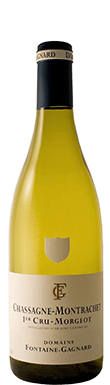
The delicious white Morgeot from Fontaine-Gagnard is expressive and elegant, with aromas of pear and apple, a hint of hawthorn, and a suggestion of butter...
2023
Domaine Fontaine-GagnardChassagne-Montrachet
Domaine Jean-Claude Bachelet, Chassagne-Montrachet, 1er Cru Boudriotte, Burgundy, France, 2024
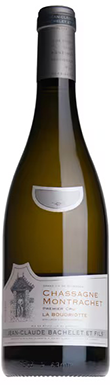
Domaine Jean-Claude Bachelet produces white and red Boudriotte; the white is superb, with a marvellous silky texture and aromas of ripe pear, white flowers, a...
2024
Domaine Jean-Claude BacheletChassagne-Montrachet
Domaine Joseph Colin, Chassagne-Montrachet, 1er Cru Caillerets, Burgundy, France, 2024
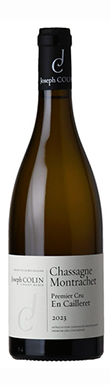
Joseph Colin has produced a Chassagne En Caillerets that is among the great wines of the village in 2024, offering pronounced aromas of lemon peel,...
2024
Domaine Joseph ColinChassagne-Montrachet