Get to know white Burgundy: Good, better, best
Have you ever wanted to know more about a great wine region but didn’t know where to start? Andy Howard MW gives a summary on white Burgundy , and picks three bottles – good (affordable), better (medium-priced) and best (money no object) – to take you there.


Chardonnay is, to my mind, the greatest white wine grape. Its finest expression lies within the dry wines from Burgundy, where the concept of terroir is not just a marketing angle but a fundamental philosophy. Prices have climbed steeply – but so has quality. The tiered AP system ranges from regional wines, through village and premier cru levels, to the finest grand cru. On the way, small plots (climats and lieux-dit) add another layer of individuality.
White Burgundy is produced from the cool, marginal climate of the Yonne region, running roughly north-south down to the up-and-coming Côte Chalonnaise and Mâconnais. In between lie the famed slopes of the Côte d’Or, where bedrock, weathered soils, aspect, drainage and people all have a key influence on the creation of the world’s finest Chardonnay.
At the base of the Burgundian quality pyramid are regional and village appellations such as Bourgogne, Mâcon, St-Véran and Chablis. These are accessible and offer great value and high quality. APs such as the named Mâcon villages (including Azé, Davayé and Milly-Lamartine), Viré-Clessé, Pouilly-Fuissé and wines from the Côte Chalonnaise (eg, Mercurey, Montagny and Rully) add further complexity.
The Côte d’Or is home to the revered wines of Corton-Charlemagne, and the trinity of Meursault, Puligny-Montrachet and Chassagne-Montrachet, all leading up the ‘stairway to heaven’. It is impossible to have a preference here – the wines from nearly all producers are magical.
Meursault was historically seen as richer and Puligny more mineral, but individual site and producer are more important factors. Premier cru wines are worth the extra for their terroir influence, and individual appellations (Le Cailleret, Les Combettes, Les Pucelles…) should all be explored.
At the top of the Burgundy stairway lie the Montrachet grands crus: Bâtard, Chevalier and Le Montrachet. Stunning, powerful wines with great complexity of flavour and ageability, balanced by other-worldly finesse. Although expensive, these are the finest expressions of Chardonnay in the world and won’t disappoint.
Good: Rijckaert F Rouve, Haute Cuvée, Viré-Clessé 2019 – 91 points
Better: Etienne Sauzet, Puligny-Montrachet 1er Cru Les Combettes 2018 – 94 points
Best: Olivier Leflaive, Chevalier-Montrachet Grand Cru 2017 – 97 points
Andy Howard MW’s white Burgundy picks:
Get to know Left Bank Bordeaux
Get to know California Cabernet
Olivier Leflaive, Chevalier-Montrachet Grand Cru, Burgundy, France, 2017
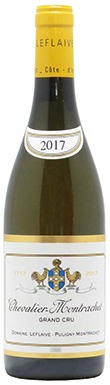

It’s almost impossible to split Le Montrachet, Chevalier- and Bâtard-Montrachet. Whichever you are drinking, it will almost certainly be both stunning and eye-wateringly expensive. Chevalier-Montrachet, located higher up the grand cru slope, delivers additional finesse and lift compared to the more powerful, weighty style of Bâtard. Austere on the nose, with amazing intensity, length and the ability to balance muscularity with finesse on the palate, this soaks up the oak and will age for decades. Oliver Leflaive, along with winemaker Franck Grux, has driven up quality at this domaine in recent years. From a 0.2ha parcel on poor, marly limestone soils in the centre of the grand cru.
2017
Olivier LeflaiveChevalier-Montrachet Grand Cru

Etienne Sauzet, Puligny-Montrachet, 1er Cru Les Combettes, Burgundy, France, 2018
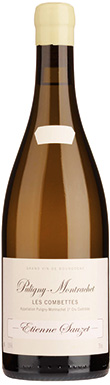
Created in 1975, Etienne Sauzet is one of the top names in Puligny-Montrachet, with holdings in many key premier cru sites as well as Chevalier-Montrachet and Le Montrachet. Winemaker Benoît Riffault’s immaculate approach means the wines are all about minerality, precision and exceptional length. Oak is judiciously used, with 33% here. Les Combettes, sandwiched between Champ Canet and Les Referts, is in the north of Puligny and is one of its finest premiers crus, with a core of intense apple and white peach fruit. A great balance between richness and precision.
2018
Etienne SauzetPuligny-Montrachet
Rijckaert F Rouve, Haute Cuvée, Mâconnais, Viré-Clessé, Burgundy, France, 2019
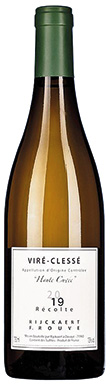
A great showcase for Viré-Clessé – an appellation which is a rising star in the Macônnais. This new AP (created 1999) is keeping neighbouring Pouilly-Fuissé on its toes, at substantially lower prices. Florent Rouve runs the estates of Jean Rijckaert and manages to coax masses of flavour, richness and character through a meticulous approach in the vineyard and winery. Low yields, manual harvesting, gentle pressing and long ageing all work together to add hints of gold in the glass, with luxurious notes of ripe stone fruit, honeysuckle on the nose, gentle oak flavours and fine acidity to keep the wine fresh and vibrant.
2019
Rijckaert F RouveMâconnais
