Get our daily fine wine reviews, latest wine ratings, news and travel guides delivered straight to your inbox.
You are now subscribed
Your newsletter sign-up was successful
An account already exists for this email address, please log in.
Stone & Smoke: Italy's sensational Sauvignon Blancs
Chameleon variety Sauvignon Blanc assumes the character of its local terroir like few others, and in Italy’s wide-ranging regions and geographies, it means lots of stylistic variation and nuance.
Although not indigenous to Italy, Sauvignon Blanc can be considered one of the country’s most important white grape varieties.
The most celebrated examples are from the two northeastern regions of Friuli Venezia Giulia and Alto Adige, while other notable examples come from regions as far apart as Piedmont and Sicily.
Friuli
Matteo Gallo (second right) with sister Veronica, father Gianfranco and brother Tommaso, Vie di Romans.
(Image credit: Vie de Romans)
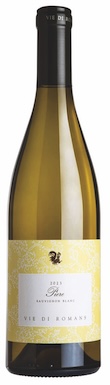
In the commune of Mariano in the Gorizia province of Friuli, the Gallo family crafts two remarkable Sauvignons, Piere and Vieris, sourced from two distinct vineyards.
Matteo Gallo, son of winemaker Gianfranco, who has managed the Vie di Romans estate for more than 40 years, calls the wines ‘our two most representative crus’.
Gallo characterises the Piere vineyard as having greater soil depth and a higher clay content, while Vieris features much shallower, reddish-coloured soil, rich in limestone and pebbly stones.
He notes that these differences are the result of the way the valley was formed and later shaped, following the overall retreat of the glaciers, a process completed about 10,000 years ago.
‘During this long period,’ he explains, ‘the Piere area was the first to emerge from the waters and it therefore displays a more evolved and deeper soil profile.’
Decanter newsletter
Get our daily fine wine reviews, latest wine ratings, news and travel guides delivered straight to your inbox.
Piere, produced from predominantly Italian-clone vines that have loose grape clusters, is vinified in stainless steel, while Vieris, which has more French clones than Italian, matures for nine months in French oak barriques.
They are, ‘the result of our understanding and interpretation of their unique terroir’, reasons Gallo.
Alto Adige/ Südtirol
The view to the northeast over the sloping hillside vineyards of Cantina Kurtatsch.
(Image credit: Florian Andergassen)
At the Cantina Terlano cooperative in the village of Terlano in Alto Adige, cellar master Rudi Kofler notes that Sauvignon Blanc arrived in this commune from France around the turn of the 20th century, marking the origin of the variety in the Südtirol (the Germanic name for the multilingual region).
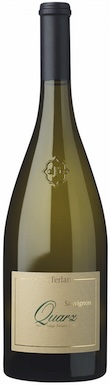
Cantina Terlano was the first local producer to bottle a single-varietal Sauvignon Blanc, in 1956. Today, the winery offers two celebrated Sauvignon Blancs, Winkl and Quarz, sourced from vineyards in the Terlano surroundings.
They both have a similar profile of volcanic-origin quartz porphyry with sandy-loamy soils very rich in skeletal material (especially for the plots used for the Quarz).
The ratio of vines in each is overwhelmingly Italian – between 70%-80%, with only 20%-30% French.
Kofler vinifies these wines in both stainless steel tanks and large barrels, with slight variations; for Winkl, 20% of the wine is aged in large, 7,500L German oak casks that are between 20 and 30 years old, while for Quarz, half of the wine is aged in 3,000L French oak casks of five to 10 years old.
‘Wines aged in wooden barrels tend to be creamier, more playful in texture and less reductive than those fermented exclusively in stainless steel,’ he says.
The winemaker describes Quarz as a ‘crystalline Sauvignon Blanc with layered texture and vibrant salinity’ – a more formidable wine than the Winkl, explaining that it benefits from a higher proportion of ageing in oak.
A focused profile
Another acclaimed Sauvignon Blanc producer in Alto Adige is the Cantina Kurtatsch co-op.
Although its oldest vines are French clones, head winemaker Erwin Carli prefers the local clones developed by the Laimburg agricultural research centre, which are also used by Cantina Terlano and some other wineries in the area.
Carli explains that these local clones have looser clusters, which results in lower susceptibility to infection by the botrytis fungus, as well as reduced canopy vigour and higher acidity in the resulting fruit than the French clones.
‘Under warming growing conditions, this typically translates into a fresher, more focused profile that helps to retain acidity in the wine,’ he says.
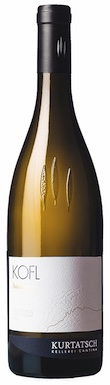
The hillside vineyards here at Penon-Kofl, in the commune of Cortaccia, south of Bolzano, are situated between 425m and 600m, on steep slopes reaching 85% gradient.
The soils are composed of sand and gravel, rich in Dolomitic limestone and quartz minerals.
Carli explains that this site experiences strong solar radiation but with fewer hours of direct sunlight per day – conditions the winemaker believes are ‘ideal for Sauvignon Blanc, promoting ripeness while preserving freshness and aromatic precision’.
For him, flagship Sauvignon Kofl – labelled as Penon-Kofl as of the 2024 vintage, following the implementation, from that vintage, of the 86 new Alto Adige UGA areas (unità geografica aggiuntiva, or ‘additional geographical unit’) – displays an earthy, stony character with its fruit and floral notes in the background.
It's a vertical wine, unlike more typical Sauvignon Blancs of the area, which he describes as more expressive, aromatic and bold.
Trentino
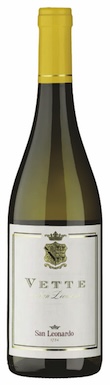
To the south of the Alto Adige region, at Tenuta San Leonardo in Avio, Trentino, Marchese Anselmo Guerrieri Gonzaga produces a refined offering of Sauvignon Blanc, Vette, that’s vinified in stainless steel only.
He explains that he isn’t interested in an ‘extreme’ style of Sauvignon: ‘With Vette, we’ve always looked for a “third way” between the Loire and the New World – the precision and tension you find in the Loire, combined with a touch of generosity in the fruit, always handled with restraint.’
The balance and freshness of this wine are largely guaranteed by two factors: the vineyards are situated at high elevations of 250m-700m; and the traditional pergola training system shades the fruit and helps moderate heat stress, preserving acidity and aromatic definition in the wine.
Piedmont
From left: Pierguido Busso and his father Piero
(Image credit: Piero Busso)
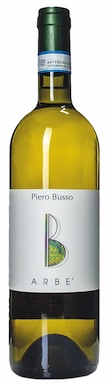
In Neive, in the heart of the Barbaresco appellation, Pierguido Busso at his family’s Piero Busso winery has been producing the mono-varietal Arbé Sauvignon Blanc since the 2018 vintage.f
These grapes were previously incorporated in the winery’s Langhe Bianco blend. Arbé is dedicated to Busso’s two nieces, Arianna and Beatrice.
He says that his main inspiration comes from France, particularly from the Loire valley. The winemaking is gentle, with soft, whole-cluster pressing and great care taken to avoid extracting green or vegetal components.
The wine ages for 12 months on the fine lees, without batonnage.
‘The goal is to produce a Sauvignon with a clear, precise expression, far from common stereotypes,' he explains.
'I want this wine to reflect the Busso philosophy, first and foremost, rather than a generic or classic interpretation of Sauvignon – elegance, purity of fruit and a strong sense of place are essential.’
Umbria
At Castello della Sala in Umbria, part of the Marchesi Antinori group, Sauvignon Blanc is represented by Conte della Vipera, a blend typically of 68% Sauvignon Blanc and 32% Semillon.
Here, Sauvignon tends to display a more tropical profile, with fruit notes of peach, citrus, pineapple and lime.
The freshness that emerges from the variety is enhanced by the texture and roundness of the Semillon.
The 2024 is a typical offering of this unoaked wine, understated in its fruit definition and intensity, standing apart from Alto Adige or Friuli examples, which display sharper acidity and more herbaceous notes.
Tuscany
Marco Balsimelli
(Image credit: Ornellaia)
The Tuscan coast, specifically Bolgheri, has become an important territory for Sauvignon Blanc.
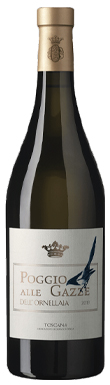
At Ornellaia, technical director Marco Balsimelli produces two Sauvignon-based wines: 100% varietal Ornellaia Bianco; and Poggio alle Gazze – Sauvignon Blanc blended with smaller percentages of Vermentino, Viognier and Semillon.
Balsimelli explains that ‘aromatically, Sauvignon Blanc from Bolgheri offers many different shades’.
Harvesting of the Sauvignon Blanc fruit destined for Poggio alle Gazze generally begins relatively early, around mid-August.
Balsimelli notes that the sandy coastal soils naturally produce wines that are firm, aromatic and lively.
For Ornellaia Bianco, meanwhile, he works with soils rich in limestone, clay and stones. The grapes are typically picked towards the end of September, when the fruit is slightly riper, which results in a wine with greater complexity and a more elegant aromatic profile.
Fuller on the palate than Poggio alle Gazze, and also more structured, according to Balsimelli, the wine ‘finishes with a striking freshness and salinity typical of these soils’.
Comparing Sauvignon Blanc from Bolgheri with northern Italian versions, Balsimelli points out that the latter examples are sharper, with plenty of tension.
‘Our wines tend to show riper aromas and a fuller, more textured and structured mouthfeel,’ he says.
‘One trait we share, however, is the freshness and minerality on the finish. It seems to me our style of white wines is closer to French wines than to those from northern Italy.’
Perhaps the most positive aspect of Italian Sauvignon Blanc is its ability to display its greatest qualities with age.
The finest examples take on different identities after several years, with some showing a Riesling-like character, while others offer more distinct earthy, herbal notes after a decade.
Regardless of the style, Italian Sauvignon Blanc is the backbone of some of the nation’s finest white wines, deserving of greater respect on the world stage.
Ornellaia, Poggio alle Gazze, Toscana, Tuscany, Italy 2023
My wines
Lush aromas of passion fruit, orange zest, sage, thyme and pine. Medium-full body with a richly textured mid-palate, very good acidity, impressive persistence and notable...
Vie de Romans, Piere, Friuli, Isonzo, Friuli Venezia Giulia, Italy, 2023
My wines
Intense aromas of wet stone, chervil, grapefruit and yellow pepper. Outstanding varietal character, with notable Isonzo terroir. A layered mid-palate leads to a beautiful herbal...
Gooseberry, bell pepper, chive and white pepper aromas are followed by excellent depth of fruit on the palate. Vibrant acidity carries emphatic green and yellow...
Aromas of papaya, melon, lime and a hint of basil. Impressive ripeness, good acidity and impeccable harmony, with a persistent finish displaying assertive notes of...
Tenuta San Leonardo, Vette, Vigneti delle Dolomiti, Trentino-Alto Adige, Italy, 2024
My wines
Freshly cut hay, yellow pepper, marigold and hints of papaya and mango introduce a wine of impressive ripeness, with lively acidity and outstanding persistence. While...
Quince, sage and buttercup scents meet a round body with cleansing acidity, and notes of spearmint and eucalyptus on the impressively persistent finish. This works...
Tom Hyland is a freelance wine author, journalist and photographer based in Chicago. He specialises in Italian wines and has a blog dedicated to the subject, called Learn Italian Wines. Aside from Decanter, he has appeared in Sommelier Journal, The World of Fine Wine and Quarterly Review of Wines. His book, The Wines and Foods of Piemonte, was published in 2016.