What is Cirò? A regional profile
A Calabrian town which gives its name to one of the Italian region's best known DOCs.


Cirò, pronounced CHI-roh, is a historical town which gives its name to a DOC for red, white and pink wines made in the Crotone province of Calabria, close to the Ionian coast at the toe of the Italian boot.
The Greeks who began colonising the region in the 8th century BC named the area ‘Oenotria’, and the locals ‘Italoi’. By the time of the Romanisation of southern Italy in the 2nd century BC, ‘Italoi’ had become the term to describe all local people in the south of the peninsula, eventually encapsulating those in the north too, giving us the foundations of the modern name, Italy.
Roman, Byzantine, Norman, Spanish, French and Italian hegemonies all shaped the region of Calabria in the following centuries, but Cirò remained largely feudal in structure until relatively recently, only modernising after World War II due to radical government land reforms.
In 1952, the coastal settlement of Cirò Marina was created, attracting the peasant class away from the historical hill town of Cirò, located in the foothills of the Sila mountain range, which, as noted in Cirò, Cirò Marina: Storia, Cultura, Economica (Rubbetino, 1997), had traditionally been a haven against pirates and malaria.
Cirò DOC
Cirò and Cirò Marina today form the heartland of Cirò DOC, which has the largest production by volume of any DOC in Calabria.
The DOC was created in 1969, encompassing Cirò, Cirò Marina, Melissa and Crucoli. Wines made only from vineyards in Cirò and Cirò Marina are entitled to the Classico designation.
Wines must be a minimum of 11% for Cirò Bianco DOC and 12.5% for Cirò Rosso and Rosato DOC.
Wines of DOC status of 13.5% or more may be classified as Superiore, and wines of 13.5% or more which are aged for a minimum of two years may be classified as Superiore Riserva.
Cirò Classico has been approved for elevation to DOCG status since autumn 2023, which will make it Calabria’s first DOCG.
Area Cirò DOC 1,500ha; Cirò Classico DOC 500ha
Wineries 65, with 300 winegrowers in the Consorzio
Production 31,550hl (five-year average) – approx. 4 million bottles/year
Plantings 50% Gaglioppo, 30% Greco Bianco, 20% other varieties
Production 40% red, 30% white, 30% rosé
Cirò Bianco DOC: Minimum 80% Greco Bianco plus 20% other authorised grape varieties
Cirò Rosso/Rosato DOC: Minimum 80% Gaglioppo plus 20% other authorised grape varieties, of which only 10% may be Barbera, Cabernet Franc, Cabernet Sauvignon, Merlot or Sangiovese.
The climate of Cirò DOC is Mediterranean, with long, warm summers and mild, wet winters. The region has low rainfall and both the Sirocco and Tramontane winds assist in creating dry conditions, helping to combat vine diseases such as downy and powdery mildew.
Proximity to the sea helps to moderate the heat of the summer, and harvest typically lasts from late September into October.
The two most important grape varieties are Gaglioppo and Greco Bianco. Other varieties including Barbera, Cabernet Franc, Cabernet Sauvignon, Merlot and Sangiovese are also permitted in small quantities.
Gaglioppo
Gaglioppo is the foundation of both Cirò Rosso DOC and Cirò Rosato DOC. It has thin skins but marked acidity and chewy tannins that require ageing to soften. It is often pale and orange-tinged in the glass, spicy and aromatic on the nose, encouraging comparisons with the Nebbiolo of Barolo.
Genetically, Gaglioppo is descended from Sangiovese, perhaps emerging as a natural crossing between Sangiovese and Mantonico. According to Ian d’Agata in Native wine grapes of Italy (University of California Press, 2014), ‘This means that Gaglioppo and Frappato are most likely siblings.’
The wines can have a dried fruit, leather and savoury character even when matured in concrete or steel. Some of the most interesting examples of Cirò are only released after significant ageing in producers’ cellars.
Greco Bianco
Greco Bianco is a local variety which forms the backbone of Cirò’s white wines. It’s unrelated to Greco from Campania, or — confusingly — the Malvasia di Lipari used in the nearby sweet wine DOC of Greco di Bianco.
The wines are generally fruity with floral notes, although the best can develop in bottle.
The Cirò revolution
Some international varieties were added to the Cirò DOC regulations in 1996. While larger wineries have generally been in favour of their addition, a number of smaller producers have resisted, leading to the foundation of the Cirò Revolution by Azienda Agricola Sergio Arcuri, A’ Vita and Tenuta del Conte.
Members of this organisation agree to use only 100% Gaglioppo, and no barriques in the ageing of the wines. There are 11 members as of 2024, and their eye-catching logo is a fist holding secateurs.
Cirò from Calabria: Six wines to try
Related articles
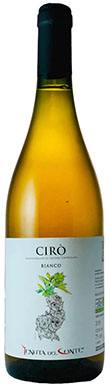
Tenuta del Conte, Bianco, Cirò, Calabria, Italy, 2022
90
Made from 100% Greco Bianco this is fresh but rich, with aromas of ginger, yellow apple, quince, gorse flower, honey and orange, and a touch of leesy richness giving pastry and custard on the finish. Fermented in steel with native yeasts, and kept in steel for 12 months before bottling.
2022
Tenuta del ConteCirò
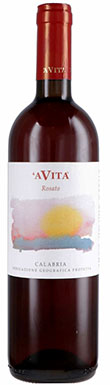
’A Vita, Rosato, Cirò, Calabria, Italy, 2022
90
An uncompromising, high-integrity introduction to the compelling Cirò Rosato, this 100% Gaglioppo from clay-rich coastal vineyards is made in the historical ‘Cerasuolo’ style: there is a two-day period of skin contact, resulting in a wine of gentle tannic friction and notes of saffron, spiced orange and dried cranberry. Pleasingly rustic, this expresses the personality of Cirò Rosato as the traditional ’farmer’s wine’ in a low-intervention style.
2022
’A VitaCirò
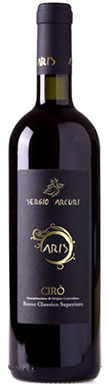
Sergio Arcuri, Aris, Cirò, Classico Superiore, Calabria, Italy, 2020
93
An exemplary Cirò from Sergio Arcuri, this is one of the best in the DOC. Arcuri believes that the finest wines of the area come from coastal bush vines planted at high density – up to 10,000 vines per hectare. This is from two vineyards rich in clay, near the Ionian coast, and undergoes four days of skin contact followed by two years’ maturation in concrete, and six months of ageing in bottle before going on sale. There’s real fruit and juiciness here, which is something few achieve with Gaglioppo, but the grape’s signature aromas of terracotta, dried strawberry, spiced cherry, sweet leather and membrillo are still present. The grainy, textured tannins indicate this will continue to develop well in bottle.
2020
Sergio ArcuriCirò
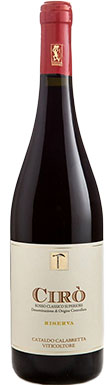
Cataldo Calabretta, Riserva, Cirò, Classico Superiore, Calabria, Italy, 2018
92
In contrast to Sergio Arcuri’s style, this Riserva from Calabretta spends three weeks on the skins, a year in oak, and two years in concrete. It is made using a selection of the best grapes of the family’s vineyards. Sweet strawberry fruit, dried cherries, nutmeg and exotic, polished wood aromas are followed by papery tannins and incense-like aromas, very much aligning with contemporary Barolo in style.
2018
Cataldo CalabrettaCirò
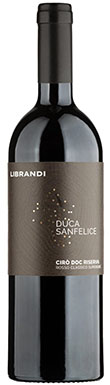
Librandi, Duca Sanfelice Riserva, Cirò, Classico Superiore, Calabria, Italy, 2020
91
Baking spices and fruitcake meet dusty red and black cherries, strawberry jam and cassia bark on the nose of this expressive Cirò. The tannins are gentle and ripe with some grain and heft, and there’s a crisp line of acidity that keeps this fresh and moreish. The finish reveals some tobacco and dark chocolate. Less tannic than a lot of Cirò reds, this is an excellent introduction to the Gaglioppo grape.
2020
LibrandiCirò
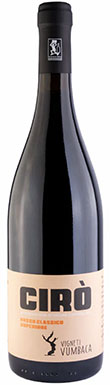
Vigneti Vumbaca, Cirò, Classico Superiore, Calabria, Italy, 2022
91
Fresh cherries, dried strawberries and leather unfurl on the nose of this sappy, bright Cirò Rosso, although the papery tannins and crisp acidity keep this savoury and firm. Elegant, compact and direct, treat it like a good Langhe Nebbiolo and enjoy it with food.
2022
Vigneti VumbacaCirò
