
Interview: Alois Lageder
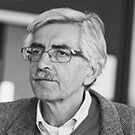

Italy’s biodynamic champion is a fourth-generation winemaker who flirted with economics before finding his true calling among the vines. Richard Baudains visits his estate to see his sustainable wine-growing philosophy in action...
Alois Lageder owns and runs Italy’s biggest biodynamic wine estate. To set our conversations in context, he began my visit by taking me to his Römigberg estate at Caldaro. It was a cold and frosty January morning, but already by 9:30am the steeply terraced vineyards on this, the sunny side of the valley, were in bright sunlight.
What Lageder wanted to show me was Steinerian biodiversity in action. Some years ago he planted a part of these slopes with the local Schiava vines. The clones had been carefully selected and the soils and the exposition were perfect, so there were high hopes for the vineyard. But in the first years the results were disappointing. He recounts: ‘Ripening was very uneven. We weren’t getting the results we had hoped for and we were even contemplating grubbing up the vines.’Then in 2010 he had the idea of asking farmers to bring their sheep and cattle down from the mountains to winter in the vineyard. The result was a revitalised plot, healthy vigorous plants and perfect, even ripening. At a practical level, the animals eat the grass between the rows and leave their manure, but in Lageder’s vision something else less tangible but no less significant was going on, and it was to do with the Steinerian philosophy of the vineyard as a microcosm of the natural world, the internal harmony of its elements and influence of the cosmos.
Alois Lageder at a glance
Born 1950 in Bolzano, in the bilingual province of the Alto Adige-Südtirol
Education Dropped out of economics at university to study viticulture in Switzerland and Germany
Career Took over the family wine business in 1975
Biodynamics Family-owned estates certified in 2004; elected president of Demeter Italy in 2016
Interests Music, contemporary art
Landmark events
Lageder represents the fourth generation of a wine dynasty founded in 1823 by his great grandfather, who set up a business trading wines in the provincial capital of Bolzano. In the 1930s the family then moved away from sales into growing and making their own wines with the acquisition of the Läwengang estate at Magrè, in the south of the province. Alois (pronounced Al-o-eese – the German way, here in the bilingual Alto Adige-Südtirol region of Italy) was born in 1950, the youngest of a family of six. He grew up picking grapes in the school holidays, but without any grooming to one day take over the business. He attended a classical high school rather than the region’s prestigious viticultural college at San Michele, the destination of many wine producers’ sons.
Alois was just 12 years old when his father died; his mother and elder sister assumed the management of the estate. Time passed, Alois began a university degree course in economics but then made a life-changing decision. ‘There was no pressure from the family, but I felt I had a responsibility,’ he says, and so he switched to viticulture, with studies in Switzerland and Germany. When he came back, at the age of 25, he took up the inheritance of the estate and the wine business.
The seed of biodynamics had already been sown (his earliest influence was his mother’s biodynamic vegetable garden), and when he took over the estate he was very conscious of the conflict between the viticultural practices of the time and his own personal convictions. ‘I realised that the way we worked, based on technique, was all against nature. But we didn’t have the know-how to change then and it wasn’t the right time. The image of Alto Adige wines was very poor in those years and the priority was to build up the firm.’
He travelled (picking up an impeccable command of English), studied and invested, buying among other things the Römigberg property. One of his great influences at that time was Robert Mondavi, who he met in 1981.
Lageder recounts an anecdote to illustrate the rapport that developed between him and the doyen of Californian producers. During a visit to Löwengang in 1982, Lageder presented Mondavi with the estate Chardonnay, explaining that they aged it in traditional barrels because they believed that was the best solution for white wines. ‘Have you ever tried anything else?’ asked Mondavi. Lageder tells me: ‘I had to confess to him that we hadn’t; we had lots to learn. Robert convinced me to buy our first barriques and it opened new doors for us.’ The Löwengang barrel-fermented Chardonnay, first released in 1984, was a milestone in Italian wine and the breakthrough for Lageder.

Realising an ambition
The evolution continued in 1995 with the inauguration of a new eco-sustainable winery at Magrè, one of the first of its kind in Italy. At that point Lageder felt he had everything sufficiently in place to return to his original ambition of converting the estate to biodynamics. Along the way, he lost a vineyard manager who was unable to accept the new methods (‘to convert a vineyard is relatively easy, to convert people is very difficult’, notes Lageder) but he achieved the objective with full Demeter certification in 2004.
The next big leap came in 2014 when, on the retirement of the veteran cellarmaster Luis von Dellemann, Lageder’s son Clemens and a new young team overseen by Georg Meissner, one of Europe’s leading biodynamic consultants, took overall control of production.
‘We are working on detail in the wines, which is the next quality step forward,’ says Lageder. This involves greater differentiation in the harvesting and vinification in smaller lots, partial maceration for the whites and whole-bunch fermenting on some of the reds. All the top-selection and single-cru wines and the majority of the rest of the production are fermented without selected yeasts and without sulphites, and generally the amount of intervention has been reduced, especially during ageing. ‘In the past we used to rack a wine at the first sign of reduction, but now we let the reduction run its course and allow the wine to find its own balance over time.’
Lageder’s wines are in part sourced from his own estates, which now extend over 55ha, and in part from about 80 ‘partner’ (his word) grape-growers distributed around the region. The estate wines occupy the top end of the range, while the entry level varietal wines are from bought-in grapes. In the middle are site-specific wines made with fruit from the estates and from growers in prestige sub-areas.
Lageder’s aim is very much to involve the partner growers in the ethos of the mother company, and he states with some satisfaction that, over the past five years, half of his current suppliers have converted to either organic or biodynamic viticulture. ‘Growers are more open these days, and they see for themselves the difference between a conventional and a biodynamically managed vineyard.’ And, he says, there is no difference in cost.
Of the 36 wines on Lageder’s extensive list, 16 are currently certified either organic or biodynamic. His ambitious aim is to have a 100% biodynamic grape supply by 2023, a symbolic deadline, falling exactly 200 years after the foundation of the firm.

Assured leadership
In line with the long-standing practice in Alto Adige, Lageder grows 20 different varieties. This may seem a lot, even excessive, but there’s a logic to it. Alto Adige is a mountainous region with myriad growing environments in which terroir dictates grape varieties. It might be complicated to promote – and in fact there are official moves in the region to encourage a streamlining of the offer – but Lageder is convinced that ‘our trump card is our diversity of sites and varieties, and we have to play with this diversity’.
He also has views about the style of wine Alto Adige ought to be making. There has been a trend in the region towards low yields and weighty concentration. Lageder is coming from a different place. ‘The essence of Alto Adige is elegance, freshness and mountain streams. We have to express this, not lush and overripe fruit. Generally in the past 20 years there has been a tendency to make wines for scores, but we need to make wines to drink. I think of Bordeaux before the 1980s. They were fine and elegant wines, now they are opulent and heavy. I can’t drink them any more.’
Not all the blame for this ponderous concentration can be laid at the door of perverse winemaking styles and opinion-leading guides, however. Today’s super-ripe wines are also the natural consequence of climate change. ‘We used to start picking at the end of September, or even in October for some varieties. Nowadays we have to begin in early September. One year it was even August.’ And as a result of this, he says, ‘the big problem we have today is that we don’t have enough acidity’.

Lageder began to study the issue in the 1980s, ‘when the first climate models were starting to come out’, and to explore the possibility of introducing varieties from hot, dry climates such as the Rhône and Argentina which could adapt to the changing weather patterns in the region. The upshot was the arrival of Tannat, Viognier and Petit Manseng, which feature in the Lageder Casòn Hirschprunn estate wines. The focus among the local varieties is on two that tick Lageder’s boxes of drinkability and terroir – the white Incrocio Manzoni, for its ability to maintain acidity, and the pale red Schiava/Vernatsch for its moderate alcohol and delicate tannins. The wines to taste are the Fórra Bianco and Römigberg Vernatsch.
In 2016, Lageder was elected Italian president of Demeter, the biodynamic certifying agency which currently counts 97 certified wine producers in Italy and boasts a growth of 80% in membership over the past five years. They could not have chosen a more reassuring ambassador for biodynamic agriculture. The vegetarian, polyglot Alois Lageder exudes positivity and Steinerian calm. He leads by convinced and principled example, he has a track record for managing change – and most importantly, he is a man with a vision for the future.
Richard Baudains is a DWWA Regional co-Chair for Italy, who has written on Italian wine for Decanter for 25 years
