
Winemaking disasters: When wine goes wrong…


Making wine is not easy. From natural disasters and vineyard pests to human error and deliberate sabotage, Matt Walls shares some of the trials and tribulations that winemakers have overcome to get the bottle to your table...
Every bottle of wine you open represents a minor triumph. Despite the countless things that can go wrong in the vineyard and the cellar, some determined individuals nurtured the vines, harvested the grapes and turned the juice successfully into wine.
Few growing seasons pass without incident, but most issues can be treated, rectified or solved along the way. There are some events, however, that are so severe there’s nothing a winemaker can do to overcome them. Whether it’s a catastrophic weather event, an invasion of pests, rampant disease or disasters in the winery, occasionally winemakers must face their worst nightmares.
Heaven and earth
Larry McKenna of Escarpment vineyard in New Zealand’s Martinborough region has three decades of winemaking experience under his belt and has tackled his fair share of climatic disasters. He explains that some, such as drought, develop steadily, worsening day by excruciating day. others are more sudden. ‘Frost is immediate,’ he says, ‘it happens in a night. It’s pretty traumatic. You can light all the fires you want, but sometimes there’s nothing you can do – you just have to cop it.’
Other weather events strike even faster. ‘The sky goes yellow-orange,’ says Amandine Marchive, co-owner of Domaine des Malandes in Chablis. ‘When you see this colour, you know it will hail.’ She received a call from a neighbour one summer’s day in 2016, telling her to visit one of her vineyards urgently. ‘Within five minutes hail had completely destroyed the whole 5ha. This was in June, but the day after it looked like February – no leaves, no grapes, nothing – just the wood remained,’ she remembers.
‘Emotionally it’s horrible. The vineyard employees, they work there every day and they feel they worked for nothing. The work is hard, but the payback is seeing the juice in the tanks. It’s hard not to be depressed. And we didn’t have insurance,’ she adds. Marchive bought and installed anti-hail netting straight after at great expense. Then the following year she lost 50% of her production to frost.
Before joining Viña Estampa in Chile’s Colchagua valley as head winemaker, Johana Pereira worked at neighbouring Bisquertt. On 27 February 2010, she suffered one of the most sudden and terrifying events of all. It was two weeks before harvest, and the winery’s tanks contained four million litres of wine prior to bottling when it was hit by a massive earthquake, measuring 8.8 on the moment magnitude scale and lasting for around three minutes. ‘Tanks were crushed like Coke cans,’ she says. They lost almost 800,000 litres of wine. ‘It was like a river,’ she adds. Where the wine eventually pooled and sank into the ground, trees fell ill and died.
The winery also suffered widespread damage to its irrigation systems in the vineyards, but Pereira was amazed by the response from local people and colleagues in other wineries. ‘Everybody was in the same situation, but everybody wanted to help,’ she says. In the end, the 2010 vintage was one of good quality, if smaller in volume than expected. Despite the destruction, natural disasters such as this can pull communities together and bring out the best in people.
Plagues and pests
If you make Sauternes, watching noble rot spread through your vineyard will fill you with joy. But not if you make Cabernet Sauvignon. This is what happened to Lenz Moser at his family estate Weinkellerei Lenz Moser, near Krems in Austria, in 1996. It rained during harvest, and botrytis seized the vineyard. ‘The only way to save the harvest economically was to pick immediately, press, and make a white Cabernet Sauvignon. The grapes were ripe, they didn’t lose sugar or flavour, just colour.’ It was a desperate last-ditch gamble, but to his amazement it paid off and the wine was a huge success.
Today Moser’s main project is making wine at Château Changyu Moser XV in China’s Ningxia province. The vast majority of vineyards here are planted with red varieties, but keen to make a white, he decided to have another shot at making white Cabernet – this time by design. It’s proved so popular he’s now teaching colleagues in other wineries how to do it. The moral of the story for Moser? ‘When life gives you lemons, make lemonade.’
Most diseases can be treated by spraying, but insects or larger pests can be trickier to deal with. The 2014 vintage in the northern Rhône got off to a wet start. One winemaker described the situation in Crozes-Hermitage as a textbook example of what you don’t want to happen in your vineyards: ‘huge disease pressure with symptoms of not only oidium, mildew… but even botrytis on grapes prior to veraison!’ To top it off, there was an invasion of Drosophila suzukii known locally as ‘vinegar flies’ because they pierce the skins of grapes to lay their eggs, leading to sour rot. Thankfully they haven’t returned since.
The biggest pest of all is the one with two legs. Marc Hochar, of Chateau Musar in Lebanon, explains: ‘People often ask about the major challenges facing us in Lebanon such as conflict, war, political unrest, climate change, the ongoing refugee crisis, phylloxera, and so on. But the one thing that no one would think about being a problem for us, is that we have to deal with our vineyards being raided by people picking the leaves from our Grenache vines to prepare stuffed vine leaves, a traditional local dish… This is not an ideal situation for us, as we absolutely need the canopy to protect our grapes from the heat of the summer in the Bekaa Valley.’
See also: Animals eating grapes – five most wanted
Cellar calamities
Once the grapes are in the cellar they are largely safe from the elements, pests and diseases, but there’s a whole host of potential new problems – mostly of the man-made variety. Richard Painter, winemaker for Te Awa’s Left Field label in New Zealand’s Hawke’s Bay, knows this all too well.
‘I arrived at the winery one morning and walked past a small tank of about 1,500 litres. Nothing was amiss,’ he begins. ‘I went upstairs, then one minute later there was this huge eruption – I looked down and wine was volcano-ing out of the small door at the front! If I’d walked past a minute after I did, it would have knocked me off my feet.’
It turns out the tank was still fermenting when it had been sealed off the previous night, and pressure had built up to dangerous levels. ‘We lost about 1,000 litres of juice. I put pressure release valves on every vat the next day.’ Lesson learned.
Meanwhile in South Africa, Adam Mason is winemaker at Mulderbosch in Stellenbosch, and has his own winemaking project, Raised by Wolves. Despite his success, he admits he’s made mistakes over the years. ‘I’ve over-sulphured wines by a factor of 10, just because I wasn’t thinking. There’s nothing you can do to save a wine like that.’ He describes how the cellar hand looked on in disbelief but was too scared to question his boss. ‘His eyes were popping out of his head,’ remembers Mason. He’s recently had a family crest designed with the Latin motto illud non futuis. A polite translation would be ‘Don’t mess it up’…
Everybody makes mistakes. But when a good wine is destroyed on purpose, it’s even more upsetting. Katie Jones moved from Leicestershire in England to the Languedoc in 1993, where she took a job with local cooperative winery Mont Tauch. She worked her way up from sales assistant to export sales director, but after 15 years she decided it was time for a change and bought a small vineyard. Along with husband Jean-Marc, she made her first vintage of Domaine Jones in 2009; by 2013, they were making a modest 15,000 bottles a year. In April that year they travelled to a trade fair in Germany to market their wines. They returned home elated, with purchase orders for their entire production, which was ready to be bottled in their garage winery.
‘The next day I had a tasting,’ she recounts. ‘I turned on the tasting tap on the vat and nothing came out.’ The same happened with a second tank. ‘I thought, “That’s strange…” Then I saw the valves at the bottom of the vats were open. It didn’t sink in. I called Jean-Marc, and his legs just gave way.’
They looked in the drainage system where waste water collects – ‘and it was full of wonderful white wine’. Their tanks had been sabotaged in their absence, destroying 3,000 litres of wine. The police were called but offered little assistance. She has her suspicions as to the culprits, but nothing has yet been proved, jealousy the likely motive.
Jancis Robinson MW picked up on the story via Twitter and featured their plight in an article. ‘We got so much support from all over the world,’ says Jones. Awareness of her wines increased, sales rocketed, and she was able to buy more vineyards as a result.
When you consider all the things that can go wrong, it’s a wonder anyone tries to make a living making wine. Pitfalls are everywhere, some caused by nature, some by winemakers themselves, and others prepared by nefarious others. Thankfully, most bounce back and chalk it up to experience.
Next time you open a bottle, it may not be an award-winner – but it will still be, in so many ways, a remarkable achievement.
Wines that have overcome winemaking disasters:
Matt Walls is a contributing editor for Decanter and the DWWA Regional Chair for the Rhône.
Raised by Wolves, La Colline Semillon, Franschhoek, South Africa, 2016

Raised by Wolves is a series of small-batch experimental single-vineyard wines made by Adam Mason, winemaker at Mulderbosch and previously Klein Constantia. This is whole-bunch...
2016
Raised by Wolves

Chateau Changyu-Moser XV, White Cabernet, Ningxia, China, 2016
Destemmed Cabernet Sauvignon grapes are crushed, and the first 10 minutes of free run juice runs clear enough to make a blanc de noir. It's...
2016
Chateau Changyu-Moser XV
Domaine des Malandes, Chablis, 1er Cru Les Montmains, Burgundy, France, 2016
This family-owned 29ha estate planted vines in Montmains in 1953. It's a massale selection, partly fermented in French oak barrels between one and five years...
2016
Domaine des MalandesChablis
Left Field, Albariño, Gisborne, New Zealand, 2017
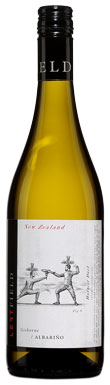
Succulent and ripe with lovely peach and red apple that caress the palate, followed by lemon cheesecake and a honeyed nuance. There’s depth, concentrated fruit...
2017
Left Field
Estampa, Reserva Viognier Chardonnay, Colchagua Valley, Chile, 2017
From a 7ha plot owned by Estampa, planted on clay over granite in the Marchigüe sub-region, 37 miles from the Pacific Ocean. Musky, slightly reductive...
2017
Estampa
Escarpment, Te Rehua Pinot Noir, Martinborough, Wairarapa, New Zealand, 2016
94
From 23-year-old vines aged in French oak, 30% new. It has a dark, dense colour and brooding damson and loganberry fruits shot through with incense. Medium- to full-bodied, it has intense, ripe, muscular tannins. It's very concentrated and savoury with real impact, and needs time to open up. Well-balanced acidity keeps things rolling. Impressive, but needs ageing to show its best.
2016
EscarpmentMartinborough
Chateau Musar, Bekaa Valley, Lebanon, 2008
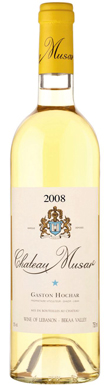
Made from two local grape varieties, Obaideh and Merwah, from 100 year old pre-phylloxera vines. The wine is released eight years after the vintage, and...
2008
Chateau Musar
Domaine Jones, Vieilles Vignes, Fitou, Languedoc-Roussillon, France, 2016
A blend of 15 small vineyards, most containing vines of more than 100 years old. It's wonderfully fruity on the nose: blackberry, plum, plus a...
2016
Domaine JonesFitou
Cave Julien Cécillon, Pierre Aiguille, Crozes-Hermitage, Rhône, France, 2016
Full, concentrated and mouthfilling fruit, backed up with camphor, smoky bacon and garrigue herbs. A lush, expansive, fruit filled style, well balanced and delicious and...
2016
Cave Julien CécillonCrozes-Hermitage
