
The 10 most improved Bordeaux châteaux


Bordeaux is often viewed as one of the wine world’s more traditional regions, but developments have picked up pace of late. Stephen Brook turns the spotlight on 10 producers where he believes that recent change has led to noticeable improvements.
Bordeaux is in a constant state of flux. Properties frequently change hands as economic crises or inheritance issues persuade owners to throw in the towel. On the Left Bank in particular, most châteaux today are no longer family properties but are in the hands of corporations or super-rich individuals.
This is not necessarily negative. It has not been enough for a new proprietor to brag of his acquisition. There must be discernible improvements. It’s a competitive world out there, and négociants, importers and journalists are constantly assessing performance. The steadily rising prices of the top wines must be justified by quality. Resting on laurels is no longer an option. Underperforming estates are often transformed by hiring a new consultant and throwing enormous amounts of money at the property concerned.Even during the five years between the publication of the second and third editions of The Complete Bordeaux, there have been significant changes. Properties long considered stagnant or obscure have risen again. At the same time, some already well-regarded estates have ratcheted up the quality a notch or two further. It hasn’t been easy to make a selection of the 10 châteaux I consider most improved in those five years since 2012. Some that seem worthy of inclusion – such as Gruaud Larose and Duhart-Milon – are starting from a high base, and the improvement has been gradual rather than dramatic. Other estates – such as Marquis d’Alesme in Margaux – have seen significant investments by new owners, but it’s still far too early to assess wine quality, though tastings suggest a distinct amelioration.So Bordeaux is evolving, and will continue to evolve. The concept of the second wine allows for rigorous selection and improving quality can now be taken for granted – if you can afford it.
Scroll down to see all Stephen’s tasting notes and scores
PAUILLAC
Pédesclaux
For decades Pédesclaux was arguably the dimmest of the Pauillac classified growths. Its owners, the Jugla family, had their defined markets and saw no reason to ramp up quality. A change of generation in 1997 saw some new investments and improvements. Indeed the 2000 was rapturously acclaimed at a Decanter blind tasting, although most subsequent vintages were unexciting.
Then in 2009, Pédesclaux was bought by estate-agent tycoon Jacky Lorenzetti, who already owned Lilian Ladouys in St-Estèphe. He installed as winemaker Vincent Bache-Gabrielsen, who insisted on ploughing and manual harvesting, and Emmanuel Cruse of Château d’Issan in Margaux as manager, after Lorenzetti took a substantial holding in that estate. In 2014, architect Jean-Michel Wilmotte imposed a dazzling glass façade on the conventional château and designed a new high-tech winery. If Lorenzetti wanted to make a statement, he succeeded.
At the same time Lorenzetti doubled the area under vine. In 2013 he fought the first growths over 14ha (hectares) of well-located vines – and won. The resulting wine now has sufficient concentration to survive ageing in 70% new oak.
Recent vintages have been overtly oaky but with splendid blackcurranty fruit. Lighter vintages have lacked some energy, but 2010, 2012, 2014 and 2015 show structure without excessive concentration.
ST-ESTEPHE
Calon-Ségur
This northerly vineyard, once under the same ownership as Lafite and Latour, released wonderfully elegant and long-lived wines in the 1940s and 1950s, and was often regarded as the finest wine of St-Estèphe. Thereafter its reputation declined. Among the reasons for this was a lowering of vine density and excessive barrel-ageing, giving the wines an unwelcome austerity and a shorter life.

The Capbern-Gasqueton family owned Calon since 1894, and after Philippe Capbern-Gasqueton died in 1995 his widow Denise managed the property until her death in 2011. Many regarded her with affection, but I was unmoved by her apparent charms, finding her an old-fashioned battle-axe. But she did make one important decision, hiring Dr Vincent Millet from Château Margaux as technical director in 2006, and then Eric Boissenot as consultant winemaker in 2009. Millet devoted his first months to studying the vineyards rather than tasting. He remained in place after the purchase of the property by a French insurance company.
Millet’s intense study of the vineyards resulted in the regrouping and replanting of the estate’s 55ha. More than half the vines are Cabernet Sauvignon, and the grand vin sometimes contains as much as 90% of the grape. The winemaking is classic, although since 2009 the grand vin has been aged in entirely new oak.
Given that Calon’s illustrious neighbours, Montrose and Cos d’Estournel, produce wines of great richness and power, one would have expected Millet to have done the same. Far from it. From 2010 Calon has excelled in terms of its finesse, freshness and delicacy. It shows seamless fruit and a light touch in terms of extraction, although it’s far from a light wine. Even in trickier vintages, Calon is beautifully poised and balanced. In recent years and vintages Millet and his team haven’t put a foot wrong.
LISTRAC
Saransot-Dupré
Listrac has long been something of a backwater, west of the Garonne estuary and away from the Médoc’s best terroirs. Its clay as well as gravel soils can inhibit ripening, so in the past there were many green, tannic wines. But climate change has benefited Listrac, as has an influx of well-heeled proprietors.
However, the Raymonds have been here since the early 18th century, and acquired this property in 1875. For many years Yves Raymond has looked after an estate that was almost entirely replanted in 1983. Merlot dominates, as it ripens earlier than Cabernet Sauvignon, which shares about 25% of the surface with Cabernet Franc and Petit Verdot as more minor bit players.
When in 2017 Saransot-Dupré won the blind tasting called the Coupe des Crus Bourgeois, it came as no great surprise. From 2009 onwards there has been a succession of well-crafted and complex wines, which married a New World opulence to a Médoc rigidity and tannic structure. It’s possible that the wide acclaim for the 2010 inspired Yves Raymond to maintain the very high quality he always knew his soils were capable of. The limestone soil here is part of the oldest geological layer in the Médoc.
PESSAC-LEOGNAN
Les Carmes Haut-Brion
This little walled property of 5ha, a Carmelite foundation, is close to Haut-Brion and thus within Bordeaux’s city limits. The Chantecaille family of négociants owned it from the 19th century and built the château, and from 1997 it was run by Didier Furt, who had married into the family. Its typicity derives from the fact that Cabernet Franc is the dominant variety, closely followed by Merlot, the remainder being Cabernet Sauvignon. The band of clay below the sandy, gravelly topsoil suits Cabernet Franc as well as Merlot.
I often admired Furt’s robust wines, and although he preferred them young, they aged well. They could be somewhat rustic, and there was undoubtedly a lack of consistency. In 2010 Carmes was purchased by property developer Patrice Pichet, who lived close by and clearly had his eye on the estate.
He was keen to build a new winery. But that wasn’t easy here: he didn’t want to pull out vines, and the estate’s small park was listed and couldn’t be built on. The only space available was the stream that traversed the vineyard. Architect Philippe Starck came up with the solution. He created a small island, and built the winery on and below it. The site determined the shape, which resembles a ship’s prow built from aluminium panels.
A beautiful new winery doesn’t confer greatness on a wine, although it’s a useful tool. Pichet also hired Guillaume Pouthier as technical director; he had worked with Chapoutier in the Rhône. He introduced optical as well as manual sorting, partial destemming, light extraction with manual punchdowns, and aged wine in 80% new oak.
Furt made excellent wines in 2008 and 2009, but in succeeding years the wine gained in texture, polish and opulence; it’s imposing but elegant, the tannins increasingly fine-grained. Even the 2013 was a success, though more forward in character. Only 35,000 bottles are produced, but it’s worth seeking out.
PESSAC-LEOGNAN
Smith Haut Lafitte
Despite their background as Olympic skiers and business tycoons, Daniel and Florence Cathiard are passionately committed to the property they bought in 1991. They rapidly transformed a dozy source of indifferent wines into a leading estate of Pessac-Léognan. The story is well known: they created a hotel, two restaurants and a spa offering wine-based therapies. They swiftly ramped up quality, and acquired other vineyards. Nor are they absentee landlords; they live on the property.

It never hurt that Florence Cathiard had been a senior advertising executive. When I once asked Daniel about their marketing strategy, he simply replied ‘Florence’. She soon boosted Smith’s international reputation. Fabien Teitgen proved to be a first-rate winemaker, sharing the Cathiards’ aim to push Smith to the highest level. Both white and red wines have been truly excellent for a long time, but Daniel Cathiard still seems willing to experiment and invest. In 2015 he initiated a new mapping of the vineyards to maximise information on the growing season.
Farming is along organic and biodynamic lines, and yields rarely exceed 35hl/ha. In the cellar there has been optical sorting since 2009, no crushing, and fermentation in wooden tanks or barrels with natural yeasts. For white wines too, yields are very low, as Teitgen and Cathiard want wines of power and density, even though the dominant grape is Sauvignon Blanc. Yet that density should never be at the expense of freshness and verve.
The red wine has long been acclaimed, but the white is equally impressive. The Cathiards have the will, as well as the resources, to go all out for quality.
ST-EMILION
Figeac
It may seem surprising to find Figeac included here. Hasn’t Figeac always been a great wine? Usually, yes, but not always consistently. This is linked to the high proportion of Cabernet Sauvignon in the vineyard, an appropriate choice for the gravelly soil in this sector of St-Emilion, but arguably over-represented. Ripeness is not an issue for Merlot here, but the Cabernets are more demanding.
Since 1947 Thierry Manoncourt owned Figeac, and after his death in 2010 changes were inevitable. He had long delegated the management to his son-in-law Eric d’Aramon, but there were mutterings that in this age of specialist professionalism, Aramon was too laid-back. In 2013, to widespread surprise, Manoncourt’s widow Marie-France dismissed Aramon, and he and his family moved out of the estate. It’s possible that the main reason for their departure was the failure of Figeac to be promoted, alongside Pavie and Angélus, to the very highest tier of classified growths in 2012.
Be that as it may, a new team was soon in place. Frédéric Faye, the former vineyard manager, became director, and Michel Rolland was hired as winemaking consultant. Many were dismayed by Rolland’s appointment, since his lush, super-ripe style seems the antithesis of the leaner Figeac profile. However, Rolland’s first vintage, 2015, dispelled those doubts, and tasters could detect no radical shift in style.
There had been earlier changes at Figeac before Rolland’s appointment that proved beneficial, such as the planting since 2008 of massal selections from ungrafted vines in order to improve the quality and potential of the estate’s plant material. Because of its varietal blend, Figeac is slower than most other top St-Emilion growths to shine, and it’s possible that this too has caused some to question its quality. It’s probable that with Rolland advising on the final blend, the wine will prove to be more accessible when it is young, without compromising its ability to age.
ST-EMILION
Sansonnet
That this 7ha estate is little known is unsurprising, as in 1996 it lost its place among the classified growths. A few years later the Robin family sold Sansonnet to François d’Aulan, the former owner of Piper-Heidsieck. He made substantial investments and halted machine-harvesting. Despite these good intentions, the wine continued to disappoint.
Sansonnet was bought in 2009 by Dr Marie-Bénédicte Lefévère. She hired some big guns as consultants: Michel Rolland’s protégé Jean-Philippe Fort and, on the commercial side, Jean-Luc Thunevin. They recognised Sansonnet’s potential, since it was located close to Trottevielle. Improvements were rapid: more thorough sorting, a cold soak, partial barrel-fermentation, a post-fermentation maceration, and ageing in 75% new oak. In short: a very modern vinification style, designed to produce super-ripe, structured wines that would also be accessible young. In the 2012 classification, Sansonnet regained its former position.
These are sumptuous, chocolatey, oaky wines with seductive fruit. Some vintages are high in alcohol, though scarcely discernible, but that is common these days on the St-Emilion plateau.
ST-EMILION
Trottevieille
This first growth has always made good wine, but it rarely stood out among its peers. Its vineyards lie just east of the village, so the location on the plateau is ideal, with Troplong-Mondot and Pavie nearby. The property forms part of the stable of châteaux owned by the Castéja family, who run the négociant business of Borie-Manoux. Their wines were relatively inexpensive and popular in certain markets, but never dazzled.

Philippe Castéja was certainly aware that the wines were workmanlike rather than brilliant, and were being increasingly overshadowed by other properties. He hired the late Professor Denis Dubourdieu in 2001 to work his magic, with considerable success. And nowhere more than at Trottevieille, where they had the advantage of working with an exceptional terroir, including some centenarian Cabernet Franc vines.
By 2009 the improvement was palpable, and even though the crop was severely reduced by hail, the wine that survived had fine tannins and surprising freshness. Subsequent vintages were even better.
POMEROL
Feytit-Clinet
Pomerol lacks a classification to help consumers sort out which of its countless small properties warrant attention. The great, reliable and humdrum are all bundled together. Feytit-Clinet was under the radar because it used to be an exclusivity of JP Moueix, so it never enjoyed the same billing as the company’s finest estates. However, in 2000 Jérémy Chasseuil took back control.
The vines are close to Château Clinet and slope gently down to the N89 road that bisects the appellation. The soils are gravel rather than clay, but clearly capable of producing full-bodied, opulent wines. Chasseuil rectified anything he perceived as poor farming, also reducing yields. The wine is almost pure Merlot, which is capable of withstanding the ageing in 70% new oak.
The transformation of Feytit-Clinet into a rich, modern-style Pomerol was immediate. There are certainly no bells and whistles here: a drab house, a functional winery and no promotional wizardry. An intimate connection with his 6ha of vineyards allows Chasseuil, a one-man band, to make exceptional wines even in difficult vintages such as 2002 and 2007. Chasseuil has grown in confidence, and his vigilance and sensitivity during the fermentation in concrete tanks has delivered outstanding wines in 2015 and 2016.
CADILLAC COTES DE BORDEAUX
Biac
For those launching bravely into estate ownership in Bordeaux, crucial decisions must be taken. Is the viticulture correct, are the vineyards healthy, is the plant material adapted to the site? Then a winemaker and costly consultant must be recruited. There follows the long wait for the first vintage – and the first scores. Yet it’s not enough for the wine to be good; it must find a market.
The Lebanese Asseily family seems to have found the right answers to these questions. Biac in Langoiran once enjoyed a good reputation, but previous proprietors had allowed quality to slide. Tony Asseily and his wife Youmna knew the area well and suspected that Biac could produce excellent wines. The 10ha of vineyards form an amphitheatre overlooking the Garonne, which moderates winter temperatures. The site is both well ventilated and sunny.

When Asseily met the former Mouton-Rothschild winemaker Patrick Léon at a dinner party, Léon, unaware of the change in ownership in 2006, happened to sing Biac’s praises. Asseily swiftly hired him as a consultant in January 2009.
Both men understood that were Biac to be offered at a modest price, like most Côtes de Bordeaux, it would never be recognised as a desirable brand. A high price would single it out, but the quality needed to live up to the highly ambitious marketing. It was a gamble, but they succeeded.
Merlot is the dominant grape variety in terms of vineyard area, but in practice the grand vin often contains about 70% Cabernet Sauvignon. New plantings are at a higher density, new drainage was installed and rootstocks adapted to the varying soils. Selection is severe. Fortunately the market has rewarded quality, and Biac now graces the wine lists of many top restaurants.
Château Calon-Ségur, St-Estèphe, 3ème Cru Classé, Bordeaux, France, 2015
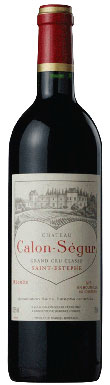

Really lovely bouquet: totally aromatic and full of finesse and restrained power. Great charm and purity of fruit on the palate, showing lovely precision and...
2015
Château Calon-SégurSt-Estèphe

Château Saransot-Dupré, Listrac-Médoc, Listrac-Médoc, Bordeaux, France, 2015
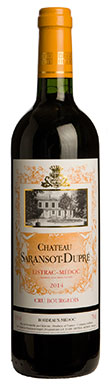
2010 was the breakthrough vintage here, and this 2015 maintains that high standard. The nose is dense but suffused with rich blackberry fruit, and there’s...
2015
Château Saransot-DupréListrac-Médoc
Château Les Carmes Haut-Brion, Pessac-Léognan, Pessac-Léognan, Bordeaux, France, 2014
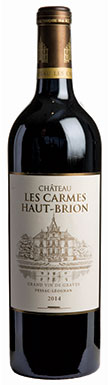
Opulent blackcurrant and black cherry nose, with admirable elegance. Lavish and concentrated, an imposing wine, with a long, spicy, intense finish refreshed by a touch...
2014
Château Les Carmes Haut-BrionPessac-Léognan
Château Smith Haut Lafitte, Pessac-Léognan, Pessac-Léognan, Bordeaux, France, 2014
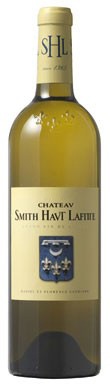
Highly successful across white and red in 2014, So much character and grip. Firm varietal definition, but with a touch lower acidity than some as...
2014
Château Smith Haut LafittePessac-Léognan
Château Figeac, St-Émilion, 1er Grand Cru Classé B, Bordeaux, France, 2015
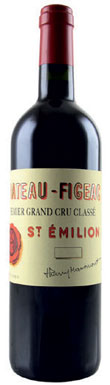
This Figeac expresses the solar character of the vintage while retaining enticing freshness. The bouquet is dense and complex with spicy, woody and graphite-like notes...
2015
Château FigeacSt-Émilion
Château Trotte Vieille, St-Émilion, 1er Grand Cru Classé B, Bordeaux, France, 2015
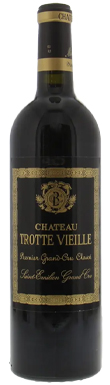
Dark liquorice, blueberry, cocoa powder and black chocolate - such a typical nose where you get more wood and savoury touches more than freshness of...
2015
Château Trotte VieilleSt-Émilion
Château Feytit-Clinet, Pomerol, Bordeaux, France, 2010
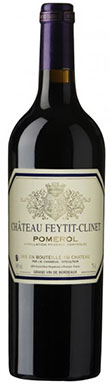
Heady, very oaky nose with plummy, savoury tones. Rich and opulent, highly concentrated and good acidity, with a hint of red fruits alongside the savoury...
2010
Château Feytit-ClinetPomerol
Château Biac, Cadillac Côtes de Bordeaux, Bordeaux, France, 2012
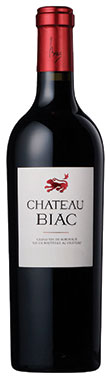
A fine terroir needs to be validated, but in some appellations the growers lack ambition and resources. Not here. This displays a rich, powerful blackberry...
2012
Château BiacCadillac Côtes de Bordeaux
