
Ageing Italian whites: A (patient) wine lover’s guide
Put aside those preconceptions, Aldo Fiordelli argues – as well as its plethora of young and-fresh white wine styles, Italy offers many surprising options that are well worth tucking away in your cellar. He highlights the producers to seek out, and 10 great wines to age


A strikingly beautiful wine of citrussy and flinty minerality, with subdued nuttiness and a refreshing style: undoubtedly Puligny, some of the wine lovers around the table were thinking. But it wasn’t. Similarly, it wasn’t as oung as estimated by the majority of us. Jaws dropped when the bottle was revealed to be a non-macerated Vitovska 1996 from Edi Kante in Carso, in Friuli-Venezia Giulia’s far south-eastern corner along the border with Slovenia.
In Italy, white wines are almost always intended for early consumption. Arneis, Cortese, Friulano and Vernaccia are all examples of delicious, crisp wines. Italian producers are not challenged to produce age-worthy whites, mainly because the consumer is suspicious of drinking them after more than two to three years. So, to what extent are we aware of the evolution of certain indigenous Italian white wines?
Looking around the country, there are at least two groups of grape varieties that deserve a more respectful approach. Vitovska, along with Trebbiano d’Abruzzo and Carricante, are fairly neutral whites marked by steely minerality, high acidity and low pH. On the other side, there are the more phenolic grapes such as Fiano, Garganega and Vermentino: less neutral, less aggressive in acidity, richer in body. Verdicchio shares characteristics with both groups.
‘It’s hard to explain how fresh and precise Valentini’s 1977 Trebbiano is now’
Of course, it must be said that there are also outstanding examples of international grape varieties in Italy with well-known labels, including Antinori’s Cervaro della Sala from Umbria (a blend of Chardonnay and Grechetto), Gaja’s Gaia & Rey from Langhe (Chardonnay) and Querciabella’s Batàr (Chardonnay and Pinot Bianco) in the SuperTuscan category.
There are also two recent novelties to look for from Tuscany. The stunning Ornellaia Bianco is a Sauvignon Blanc-led blend made in a Graves style. And another surefire bet will be released this year by Andrea Franchetti in the Val d’Orcia: a unique Semillon from the 2017 vintage which promises long bottle ageing, with a style crossed between Bordeaux and Hunter Valley.
Steely, neutral grape varieties
Nonetheless, we have an indigenous identity to explore in Italy. Edi Kante picks his Vitovska from 19-year-old vines on the calcareous rock of Carso Triestino, with yields (in 2016) of 500-600 grams per vine. He ferments it in neutral oak barrels with 12 months of ageing on the lees in order to bind the steely acidity of the wine, giving more balance to the lightweight character of the grape. This wine’s ability to age is thanks to it achieving balance when young as opposed to it being intentionally crafted for age. Its neutral character is the perfect vehicle for a depth of chalky-citrus notes with subtle nuttiness.
The same approach unites Vitovska with Sicily’s Carricante. According to a survey conducted by Salvo Foti and Rocco Di Stefano at Etna, ‘the Carricante grape shows neutral aromas, with low levels of terpene compounds’.
This flagship variety of Mount Etna is a trend within a trend: according to Foti, the number of wineries in this region increased from 10 in 2000 to 250 in 2015. Since 2011, the producers on Etna have consistently worked on the concept of the ‘contrada’ (a smaller division of a commune) to define the different slopes. One of the best for whites is Caselle, within Milo village on the east side of Etna. The DOC Superiore category comes only from this village, with vineyards at an average altitude of 750m.
Productive and characterised by an extremely low pH, Carricante ‘is as if eating a green lemon slice with salt when young’, remarks Foti. ‘Ageing is almost compulsory, in order to mellow the acidity and increase complexity,’ adds the winemaker. In 1988, when the winery was known as Tenuta di Castiglione, Foti experimented in making wines with Benanti. Benanti’s Pietra Marina is a benchmark for the whites of Etna given its incomparable vibrancy when young and complexity with ageing. The 2001 shows a Champagne-like evolution today, mixing baroque citrus characters with patisserie flavour. Other producers to look for are Barone di Villagrande and Federico Graziani.
Standing in a class of its own, and moving north on the mainland to Loreto Aprutino in Abruzzo, we must consider Valentini’s stunning Trebbiano. The true Trebbiano Abruzzese differs from Trebbiano Toscano because its large leaves shade the grapes, preserving a kind of leafiness. The acidity of Trebbiano Abruzzese drops very quickly if the grapes overripen; the window for quality is the bullseye on a target. Francesco Paolo Valentini’s approach over the 65ha of vineyards from which he produces only 50,000 bottles is to follow what is given by nature, aided by a deep library of data from vintages since 1817. His Trebbiano is always elegant, limey and chalky when young, developing great personality. It’s hard to explain how fresh and precise his 1977 is now, with hazelnut, caramel and white chocolate supported by a candied-grapefruit vibrant finish, or the coffee powder melted with cedar of the 2001 vintage.
Making our way up to the Marche region, Verdicchio grows in the coastal area of Jesi as well as in the inland Matelica. Ripening two weeks later, Matelica shows both more alcohol and more acidity, with a depth of angelica and honey that lend complexity compared to the more flinty character of Jesi. Leonardo Valenti, viticultural science professor at the University of Milan and Pievalta’s consultant, has had plenty of experience taming Verdicchio’s phenolic character: ‘Like Fiano, Timorasso and Vermentino, Verdicchio is rich in phenols,’ he says. ‘It’s not only a more challenging extraction but, as with red wines, a resource for ageing.’ Sometimes too austere, and similar to dry Riesling when young, Jesi shows its potential, with its seaweed character and acacia honey flavour, in Pievalta’s 2004 vintage. Other producers to look for include Tenuta di Tavignano, Villa Bucci and Colle Stefano (Matelica).
Richer and more phenolic
In 1991, it was demonstrated that Verdicchio is identical to Trebbiano di Soave, the steely alter-ego of the more sophisticated Garganega in Soave blends, effectively linking Marche with Veneto in the north. 2020 is promising to be one of the most exciting years yet for Soave as the 33 new mapped crus will be released, classified by soil composition, altitude, gradient and vine-training system.
Top producers such as Pieropan have already emerged with crus such as La Rocca (chalky soils) and Calvarino volcanic soils). For Andrea Pieropan, the idea that Italian white wines are not able to age was born due to viticultural practices that suited high yields. ‘At those levels, not even Chardonnay is good. At lower yields, though, our wines have great potential.’ La Rocca Soave Classico 1995 is today full of minerality, with aromas of dried rose and orange peel, peach tea and lemon curd; strikingly more complex compared to the restrained stone-fruit character and frangipani flower of the current release.
Down in the south in Campania, the rivalry between Greco and Fiano is, in my opinion, won by the latter. Both grape varieties are Photograph: Herbert Lehmann/Cephas capable of producing white wines that can masquerade as red. But while Greco is good young as well as aged, it’s a mortal sin to drink Fiano when young. Nowadays planted all over the world (California, Australia), Fiano finds its best expression around Lapio in Avellino and Paestum in Cilento. Lapio’s volcanic soils give the wine its typical smoky character even in its youth. Producers to seek out here are Ciro Picariello and Romano Clelia Colli di Lapio. In Paestum, the best and more sophisticated expressions are made by Luigi Maffini. The 2005 vintage developed subtle kerosene hints only after 10 years, while maintaining notes of candied citrus, fresh kiwi and stony, mineral length with a hint of nuttiness. Fiano is arguably the best match for a pizza.
‘While Greco is good young as well as aged, it’s a mortal sin to drink Fiano when it’s young’
Commercially speaking, Vermentino is a standout among emerging grapes: a highly popular wine that’s sold out every year by June. Mostly considered a summer wine to enjoy during holidays along the coastal zones of Sardinia, Liguria and Tuscany, it also possesses the phenolic grip to age. In the granitic soils of Gallura, proper yields, oak fermentation and ageing are producing treasures such as Siddùra’s Bèru 2016, which claimed a Platinum medal at the 2019 Decanter World Wine Awards. Other producers to watch are Ivan Terenzuola in Colli di Luni, Grattamacco and Poggio al Tesoro in Bolgheri.
Last but not least, a new DOC for Derthona Timorasso in Colli Tortonesi, southeast Piedmont, is close to being officially approved, according to the local consorzio’s president, Gian Paolo Repetto. The ‘riserva’ of what many refer to as ‘Barolo bianco’ will be released only after three years of ageing – a considerably longer period than the standard for Italian white wines generally. Many top Langhe producers, such as Borgogno, Oddero, Pio Cesare, Roagna, Vietti and Voerzio, are betting on this grape variety (known at times to resemble a dry Riesling), despite its tendency to suffer from millerandage (different-sized berries on the bunches).
Going beyond
Paraphrasing Richard Baudains in his 2007 Decanter article entitled ‘Beyond Pinot Grigio’ (in which he, in turn, referred to Nicolas Belfrage’s revolutionary book, Life Beyond Lambrusco), we must move beyond Prosecco, beyond the concept of ‘the younger, the better’, beyond the prejudice that Italian white wine is unable to age. The leitmotif of the wines explored in this article proves that low yields, low pH, proper and occasional oak ageing and the biodiversity of Italy have immense potential for a life beyond immediate release.
Aldo Fiordelli’s pick: Ten Italian whites to age
Valentini, Trebbiano d’Abruzzo, Trebbiano d’Abruzzo, Abruzzo, Italy, 2015
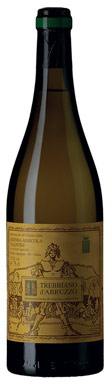

2015 was cool and rainy in spring, warm and dry in July and August; the harvest was then postponed. The wine has its typical reductive...
2015
ValentiniTrebbiano d’Abruzzo

Cantina Terlano, Terlaner I Grande Cuvée, Trentino-Alto Adige, Italy, 2016
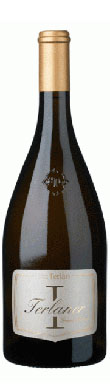
75% Pinot Bianco with Chardonnay and just 2% of Sauvignon Blanc. Focused on candied lemon, iodine minerality and a mix of citrus, white peach and...
2016
Cantina Terlano
Pieropan, La Rocca, Soave, Classico, Veneto, Italy, 2017
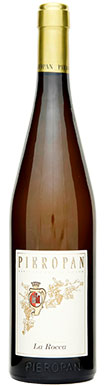
100% Garganega, from the La Rocca vineyard on chalky soil at 200m-300m, where the grapes are smaller and thicker-skinned, and picked when very ripe. Full...
2017
PieropanSoave
Siddùra, Bèru, Sardinia, Italy, 2016
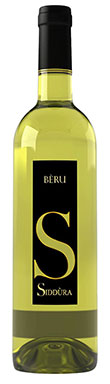
Granitic soils and the northwest Maestrale wind concentrate the grapes and bring quintessential Mediterranean flavours. From a balanced vintage and, despite its overtly oaky character,...
2016
Siddùra
Benanti, Pietra Marina, Etna, Sicily, Italy, 2016
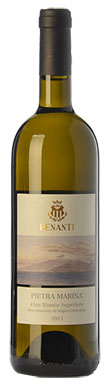
From 80-year-old Carricante bush vines in Milo village at 750m. When young, it seems to have a margarita-like profile with notes of salty lime, a...
2016
BenantiEtna
Pievalta, San Paolo, Verdicchio dei Castelli di Jesi, Classico, Le Marche, Italy, 2016
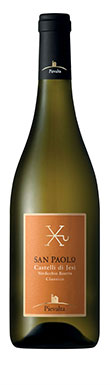
Fermented in stainless steel, aged on lees for 14 months. Clean, pure lemony aromas are layered with fennel and gherkin notes. On the palate, the...
2016
PievaltaVerdicchio dei Castelli di Jesi
Luigi Maffini, Kratos, Paestum, Campania, Italy, 2018
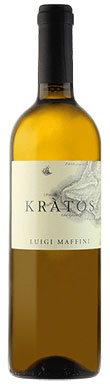
Luigi Maffini and his wife take a holistic approach to express the elegance of Fiano on chalky soil. A wine of great Campanian character: green...
2018
Luigi MaffiniPaestum
Tenuta di Trinoro, Bianco di Trinoro, Tuscany, Italy, 2017
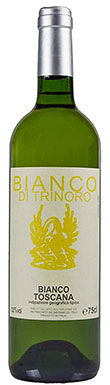
100% Semillon from a tiny parcel of sand in the highest reaches of the Trinoro estate. Whole clusters were fermented in stainless steel, the wine...
2017
Tenuta di Trinoro
