
Amphora wines: The joy of clay
Are wines made in amphorae just the latest winemaking fad, or is there something more substantial to it? Simon J Woolf gets to the bottom of winemakers’ growing affinity for clay vessels...


They’ve become a must-have accessory for wineries everywhere on the planet, in much the same way that hip restaurant kitchens boast a kamado grill, or craft breweries proudly show off their clutch of used Sherry barrels. Their primeval form commands attention: they are an Instagrammer’s dream.
Progressive winemakers gush about their unique properties and their innate suitability for making great wine. Make no mistake, amphorae have carved out an increasingly visible and trendy niche in 21st-century winemaking. Yet just a decade ago, these archaic clay vessels were largely dismissed as part of wine’s history, barely relevant to modern viniculture. Why have winemakers across the globe fallen so in love with them?
Scroll down for Woolf’s top amphora wine picks
Fashion may have a part to play, but the return to clay as a medium for fermentation and ageing has been driven more by a quest to find the perfect vessel. We’ve been here before: supposedly unhygienic barrels gave way to cement tanks in the 1950s and ’60s, only for those to be swiftly succeeded by eminently practical, airtight stainless steel tanks. Missing character and subtle micro-oxidation, winemakers in the 1980s ushered in the golden age of the French new oak barrique. More recently, overt oak character has become passé, replaced by a desire for greater fruit expression and more neutral vessels that are less sterile than steel.
Enter Georgia, right on cue.
Qvevri revelation
The republic of Georgia’s winemaking culture has 8,000 years of documented history. Since antiquity, Georgians have always fermented and aged their wines in the large clay amphorae known as qvevri. Unfortunately, the Soviet era greatly damaged this long-held tradition, simultaneously obscuring Georgia’s winemaking techniques from the western world until the 1990s.
In Italy, Friulian winemaker Josko Gravner was perhaps the first to lift the veil on Georgia’s traditions, when he visited in 2000. Gravner had become dissatisfied with modern technology, feeling it wasn’t helping him to express the maximum potential of his grapes. His first taste of a qvevri wine was a revelation: ‘I was astonished by the result of this kind of production. It was heavenly.’ He immediately ordered a batch of qvevris and installed them in a new purpose-built cellar at his winery.
Gravner’s renown was already considerable, and his enthusiasm for qvevris quickly became infectious. Winemakers from Italy and beyond followed in his footsteps, also visiting Georgia, then more often than not placing their own orders. Notable examples include Paolo Vodopivec in Friuli Carso, Kabaj winery in neighbouring Slovenia and Belgian Frank Cornelissen, who makes wine in Sicily’s Etna region.
Giambattista Cilia, Cirino Strano and Giusto Occhipinti (founders of COS winery in Vittoria, Sicily) also visited Georgia in 2000, but ultimately decided to work with small Spanish amphorae: tinajas. COS now boasts an impressive 150 tinajas, all holding roughly 400 litres and made by Spanish master craftsman Juan Padilla. Occhipinti explains that the vessels allow more terroir expression than barrels: ‘Clay has the distinction of letting the wine breathe like it would in wood, but without the contribution or addition of wood, so we have more precision of the territory of origin.’
Occhipinti’s friend Elisabetta Foradori, the elfin winemaking genius of Trentino, became similarly enthused with tinajas. Occhipinti introduced her to Padilla in 2005, opening up what she describes as ‘a whole world of possibilities’. Foradori is particularly passionate about her skin-fermented white wines, Fuoripista Pinot Grigio and Fontanasanta Nosiola, both fermented and aged in the tinajas. ‘It takes six to eight months for the wine to absorb the message of the skins,’ she explains. ‘It’s like an infusion.’ Her winery now boasts no less than 180 of Padilla’s tinajas, spread across three separate cellars.

Clay converts
Božidar Zorjan, a biodynamic winemaker based in Slovenia’s Stajerska region, has been a fan of clay for perhaps longer than anyone outside Georgia. Visiting Croatia in 1995, a hawker selling miniature amphorae to tourists caught his attention. ‘Can you make me a real one of those?’ he asked. The response didn’t invite confidence: ‘Maybe, but how do I actually know it’ll work?’ asked the seller. Zorjan replied: ‘Just check if it will hold water – if it does, it’s good. And by the way, I’m not paying the same price as the tourists!’
Zorjan took delivery of the 40-litre vessel and used it to ferment a late-harvest wine. It promptly won a prize at a local tasting. He didn’t mention the unconventional nature of its production, but he did buy more and larger amphorae from the unlikely Croatian craftsman, expanding the range of wines he made in clay.
Zorjan later switched to using Georgian qvevri, after his original supplier died. ‘I’m not interested in how they make wine in Georgia, or even in Brda,’ he says contrarily. ‘I want to understand how we made wine in this region 2,000 years ago.’
His qvevris are buried under the stars, and the wines lie undisturbed for up to seven years. The results, almost all made from white grape varieties, are complex and structured but often beguilingly fresh.
Fresh thinking
The perceived uptick in freshness is a positive that Gernot Heinrich also associates with amphorae. Heinrich is a major Demeter-certified winery in Austria’s Burgenland region, producing half a million bottles a year, and Gernot (the owner) has transitioned it increasingly towards a minimal-intervention style of production.
After purchasing five amphorae in 2017, he made a significant investment in 2018, adding a further 66. The amphorae are manufactured in China, with a 3cm wall (thicker than a qvevri) and dense structure.
Gernot reflects on the advantages: ‘The wine stays fresher and more reductive than with oak. What I like is that the temperature [during fermentation] doesn’t go beyond 27°C-28°C. And there is no technology needed.’ He’s very satisfied with the first year’s results – skin-macerated Traminer, Pinot Noir and Blaufränkisch among them.
‘I’m convinced that this is the perfect way to ferment white and red, and to age wines too. The development is very slow and gentle.’
Adherents of clay have spread far beyond central Europe. Georgian wine and qvevris have a surprisingly large fan-base in France, a wine nation not especially known for being outward looking. Loire-based producer Thierry Puzelat is famed for his natural wines, and he’s also an advocate of qvevris, promoting and importing Georgian wine to France. Puzelat’s fascination was fuelled by US journalist Alice Feiring, who introduced him to two Georgian winemakers in 2010.
Intrigued and impressed by the wines, he ordered a truckload of qvevris, which finally arrived in 2013. Five years in, he’s really beginning to appreciate their qualities: ‘With oak, each barrel has its own story. When you’ve got the same wine in 20 different barrels they are brothers and sisters but you have 20 different wines.’
He finds much more consistency with qvevris. ‘The clay is not neutral but doesn’t give as much influence as the barrel,’ he says. ‘There is no aroma from the clay, but there is aroma from what happens in the clay.’

Not for everyone
Puzelat is one of many who emphasise the importance of cleaning when it comes to qvevri. Wines made in any kind of amphora should not have a strong earthy flavour, something which generally indicates a dirty vessel. Puzelat has experienced issues with small ‘mufa’ funghi which grow underground and penetrate the body of the qvevri, imparting off-flavours to the wine. ‘The problems are different to barrels, but just as important. If you don’t smell it before you fill it, it could be game over.’
Puzelat takes a balanced view of positives and negatives, but for some the magic spell of clay has waned. Ewald Tscheppe, of Weingut Werlitsch in southern Styria in Austria, renounced his qvevris in 2010. He explains: ‘I found out that I’m just more in tune with barrels, and I could never find the right place in my cellar for them anyway.’
Tscheppe adds: ‘For the wines I’m looking for, it’s not so important if it is a qvevri or a barrel. More important is that the wine can breathe naturally and the liveliness of the grapes stays in the wine.’ Winkler-Hermaden in nearby southeast Styria has also abandoned its qvevri project, claiming that the vessels were just too difficult to clean.
The aforementioned Frank Cornelissen fell out of love with his tinajas around 2013. Obsessed with hygiene as he works completely without sulphur dioxide additions in the winery, Cornelissen has moved all fermentations to plastic tubs, and almost all ageing to fibreglass or epoxy vats, which he asserts are completely neutral, but without the unwelcome reductiveness of stainless steel.
Join the queue
For most converts though, the only issue is availability. With fewer than 10 artisans in the whole of Georgia, waiting lists for qvevris can be in excess of a year. Juan Padilla is rumoured to be considering retirement. New amphora producers have sprung up in Tuscany, Spain and of course Asia, but as orders flood – not just in the ones and twos, but in the the hundreds – production is inevitably under stress.
Is there a danger that the hype will fizzle out, that the amphora boom will bust? Could clay seem as outdated as 200% new oak in a decade from now?
Gernot Heinrich doesn’t think so: ‘It’s just a better way to produce wine. That’s it.’
Potted history: the key terms in amphorae and clay vessels
The word amphora has Greek origins, and describes a small round-bottomed ceramic or earthenware vessel used for storage, typically holding less than 50 litres. True amphorae usually have two handles and a very slim neck. Two different Greek sizes and shapes more closely resemble those used in the modern era for winemaking:
Pithos A medium-sized vessel, with a capacity of up to 1,000 litres. COS winery, in Sicily, uses the term to denote its amphora-fermented range.
Dolium Flat-bottomed and very large, with a wide mouth. According to Oregon-based potter and winemaker Andrew Beckham, this is the most suitable shape for fermentation.
Local variants
Tinaja Spanish term, which translates literally as ‘jar’. Tinajas are smaller than their Georgian counterparts (400-litre is a popular size), and they usually have flat bottoms.
Qvevri Georgian traditional amphora,with a characteristic sharp point at the bottom and a narrow mouth. Qvevris are usually made in sizes between 500L and 2,000L, occasionally larger. They are, somewhat uniquely, buried in the ground up to their necks.
Talha Portuguese name for vessels that were once common in the Alentejo region, now experiencing a small renaissance. Talhas have a squat shape, narrow neck and very wide middle. They come in a variety of sizes, sometimes as large as 1,500L or more.
Simon’s amphora wine picks:
Simon J Woolf is an awarded wine writer who specialises in natural wine, and author of Amber Revolution: How the World Learned to Love Orange Wine
You may also like:
Can you taste amphora ageing? Ask Decanter
The Chenin Blanc renaissance? Loire vs South Africa
Bolgheri 2016: One of the best vintages ever?
Dobrá Vinice, Chardonnay, Czech Republic, 2013

Taking inspiration from Joško Gravner, Petr and Andrea Nejedlík invested in Georgian qvevri in 2012. This big, bold Chardonnay is one of the results, with...
2013
Dobrá Vinice

Aphros, Phaunus Loureiro, Vinho Verde, Portugal, 2017
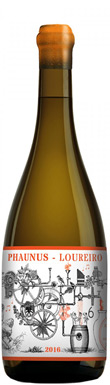
Made in a huge, squat talha (an amphora from Alentejo), this unique reading of the lively Loureiro grape replaces its usual perfume with earthy, baked...
2017
Aphros
AD Beckham, Pinot Gris, Oregon, USA, 2016
Andrew Beckham started life as a potter, and makes his own amphorae. This deeply coloured Pinot Gris is a dead ringer for a light northern...
2016
AD Beckham
Cantina Giardino, Anfora Bianco, Campania, Italy, 2017
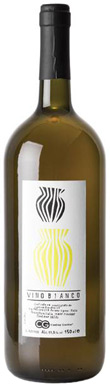
This blend of Coda di Volpe with one-third Fiano is given 10 days of skin contact, and it explodes with vitality and nervous energy. Subtle...
2017
Cantina Giardino
Zorjan, Dolium Muscat Ottonel, Štajerska, Podravje, Slovenia, 2015
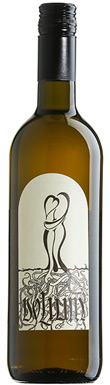
Fermented and aged more than two years in Georgian qvevri, the aromatics of this quirky bottle are subtle and elderflower-like. Muscat’s thick skins provide substantial...
2015
ZorjanŠtajerska
Loxarel, A Pèl, Penedès, Spain, 2016
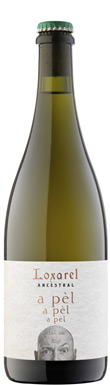
Xarel-lo’s exuberant ripe apple fruit sings loud and clear in this tinaja-fermented and aged version, bottled unfiltered with no added sulphur. The nose feels wild...
2016
Loxarel
Tbilvino, Qvevris Rkatsiteli, Kakheti, Georgia, 2016
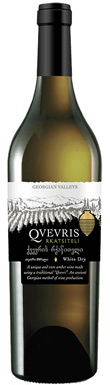
Tbilvino’s entry-level qvevri wine is an excellent introduction to the style, made with the traditional six months of skin contact, but less stems. Ripe apricot...
2016
Tbilvino
Papari Valley, 3 Terraces Saperavi, Kakheti, Georgia, 2017
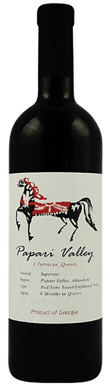
The exceptional quality of Nukri Kurdadze’s estate-grown fruit sets this traditional qvevri-fermented and aged wine apart from its peers. The concentrated brambly fruit is balanced...
2017
Papari Valley
Foradori, Granato, Trentino-Alto Adige, Italy, 2016
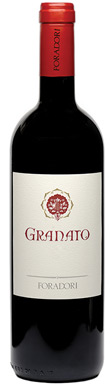
Elisabetta Foradori’s top Teroldego is also the estate’s most delicate, at least in this vintage. Fermented and aged in small Spanish tinajas, the red berry...
2016
Foradori
Zorah, Karasì, Armenia, 2016
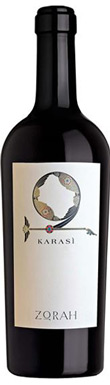
The story is beguiling enough: Areni Noir grapes grown at 1,400m, fermented in concrete and aged in traditional Armenian karas (amphorae). The wine easily trumps...
2016
Zorah
Sierra de Toloño, Camino de Santa Cruz, Rioja, Northern Spain, Spain, 2016
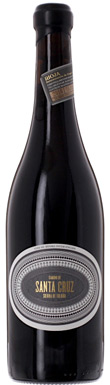
Serious Rioja doesn’t just have to mean vanilla and toasted oak. This single-vineyard Alavesa offering from winemaker Sandra Bravo was fermented in amphora before ageing...
2016
Sierra de ToloñoRioja
Herdade de São Miguel, Art Terra Amphora Tinto, Alentejo, Portugal, 2017
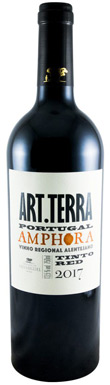
Aragonês and Trincadeira with 10% Moreto, fermented in large talhas, with a very long skin maceration of two months, then aged further in smaller clay...
2017
Herdade de São Miguel
