From the archive: Côte-Rôtie 2012 panel tasting results


These Côte-Rôties are now within their drinking windows, according to our expert panel. Do you have any in your cellar?
Originally published in Decanter magazine's July 2015 issue and now available online in full, with tasting notes exclusively for Premium members
54 wines tasted with one rated Outstanding
The panel tasters were: Gearoid Devaney MS, John Livingstone-Learmonth & Matt Walls
With influences from Burgundy clear, young producers showed their mettle in this tasting – a positive sign for the appellation’s future, says John Livingstone-Learmonth…
Relative youth – producers who have not experienced 20 vintages or more – were among our top scorers here, which is an encouraging sign for Côte-Rôtie.
The brothers Duclaux are clued-up, formally trained lads, while Aurélien Chatagnier, who started at St-Joseph in very rundown premises on a shoestring in the early 2000s, is a pupil of the Beaune Wine School.
Scroll down to see the top wines from this panel tasting
Likewise, Stéphane Pichat, whose father sold his crop to merchants, takes his inspiration and his casks from Burgundy. In tune with the search for finesse, he has eased back on new oak use since he started in 2000.
Maxime Gourdain took over Domaine de Rosiers from his uncle in May 2013; his schooling was at Mâcon Davayé and, starting with 2012, he has given the wine from this very reliable estate lift and more dynamic fruit.
With influences from Burgundy in the ascendancy, the recent trio of cool-climate vintages have fitted in well with the new philosophy and self-confidence of these growers.
It was encouraging that over-extraction, a crime noted in the past, was not in evidence. 2012 is a vintage that requires time to find its own way, to absorb some of its acidity, and to gain stealthy weight as it evolves.
Quick link: View all 54 wines from this panel tasting
The southern part of Côte-Rôte produced the top two wines. Bassenon, whose official title is Coteaux de Semons, is the last stop before Condrieu, a small stream separating them; Maison Rouge lies just a little further east. They were both fresh, and also tighter and more complex than in the hot years such as 2009 and 2010. Hence they told a satisfying story about their vineyard, rather than the cellar.
The performance of merchants based further south in Tain l’Hermitage – namely Delas, Chapoutier and Ferraton – was subdued. A few bottles also proved that the inclusion of 20% Viognier stifles the free-running fruit of the Syrah, and results in an overburdened, clumpy wine.
There were three 2011s submitted, all from the Guigal stable. All showed well, backed by the stuffing and ample content that is usual, but also with delicate, scented touches.
The scores
54 wines tasted
Entry criteria: Producers and UK agents were invited to submit their 2012 Côte-Rôties. As E Guigal is a key producer in the region but does not release its 2012s until later in the year, it submitted its 2011s.
Exceptional 0
Outstanding 1
Highly Recommended 9
Recommended 37
Commended 0
Fair 6
Poor 0
Faulty 1
Continue reading below
The results
The wines of Côte-Rôtie are often more subtle than people may expect, especially when comparing them with the neighbouring northern Rhône Syrah appellation of Hermitage. Indeed, Hermitage and Côte-Rôtie are often seen as twins, when in fact they are very different.
‘Côte-Rôtie may be south-facing but it’s actually quite far north, so consumers shouldn’t expect huge structure and powerful wines, but something with more elegance and finesse,’ said Matt Walls. Gearoid Devaney MS agreed: ‘There are big, black, monstrous wines in certain vintages, but those aren’t a true reflection of Côte-Rôtie. Those that interested me most had elegance, an acid backbone and firm structure.’
John Livingstone-Learmonth described 2012 as a ‘purist’s vintage rather than a crowd pleaser’. Devaney concurred, adding that ‘they are not wines based on a nice, long, sunny summer, but wines based on terroir.’
For Walls, who tasted the 2012s from barrel last November, the wines didn’t perform quite as well as he was hoping for here: ‘Some lacked a bit of concentration and some were a bit light.’ But Devaney made a fair point: ‘Some of these wines may only have been bottled in the last few months, so we are tasting them in a very delicate window of their maturity.’
Livingstone-Learmonth insisted that 2012 was a vintage that needed patience. ‘There is terroir in the best wines, and I would advise wine lovers to take their time as the wines will reward patience and most likely will develop a bit of weight, corpulence and depth as they evolve.’
Devaney shared his view: ‘In their youth these 2012s can be quite shy with their fruit, showing only the structural elements. In the next five years they should start to give more pleasure.’ Livingstone-Learmonth went even further, recommending that drinkers wait until 2030 to broach the ’12s.
Walls was not as optimistic ‘The best wines had very vivid and bright aromatic profiles. Some I would enjoy today quite happily and they will certainly improve over the next two or three years, but I don’t think it’s a vintage to keep for the long term.’
The panel praised the consistent quality and agreed that, happily, the over-oaked style of the past was ‘yesterday’s story’. Livingstone-Learmonth said: ‘There was the odd example of oak sweetness, but none were clubbed by oak. Producers are taking a more relaxed approach and looking to Burgundy for inspiration.’
For Devaney, the modern versus traditional style seemed almost unnoticeable: ‘A few producers were were pushing the extraction, but overall I think a lot of wines fell into that ‘good quality’ bracket and then there were a number of high points within that.’
Livingstone-Learmonth concluded that ‘a tasting like this won’t ever be stacked with five-star wines; the tasting notes will tell more of the story than the scores.’ Devaney echoed his view: ‘These aren’t singing-and-dancing wines. Those that scored well showed good acidity, good structure and good tannins, and right now structure is dominating because the flavour profile will not come through for another six months or so.’
Our tasters each pick their top 3 wines from the tasting:
Gearoid Devaney MS
Devaney works at Flint wines, an independent London-based merchant. He has worked as a sommelier for restaurants including London’s Capital Hotel, l’Oranger and Tom Aikens as well as Pierre Gagnaire in Paris. He was UK Sommelier of the Year 2008, and is now a Master Sommelier.
‘This was a really surprising tasting, with the wines on the whole showing well, considering the difficulties presented by the 2012 growing season. The vintage was saved by a good, warm finish to the season and health-bringing winds. Also, sensible winemakers will have reduced their yields and been vigorous at the sorting tables.
‘The wines were good overall and showed a real sense of place. I will be intrigued to see whether the top sites have shown through in the results, as some wines were very mineral and stoney. It was great that only a few wines suffered from over-zealous use of new oak – I think that would have been different five or 10 years ago. These wines will age but will show well in the next two to five years rather than having to be cellared for decades.’
Yves Cuilleron, Bassenon 2012
A great wine that always delivers. Lots of fruit and spice, vibrant acidity, granite minerality and nicely done oak – usually about 50% new. Bassenon is the name of a stream that cuts through this vineyard. 95/100 Drink 2018-2031
Benjamin & David Duclaux, Maison Rouge 2012
These talented brothers are a reliable source of top Syrah and this lieu-dit, Maison Rouge, which sits on gneiss-based, rocky soils on south-facing slopes in Tupin does not disappoint. 91 Drink 2016-2025
Jean-Michel Gerin, Champin Le Seigneur 2012
A blend of different terroirs mostly from the north, from an estate started in 1983. I’ve followed these wines since my first sommelier role 18 years ago, so am pleased it did so well. 91 Drink 2017-2029
John Livingstone-Learmonth
Livingstone-Learmonth is the DWWA Regional Chair for Rhône. Since first visiting the region in 1973, he has dedicated most of his life to writing and talking about its wines. He is the author of four books on the Rhône, including The Wines of the Northern Rhône, which won the Louis Roederer International Book Prize in 2006, and runs Drinkrhone.com.
‘2012 is a subtle vintage, and the tasting endorsed that. It doffs its cap towards Burgundy, which is the inspiration for many younger growers. They are happy to work with acidity, and thrive on obtaining pure fruit, which was often in evidence here. As such, this vintage of freshness will develop weight gradually, just as the grapes ripened gradually.
‘Here the expression of granite and schist – the rocky face of the hills – was often captured in the glass, the aromas clear and varied, the fruit lucid, the tannins fitting neatly into the whole package.
‘At first, the wines in cask could be a little stark, but their thread of acidity always promised an interesting route ahead. They possess a naked quality which will beguile thoughtful drinkers most satisfactorily over time. Winemaking is now accomplished at Côte-Rôtie, which rules out fears of overoaking. Wines that underperformed had less fruit on the mid-palate. 2012 is a vintage to cellar, and drink from five or six years old. It is better than the more obvious, immediate 2011, but not as good as the legendary 2010, a year I place on a par with 1978.’
Yves Cuilleron, Bassenon 2012
The paradigm for Côte-Rôtie: notes of mineral? Check. Atypical floral note? Check. Captures the freshness of the vintage? Check. A true Syrah from granite? Check. Enough written. Bravo, Yves! 96 Drink 2018-2031
Paul Jaboulet Aîné, Domaine des Pierrelles 2012
The new owners here have started to get their eye in, and this was an encouraging example of that welcome trend: a serious yet enjoyably pretty wine. 94 Drink 2015-2025
Domaine Bonnefond, Côte Rozier 2012
This has quiet class, backed by the clarity and tingle provided by the hard rock of the Rozier hillside. Its balance and juicy fruit will sweep up its oak in time. 91 Drink 2015-2026
Matt Walls
Matt Walls was made a contributing editor for Decanter in 2017. He won Best Newcomer at the 2013 Fortnum & Mason Food and Drink Awards, and the Rhône is a regular focus of his writing.
‘The 2012 vintage in the northern Rhône has a lot to offer: fresh, vibrant wines with defined aromatics and a precise sense of place. As you move from Cornas, Crozes-Hermitage and Hermitage up towards Côte-Rôtie, however, the wines become slightly less reliable.
‘Fifty kilometres north can make a big difference in this marginal climate for Syrah, and there were a handful of wines in this tasting that lacked concentration and interest. But these were relatively few and far between, and there are plenty of Côte-Rôties of real elegance and finesse to choose from in this vintage.
‘It’s hard to think of many other red wine regions that can deliver such impact and intense flavour at such low alcohols; almost all the wines were just 12.5% or 13%. Most are approachable now and the rest will be in a year or two – they aren’t intensely concentrated or terribly tannic, but that’s not always a bad thing. Although as a rule 2013 is a better vintage for Côte-Rôtie, the wines will take longer to come round. The best of 2012 will provide some beautifully aromatic and highly drinkable bottles in the meantime.’
Yves Cuilleron, Bassenon 2012
Cuilleron is better known for his superlative Condrieus, but his Côte-Rôties can be thrilling. All three performed well, but his Bassenon – the only cuvée to contain Viognier – stood out for its aromatic vibrancy, balance and length. 95 Drink 2018-2031
Aurélien Chatagnier 2012
A relative newcomer, Chatagnier established his domaine as recently as 2002. Owning just 0.2ha of Côte-Rôtie, he makes about 1,000 bottles a year. On the strength of this elegant and detailed 2012, his is a name to watch. 93 Drink 2015-2024
François Villard, Le Gallet Blanc 2012
Whenever I see Villard’s name on a bottle, I know I’m in for a treat. His Gallet Blanc is a blend of six lieux-dits mostly from the northern end of the appellation and it makes for a rich and supremely satisfying style of Côte-Rôtie. 90 Drink 2015-2031
Côte-Rôtie: the facts
Vineyard area 277ha (2013)
Annual production 8,908hl (2013)
Number of growers 147 (2014)
Number of vinifiers 96 (2014)
Grape varieties minimum 80% Syrah, maximum 20% Viognier
Exports 23%
Côte-Rôtie: know your vintages
2014 Fruit-filled wines, fresh and drinkable, showing well young.
2013 Very good, aromatic and deep, with proper tannic support. Ageworthy.
2012 Slow-burn vintage, often very good. Wines are gaining weight.
2011 The wines give immediate depth and an obvious fruitiness. Lacks the structure of 2012 and 2013.
2010 Mighty, wondrous, so excellent is it. On a par with 1978. Fabulous richness allied to freshness.
2009 Tight, dense wines with initially firm tannins. Very good.
2008 Testing: ripeness was hard to achieve. Drink soon.
2007 Good, a stylish, gentle year that is drinking well now.
2006 Good. Clear, aromatic wines with a fine elegance. Many are very satisfying now.
2005 Very good. Tightly-knit, firmly tannic wines, mysterious and deep. Need decanting; ageworthy.
Top scoring Côte-Rôtie from the panel tasting:
You might also like:
Northern Rhône 2016: Full report and wines to look for
Northern Rhône 2015: Panel tasting results
First taste: Chapoutier single vineyard wines 2017
Yves Cuilleron, Bassenon, Côte-Rôtie, Rhône, France, 2012
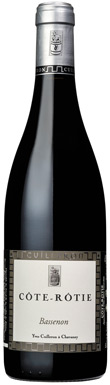

Yves Cuilleron’s Bassenon is coming of age, as this tasting shows. He planted most of this southern sector vineyard himself, in 1989 and 1990, and it is these maturing vines – 90% Syrah, 10% Viognier - that have brought increased depth to a wine that in its early days suffered from over-heavy oaking. Cuilleron is generally better known for his prowess with white wines, his stable of Condrieus being up in the front rank of that appellation, and his St-Joseph enjoys a high profile. His Vin de France and IGP Collines Rhodaniennes whites are serious, polished and excellent value. Gearoid Devaney MS: Restrained notes of cherry stone, sweet oak and spices with some vibrant acidity, fine tannins and a long finish. John Livingstone-Learmonth: Smoky note to the red fruit, pepper and capsicum. A firm line of red fruit within. The palate continues the smoky, rocky fusion theme. Northern sector vibrancy here. Clipped tannins for now – a pumice stone effect – with a tiny note of flowers on the finish, which delivers complexity. Appeals to both mind and palate. Has intrigue and reflects its terroir well. Lovely freshness and length. Matt Walls: Dark, brooding blackberry fruit. Lovely, lifted aromatics on the palate with marked, tangy acidity and lovely balance. Good length too. Has substance, intensity and persistence.
2012
Yves CuilleronCôte-Rôtie

Benjamin & David Duclaux, Maison Rouge, Côte-Rôtie, Rhône, France, 2012
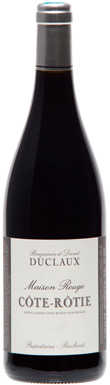
Open, developed, ready to drink. Notes of tobacco, rose and incense, this is very aromatic. Lovely sense of generosity on the palate but fresh and velvety. Well balanced, harmonious, with good length. This has everything in the right amount and the right place; 2025 is the perfect moment to drink this. Perhaps just lacking a little concentration and length, but just so charming and classic. The family has 1.4ha in this lieu-dit, partly planted in 1943, partly in the mid-1970s. First vintage was 2005, but just 900 bottles; 2006 was the first to be sold commercially. Gneiss soils; stems only included since the 2017 vintage. Natural yeasts, submerged cap fermentation, 40% new oak.
2012
Benjamin & David DuclauxCôte-Rôtie
Paul Jaboulet Aîné, Domaine des Pierrelles, Côte-Rôtie, Rhône, France, 2012
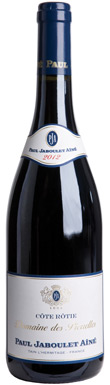
Appealing bouquet reflecting berries, smoke, and buffed leather. Good weight of red cherry fruit with ripe tannins on the mid-palate and refreshing acidity. Well made, enjoyable and serious wine.
2012
Paul Jaboulet AînéCôte-Rôtie
Jean-Michel Gerin, Champin Le Seigneur, Côte-Rôtie, Rhône, France, 2012
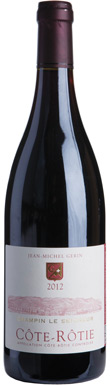
High-toned cola, clove and black cherry. The palate is intense and bright, with lots of black fruit, uplifting acidity, and smooth tannins. Honest, genuine, grounded wine, with local appeal.
2012
Jean-Michel GerinCôte-Rôtie
Domaine Bonnefond, Les Rochains, Côte-Rôtie, Rhône, France, 2012
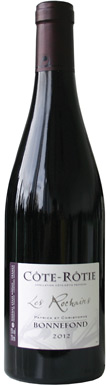
The bouquet carries a little mystery – mulled fruits with a sound clarity and depth. An intense palate showing black fruits, warming spice and grippy tannins. Needs two years to fuse on the finish.
2012
Domaine BonnefondCôte-Rôtie
Domaine de Rosiers, Côte-Rôtie, Rhône, France, 2012
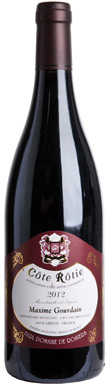
Black olives and iron on the nose; very concentrated in style. The palate has the nerve of the schist and a tension that underpins it. The oak gives it a caramel flavouring, while the fruit is fluid and runs well; serious stuff.
2012
Domaine de RosiersCôte-Rôtie
Aurélien Chatagnier, Côte-Rôtie, Rhône, France, 2012
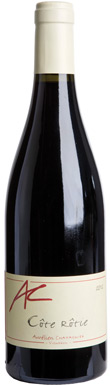
Attractive high-toned fragrance of sweet blueberry and spicy red fruits. The palate is rather savoury with a minor note of violets. A true expression of Côte-Rôtie with real finesse and balance.
2012
Aurélien ChatagnierCôte-Rôtie
François Villard, Le Gallet Blanc, Côte-Rôtie, Rhône, France, 2012
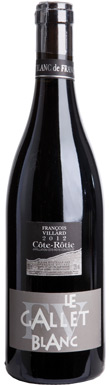
Lovely nose of juniper, rosemary and resin with a soft air of vanilla. The palate presents red berries, flowers and minerality before a tight, schist-inspired clarity on the finish. Lots to enjoy here.
2012
François VillardCôte-Rôtie
E Guigal, Brune et Blonde, Côte-Rôtie, Rhône, France, 2011
Juniper, clove and some earthy, woodland, resinous aromas. The palate also carries the imprint of flowers, bright acidity, good concentration and smoky spices with a long finish. Juicy yet savoury with a dry finish.
2011
E GuigalCôte-Rôtie
Domaine Pichat, Les Grandes Places, Côte-Rôtie, Rhône, France, 2012
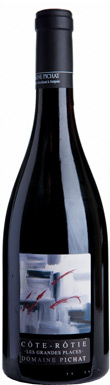
Savoury, mulled red fruit nose with Provençal herbs. Intense violets and dark fruit on the palate with winter spices and refreshing acidity. Elegance and a degree of class. It persists with a steady hand; the aftertaste is very tasty and long.
2012
Domaine PichatCôte-Rôtie
