
From the archive: Refreshingly dry Alsace Riesling 2012 – panel tasting results


An underrated year like 2012 could mean some value buys, said our experts.
Originally published in Decanter magazine's March 2015 issue and now available online in full, exclusively for Premium members
84 wines tasted with two rated Outstanding
The panel tasters were: Thierry Meyer, Marcel Orford-Williams & Eric Zweibel MS
While this was a good result, the terroir character of the individual grand crus did not sing, though some lesser-known names did stand out, says Thierry Meyer…
This 2012 Riesling tasting was very successful, with 82% of wines Recommended or higher.
Despite asking specifically for dry Riesling, some wines were still perceived as too sweet, but usually this was due to a lack of concentration, rather than an excessive amount of residual sugar (75% had less than 8g/l, which tastes dry when the acidity and the structure are powerful enough).
While most wines showed great varietal style, it was a disappointment that so many grand crus lacked specific terroir character and showed little complexity. These were great premium Rieslings and we would have expected the individual crus to be more distinctive. Of the 84 bottles we tasted, 60 were grand cru wines representing 33 different grand crus.
Scroll down to see the top wines from the panel tasting
Zinnkoepflé, Pfersigberg, Schlossberg and Schoenenbourg were the most represented; Schlossberg and Schoenenbourg getting the highest average scores.As mentioned, with 71% of wines tasted coming from one of the 51 Alsace Grand Cru ACs, two trends emerged.One is that producers are crafting grand cru Rieslings as premium Rieslings, amplifying the qualities of standard Riesling by providing more fruit, acidity, ripeness and density. These wines would be satisfactory with the grand cru name, without mentioning any terroir.
Quick link: View the tasting notes & scores from the panel tasting
On the other hand, some producers have decided to go for the full terroir character route, and produce wines of high complexity, character and ageability but sometimes challenging to drink. In a light vintage like 2012, these stood out.
Established houses like Paul Blanck, Bott-Geyl, Marc Kreydenweiss, René Muré, Louis Sipp and Zind-Humbrecht shone in our tasting, but also a new generation of young producers.
Winemakers to watch include Paul Fuchs (Henry Fuchs), Philippe Kubler (Paul Kubler), Lucas Rieffel (Rieffel), Frédéric Schmitt (François Schmitt), Samuel Tottoli (Kuentz-Bas) and Pascal Batot (Dopff au Moulin).
We had a few shocks. Some big names failed to shine (Trimbach, Hugel, Josmeyer, Schlumberger to name a few), as did well-known crus like Brand, Geisberg, Kastelberg, Rosacker and Sommerberg. In the latter case, it was hard to decide whether they were underperforming or whether lesser-known grand crus (that scored highly), such as Bruderthal, Frankstein, Steinert and Wineck-Schlossberg, were overperforming due to good producers.
Since wines from lesser-known terroirs are often priced moderately, these high-scoring examples should be great value.
The scores
84 wines tasted
Entry criteria: Producers and UK agents were invited to submit their dry Alsace Rieslings (100%) from 2012. One wine per producer was permitted.
Exceptional 0
Outstanding 2
Highly Recommended 10
Recommended 57
Commended 0
Fair 12
Poor 0
Faulty 3
The results
When reporting on a lesser vintage, expectations are naturally not as high as they could be, but our experts often find themselves pleasantly surprised, as this tasting proved.
‘2012 might be the perfect vintage for wine lovers to get to know Alsace Riesling,’ said Thierry Meyer.
Marcel Orford-Williams agreed, adding: ‘In a sense, 2012 is a handy vintage because the wines are ready now. Alsace has seen a string of great vintages – 2008, 2009 and 2010 – but none are ready to drink yet’. It could also be one where wine lovers can seek out value, as the wines will be less pricey than some of the more fêted vintages, noted Eric Zwiebel MS.
For lovers of austere and terroir-driven wines, 2012 may be a bit of a deception, Meyer explained. ‘Great Alsace Rieslings that taste of the soil tend to have a character that isn’t necessarily so Riesling-like. If consumers are looking for terroir in their 2012s they may be disappointed, as most of these grand cru wines were very varietal in style rather than terroir-origin.’
Orford-Williams found the generic entry-level Rieslings ‘homogenous and fairly simple but everything was more or less well-made’, but the grand crus were a step up.
With 51 grands crus to choose from, not to mention the many lieux-dits (named sites), Alsace is not an easy region to understand, and the tasters admitted they found it hard to identify specific characteristics for each grand cru. ‘There are too many grand crus,’ said Orford-Williams. Meyer agreed: ‘They have big limitations,’ he said. ‘The delineation is too big, often the yields are quite high, and sometimes the maturity isn’t there, so we end up with something that tastes like Riesling but not a grand cru, as with 2012.’
Of the 33 grand crus represented in this tasting, they felt about 10 showed some specific style, with Rangen, Brand, Kastelberg and Schoenenbourg the most distinctive. Meyer added: ‘This doesn’t mean other grands crus can’t produce great wines. It’s very challenging to judge whether or not a grand cru has potential because it depends on the grower’s effort – perhaps some of these underperforming grand crus are waiting to be revealed by good producers.’
The sweet/dry dilemma is also making Alsace difficult to sell. While most of the wines in this tasting had residual sugar levels below 6g/l, Meyer feels that the perception of sweetness is to do with the body of a wine. ‘It’s that some Rieslings don’t have enough concentration rather than having too much sugar. Most of the overly sweet wines were only 5-6g/l, while some had 10g/l and you didn’t taste it because of the acidity and weight.’
The sweetness is also partly due to the vintage, continued Meyer: ‘When you have a cold, late vintage, producers need to wait for the grapes to ripen and then you get botrytis because of the warm days, fresh nights and humidity. In 2012, none of the wines had botrytis so the sugar was really under control.’
The Alsace market has never been an easy one for UK consumers to understand, explained Orford-Williams. ‘This is partly due to the fact that 25 years ago Riesling was considered to be Germanic – people like my father would never touch Riesling because of that,’ he said. ‘Today, young wine lovers are drinking Riesling from Australia, New Zealand, wherever. Riesling is becoming a much more international grape variety, and suddenly Alsace is finding a bit of a niche in the Riesling market.’
Meyer was also feeling very positive about the future. ‘Convincing people to spend £30 to £50 on a dry Alsace Riesling is quite challenging. But look at Burgundy – £40 is considered a bargain! Alsace terroir is becoming a great discovery for wine lovers and it’s getting more visibility. Also, because there’s no oak, people are starting to understand better the complexity of the acidity.’
Our tasters each pick their top 3 wines from the tasting:
Thierry Meyer
Meyer is the DWWA Regional Chair for Alsace. He was born and raised in the region and began writing about wine in 1999. He founded L’Oenothèque Alsace in 2006 and launched the website Oenoalsace.com, later organising a structured programme of Alsace wine classes and dinners. Meyer was contributing editor of Bettane & Desseauve Guide des Vins de France from 2007 to 2011 and in 2014 headed up the Alsace Master-level education program for the French Wine Society.
‘With 82% of wines Recommended and above, the tasting showed that 2012 is a very good and homogeneous vintage for Alsace Riesling. Past tastings of young 2012s in bottle showed a lack of character, yet here the selection was much better with good depth and focus on the palate.
‘Many wines were easy to drink, with clean citrus and green fruit aromas, and a sharp, fresh, dry palate. The grand cru terroirs showed at their best, as they are already enjoyable to drink now. However, all the wines will benefit from three to four years’ cellaring and will drink well over the next 10 years.
‘Several grands crus (Rangen, Brand, Kastelberg and Schoenenberg) stood out, showing complexity, depth and focus, with terroir character. The style of Alsace Riesling can be surprising to those who haven’t tried it before, however, so be careful before rushing to the Outstandings or Highly Recommendeds, as they may not taste like Rieslings you have tasted from elsewhere. Having said that, 2012 – approachable as it is – would be a good vintage with which to introduce yourself to Alsace Riesling.’
Marc Kreydenweiss, Le Château Riesling, Grand Cru Kastelberg 2012
Exceptional schist terroir character which eliminates any notion of Riesling. The typical tannic structure of the Kastelberg brings a racy style. For me, one of the greatest Alsace grand cru Rieslings of the 2012 vintage. 98/100 Drink 2018-2027
Paul Kubler, Breitenberg Riesling 2012
Coming from a sandstone soil mixed with some limestone, the wine is bone dry and firm with a great saltiness. With citrus and smoky aromas, this is a great Riesling with more terroir character than many grand cru-labelled siblings. Would be great with smoked fish or eel. 93 Drink 2015-2025
Louis Sipp, Riesling, Grand Cru Kirchberg de Ribeauvillé 2012
This powerful Riesling from a complex soil of limestone, marl and sandstone is a perfect 2012 to cellar. White flowers and smoke aromas are still discreet. It shows good complexity and a full-bodied, robust structure. 90 Drink 2016-2027
Marcel Orford-Williams
Orford-Williams joined The Wine Society as a buyer in 1986, where he has become a specialist for Alsace, Champagne and southern France, including the Rhône, Languedoc-Roussillon, Beaujolais and the southwest. In recognition of his services to French wine, Orford-Williams was made Chevalier de l’Ordre du Mérite Agricole.
‘It has always been my belief that Alsace is capable of producing wines that can rival the very best from anywhere. This tasting showed a healthy number of delicious Rieslings in many different styles that would give pleasure over the next few years. Moreover 2012 is just the right sort of vintage for easy drinking, and you can approach these now.
‘But of course, Riesling is one of the world’s greatest white grape varieties, and what is remarkable is its ability to adapt to different soil types and expositions, and produce wines with highly distinctive nuances.
‘Alsace famously benefits from a great variety of soil types from volcanic to sandstone by way of schists and limestone and I thought that in this tasting the wines clearly showed their origin with, of course, differences not only in taste but also maturity. Are people ready to taste a Schlossberg Grand Cru against a Rangen or Schoenenbourg? Absolutely!’
Domaine Zind-Humbrecht, Clos St Urbain Riesling, Grand Cru Rangen de Thann 2012
Great wines are rare and depend on a great terroir and the ability of a great grower, like Olivier Humbrecht, to express it. Wines from Rangen stand out, almost overwhelmingly so. The cru is based on volcanic soils and the angle of slope is dramatic. The wines always have intensity and incredible depth; this was glorious. 96 Drink 2017-2030
Louis Sipp, Riesling, Grand Cru Kirchberg de Ribeauvillé 2012
Ribeauvillé is at the heart of Alsace and boasts France’s oldest co-op and many fine estates. I especially liked Sipp’s Riesling from the fine Kirchberg vineyard. 93 Drink 2016-2027
Jean Becker, Riesling, Grand Cru Mandelberg 2012
The Mandelberg vineyard in Mittelwihr points south like so many others, and sometimes I find the wines just a little too showy for their own good. But I adored the attack and brightness Becker gave to this wine. 93 Drink 2017-2026
Eric Zwiebel MS
Zwiebel is cellar master at Summer Lodge, a country house hotel in Dorset. Born in Alsace, he worked as a sommelier for Le Pavillon Elysée Lenôtre in Paris. Following this, he moved to London to broaden his knowledge and two years later, in 2001, became a Master Sommelier. In 2004, he was named Best Sommelier of the UK, which he followed up with third place in the Best Sommelier of Europe final in 2006 and 2008. He reached the finals in the Best Sommelier of the World in 2007 and placed 4th at the 2013 competition in Tokyo.
‘I felt this was a very good result overall, with a number of excellent Rieslings – thanks to the producers for sending them in.
‘For me, there wasn’t enough difference between the basic Alsace AC wines and those with a specific lieu-dit to make me think that a new tier in the appellation hierarchy is deserved.
‘Looking at the 2012 vintage, it’s a little bit unlucky to be stuck in the middle of such great years as 2010 and 2013, where the fruit and acidity is much more pure and vivacious. The 2012s are more rounded in character, with less acidity, so it it will be a vintage to drink earlier. Even so, perhaps some of these wines need a bit more time to express themselves fully, as with many great terroirs in the world.’
Domaine Zind-Humbrecht, Clos St Urbain Riesling, Grand Cru Rangen de Thann 2012
A great classic from volcanic soil. The texture was oily, deep and intense with a nose of mango, honey blossom and bruised apple. The spectrum of this wine was a perfect balance of power and complexity. 96 Drink 2017-2030
Charles Sparr, Riesling, Grand Cru Schoenenbourg 2012
Again, a great terroir at its best, here dominated by gypsum. Texture with concentration, a full body and a long finish. The nose had some touches of mushrooms, white pepper and cinnamon with passion fruit. The finish was juicy, vibrant with a saline finish. 95 Drink 2017-2027
Gérard Neumeyer, Riesling, Grand Cru Bruderthal 2012
A pleasant expression of marl and limestone terroir. The palate was full of freshness balanced by a rounded mouthfeel. On the palate there was a combination of zesty pink grapefruit and lemon as well as green apples and pears. The finish was sharp, precise and long with a juicy pink grapefruit finish – quite vivacious. 90 Drink 2017-2026
Alsace Riesling: the facts
Climate Semi-continental with cold winters and hot, dry summers.
Production 18% of total French still white AC wine production comes from Alsace. At just over 20% (3,350 hectares), Riesling is Alsace’s most widely planted grape, followed by Gewurztraminer and Pinot Gris.
Appellations
Alsace AC 805,540 hl (72%) . Minimum 10% ABV, maximum 13% (including chaptalisation) and maximum yield of 80hl/ha. This rises to 10.5%–13.5% ABV and a maximum yield of 75hl/ha if naming a specific communal appellation or lieu-dit.
Crémant d’Alsace AC 270,062 hl (24%)
Alsace Grands Cru AC 44,780 hl (4%). Minimum 12% ABV, maximum 14%. Maximum yield of 55hl/ha
Alsace Riesling: know your vintages
2013 Challenging vintage. Complicated growing season and harvest. Choose from the best producers.
2012 Very good ‘classic’ vintage. Rieslings marked by freshness and vivacity. Drink 2015-2030.
2011 Good vintage, with some Rieslings lacking focus. Drink 2015-2020.
2010 Excellent vintage of both vivacity and opulence. Drink 2017-2030.
2009 Very good. Lacks the tension of 2010 or 2008, but succulent and rich. Drink 2016-2020, the best to 2025.
2008 Excellent vintage of precision and finesse. Drink 2016-2025.
Top scoring Alsace Riesling 2012 from the panel tasting:
You might also like:
Alsace Riesling: Comparing grand cru sites
Dry German Riesling Grosses Gewächs: Panel tasting results
Have you tried Txakoli wines?
Domaine Zind-Humbrecht, Clos St Urbain Riesling, Grand Cru Rangen de Thann, Alsace, France, 2012
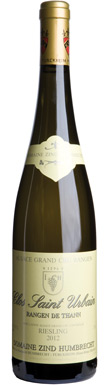

One of Alsace’s very best producers, Zind Humbrecht owns vines in four superb grand cru vineyards: Hengst, Goldert, Brand and Rangen. Owner and leading biodynamic...
2012
Domaine Zind-HumbrechtGrand Cru Rangen de Thann

Charles Sparr, Riesling, Grand Cru Schoenenbourg, Alsace, France, 2012
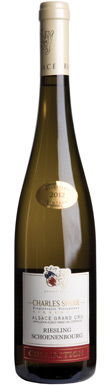
This estate opened a new chapter with Charles Sparr, 26, recently taking over from his father Pierre. He is slowly replanting in the seven hectares of...
2012
Charles SparrGrand Cru Schoenenbourg
Bott-Geyl, Riesling, Grand Cru Schlossberg, Alsace, France, 2012
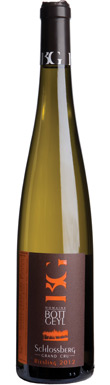
Nutty, yeasty nose with lime hints. Powerful, dry and vibrant palate with good density, firm and complex acidity, and a long grapefruit finish. Great character;...
2012
Bott-GeylGrand Cru Schlossberg
Domaine Charles Frey, Riesling, Grand Cru Frankstein, Alsace, France, 2012
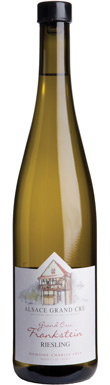
Honey, wax and candied papaya aromatics. Palate is soft, sweet and salty with a light acidity, bringing a soft and delicate balance to this long,...
2012
Domaine Charles FreyGrand Cru Frankstein
Gérard Neumeyer, Riesling, Grand Cru Bruderthal, Alsace, France, 2012
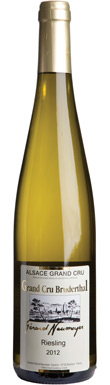
Citrus and green apple aromas with a salty edge. Fresh palate with great power, good ripeness and strong acidity. A fat, long, incisive wine with...
2012
Gérard NeumeyerGrand Cru Bruderthal
Muré - Domaine du Clos St Landelin, Clos Saint Landelin Riesling, Grand Cru Vorbourg, Alsace, France, 2012
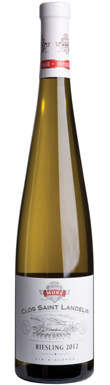
Quince and yellow apple aromas. Dry, clean palate with pure, complex acidity and a long finish. A full-flavoured wine that is a bit austere and...
2012
Muré - Domaine du Clos St LandelinGrand Cru Vorbourg
Emile Beyer, Riesling, Grand Cru Eichberg, Alsace, France, 2012
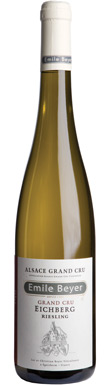
Discreet nose with peach, apricot and cinnamon flavours. Fresh palate with good density, moderate yet present acidity, and a great salty edge. A gorgeous, pink...
2012
Emile BeyerGrand Cru Eichberg
Domaine Marc Kreydenweiss, Le Château Riesling, Grand Cru Kastelberg, Alsace, France, 2012
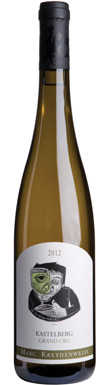
Delightful acidity gives way to pleasing sweetness and some waxy, spiced notes. It is gradually getting quite rubbery but it is very balanced nonetheless.
2012
Domaine Marc KreydenweissGrand Cru Kastelberg
Domaine Rieflé, Riesling, Grand Cru Steinert, Alsace, France, 2012
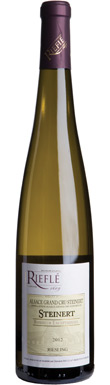
Intense passion fruit, mango and papaya nose. Palate is rich and pure with depth. Long saline finish with good acidity. Not ready yet, needs some...
2012
Domaine RiefléGrand Cru Steinert
Joseph Gruss, Riesling, Grand Cru Eichberg, Alsace, France, 2012
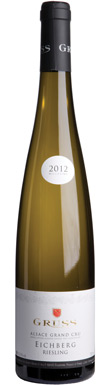
Pink grapefruit and smoke aromas. Stony white pepper and a firm mineral edge on the palate, which has a strong acidity and a long finish.
2012
Joseph GrussGrand Cru Eichberg
Jean Becker, Riesling, Grand Cru Mandelberg, Alsace, France, 2012
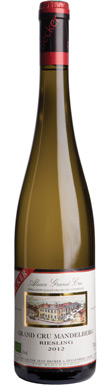
Passion fruit and yellow apple. Palate is soft and pure with medium acidity. Good, powerful structure with the potential to age; incisive.
2012
Jean BeckerGrand Cru Mandelberg
Domaine Paul Blanck, Riesling, Grand Cru Schlossberg, Alsace, France, 2012
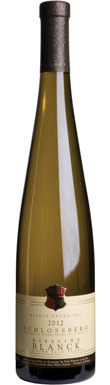
Discreet melon and apricot aromas. This has great concentration on the deep, full-bodied palate. Good acidity that evolves into a crisp, mineral finish.
2012
Domaine Paul BlanckGrand Cru Schlossberg
