
Are these Spanish whites in your cellar?


Top white Rioja can age beautifully. But Spain is home to a surprising – and growing – array of other wine styles that will also reward cellaring. Pedro Ballesteros Torres MW advises on the best wines to lay down...
Two years ago, a number of wine apasionados discreetly came together at Bodega Cigaleña, a prestigious wine restaurant in Santander, to taste old white Rioja wines. We made the trip filled with excitement, but the results went even beyond our expectations: Paternina’s lively, complex Reserva 1920 and firm 1930; balanced Viña Soledad ’59; structured AGE ’46; genuine López de Heredia ’64; fresh CVNE’s Monopole ’71 (in half-bottle!); Murrieta’s unforgettable, perfect, glorious Castillo Ygay 1946 and 1970. And some other amazing, utterly complex and genuine wines.
Scroll down for Ballesteros Torres’ pick of great Spanish whites for ageing
The main reason for such oversight is probably the preference in mature wine markets for red wine – but there are several other reasons worth mentioning.
Overlooked potential
First, white wines for long-term cellaring require exceptional grapes from old vines, usually dry-grown bushes. While the quality of young, fruity wines will not be affected greatly by high yields or young vines, age strips wines of their fruit make-up, respecting those with the sound, finely grained structure that can only be conferred by old vines and exceptional sites. Besides, wines intended for the long haul are often austere and restrained when young. Their appeal emerges only with time – and nowadays time is a rare luxury.
Then, only the most gifted winemakers understand the complexities and take on the technical risks of making white wines for ageing. Grape and site selection, winemaking, lees contact and ageing procedures are delicate issues for such wines, and success, or else, becomes evident only after several years.
Finally, wine lovers need to understand the uniqueness and increased value these wines gain following long-term cellaring; but such understanding comes from tasting and word of mouth – particularly difficult tasks when stocks are very limited.
The stocks of old white Rioja wine that do exist are the living proof of its ageability. The fact that they exist at all can be explained by the fact that this is one of very few European wine regions that in the last 150 years has not been occupied by foreign troops (soldiers tend to drink anything they find in occupied territories). The top classic producers, led by López de Heredia and Marqués de Murrieta, distinguish themselves with wines that are aged for very long periods in oak, and then fine-tuned during several decades in bottle. The wines transform their original fruit into complex spicy, nutty, herbal, floral aromas and characters, resulting in suave, delicate texture on the palate and a restrained, distinctive finish: inimitable.
Other producers in Rioja go for top quality through very strict fruit- and site-selection, bâtonnage and extended lees contact during fermentation, and shorter oak-ageing periods, often in French rather than American oak. The results are amazing, for an increasing number of wineries: Abel Mendoza, Allende, Basilio Izquierdo, Contino, Remelluri, Remírez de Ganuza and many others are highly commendable.
Beyond Rioja
Rioja remains the classic Spanish white for ageing, but ambitious winemakers all over Spain are at present endeavouring to produce top-quality white wines that improve with bottle age, from grapes that are, in principle, just as well suited to this challenge as Rioja’s flagship white grape, Viura – these include Albariño and Godello, Albillo, Garnacha Blanca, Malvasía and Xarel.lo, Palomino/ Listán Blanco and Pedro Ximénez.
Working with excellent genetic material is crucial to success. Thankfully, there are still several thousand hectares of old vineyards in Spain, and a few dozen ideal spots for top white grapes, many of them as yet unexploited. However, the definitive factor in the present quest for top white wines to age is, in my view, the self-confidence, the mood for exploration and the willingness to share knowledge that are common to the new generations of winemakers in Spain.
The most probable cradle of Spanish top white wines capable of ageing graciously is Ribeiro in the far northwest. In the 16th century it was known as Ribadavia, and the wine fetched such high prices in England that in 1579 the local government created the first regulation establishing conditions similar to today’s appellation of origin rules. Ribeiro faded into obscurity in the 19th century, only to find its way back into the spotlight today. In my view, Ribeiro has some of the highest potential for wine quality in the world. Pay a visit to the area and this potential will be immediately apparent.
Still in Galicia, the Godello variety shows impressive quality and ageing potential. It’s still early days, because it was only in 1974 that Godello was rescued from extinction, by Horacio Fernández Presa. But 30 years later, Rafael Palacios brought it to global attention with his As Sortes from Valdeorras. I have had the fortune of tasting all As Sortes vintages, starting with 2004, and have confidence in its long-term ageing capacity. Godello wines from Monterrei (Quinta da Muralleda) and Bierzo (Mauro) are also worth following.
Last but not least in Galicia, Albariño from Rías Baixas shows its ageing capacity in a surprising way. Although there are some oak-aged Albariños of remarkable quality, the top wines from Rías Baixas are those aged for years on their lees, in reductive vats. Again, there is no long track-record, but the Pazo de Señorans, Selección de Añada 2001 showed excellently in 2016. Probably, the best Albariño wines have not yet been made; they are likely to come from old vineyards with low yields, and will improve with time thanks to their high extract.
Hidden gems
Elsewhere across the north, Catalonia’s potential for top quality white wines was historically hindered by the great market for rancio (oxidative) styles and sweet wines. Nowadays, white wines from Priorat and Montsant, blends normally dominated by Garnacha Blanca, show an opulent, full-bodied style that becomes rounder after some years in bottle. Penedès hosts a most promising variety, Xarel.lo, whose high extract combines with nice balance and surprising minerality when vines are very old. Not everything worthy is indigenous: Torres, the Catalonian leading force in the recovery of autochthonous red varieties, prefers to use Chardonnay for its top white wines, Milmanda and Jean Leon Vinya Gigi. In Navarra, you will find one of the top and longest-lasting Chardonnays in southern Europe, Chivite’s Colección 125.
Another area with great potential for long-term white wines is one with a contradictory present: Rueda. Classic Rueda vineyards are planted with low-yielding, dry-grown bush Verdejo vines, yielding wines with restrained aromatic expression when young but huge potential for ageing, when planted in suitable sites. Those vineyards are dwindling, giving way to high-trellised ones producing easy-going, simple, Sauvignon-like wines. Thankfully, a number of heroes stick to their old vines to produce impressively complex, elegant wines, not always within the Rueda appellation, that are now a benchmark for the whole category. Marqués de Riscal is the leader with its Barón de Chirel, but the cooperative Cuatro Rayas owns the best stocks. Again, there’s no record of old vintages, just a perception of the quality potential.
Old-time Rueda used to be a high-alcohol wine from overripe grapes, because the market used to demand that style. It’s the same rationale for today’s Montilla-Moriles and Jerez, two southern regions known for their fortified wines that can also deliver top-quality, moderately alcoholic wines. It is a matter of facing viticulture and winemaking challenges and being prepared to take a new approach in order to achieve a top terroir wine. Palomino and Pedro Ximénez provide fine raw material for ageable whites if planted in the right way, and in the right places. Next-generation projects such as Mirabrás by Barbadillo, 3 Miradas by Envínate, Callejuela and others are likely to become great wines worth keeping in the cellar in the future. The terroir – chalky albariz – and the know-how are there, but more time is needed.
I finish in the Canary Islands, where a trove of wine jewels is being rediscovered. Thanks to the fact that phylloxera did not reach the archipelago, islands like Tenerife are home to centennial vines surviving in lava soils, providing wines with a distinctive character. Some of those wines have all the elements for a promising development in bottle over the next decade: balance, tight structure, long finish and high extract. Envínate, Suertes del Marqués and Viñatigo lead the way for this kind of wine, with varieties such as Listán Blanco, Marmajuelo and Bual, among others.
Wisdom of ageing
In conclusion, I can only recommend investing in top aged Rioja whites, and some other great wines in Catalonia and Galicia, to discover the distinctive, classic wine styles that can be enjoyed over decades to come. Developments in those regions are worth following; great things are going on. And pay a visit to other Spanish regions: nice surprises abound, with encouraging potential for cellaring. Now is the time to take a new view of Spain as a producer of remarkably ageworthy white wines.
Ballesteros Torres’ pick of great Spanish whites for ageing
Envínate, 3 Miradas, Cerro Macho Pedro Ximenez, Montilla-Moriles, Spain, 2016
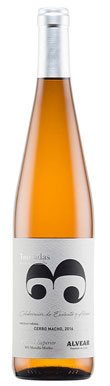

An epitome of calcareous soils, a paradigm of freshness and restraint from a warm southern climate, combining yeasty refinement and a suave balance of alcohol....
2016
Envínate

Marqués de Riscal, Barón de Chirel Verdejo, Castilla y Léon, Spain, 2015
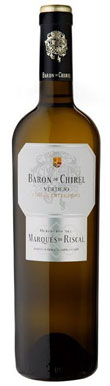
From ungrafted vines more than 100 years old lying to the south and southeast of Rueda, this is probably the most complex and original of...
2015
Marqués de Riscal
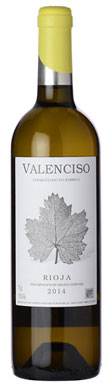
Valenciso, Rioja, Northern Spain, Spain, 2014
92
Classic style, with cleverly managed fermentation in oak and a soft, creamy texture. It’s unmistakably Rioja, to be enjoyed over many years.
2014
ValencisoRioja
Finca Allende, Blanco, Rioja, Northern Spain, Spain, 2008
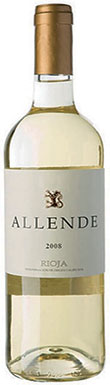
A wine that has a genuine and highly distinctive expression, not afraid of long ageing: elegant reticence, notes of lanolin and old lace, in a...
2008
Finca AllendeRioja
Remírez de Ganuza, Reserva, Rioja, Northern Spain, Spain, 2010
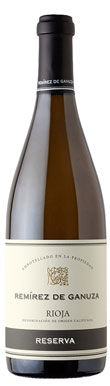
Top white Rioja in a more international style, made with cold soak and ageing in new French oak, but built on quality Viura and Malvasía...
2010
Remírez de GanuzaRioja
Bodegas Julián Chivite, Colección 125, Navarra, Spain, 2009
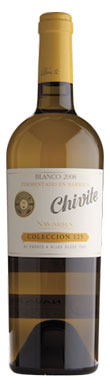
A top-notch New World-style Chardonnay, with generous fruit, evident toasty and smoky notes, and a rich, creamy, velvety palate. A bit excessive when young, with...
2009
Bodegas Julián Chivite
Pazo Señorans, Selección de Añada Albariño, Galicia, Spain, 2009
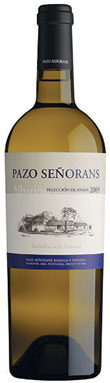
The pioneer of Albariño for the long term. Kept on the lees for 30 months plus a subsequent year of ageing in bottle. Lees and...
2009
Pazo Señorans
Belondrade y Lurton, Rueda, Castilla y Léon, Spain, 2014
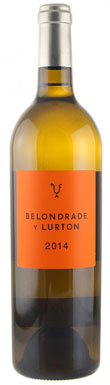
Pure expressive aromatic expression of Verdejo, with passion fruit, herbs and spice, in a somehow restrained and elegant way. Firm, sinewy, persistent – it has...
2014
Belondrade y LurtonRueda
Bodegas Barbadillo, Mirabrás, Cádiz, Spain, 2015
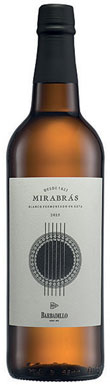
One of the most remarkable advances among Sherry producers into white wine territory. Palomino is fermented in old Sherry botas, exposed to biological ageing (flor)...
2015
Bodegas Barbadillo
Torres, Milmanda, Catalonia, Spain, 2015
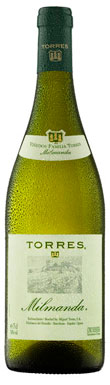
Elegant, subtle nose with deft integration of the oak. Silky, textured palate: broad, restrained and lengthy finish. An excellent Chardonnay, benchmark in the style, with...
2015
Torres
Rafael Palacios, Sorte O Soro, Valdeorras, Galicia, Spain, 2011
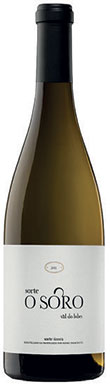
A unique Galician character, with lots of Burgundian intimations: a genuine combination of focus and volume. It’s a bone-dry, 100% Godello, tightly structured, minimalist wine...
2011
Rafael PalaciosValdeorras
Marques de Murrieta, Castillo Ygay Especial, Rioja, Northern Spain, Spain, 1986
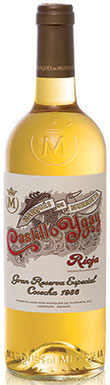
I have tasted three vintages, only one of them blind. This 1986 is a much oakier style, not so elegant, but delicious on the palate,...
1986
Marques de MurrietaRioja
Basilio Izquierdo, B de Basilio, Rioja, Northern Spain, Spain, 2013
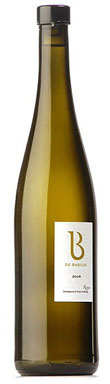
One of the most remarkable new white Rioja wines, combining deep knowledge with deft winemaking. Suavely perfumed, slowly integrating its French oak notes over ripe...
2013
Basilio IzquierdoRioja
R López de Heredia, Viña Tondonia Reserva, Rioja, Northern Spain, Spain, 2004
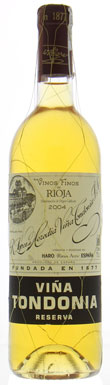
One of the greatest classic styles, a wine that has been made through long hard ageing and will last forever. Shocking for novices, addictive for...
2004
R López de HerediaRioja
Suertes del Marques, Vidonia Listán Blanco, Valle de la Orotava, Tenerife, Spain, 2016
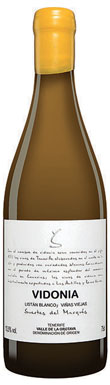
From pre-phylloxera vines, this is a prodigy of balance and discreet savoury characters, intriguing and delicate, long but restrained. Plenty of extract, sound structure and...
2016
Suertes del MarquesValle de la Orotava
Forjas del Salnes, Leirana, María Luisa Lázaro Albariño, Galicia, Spain, 2005
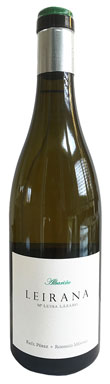
Subtle and delicate in character, with very refined aromas and retaining hints of dried apricot and herbs, along with an earthy overtone. Bone dry in...
2005
Forjas del Salnes
Cuatro Rayas, Amador Diez, Rueda, Castilla y Léon, Spain, 2015
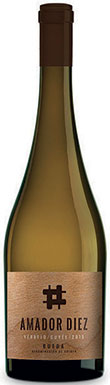
Made by a cooperative, a wine to keep for many years. Centennial vines, tiny yields and loving winemaking all result in a charmingly complex wine...
2015
Cuatro RayasRueda
Sabinares, Blanco de Guarda, Arlanza, Castilla y Léon, Spain, 2013
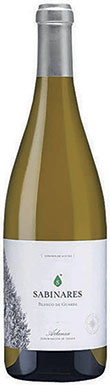
The wine that proves Albillo to be a great grape variety. Honeycomb aromas, deceptively mature on the nose, opening up in mouth with silky texture...
2013
Sabinares
