
The rebirth of Armenian wine, and bottles to try
Few corners of the world can rival Armenia's rich winemaking history and a new, exciting generation of wines have emerged in the post-Soviet era, writes Caroline Gilby MW. Read her feature below and see recommendations on wines to try.


It’s hard to imagine a prouder but more oppressed people than the Armenians, who have played starring roles in the creation of coffee culture, the colour TV, the hairdryer, the ATM and even the green dye of US banknotes but, throughout history, have faced waves of invaders from Persians to Soviets via Byzantines, Mongols, Ottomans and Russians.
The shadow of the 1915 genocide still looms, with at least 7 million Armenian diaspora living around the world and only 3 million in Armenia itself.
When it comes to Armenian wine, the country is on very solid ground with its pioneering claims – and a rival to nearby Georgia as the birthplace of wine.
Wild grapevines can be found in the hills and the country is home to one of the oldest-known wineries in the world, located in Areni-1 karst cave in the Armenian mountains and dating back more than 6,100 years.It’s an eerie place to visit, and quite spine-tingling to see that winemaking was already large-scale and a key part of complex human rituals; there’s evidence of possible human sacrifice here, too.
Scroll down to see Caroline’s Armenian wine recommendations
The cave has a rudimentary grape press surrounded by clay wine jars surrounded by grave caskets. Analysis on the jars has confirmed grape pigments, alcohol and traces of grape material.
The atmosphere of the cave has preserved organic material incredibly well, and other finds include a six millennia-old human brain and a leather shoe from 5,500 years ago.
There’s evidence that winemaking has continued on throughout Armenia’s history.
Four thousand years ago, Armenia had five gods with specific winemaking traits, while the 3000-year-old Karmir Blur site has uncovered 480 ‘karas’ – Armenian clay wine jars.
Then there are later records of Assyrian conquerors taking wine and identifying grape-growers as especially valuable people.
Armenia was believed to be the first official Christian nation in the world, after King Trdat III adopted the religion in 301 AD, and churches continued to maintain vineyards, even throughout the Ottoman era. Remnants of a medieval vineyard still hang on in the Norovank monastery gorge.
Post-Soviet revival
Stalin designated the Armenian Soviet Socialist Republic, which existed between 1920 and 1991, as a brandy producer, providing around 30% of the USSR’s premium brandy, meaning many vineyards were replanted with grapes for distillation.
Historically Armenia grew up to 400 grape varieties, but today only 31 are grown commercially for wine and brandy.
A decade ago, Armenia had barely any quality wine industry, but largely thanks to its proud diaspora, the last few years have seen an incredible wine industry revival.
Several expats have returned to their family roots, wanting to do something close to the soil of their ancestral country. Grapevines are an obvious choice.
High altitude vineyards
Armenia is a continental country with more than 300 sunny days in a year, but its vineyards are at serious altitude, going up to 1,800 metres above sea level, and so it has cool nights and chilly winters. Most regions have to bury vines to protect against winter cold.
It’s a volcanic landscape with outcrops of limestone, and most of the country has no phylloxera so some vineyards are centuries old, at least where they were so remote that they escaped Stalin’s planned economy.
Areni Noir: a variety to watch
It was the arrival of Zorah in the early 2000s that first showed the outside world that Armenia was capable of seriously exciting quality.
Owners Zorik Gharibian and Yeraz Tomassians dropped their dream of a Tuscan winery in favour of a remote spot surrounded by dramatic snow-capped mountains in the Armenian highlands.
They recruited renowned consultant Alberto Antonini to help them realise their vision.
‘I’m here to find my roots, but I don’t just want to be the best wine in Armenia, I want world recognition,’ said Gharibian.
They took a chance on the largely ignore local Areni Noir, planting cuttings from old vines. This led to their first vintage, 2010, which they released in 2011, coincidentally the same year that the Areni-1 cave finds were announced.
Today, almost all serious wineries have followed suit with Areni, recognising its quality potential. It channels a little of the elegance of Pinot Noir with the linear structure and freshness of Sangiovese, although it is totally unrelated, along with its own ethereal aromas.
There’s a lot of research now going into rediscovering Armenia’s viticultural legacy. Grapes showing potential include:
- the wonderful golden Voskehat, which really comes into its own with a bit of age;
- inky dark Sireni from Artsakh;
- Karmrahyut with its red juice, only grown by ArmAs;
- fresh white Kangun;
- and Chilar, which suits long vinification with skins in karas. Try Zorah Heritage as an example.
Other renowned international figures have found their way to Armenia, too.
Michel Rolland is consultant to the Karas project, started in 2010 by Argentinian expat Eduardo Eurnekian and his niece Juliana, who wanted to invest in their ancestral country.
It began with international grapes to showcase Armenian terroir on a sunny, rocky site overlooked by Mount Ararat. But, indigenous grapes have been added, too, and local flavour is also added via part-ageing in local Causcasian oak.
Other notable projects from both expats and locals include Van Ardi, ArmAs, Voskevaz, Voskeni, Armenian Wine Company, The Old Bridge, KatarO, Keush, Koor, Maran and Gevorkian, while Trinity Canyon is the first winery to gain organic certification.
Few people know where Armenia is, let alone that it grows grapes and produces genuinely exciting wine in a very dynamic wine industry.
The last decade has seen it go from almost nothing to a bright spot with a great wine future, all rooted in its ancient and glorious history.
Birthplace of wine or not, wine is all about place and Armenia is well worth exploring.
Fact File: Armenian wine
Vineyard area (2018): 15,840 ha
Number of wineries/distilleries: 40 to 50
Wine production (2018): 9.7 million litres
Grape varieties: 400 native varieties, 31 grown for wine and brandy
Key native varieties: Areni (Noir) aka Sev Areni, Voskehat, Haghtanak aka Akhtanak, Kangun, Kakhet, Karmrahyut, Khatouni aka Khatoun Kharji, Sireni aka Khndoghni
Wine Regions: Vayots Dzor, Armavir, Aragatsotn, Ararat Valley, Tavush, Artsakh (Nagorno-Karabakh)
See Caroline’s 10 recommended Armenian wines to try:
You might also like:
Andrew Jefford tastes Georgian wines
Keush, Origins Brut, Vayots Dzor, Armenia
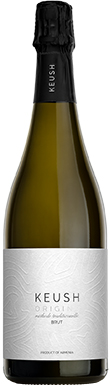

<p>Armenia's first traditional-method sparkling wine, produced from 60- to 100-year-old vines grown at 1,800 metres in Vayots Dzor. It brings together two rare local grapes:...
Keush

Voskevaz, Karasi Collection Vieilles Vignes, Aragatsotn, Armenia, 2016
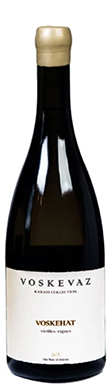
Voskevaz is a former Soviet-era winery acquired in 2004, focussing on local grapes. This Voskehat is from 50- to 60-year-old vines and was matured in...
2016
Voskevaz
ArmAs, Voskehat Reserve, Aragatsotn, Armenia, 2014
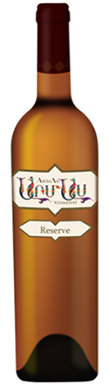
In 2007, ArmAs was an abandoned landscape of rocks and snakes. Today there are 110ha of local grapevines enclosed by an 18km wall and a...
2014
ArmAs
Voskeni, Old Vines 130 Reserve, Vayots Dzor, Armenia, 2016
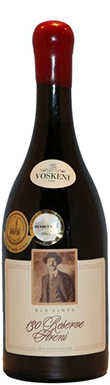
<p>Surrounded by apricot groves and rusting military tanks, Voskeni is a small family winery in the heart of the Ararat valley. In 2008, the family...
2016
Voskeni
Zorah, Karasi, Vayots Dzor, Armenia, 2017
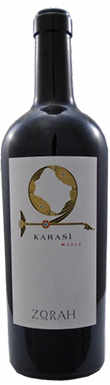
This is a winery that pioneered a new generation of exciting wines in Armenia, rescuing a forgotten grape and ancient winemaking traditions through ageing in...
2017
Zorah
Karas, Winemaker's Selection Reserve, Armavir, Armenia, 2014
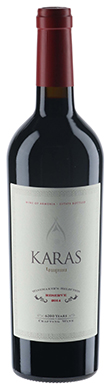
<p>The Armenian diaspora took the Eurnekian family to Argentina but in 2002 Eduardo and niece Juliana returned to their roots, buying rocky land in Armavir...
2014
Karas
Domaine Avetissyan, KatarO, Artsakh, Armenia, 2017
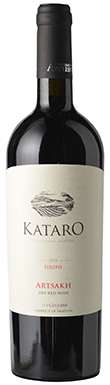
The Avetissyan family was crafting wine in Artsakh a century ago, though wine was largely forgotten through the region's political turmoils. In 1996, current owner...
2017
Domaine Avetissyan
Van Ardi, Classic, Aragatsotn, Armenia, 2017
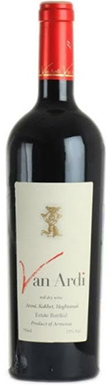
After 20 years as an accountant in US, Varuzhan Mouradian wanted to return to his roots so he bought land in Armenia and taught himself...
2017
Van Ardi
Old Bridge, Reserve, Vayots Dzor, Armenia, 2013
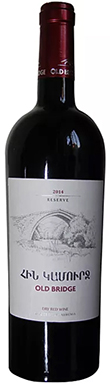
This wine comes from a tiny family estate founded in 1998 and named after a historic bridge close to their vineyards. Husband and wife...
2013
Old Bridge
