
Beaujolais: assessing its premier cru potential
The wheels are in motion for parts of Beaujolais to gain premier cru status in the next decade as recent findings from an extensive soil study reveal a rich mosaic of terroirs. Victoria Daskal recommends 10 wines that succeed in expressing this diversity.


The general saying that the southern Beaujolais growing area is limestone soil and the 10 crus to the north are on granitic soils is, in reality, too simplistic.
A comprehensive soil survey has confirmed local vignerons’ knowledge of the diverse terroirs found in Beaujolais, giving fuel for cru applications to INAO as well as to UNESCO.
Growers have long recognised the pockets of prime land that produce exceptional quality Gamay, declaring these as lieux-dits on their labels in order to communicate the characteristic wines they produce. Some of these lieux-dits are widely known and sought out, such as Côte du Py in Morgon, La Madone in Fleurie, and Champ de Cour in Moulin-à-Vent. Many more were identified over 100 years ago, even before the creation of the 10 Beaujolais crus themselves.
Scroll down for 10 expressive Beaujolais wines to seek out
The big dig
Between 2009 and 2018, Inter Beaujolais collaborated with the Rhône Chamber of Agriculture on a detailed investigation into the soils of the Beaujolais wine growing region, conducted by leading soil study office Sigales. This resulted in a precise soil map of the Beaujolais area.
The exploration included over 15,000 auger surveys (which involves drilling cylindrical holes into the ground) to collect soil samples well below the surface, as well as digging over 1,000 soil pits up to two metres deep. Far beyond limestone and granite, over 300 soil types were discovered and documented, revealing a beautifully complex geological picture.

The region’s soil history dates back over 500 million years, and the reason the evidence still exists in the vineyards is because Beaujolais was spared during the glacial period; its old rocks and sandy soils were not washed away by melting glaciers.
A brief geological history of Beaujolais
The Devonian era (400 million years ago) was an era of underwater volcanic eruptions and development of ocean life, resulting in the creation of blue stones (pierres bleues). These are found throughout Juliénas, the Côte du Py lieu-dit in Morgon, and Côte de Brouilly.
Brouilly (the area surrounding the Mont Brouilly) is the largest of the crus with the most diverse selection of soil types: granites, blue stones, scree and limestone sediments.
In the Carboniferous period (320 million years ago) – when the continents collided together forming Pangea – granite was formed, producing the famous pink granite of Chiroubles and Fleurie.
The Triassic period (240 million years ago) was the transition point between ancient bedrock and the more recent sedimentary and limestone soils. This period contributed quartz and sandstone, as well as clay and marl from sea deposits. The diverse combination of calcareous, granite and alluvial soils found in Moulin-à-Vent and Saint-Amour date back to this period.
Reaching for premier cru status
Having uncovered what generations of producers long suspected, the soil study gave the scientific backing towards an application to UNESCO. In April 2018 Beaujolais was recognised as a UNESCO Global Geopark – one of the first French wine regions to gain this status.
UNESCO Global Geoparks are areas of outstanding geological heritage, internationally recognised and managed with a holistic concept of protection, education and sustainable development. There 177 around the globe across 46 countries. In France, other wine regions with Geopark status include the Monts d’Ardèche (covering the IGP Ardèche), Luberon and Haute-Provence.
Additionally, the soil study motivated several of Beaujolais’ ACs to cooperate in applying for premier cru status for their most promising lieux-dits.
Grégoire Hoppenot, secretary of the Fleurie appellation, says ‘We are quite ready now. We just need to agree on the final list of premiers crus to present to the INAO, we will likely submit by March 2023.’
‘It’s a big investment for us,’ admits Hoppenot. ‘We started the work four years ago following the soil study and in the best-case scenario it would be approved in 10 years.’
The list of premiers crus they will propose represents 20%-30% of the Fleurie appellation, including some of the most recognised lieux-dits in Fleurie. ‘We are proposing to elevate [to premier cru level] the lieux-dits that are the most frequently declared [on labels], the most present in the press and in historical books, the most expensive, and the most interesting we tasted.’

It would be a major coup for the region to gain premier cru status, as it’s the only part of the Burgundy region that does not already have premier or grand cru level vineyards. Gaining premier cru will allow certain producers to charge more for their wines and continue to build their reputation for quality. The region has also been inspired by neighbouring Mâcon gaining premier cru vineyards in recent years.
However not all producers are on board. ‘There will be some producers who use a lieu-dit on their label, but the INAO may only approve part of the vineyards in that lieu-dit to be of premier cru level. If your vineyards are not included, then once that lieu-dit becomes premier cru you can not use it on the label, even if you’ve been doing so for decades,’ says Hoppenot.
For this very reason, Morgon has not made progress towards a premier cru application. The Côte du Py is a very large and famous lieu-dit that many producers use, but only a portion of it would likely gain premier cru status, and it is a name most producers are not willing to lose from their labels.
Brouilly and Côte de Brouilly are next in line to submit their applications to the INAO early next year. Juliénas and Moulin-à-Vent are not far behind as they compile the necessary documentation within their respective regions.
‘The premier cru will help consumers identify the best sites from our region, but even without it, our vignerons have become very proud and enthusiastic about the soils and quality of our wines,’ says Hoppenot.
What does applying for premier cru status involve?
Grégoire Hoppenot, secretary for AC Fleurie, reveals the process:
1. Declaration: We observed the harvest declaration over the past 10 years and counted the percentage of Fleurie’s growing area identified as lieux-dits.
2. Bibliography: We researched, through books written from 1747 to the present day, any historical mention of lieux-dits in the region.
3. Ratings: We identified the lieux-dits with the highest ratings in the French and British press.
4. Tastings: We tasted more than 120 wines from 32 different lieux-dits between January 2020 and June 2022.
5. Price: We compared the prices of wines labelled with a lieu-dit against wines labelled as generic Fleurie.
10 expressive Beaujolais wines to try:
Related content
New faces of Beaujolais
Burgundy premier cru vs grand cru vineyards
Cru Beaujolais 2019: panel tasting results
Château de Grandmont, Blanc des Moines, Beaujolais, Villages, Burgundy, France, 2020
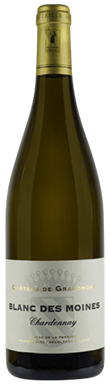

Brilliant pale lemon in colour. A delicate and pretty nose of honeysuckle, pear, ripe lemon and apricot. With its crisp, light body, this is an...
2020
Château de GrandmontBeaujolais

Robert Perroud, Pollen, Beaujolais, Brouilly, Burgundy, France, 2020
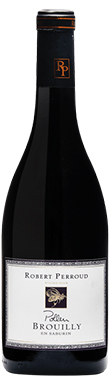
Deep, dark purple-red appearance. Intriguing combination of tart cranberry and redcurrant aromas with warming nutmeg and cloves. A soft and inviting palate with delicate tannins,...
2020
Robert PerroudBeaujolais
Domaine Bertrand, Les Fouillouses, Beaujolais, Juliénas, Burgundy, France, 2020
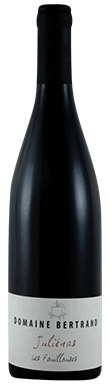
A deep and savoury style of Gamay from the blue stone soils of Juliénas. Ripe dark cherry, laced with earthy and mineral notes on the...
2020
Domaine BertrandBeaujolais
Jean-Paul & Charly Thévenet, Le Clachet, Beaujolais, Morgon, Burgundy, France, 2020
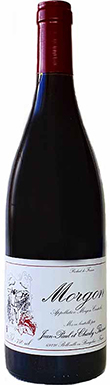
Dark, vivid ruby colour. Ripe and lively aromas, packed with dark berry fruit laced with nutmeg and cloves. A full-bodied cru Beaujolais with powerful, thick...
2020
Jean-Paul & Charly ThévenetBeaujolais
Julien Sunier, Beaujolais, Fleurie, Burgundy, France, 2020
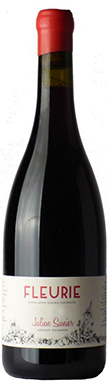
A delicate and fine Fleurie with fragrant redcurrant and raspberry on the nose. The palate is light and ethereal with superfine tannins providing a silky...
2020
Julien SunierBeaujolais
Anthony Charvet, Granite, Beaujolais, Chiroubles, Burgundy, France, 2020
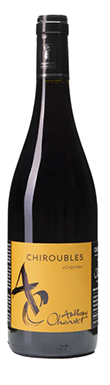
Wonderfully vibrant ruby colour with youthful red cherry, juicy plum and raspberry aromas. A soft and silky light-bodied style with refreshing acidity and energetic, pure,...
2020
Anthony CharvetBeaujolais
Château du Moulin-à-Vent, Champ de Cour, Beaujolais, Moulin-à-Vent, Burgundy, France, 2020
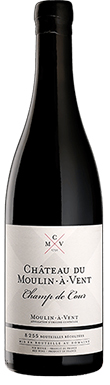
The estate dates back to 1732. Produced from vines averaging over 50 years, Champ de Cour is a 3.28ha lieu-dit, at an altitude of 200m...
2020
Château du Moulin-à-VentBeaujolais
Domaine de Mont Joly, La Croix Polage, Beaujolais, Villages, Burgundy, France, 2020
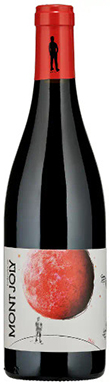
Dense and dark on first impression, but gives way to a velvety richness and juicy freshness. Lovely depth of ripe fruit with a harmonious finish....
2020
Domaine de Mont JolyBeaujolais
Domaine Thivolle, Amphoras, Beaujolais, Chiroubles, Burgundy, France, 2020
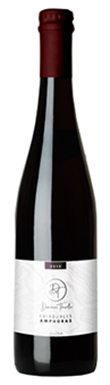
Iridescent scarlet in the glass. A gorgeous, deep nose of earthy, mineral and dark berry aromas. Enticing and energetic. Fine tannins with lifting acidity and...
2020
Domaine ThivolleBeaujolais
Domaine Dupeuble, Château des Pertonnières, Beaujolais, Burgundy, France, 2021
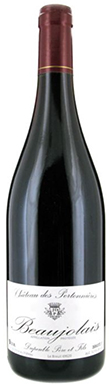
Pale brilliant ruby. A hugely refreshing, light-bodied and cheerful Beaujolais that maintains a divine purity of red berry fruit. Soft, silky tannins, mouth-watering acidity, and...
2021
Domaine DupeubleBeaujolais
