
Behind the label: Wynns John Riddoch 2018 release
Wynns John Riddoch 2018 is the second vintage of this celebrated Coonawarra Cabernet to be part of the Place de Bordeaux's September release series, and we chat to winemaker Sue Hodder about the wine's back-story.

Wynns John Riddoch Cabernet Sauvignon made its debut on the Place de Bordeaux in 2020, with the 2016 vintage, and it is following up this year with the 2018 release.
It’s part of a strategy to expand the international presence of a benchmark estate for Cabernet Sauvignon and Shiraz in Australia’s Coonawarra region, where the winery is also the largest single vineyard holder.
Wynns Coonawarra Estate also has one of Australia’s best-known winemakers at the helm. Sue Hodder joined the group in 1993 and became the winery’s first female chief winemaker five years later.
Scroll down for our new tasting note on the Wynns John Riddoch 2018 release
How it all started: Wynns history in brief
Wynns was founded in 1881 by Scotsman John Riddoch, who had become one of Australia’s richest men after purchasing vast tracts of land for sheep grazing since settling in the country in the 1860s.
Riddoch is known for planting Coonawarra’s first grapevines in 1891, and in 1896 he completed the now-famous triple gabled winery seen on the bottle labels.
Yet the region’s vineyard sector struggled after Riddoch passed away in 1901 and it wasn’t until 1951, when David and Samuel Wynn arrived, that its fortunes would change.
They bought Riddoch’s former property, changed the name from Château Comaum set about reviving the vineyards and winery. By 1954 the estate created its first Cabernet, Wynns Black Label, one of Australia’s most collected and cellared Cabernets. Flagship Cabernet wine John Riddoch was launched in 1982.
How is John Riddoch wine made?
It is produced from the top 1% of available Cabernet Sauvignon grapes and only in the years which are deemed to have the required quality.
‘In a pyramid of hierarchy of our wines, John Riddoch is the top, our Reserve wine, our ultimate selection in a given year and also our most expensive,’ Hodder says during a Zoom interview ahead of the 2018 vintage being released via the Bordeaux Place.
The 2018 growing season was warmer than average with a hot Christmas and summer period. Temperatures then changed in April due to a coastal upwelling that cooled the region for the final ripening stage and allowed the grapes to retain natural acidity.
‘As a result the wine is probably fuller and fruitier than most in the John Riddoch range,’ Hodder says. In contrast, she described the 2019 vintage as ‘more linear and finer’.
Hodder, however, still considers the 2018 to be ‘medium-bodied’ when compared to other Australian wines or other new world Cabernets.
‘When I first started making wine the definition of a wine’s weight was much more clear cut than now and we’d say; “Bordeaux was over here and Napa was over there and we were somewhere in the middle”,’ says Hodder.
‘You could deduce them with some confidence in a blind tasting, but with climate change and different approaches to viticulture and different clonal selections and all the variables that inevitably contribute to style [that] have all changed, it’s just not quite as clear cut as it once was.’
With regard to grape sourcing for the John Riddoch, Hodder says there are 25 to 30 vineyard plots ‘in serious contention’ and several ‘favourite’ plots with specific microclimates or terroir.
Within these areas, there will be different pickings, fermentations and barrel usage, meaning there are potentially 80 parcels vinified and matured separately and which will be tasted and rated before a decision on the wine’s final make-up is made.
‘Our opinion can change as the year unfolds,’ Hodder says. ‘Particularly some of the very old vineyards planted in the 1950s, they never look youthful and exuberant and bright when young but they build in stature in [the] barrel. It would have been a shame to dismiss them early without giving them an opportunity to mature in oak themselves.’
Declaring a John Riddoch vintage
There is no wine from 1983, 1989, 1995, 2000, 2001, 2002, 2007, 2011, 2014 and 2017.
When it comes to deciding if the grapes make the grade in a particular year, Hodder says she knows ‘when it doesn’t’ and that’s usually early on and due to wet conditions at the wrong time.
She is also wary of calling out great vintages and prefers to wait until the wines are at least five years old before making such a statement.
‘I think we should be a bit circumspect about calling out great vintages – that said, some are better than others.
‘Sometimes we have an abundance of riches and when we’re making the selections we don’t want the John Riddoch to be a bigger or more concentrated version of the Black Label.
‘And indeed, it’s possible that some might like the Black Label better, but we want to have another layer of interest and layer of fruit and something a little bit different or savoury.’
In general, Hodder likes the wines to have a ‘cola-type character’ that comes from a plot of vines near her house on the estate, a fragrant aspect to the fruit from vines along the V&A lane (a divide between Coonawarra’s north and south vineyards which is higher in altitude compared to the rest of the area), as well as ‘big shoulders’. But she also admits that ‘we do change our minds’.
La Place
Hodder says she was ‘delighted’ with the wine’s debut on the Bordeaux Place last year, despite challenges including the impact of Brexit, Covid-19 – and the accompanying lack of domestic on-trade presence – plus slower demand from China and shipping delays.
Hodder says she was ‘really pleased with how things started’.
She adds, ‘We didn’t know what we didn’t know, quite frankly. We’ve just been learning so much, it’s been amazing. Even when we go on Wine-Searcher, which is just one way of finding wine, there’s so many more listings for John Riddoch in different countries than there was this time last year. It’s so good to be able to show our history, ageability and story that is a culmination of our endeavours.’
The subject was first initiated by Tom Portet and Emma Thienpont, who launched ‘Australian First Growths’ specifically to promote Australia’s finest wines via the Bordeaux Place and its strong network of international clients. It took ‘a while’, Hodder says, but she is ‘grateful they persevered’.
Recent vintages
The 2021 was ‘really beautiful’, says Hodder, who describes the vintage as cool but not wet with ‘stylish’ Cabernet.
‘I don’t know how I’m going to make a John Riddoch selection or a single-vineyard selection – it was very strong,’ she says.
‘2018 and 2019 are good, 20 is not as strong as those previous ones, [and] 2021 is very interesting. But after me harping on about waiting before casting such an exuberant opinion I should wait. So far though, it does look very good. We’re very pleased.’
Tasting note on the Wynns John Riddoch 2018 release
Related articles:
Tasting the September fine wine releases via the Bordeaux Place
Wynns’ John Riddoch: An Australian Cabernet icon
Vasse Felix profile and tasting
Wynns Coonawarra Estate, John Riddoch Cabernet Sauvignon, Coonawarra, South Australia, Australia, 2018
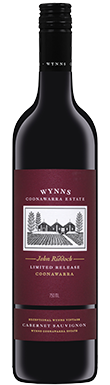

Second year on the Place de Bordeaux for the flagship wine John Riddoch first made by Wynns in 1982 from the best available Cabernet Sauvignon...
2018
Wynns Coonawarra EstateCoonawarra
