
Billecart-Salmon: Producer profile & latest releases
Yohan Castaing takes a look at the gastronomic Champagnes of Billecart-Salmon...


Founded in 1818, Billecart-Salmon Champagne is still majority-owned by the Billecart family today, who own 55%. The remaining 45% is held by the Frey group, which owns Château La Lagune in Bordeaux, Paul Jaboulet Ainé in the Rhône, and Château Corton C in Burgundy.
Billecart-Salmon is known for its haute couture viticulture and owns a total of 16 hectares of vines, including five hectares in Aÿ, in Mareuil-sur-Aÿ, four hectares in Damery in the Vallée de la Marne, and four hectares in Chouilly, Avize, and Le Mesnil-sur-Oger in Côtes de Blancs. An additional 85 hectares were purchased by the Frey group, and the house purchase the equivalent of 145 hectares of grapes from other sources.
The wines from Billecart-Salmon possess power and remarkable elegance thanks to vinification in oak. They have perfectly controlled acidity thanks to there being ‘no malolactic fermentation for the Champagne vinified in barrels,’ according to Florent Nys, the chef de caves. This strategy makes Billecart-Salmon stand out, and its wines are suited to gastronomy.
See also: Insider guide to Champagne and food pairing
Timeline
The house was founded following the marriage of Nicolas François Billecart and Elisabeth Salmon. Both could trace their roots back to the village of Mareuil-sur-Aÿ in the 16th century. Louis Salmon, Elisabeth’s brother, took charge of the oenological side of the business, while Nicolas François, a lawyer by training, developed the commercial side.
Billecart-Salmon prospered during the 19th century, until the First World War intervened in 1914. By the end of the war, the 100-year-old house was down to just 75,000 bottles remaining in the cellars. However, the company got through relatively unscathed and Charles Roland-Billecart managed to restore sales to around 217,000 bottles by 1936.
In 1958 it developed a winemaking method that was revolutionary for the time – a longer, cooler fermentation, inspired by traditional beer brewers, followed by cold settling to make the wines fresher and more crystalline.
In 1964, in tribute to founder Nicolas François, the house launched the first vintage of the eponymous Cuvée Nicolas François.
In 1970, Jean Roland-Billecart, then company president, decided to develop a rosé Champagne at a time when this type of Champagne was not considered high quality. Today, the Billecart-Salmon non-vintage rosé is a reference point for the region.
By the early 1990s, the house was repositioning itself as a premium brand after years sat on supermarket shelves. The house would now seek listings in top-end restaurants and independent retailers.
In 1995 the house isolated one-hectare of its most beautiful vineyard and vinified it separately. This became the first vintage of Clos St-Hillaire, a 100% Pinot Noir blanc de noirs vinified directly on site (very rare in Champagne) in barrels.
The new millennium saw the construction of a new cuverie, enabling better control of individual parcels in small temperature controlled tanks. This was followed in 2010 by the addition of a new chai housing 400 small and two large oak barrels, then in 2018 a further 24 large barrels were acquired.
Mathieu Billecart, appointed in January 2019 as chairman of the board, is the seventh generation at the head of the company.
For the 2019 vintage, Denis Blée, director of wine and vines, seems particularly optimistic despite having ‘some concerns about powdery mildew on Chardonnay. However, the vintage broke heat records [at 42.7°C] and the harvest was dry,’ he added.
See Billecart-Salmon’s latest releases:
Billecart-Salmon, Brut Rosé, Champagne, France
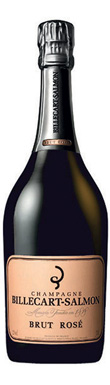

Based on the 2020 vintage, Billecart-Salmon's signature rosé appears to be on its finest form of recent years under cellar master Florent Nys, full of...
Billecart-Salmon

Billecart-Salmon, Brut Sous Bois, Champagne, France
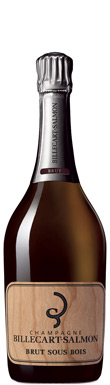
91
Based on the 2011 vintage, with seven years on its lees. Florent Nys, chef de caves at Billecart-Salmon, uses oak casks for this Champagne, bringing hazelnut notes, a lightly roasted character and some pastry touches. It's perfectly balanced on the palate with a crystalline and round texture, and a very long finish. Displays intense personality. Dosage: 4g/l. Disgorgement: December 2018.
Billecart-Salmon
Billecart-Salmon, Louis Salmon Blanc de Blancs, Champagne, France, 2007
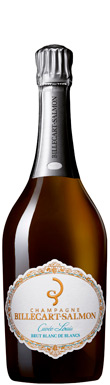
<p>The Blanc de Blancs shows an energetic and lively bouquet of fresh orchard fruits, spring flowers and citrussy heat notes. The tense and linear palate...
2007
Billecart-Salmon
Billecart-Salmon, Cuvée Nicolas François, Champagne, France, 2006
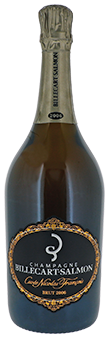
Mature toasted brioche and macadamia nuts on nose, white chocolate and toast. Great acidity on the palate provides a lot of support to the complex,...
2006
Billecart-Salmon
Billecart-Salmon, Clos St-Hilaire, Champagne, France, 2002
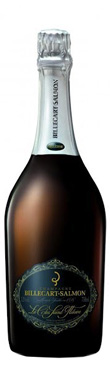
Sourced from the one-hectare Clos St-Hilaire, a walled vineyard, this 2002 opens with toasty aromas, spices, white fruits and roasted nuts. This voluminous Champagne has...
2002
Billecart-Salmon
