
Blaufränkisch: Austria’s finest red


It may be a bit tricky to pronounce, but Blaufränkisch has made a name for itself, as Austrian producers explore its potential for quality wines. Stephen Brook introduces a native grape that deserves to have global recognition...
Blaufränkisch – it doesn’t exactly trip off the tongue, does it? No wonder that in the 1990s many Austrian wine estates decided to focus instead on international varieties such as Merlot. Today, however, international varieties are in retreat, as Austrians begin to concur that Blaufränkisch is their country’s finest red.
Scroll down for Stephen Brook’s top Austrian Blaufränkisch buys
This article appears in the September 2018 issue of Decanter magazine, on general sale from 1 August, but is available online exclusively to Premium members.
It’s not exclusive to Austria. In Hungary – which was of course Austrian until 1920 – it’s known as Kékfrankos, and in southern Germany as Lemberger. But the finest expressions of the variety do emerge from Austria, and more specifically, from the Burgenland region southeast of Vienna and hugging the Hungarian border.
As well as its name, Blaufränkisch is hampered, from a marketing and popularity viewpoint, by its lack of clear varietal identity.In this it’s not alone, and grapes such as Syrah or Chardonnay also come in many guises. It’s responsive to soil types, and in the Burgenland these vary from limestone to loam to schist. There are also stylistic variations under the control of the grower and winemaker.
Picked early, Blaufränkisch can deliver bright, zesty sour-cherry aromas and flavours that bear some resemblance to Sangiovese.
Picked late, it produces a weighty, powerful wine with a character that can be further enhanced by oak-ageing.
So it’s perfectly reasonable for producers to release a range of Blaufränkisch wines, from fresh and fruity to more complex and individual styles from single vineyards. Others see it as a blending variety.Only recently have Blaufränkisch specialists taken the route of identifying and vinifying grapes from single vineyards.
They have always known the best sites, and some have been famous for decades, such as Ernst Triebaumer’s Mariental, but the list of acknowledged crus is expanding.
This too presents a challenge for wine enthusiasts, as every Burgundy or Rheingau lover knows. The difficulty is compounded by the fact that the same vineyard name – Goldberg, for instance – can occur in more than one region.
But consumers shouldn’t be put off. For many years Austria’s strength lay in white wines such as Grüner Veltliner or Riesling, and many reds were fairly rustic. But this is no longer the case, even if many Austrian reds struggle in export markets for the reasons already outlined. As with white wines, the quality of reds – especially Blaufränkisch – is very high, and superb examples can be found across the regional and stylistic spectra.

Lake wines
The best-known sector of the Burgenland lies around the Neusiedlersee, a large but very shallow lake that is shared with Hungary. Near the shore the climate is humid, especially in autumn, which is why the region is celebrated for its great sweet wines from Rust and Illmitz.
On the slopes set back from the shore, however, soils and microclimates can excel for Blaufränkisch. Fine single-vineyard wines, as well as blends, come from the area behind Rust, and equally from the warmer slopes located on the opposite side of the lake, behind Gols. Finally, on the northwestern side of the lake is the Leithaberg, a low range of mainly limestone hills. This region has become increasingly acclaimed for the quality and finesse of its Blaufränkisch, which has been awarded appellation status DAC (Districtus Austriae Controllatus).
The Carnuntum region, which lies east of Vienna and north of Burgenland, is best known for red wines from Zweigelt, but it does include one outstanding Blaufränkisch site: the Spitzerberg. The top of this hill is a nature reserve, but lower down there are almost 200ha of vineyards, about half of which are planted with Blaufränkisch. Most of the fruit went to a cooperative that closed in the late 1990s, so the wines were little known until Dorli Muhr and her then-husband Dirk Niepoort realised the hill could produce exceptionally elegant wines with fine acidity, and successfully revived the Spitzerberg.
The easiest way to track down the best Blaufränkisch wines is to focus on its most dedicated producers rather than try to memorise single-vineyard names. Triebaumer’s Mariental is, in Austria, a legendary wine, but another of his Blaufränkisch wines, from Oberer Wald, is outstanding too, if more overtly fruity and assertive than the effortlessly elegant Mariental. Other consistent growers of high quality on the western side of the lake include Markus Altenburger, Toni Hartl, Prieler and Kollwentz. Hannes Georg Prieler Schuster, another top producer, observes that the sandier soils near the shore can produce concentrated wines with a darker fruit profile, as the microclimate is warmer. In contrast, hillside sites yield more tangy wines with higher acidity. Both styles have merit, but the varying terroir results in different expressions of the grape.
On the eastern shore, it’s hard to go wrong with producers such as Paul Achs, Gernot Heinrich, Juris, Hans Nittnaus and Umathum. Growers on either side of the lake often own vineyards on the Leithaberg too. Here the limestone soils give some of Burgenland’s most refined Blaufränkisch. Altenburger explains: ‘Leithaberg limestone gives structure, salinity and length.’ However, there are exceptions. Andi Kollwentz makes superb single-vineyard wines from Leithaberg that are barrique-aged and powerful. He explains: ‘I want to make long-lived wines, so I opt for long macerations, and up to two years in oak.’ It’s a style that could be overbearing, but the Kollwentz family has made consistently excellent wines for decades.
Power house
Head south from the lake and you soon come to the compact Mittelburgenland region, which is mostly planted with Blaufränkisch and produces DAC wines. Here the moderating influence of the lake is far less pronounced, and the slopes on which the vineyards are located are on richer loam and clay soils that give more overtly powerful wines. Here and there are outcrops of limestone, schist and gravel. The wines may lack the refinement of examples from Rust or Leithaberg, but they have impressive richness and weight. For those seeking full-bodied, black-fruited red wines, this is an excellent source.
Mittelburgenland wines can sometimes be cumbersome, but the vineyards are more elevated than around the lake, and the nights are cooler, which conserves acidity. That elevation, and the water-retentive nature of the soils, gives the wines their quality and freshness, according to top growers such as Franz Reinhard Weninger. He explains: ‘The Mittelburgenland grapes ripen one to two weeks later than those on the Leithaberg, and we don’t get much influence from the lake. We end up with wines with higher acidity and more ageing potential and structure. Unfortunately, some growers used to manipulate the wines by using concentrators and de-acidification. What I, and many other producers want, is Blaufränkisch that has structure, but also freshness and finesse.’
Weingut Moric’s Roland Velich, who makes grandiose single-vineyard wines from here, agrees. ‘Super-rich, oaky styles designed to please the Austrian fondness for super-ripe, opulent wines distort what we can do with our microclimate and long growing season: namely wines with acidity and elegance,’ he says.
Other top names from the Mittelburgenland are Albert Gesellmann, Silvia Heinrich and Kirnbauer. Some of the single-vineyard wines are barrique-aged, but the wines usually have the heft to absorb some new wood. Many excellent examples come from sites such as Dürrau, Goldberg and Hochberg, and the overall quality of winemaking is high, although over-extraction and over-oaking can still be a problem.
Hochberg in the village of Neckenmarkt is the source of the new Reunion range created by the local cooperative and Gerhard Kracher, who is better known for his sensational sweet wines from Illmitz. There are two Reunion wines, a basic selection called Passion, and the more structured, new-oaked Vision. ‘It’s easy to get opulence in the Mittelburgenland,’ says Kracher, ‘but we’re also looking for finesse.’
Schist style
The Südburgenland also hugs the Hungarian border, but the terrain is more varied and a good deal of white wine is produced here too, often on loam soils. The best or most characterful Blaufränkisch here is planted on schist, and this section has its own DAC appellation: Eisenberg, a name that refers to the iron content in the soil. Many vineyards are very steep, so here too elevation (or the lack of it) plays an important role in the style of the wines. Krutzler and Uwe Schiefer have long been the top producers, but their eminence is now being challenged by younger winemakers such as Mathias Jalits and Christoph Wachter of Wachter-Wiesler. Krutzler’s wines are often very powerful and dense, while those from Schiefer, frequently aged in 500-litre barrels to tone down the oak influence, are more delicate and complex.
Personally, I enjoy the subtlety and personality of the Eisenberg wines. Julia Wachter, younger sister of Christoph, believes those qualities derive from the schist soils that give elegance, salinity and less weight than in Blaufränkisch that’s grown on loam. Altenburger also finds that schist gives a darker fruit profile. Michael Wenzel, who admittedly is based in Rust, particularly relishes the floral character and the acidity of Blaufränkisch grown on limestone, and he finds that ‘schist gives less complex and more neutral wines, and there’s a risk that the grapes can ripen too quickly on those stony soils’.
Clearly, Blaufränkisch comes in so many guises that it can defy generalisations. At one end of the spectrum are not just the basic fruit-forward wines such as Hans Nittnaus’ dependable Kalk und Schiefer but light, perky wines, such as Manila from Martin Nittnaus, that are intended to be drunk lightly chilled. The limestone Leithaberg and the schist-based Eisenberg give middle-weight wines, while some of the weightier styles come from around Gols or from Mittelburgenland. Winemaking choices play a crucial role too, especially harvesting dates and the amount of oak-ageing to which the wine is subjected.
Stylistic diversity isn’t necessarily a sign of quality. Acceptable styles of, say, Cabernet Sauvignon or Pinot Noir, don’t allow much room for divergence. But in the case of Blaufränkisch it’s an advantage, offering wine lovers a range of interpretations and flavour profiles. Prices for the top wines have been rising steadily, suggesting strong demand, even if mostly local, and an appreciation of the heights to which Blaufränkisch can rise.
Stephen Brook is an awarded author and has been a Decanter contributing editor since 1996
See Stephen Brook’s top Austrian Blaufrankisch buys
You might also like:
Austrian wine style guide
Austrian Grüner Veltliner
Austrian Riesling
Ernst Triebaumer, Mariental, Burgenland, Austria, 2015
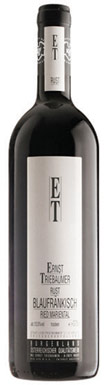

Triebaumer’s Mariental has been one of Austria’s flagship reds since the 1980s. The vineyard lies north of Rust and has vines up to 60 years...
2015
Ernst Triebaumer

Krutzler, Eisenberg Reserve, Burgenland, Austria, 2016
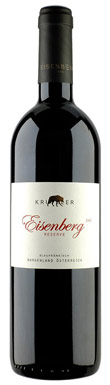
This wine has long been a perfect expression of the Eisenberg terroir, with its complex schist soils. Aged in older barriques, it has a bright,...
2016
Krutzler
Umathum, Kirschgarten, Burgenland, Austria, 2013
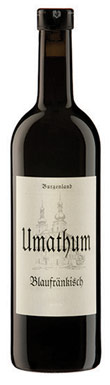
Although Pepe Umathum is a renowned red-wine producer on the east side of the lake, he is proud of this Leithaberg vineyard, which he has...
2013
Umathum
Altenburger, Gritschenberg, Burgenland, Austria, 2015
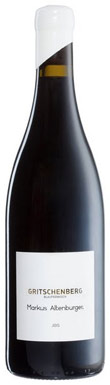
From old vines on limestone soils. The colour is not that deep, but the nose is fresh and zesty, with cherry and raspberry fruit in...
2015
Altenburger
Muhr-van der Niepoort, Samt & Seide, Carnuntum, Niederösterreich, Austria, 2016
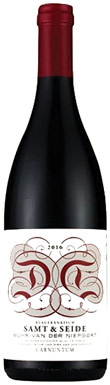
The second wine from Dorli Muhr’s holdings in the Spitzerberg zone. Its name means ‘Velvet & Silk’ in English. The nose is fragrant and pure,...
2016
Muhr-van der Niepoort
Prieler, Blaufränkisch, Burgenland, Austria, 2014
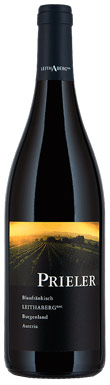
This elegant expression of the variety blends two sites and sees no new oak. The refined nose has subdued cherry aromas. It’s lean, silky and...
2014
Prieler
Reunion, Vision, Burgenland, Austria, 2015
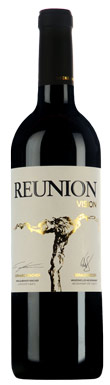
Fermented with natural yeasts and aged in new barriques, this wine comes from the outstanding Hochberg vineyard. It’s very deep in colour, with rich, suave,...
2015
Reunion
Wachter-Wiesler, Eisenberg Alte Reben, Burgenland, Austria, 2014
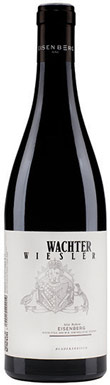
This wine from the Eisenberg appellation is an old-vine blend of Blaufränkisch sourced from four schist sites. It has a rich and vibrant nose with...
2014
Wachter-Wiesler
Hannes Schuster, Blaufränkisch, Burgenland, Austria, 2014
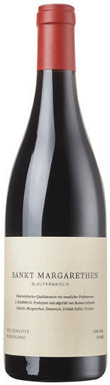
The winery used to be called Rosi Schuster, but son Hannes took over some years ago. This wine, which is aged in 500-litre barrels, comes...
2014
Hannes Schuster
Moric, Blaufränkisch, Burgenland, Austria, 2016
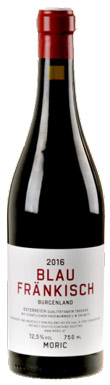
Roland Velich is a master of Blaufränkisch and his single-vineyard wines come from the Mittelburgenland. Even this basic bottling is exciting. The nose shows opulent...
2016
Moric
Uwe Schiefer, Blaufränkisch, Burgenland, Austria, 2016
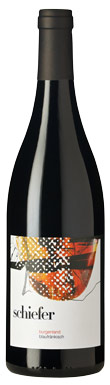
Uwe Schiefer is a passionate producer of single-vineyard wines from the Südburgenland. And this more basic bottling shows a lighter touch. There’s a muted black-fruits...
2016
Uwe Schiefer
Wenzel, Aus Dem Kalk, Burgenland, Austria, 2016
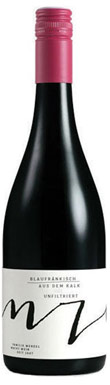
Michael Wenzel in Rust is well known for his dry Furmint and noble sweet wines, but he also makes this charming red wine grown on...
2016
Wenzel
