
Bollinger La Grande Année 2012 launch: Brut & Rosé
Simon Field attends the launch of the 2012 vintage of Bollinger's flagship Champagnes...


Only a year has passed since the release of La Grande Année 2008. To many, this was the ultimate expression of one of the world’s greatest Champagnes, so how does one follow that? Let the halo resonate for a few years, surely? Not at all…
Barely 12 months later, here we are again, bombarded with superlatives for yet another extraordinarily eloquent expression of the brand which, by definition, has to represent the fruits of a great year – and a great year only. Forget about the rainfest that was 2011, don’t get too carried away by the somewhat anodyne 2010. Even 2009, liked by some for its ripeness and forward personality does not make the cut. Far, far more interesting is 2012, an extraordinary year in many ways and a more than worthy complement to the glory that is 2008.
Frost, hail, rain, drought…you name it, 2012 had it all, described as a ‘miraculous’ vintage by Bollinger’s urbane ambassador Guy De Rivoire, and as one of the ultimate statements of Pinot Noir by his colleague, the equally aristocratic Charles-Armand de Belenet. 2012 was an exceptional vintage in every sense of the word, but short in terms of volume (8,600 kilos per hectare compared with 10,200 in an ‘average’ year such as 2019, or as much as 17,000 in a plentiful vintage such as 2004).
Short but oh-so-sweet, its berries were small and thick skinned, wonderfully ripe and yet with an exemplary level of acidity (the double-figure potential for both alcohol and acidity at harvest time recalls another famously controversial year, 1996). The crop was brought in between 13 September and 2 October and it was clear from the beginning that this was going to be something a bit special. So much so, in fact, that both Brut and Rosé were made – the quality of the red grapes was such that it would have been churlish in the extreme to not produce a rosé, especially given the unsurpassed quality of the red wine added by assemblage, its source being the famous monopole, La Côte Aux Enfants in Aÿ.
Somewhat ironically, Bollinger came quite late to the market with their rosé. In the early days it was too dark, too phenolic and often a little clumsy. How times have changed; the 2012 is its finest statement yet, a perfect sibling to the outstanding Brut, and, for my money (if only I had quite so much) one of the greatest of them all.
Bollinger La Grande Année 2012:
You may also like:
Champagne Salon vertical: A retrospective
Champagne brands to buy: Over 100 vintage & non-vintage bottles rated
The best non-vintage Champagnes to buy
Bollinger, La Grande Année, Champagne, France, 2012
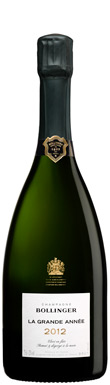

Texture is key here, with a fruit basket of indulgence tempting the senses, the predominant Pinot Noir adding plums, cherry and hints of cedar to...
2012
Bollinger

Bollinger, La Grande Année Rosé, Champagne, France, 2012
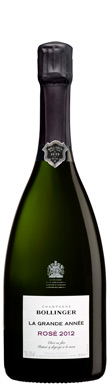
<p>5% of red wine has been added by assemblage from the legendary La Cote Aux Enfants vineyard in Aÿ. The resulting power is subtle, gastronomic...
2012
Bollinger
