
Producer profile: Château Smith Haut Lafitte
The past three decades have seen the fortunes of this historic estate renewed, becoming a pioneer in both environmental initiatives and wine tourism thanks to the collective imagination and dedication of one family. Jane Anson pays a visit.


Famously, Château Haut-Brion was the only red wine outside the Médoc region to be recognised in the 1855 Grands Crus Classés ranking. But there was a second estate, just a few miles to the south in the (then) region of Graves, that played an equally important if less high-profile role. This was Château Smith Haut Lafitte, whose owner Lodi-Martin Duffour-Dubergier was mayor of Bordeaux at the time. He was the man who decided to illustrate Bordeaux’s exhibition space in Paris with a classification of the region’s best wines. He instructed the local brokers to come up with a list, so giving the world a set of names that still dominates fine wine today.
Despite having a history that dates back to the 14th century, his own property took another 100 years to be recognised in the 1953 Cru Classé de Graves ranking. But Duffour-Dubergier would be happy to know that Smith Haut Lafitte continues to set the agenda in Bordeaux, leading the way in so many areas that it can be dizzying to keep track.
Setting the standard
Today, Smith Haut Lafitte is not only certified organic (although preferring the term ‘bio- precision’ for its use of drone and satellite technology), but is the only property outside the 1855 first growths to make its own barrels from an on-site cooperage. It unquestionably sets the standard, too, that any wine tourism venture in Bordeaux has to meet, with a luxury hotel, restaurant and spa on site, and is the birthplace of the Caudalie beauty range, which uses natural ingredients from grapes and vines.
Its vines are punctuated by art installations including Barry Flanagan’s leaping bronze hare and a Jim Dine Venus sculpture, and its wines are recognised as being in the upper echelons of Bordeaux in both red and white. Certainly, they are consistently successful, and among my go-to bottles when I am looking for something that I just know is going to make friends happy when I open it.
You can put all of this firmly at the feet of Florence and Daniel Cathiard. Both ex-Olympic skiers, they met as teenagers and went on to run a successful chain of sports shops out of their hometown of Grenoble before selling up in 1989 and moving a year later to Smith Haut Lafitte, a 55ha estate on gravel soils that lies 10km to the south of Bordeaux city.
They chose to purchase a property that had been one of only 16 in the Graves area (now AP Pessac-Léognan) to merit the official 1953 classification, but that had fallen into disrepair under first the Eschenauer family, then the now-defunct British company Brent Walker, owned by former boxer turned serial entrepreneur George Walker.
A winning team
The Cathiard’s partnership is key to understanding how the estate has been turned around in the 30 years since they arrived – Daniel quiet, intuitive, analytical, taking charge of the winemaking alongside technical director and agricultural engineer Fabien Teitgen; and Florence forthright, sociable, forward-thinking, concentrating on marketing and sales. In their first vintage of 1991, frost destroyed pretty much the entire crop, followed by three difficult years that meant they had to wait until 1995 to begin to show the potential of the vineyard they had bought.
In the meantime, they undertook a huge replanting programme, and made changes to the wine range, such as bottling a second wine for the white as well as the red, and more recently introducing a third (or alternative second) wine for each colour. And to ensure all of this was made visible, Florence quit her role as vice president for Europe at ad agency McCann-Erickson to concentrate on raising the profile of Smith Haut Lafitte.
Chateau Smith Haut Lafitte at a glance
The team: The Cathiards have been owners since 1990, after founding the Go Sport chain of sportswear shops, and early days in the 1965 French Olympic ski team. Fabien Teitgen is technical director, with Michel Rolland and Stéphane Derenoncourt as consultants
Vineyard area: 85ha (74ha red, 11ha white) split over 40% first wine and 60% second wine Le Petit Haut Lafitte. The estate also makes Les Hauts de Smith from young vines and specific plots
Red plantings: 60% Cabernet Sauvignon, 30% Merlot, 9% Cabernet Franc, 1% Petit Verdot
White plantings: 90% Sauvignon Blanc, 5% Semillon, 5% Sauvignon Gris
Château Smith Haut Lafitte timeline
1365 Verrier du Boscq signs the first recorded deeds for the estate, which even at the time includes a few rows of vines
1400s-1500s During the Middle Ages, the estate belongs to a branch of France’s royal Valois family, who give it the fleur-de-lis on its coat of arms
1729 George Smith, Scottish wine merchant and sailor, acquires the property, building the magnificent chartreuse where the Cathiards now live. He also adds the crescent moon and three-legged stool to the coat of arms
1842 Lodi-Martin Duffour-Dubergier, mayor of Bordeaux, buys the estate, then 13 years later signs the document that will become the 1855 classification
1878 Oldest vintage that remains in the estate’s cellar today
1958 Eschenauer wine merchant buys the château, building the original underground cellar (joined now by a second underground cellar in a separate part of the grounds)
1959 Awarded Cru Classé de Graves status for its red wine
1990 Florence and Daniel Cathiard acquire the estate from Brent Walker, an English company that owned breweries and leisure concerns including the Mecca casinos
1991 Devastating frosts wipe out nearly all of the Cathiards’ first year’s production
1995 Daughter Mathilde Cathiard- Thomas launches Caudalie ‘vinotherapy’ beauty range, and Smith Haut Lafitte opens an on-site cooperage
1999 Les Sources de Caudalie hotel opens, run by daughter Alice Cathiard-Tourbier and her husband Jérôme Tourbier
2013 Underground ‘stealth cellar’ opened for the second wines
2019 Organic certification secured
Her methods didn’t always go down well – one memorable comment, given to The Wall Street Journal in 1997, was from friend and Château Pontet-Canet owner Alfred Tesseron. ‘As a publicist, she’s a Ferrari,’ Tesseron told the American newspaper at the time. ‘The only problem is that we aren’t used to Ferraris around here, because our roads are too narrow.’
But it is thanks to Florence just as much as Daniel that Smith Haut Lafitte excels today. It goes above and beyond on countless environmental issues – capturing, for example, the carbon dioxide that is a by-product of fermentation and turning it into sodium bicarbonate through a technology called Velecarb (an initiative that was rewarded with a talk at the United Nations’ climate change conference in Paris in 2015), as well as reducing the levels of sulphur dioxide throughout the winemaking process.
The property also uses horses for ploughing, makes its own compost from ground vine cuttings, along with other flower and plant-based preparations for organic and biodynamic treatments, and has a carbon- neutral underground ‘stealth cellar’ solely for its second wines, which has a ‘green roof’ and uses geothermal and solar energy.
Love of nature
Perhaps most surprising of all, a vine nursery has been created on the private Ile de la Lande island in the Garonne river, bought expressly fothe purpose of ensuring a protective ecosystem for the young plants and to avoid any risk from the phylloxera louse that the American vines (necessary for the rootstocks) might bring.
‘Our love of nature is not something that we simply discovered recently,’ says Florence. ‘We met on the snowy slopes of the Alps, and have always lived outside big cities. When we first arrived at Smith Haut Lafitte, we wanted to become organic straight away. But it was such a financial and even ecological disaster to try to quickly change an estate that had become hooked on chemical viticulture that we stopped.
‘At the time, neither wine merchants nor journalists cared at all about it. It was only a few years later, when our daughter Mathilde began the Caudalie beauty range and gave 10% of all profits to environmental causes, that we looked again. A few years later, her sister Alice transformed our three-hole golf course into organic garden. We decided to re-concentrate our efforts, and this time were successful.’
The style of the wine has also evolved. There were moments in the early years where they flirted with overly oaked wines that did not fully reflect the work they were doing in the vineyard, but that has long since passed, with more sculpted and finessed, but still generous, wines in place since at least the 2000 vintage.
Nor is there any sign of them simply accepting the plaudits that come their way. I can think of no other château whose owners so consistently question the way things are done, and how to do better. Right now there is a welcome movement in Bordeaux looking at the nature of luxury wine in the face of climate change and wider issues of sustainability.
It makes the Cathiards’ initiatives with carbon capture – and with farming methods that in 2019 were given the Entreprise du Patrimoine Vivant label by the French Ministry of Agriculture for their respect of tradition and craftsmanship – more important than ever. If there are questions to be asked about the changing nature of fine wine, you can rest assured they are being asked here – and that most likely there will be more than a few answers provided.
Jane Anson’s Château Smith Haut Lafitte picks
See all Smith Haut Lafitte reviews and scores here
Château Smith Haut Lafitte, Pessac-Léognan, Bordeaux, France, 2015
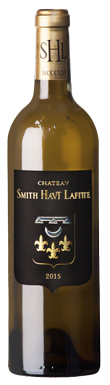

The 2015 is a stunning wine and represents a sterling effort in a difficult vintage for white wines. It shows a dense and complex nose...
2015
Château Smith Haut LafittePessac-Léognan

Château Smith Haut Lafitte, Le Petit Haut Lafitte Blanc, Pessac-Léognan, Bordeaux, France, 2017
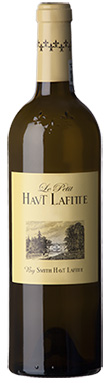
A fresh, crisp and concentrated take on the vintage. It's a little less creamy than in some years, but is extremely enjoyable with acidity that...
2017
Château Smith Haut LafittePessac-Léognan
Château Smith Haut Lafitte, Les Hauts de Smith Blanc, Pessac-Léognan, Bordeaux, France, 2017
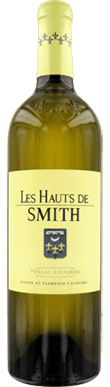
They have managed to get the Haut de Smith signature in this wine, and for me it is one of the most successful whites of...
2017
Château Smith Haut LafittePessac-Léognan
Château Smith Haut Lafitte, Le Petit Haut Lafitte, Pessac-Léognan, Bordeaux, France, 2016
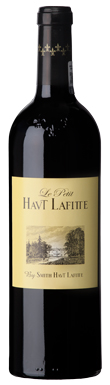
A hugely enjoyable wine that is intense and concentrated, with chocolate shavings, liquorice and damson, plus a brushed velvet texture. This is a vintage where...
2016
Château Smith Haut LafittePessac-Léognan
Château Smith Haut Lafitte, Les Hauts de Smith, Pessac-Léognan, Bordeaux, France, 2015
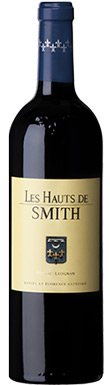
Majority Merlot (55% with the remainder Cabernet Sauvignon), with a gourmet edge of blackberry fruits, chocolate and caramel hints. This is a vintage that really...
2015
Château Smith Haut LafittePessac-Léognan
