
Bordeaux wine styles: 40 years of change


Since he started writing about Bordeaux in the 1980s, Stephen Brook has witnessed fundamental stylistic shifts in the region’s wines. Here he reflects on the highs and lows, tastes and trends, of the past four decades...
Long before I started writing about Bordeaux wines, I was buying and drinking them, seeking out bottles from less fashionable vintages, such as 1979, that I could afford. By the time the famous 1982 vintage was released I was beginning to scribble, and attended some tastings of those wines. It divided opinion at the time. ‘Too Californian!’ sniffed some British wine merchants, unused to the aromas of ripe fruit. But wine writers, an emerging breed back then, were more positive, and they were right. The 1982s were delicious and beguiling, a reminder that Bordeaux in a top year didn’t have to be mean and lean.
Scroll down to see Brook’s comparative tasting notes and scores for a range of Bordeaux wines
I was impressed by the 1986s – such density and structure! – and I was not alone. I lashed out on a top St-Estèphe from that year, and sold the case 15 years later, fearing it would never mellow enough to be enjoyable. Many 1988s were austere, even tough, and it took the precocious vintage of 1989, followed by the great 1990s, to remind us that fine claret was not a monument but a source of the utmost vinous pleasure.
That pair of vintages set the pattern for the decades to follow. There were unlovely exceptions such as 1992 and 1993, but the successful vintages – however different from each other – showed a riper, more succulent interpretation of red Bordeaux. There were two explanations for this. The first is the slow march of global warming: flowering was beginning earlier, yields were gradually reduced, and the harvest was focused on obtaining the ripest fruit, not on bringing in the crop as rapidly as possible.
And then there was the simultaneous rise of the consultant and the wine critic, both separately and in tandem. Robert Parker Jr, then in his prime, favoured optimal ripeness, and although that was sometimes pushed a bit too far for my taste, he was right to do so. His friend, the consultant Michel Rolland, thought the same way. Operating mostly in the Merlot-dominated Right Bank, he was prepared to tolerate some raisining at harvest if it ensured opulence and sensuality in the finished wines. Their informal alliance did establish a dominant style, although some questioned whether these super-ripe wines would age well. However, the public loved them, and only some connoisseurs and investors were greatly concerned about whether the wines would last three decades or more.
Quality on the rise
I have never cared for the schoolmasterly 100-point system so beloved of American critics (and nowadays we have all had to succumb), but it did encourage châteaux to raise their game. The downside was a trend towards stylistic uniformity, although that should not be exaggerated. Those who have written, for example, that all Rolland’s wines taste the same, are simply wrong. Meanwhile proprietors, who sent out releases boasting of their low scores, implying that theirs was the authentic style of Bordeaux, found themselves on the losing side.
The overall crescendo in quality was palpable through the 1990s to the present day. Yields were reduced to improve ripening and concentration, harvests became more protracted as châteaux directors sought ever-riper grapes, in poor years there was intense sorting of the grapes at harvest, and second wines were introduced to ensure that poor or middling fruit was removed from any bottles bearing the château name.
Despite ever-increasing quality, the Bordeaux image was suffering. The grotesque distortions of the en primeur system, with châteaux refusing to announce prices until they saw the scores of top critics; some unjustifiable price increases in mediocre vintages; the smugness of the Bordeaux marketplace – all this was driving away younger consumers, and even traditional Bordeaux lovers who could no longer afford a fine claret with their Sunday roast.
Of course, there were new markets – in Asia and in South America – to take up the slack. Auction houses encouraged the cult of ancient vintages and thus created a new breed of collectors and their ‘collectibles’, even though many of the latter would have tasted of vinegar. But whereas Bordeaux wines would once have been the mainstay of restaurant wine lists, it was now common to find lists at prestigious restaurants offering just a handful of clarets as a sop to diehards.
And yet there was more and more fine Bordeaux being produced, wine that was a pleasure to drink and that offered reasonable cellaring potential too. Ghastly vintages such as 1972 will surely never be replicated; poor years such as 2013 are characterised by dilution and simplicity but not the appalling greenness of the poor vintages of decades ago.

Excess and moderation
There were wines that were being pushed to extremes: in St-Emilion, Angélus and especially Pavie could come close to Portiness. Wines that were designed to impress the critics were not necessarily bottles that would be eagerly drunk at the dinner table. With the 2009 and 2010 vintages, the excesses – so easily achieved in the Merlot-dominated Right Bank – were spreading to the Médoc too. For example, the Cos d’Estournel 2009 had 14.7% alcohol, an aberration for the Left Bank, although in its own terms it was a persuasive wine. At the same time, top growths in St-Emilion such as Troplong Mondot were coming in at 15.5% or more.
(When I voiced my concerns about this in an interview, I received a witty but annoyed 2,000-word email from co-owner, Xavier Pariente. He suggested that I revisit the estate, which I did a few months later, and we spent an agreeable morning in the vineyards and cellars. Thereafter Troplong recovered its balance and seductive drinkability – although I take no credit for that.)
Bordeaux may suffer from insufferable arrogance at times, but its winemakers and proprietors aren’t stupid and the competition between them ensures that fine-tuning, whether in vineyard or cellar, is constant.
Perhaps as a response to global warming rather than critical murmurs, more Petit Verdot is appearing in some Médoc vineyards to add some extra spice to a blend in sundrenched years. At Château Pichon Longueville Comtesse de Lalande, a Pauillac with a high proportion of Merlot, CEO and winemaker Nicolas Glumineau intends to plant more Cabernet Sauvignon – I assume to maintain a more classic character in a wine that might be undermined by too much fleshy Merlot. Global warming has seen a slight reversal of the trend to plant more Merlot at the expense of Cabernet, which now ripens more easily and is valued for the contribution it makes to the structure as well as the flavour of the wines.
Over on the Right Bank, Cabernet Franc is growing in importance, although estates such as Ausone, Cheval Blanc, Angélus and CanonLa-Gaffelière have long had 40% or more. Once considered problematic because of its poor performance in tricky vintages, and because high-quality clones are thin on the ground, it is now appreciated for the finesse and complexity it can bring to the blend. Even Pavie has seen the light, with Cabernet Franc playing a significant role in 2016.
Evolutions
Bordeaux has been slow to adopt biodynamics, but scientifically trained winemakers are becoming persuaded that its intense focus on the farming cycle can be translated into higher quality. Pontet-Canet, Palmer, Climens and even Latour (in part) have been won over – even if they don’t broadcast it widely.
The white wines have also improved. Pessac-Léognan is no longer a source of mostly over-cropped and over-sulphured whites, and bottles from Haut-Brion, Domaine de Chevalier, Malartic-Lagravière and many others are world-class models of how freshness can be allied to complexity.
Sauternes too, mostly a disaster area until 1983 sparked a renaissance, is living up to its reputation, even if few consumers are buying the wines. Yquem, considered a heavyweight among sweet wines, is fresher and more elegant than in the past, without sacrificing its texture and succulence. There has been a major stylistic change in Sauternes. Up until the 1980s residual sugar levels of 90g/l to 100g/l were considered just right. Today, in good vintages, the sugar content of the grapes has soared, and residual sugar of 120g/l to 140g/l is common. This doesn’t affect quality, but it has changed the profile of the wines, which are less powerful due to slightly lower alcohol levels, but also considerably sweeter.

Size matters
Bordeaux is a commercial marketplace. To clinch a deal, you don’t email the château owner, but a négociant or broker. It may lack the intimacy of Burgundy, but commercial realities are not always to be deplored. Amalgamations, especially on the Right Bank, are frequent, and while aficionados may lament the passing of small estates such as Cadet-Piola, very limited production is a drawback in terms of satisfying worldwide demand. Better perhaps, to allow small estates to be gobbled up by larger neighbours in order to present more realistic volumes of wine.
Sauternes producers have also come to accept that the market for their magnificent wines is so small that it threatens the viability of many estates. This has led new owners of properties such as Lafaurie-Peyraguey and Rayne Vigneau to increase the production of good-quality dry white wines to soak up excess production and to ensure that whatever is released as Sauternes is of optimal quality.
Bordeaux is not stuck in a groove but will surely continue to adapt, to tailor its wines to the demands of its following. John Kolasa, the canny Scot who ran Rauzan-Ségla and Canon for many years, used to cry out in the face of occasional stylistic outrages: ‘Bordeaux must remain Bordeaux!’ And by and large it has. Great wines such as Léoville Barton, Domaine de Chevalier, Montrose, Figeac or Trotanoy, remain quintessentially Bordeaux, and there is no pressure on them to change their profile or to ape other styles. So I am not one of those who lament the loss of Bordeaux authenticity.
Bordeaux may have been on a roller-coaster ride, but it’s been heading in the right direction. The prestigious wines of the Left Bank have priced themselves out of their traditional markets, but the owners don’t care, as volumes have been reduced (hence the rise of third as well as second wines) and the world is full of rich label-drinkers.
But those wine lovers without deep pockets have not had to despair, even if many of them would rather seek out the best wines of Margaret River or Uco Valley or Stellenbosch at a fraction of the price. The lesser appellations – again because of the joint effect of global warming and rising standards of viticulture and winemaking – offer sophisticated bottles at fair prices. I, and many others, can no longer afford the classic wines of the Médoc, but we can still stock our cellars with splendid and constantly improving wines from the Castillon, Fronsac and Côtes de Bourg, to cite just a few of the under-appreciated regions.
Styles fluctuate and are always reflections of fad and fashion. Some may be deplored, and others acclaimed, depending on your taste, but none of this undermines an obsession with quality. ‘Life too short to drink bad wine!’ a Hong Kong hotelier once shouted at me as he drained his glass of Lafite. And with that we can all agree.
Stephen Brook has been a Decanter contributing editor since 1996. He is an awarded author of more than 30 books, including The Complete Bordeaux.
See Brook’s comparative tasting notes and scores for a selection of Bordeaux wines
Château Léoville Barton, St-Julien, 2ème Cru Classé, Bordeaux, France, 2014
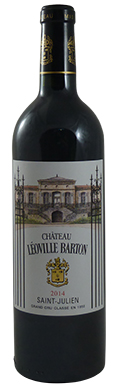

A little tart and high toned and a little green and powdery. Not the best in the line up, lots of ripe fruit and high...
2014
Château Léoville BartonSt-Julien

Château Léoville Poyferré, St-Julien, 2ème Cru Classé, Bordeaux, France, 2014
Strong nose, supple and forward, quite highly charged in terms of fruit ripeness. Fruit fades a little quickly, leaving some mineral stones and dry tannins...
2014
Château Léoville PoyferréSt-Julien
Château Pavie, St-Émilion, 1er Grand Cru Classé A, Bordeaux, France, 2010
This is accomplished and enjoyable, starting to come into its own at ten years old, and very much infused with the limestone impact of its...
2010
Château PavieSt-Émilion
Château Pavie, St-Émilion, 1er Grand Cru Classé A, Bordeaux, France, 2016
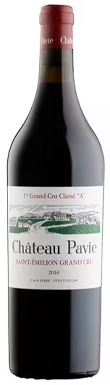
A monumental Pavie. Incredible aromatic intensity, depth and energy; alive, bright and beautifully poised. Packed with power, precision and tension, yet silky smooth, sharp and...
2016
Château PavieSt-Émilion
Château Malartic-Lagravière, Pessac-Léognan, Cru Classé de Graves, Bordeaux, France, 2008
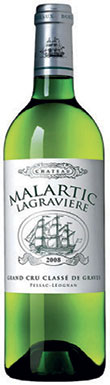
A delicious 2008, singing with the salinity that takes pole position in older whites without sacrificing minerality or juiciness. It has flavours of white pear...
2008
Château Malartic-LagravièrePessac-Léognan
Château Malartic-Lagravière, Pessac-Léognan, Cru Classé de Graves, Bordeaux, France, 2008
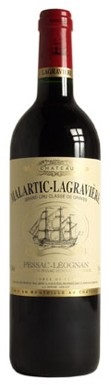
This is at the point where it's perfect to drink, although those brambly fruits are going to keep delivering for another decade at least. The...
2008
Château Malartic-LagravièrePessac-Léognan
Château Troplong Mondot, St-Émilion, 1er Grand Cru Classé B, Bordeaux, France, 2014
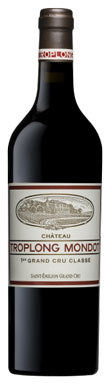
Voluptuous aromas of dense black fruits. Concentrated and chocolatey palate; a touch extracted but shows freshness on the finish. Tannic, but has no rough edges.
2014
Château Troplong MondotSt-Émilion
Château Troplong Mondot, St-Émilion, 1er Grand Cru Classé B, Bordeaux, France, 2010
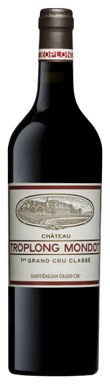
Although full of dark fruits and savoury, forest-floor tones, this is dense and oaky, lacking clarity and finesse. The palate is very concentrated but also...
2010
Château Troplong MondotSt-Émilion
Château Gaby, Canon-Fronsac, Bordeaux, France, 2010
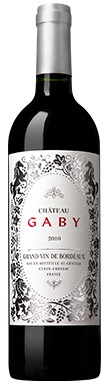
A blockbuster Fronsac, opaque red in colour, and with a very oaky nose that is sweet and intense without being Port-like. Very concentrated, this is...
2010
Château GabyCanon-Fronsac
Château de Carles, Haut-Carles, Fronsac, Bordeaux, France, 2012
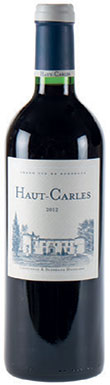
This is a parcel selection from 10ha of 90% Merlot, aged in about two-thirds new oak. That oak is certainly evident on the toasty blackberry...
2012
Château de CarlesFronsac
Château Nairac, Barsac, 2ème Cru Classé, Bordeaux, France, 1996
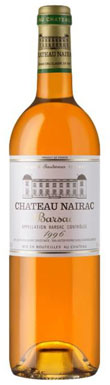
This rich, no-holds-barred Barsac shows considerable evolution, with aromas of barley sugar and marmalade. The attack is sweet, with flavours of orange and peach compote....
1996
Château NairacBarsac
