
Cebreros: Regional Profile
Formally recognised as a DOP just last year, this Spanish region may be little known, but its winning combination of old-vine Garnacha, granitic soils and a mountain climate, together with some dynamic winemaking, are putting it firmly on the map. Sarah Jane Evans MW finds out more and recommends exciting wines to try


Ever since I visited the region, I’ve been talking animatedly about Cebreros. But I’m met with blank responses. No one has heard of it. Yet when I say ‘Gredos’ or ‘Sierra de Gredos’, then lovers of new-wave Spanish wines are all ears. For Cebreros is the newest denomination within Gredos, which is itself hallowed territory for fine, old bush-vine Garnacha.
The new DOP lies northwest of Madrid, in the mountains and hills between Philip II’s palace of El Escorial and St Teresa’s home city of Avila. Telmo Rodríguez is recognised as the first to explore the area, in 1999. He has been followed by many more, notably Daniel Jiménez-Landi. Still, few wine lovers have heard of Cebreros, so the energetic regulatory body has plenty of work to do. It’s hard launching a new DOP (Denominación de Origen Protegida), but the joy of Cebreros is the magnetic attraction of its untamed, isolated countryside.
When it comes to denominations of origin, Spain has been undergoing a major upheaval, with different DOs introducing their own systems of village wines and single vineyards, and not always to local acclaim. Landi – who was working in Cebreros in 2006 before the DO existed – likes the way the fledgling DO has gone about things.
‘Their statutes are following the Burgundian model, as has been done in Priorat and Bierzo,’ he explains. ‘We will be able to make not just regional wines, but vinos de pueblo “village wines” , vinos de paraje “single vineyard wines”, and vinos de parcela “single parcel wines”. You have to create a quality pyramid. Then over time you can identify the best sites, the best vines. I think this is the right way to do it when you want to make the best of a region.’

Unique combination
What is the best of this region? ‘For us, identity is something fundamental in a wine,’ says Landi. ‘A wine should speak of its origin. The identity in our region is the mountains. In the Sierra de Gredos you have a combination that is unique in the world: old-vine Garnacha on granite, at high altitude and with a mountain climate. That’s why we called ourselves “Comando G” – Gredos, Granite, Garnacha.’
Cebreros at a glance
Formally recognised as DOP: 4 April 2019 – previously the wines were classified Vinos de la Tierra de Castilla y León
Vineyards: 455ha (with 56% between 60 and 90 years old)
Municipalities: 35
Wineries: 13
Growers: 330
Varieties planted: 85% Garnacha Tinta, 10% Albillo Real, 5% Tempranillo and Garnacha Tintorera (Alicante Bouschet)
Wines
White: 100% Albillo Real
Rosado: minimum 95% Garnacha Tinta with 5% Albillo Real, Garnacha Tintorera or Tempranillo
Red: minimum 95% Garnacha Tinta
Cebreros: The land, the climate and the vines
Climate: Mediterranean with continental influences, varying across the DO
Soils: Mainly granitic with low pH; El Tiemblo and Cebreros have some distinct vineyards on schist
Zones: Cebreros has three distinct zones, created by the rivers Alberche and Tiétar:
Alto Alberche river valley – up to 1,200m; one of Spain’s coolest areas, producing wines with a chilly minerality
Alberche river valley – Tierra de Pinares; dry Mediterranean climate with diverse soils, granitic with slate
Tiétar river valley – Las Cinco Villas; Mediterranean, but quite humid with up to 1,000mm rainfall per year
Vineyards: The highest vineyard parcel is in the village of Navatalgordo at 1,200m; to the west the mountains rise up to 2,000m; average vineyard size is 0.43ha, with a typical planting layout of 2.5m x 2.5m
The land is something exceptional: wild and craggy. No wonder St Teresa was a mystic in these parts. Rodríguez explains that ‘Cebreros is a stopover, separating north from south, where the Via Imperial and Cañada Real [the traditional drovers’ route] cross over. We were struck by the stunning view of the landscape graced with Garnacha vines. This extraordinary vineyard was growing wild, without winemaker, oenologist or engineer – it was an orphan.’
It was certainly an area lost to history in modern times, although there’s a 1272 manuscript from the Bishop of Avila concerning leasing vineyards here. Why did no one create a Gredos/Sierra de Gredos DO, taking in Cebreros, Navalcarnero, San Martín and Mentrida, when these mountain Garnachas initially grabbed attention? The point is that if you are looking for a historical pedigree for your new DO or DOP, then what counts is the village name. In wine terms, Gredos is a recent construct. Nonetheless, the urgent work today is recuperation: at Hoyanko, Juan Luis Beltrán remembers there being 1,500ha of vineyards in El Hoyo de Pinares; now, there are just 200ha of those vines remaining.
Granitic soil
In the late 19th and 20th centuries this region produced tough, alcoholic wines, used for beefing up lesser blends. Careful viticulture is leading the change. Marc Isart of Bernabeleva, who knows the area well, defines the Cebreros character today: ‘It rains less there, and it’s higher. A key is the soil, which is a slate of granitic origin. The effect is that the tannins are finer, almost like chalk but more friendly, sweeter. The fruit is a little riper. The wines are darker in colour, with alcohol. They are more complex, less subtle, than the wines of neighbouring San Martín, a little less elegant and more robust.’
Fernando Mora, a Garnacha grower in Aragon, adds: ‘It’s one of the warmest parts of Gredos. It’s got altitude, but it is hot. As a result, the wines are structured, with acidity and persistence.’
Sommelier and wine educator Agustín Trapero was born in Cebreros, and is an ambassador for the new DO. For him, the excitement of Cebreros Garnacha lies in the diversity of sub-zones and the fact that above all the Garnachas show real refinement, ‘with layers of fresh red fruit, like raspberry and cherry, and fragrant touches of violets, thyme and high Mediterranean forest, elegant and velvety, with superb minerality on the finish’.
Cebreros: 10 names to know
ARRAYAN
Established in Toledo in 1999, Arrayán is managed by winemaker Maite Sánchez. Its Garnacha de Arrayán is grown at 900m in the Arrebatacapas pass. It also produces a Cebreros Albillo Real.
DANIEL JIMENEZ-LANDI, COMANDO G
Working in the region since 2008, and one of the first to make the area known, grabbing headlines with very pure, fine Garnachas. Now that a winery is being built in Avila, its relevant wines are in transition to Cebreros labelling. Rumbo al Norte is a single-vineyard red wine from Navarrevisca.
DANIEL RAMOS
Described to me as ‘the heart and mind behind DOP Cebreros’ (alongside DOP Cebreros president, Rafael Manceb). Australian-born Ramos is dynamic and enthusiastic, and his cellar in El Tiemblo (founded in 2010) is an explorer’s delight of different vats and wines, of concrete, old oak and amphorae. He has wonderful isolated, high-altitude vineyards.
ORLY LUMBRERAS VINADOR
Lumbreras is Cebreros’ rock-star producer, literally, known for his former rock ’n’ roll radio programme. Drawn to Cebreros for the landscape and the vines, he worked with Daniel Landi in 2012 and with Rubén Díaz in 2013 (in that year he also located an abandoned winery). He follows biodynamic practices, and uses traditional tinajas that were made in El Tiemblo. Sade is his orange wine made from Albillo Real.
RICO NUEVO VITICULTORES
This is another fascinating project, launched in 2018. ‘Juanan’ Martín works with his 12ha of family vineyards – all beautiful sites – and a small cellar in the middle of the village of Burgohondo. Smart viticultural and winemaking advice from Julio Prieto means this is a project that’s moving fast.
RUBEN DIAZ VITICULTOR
Díaz is a Cebreros native who has worked with Garnacha in the region since 1999. A former partner of Daniel Landi, he makes El Reventón, famed for being a 100-point wine. With his thorough understanding and his subtle winemaking, he’s one to watch. Look out for his rancio Albillo.
SOTO Y MANRIQUE
Launched in 2016 by Jesús Soto (formerly of Belondrade in Rueda and another of the drivers behind the new DOP), working with technical director Bárbara Requejo. The pair are based in the Cebreros cooperative, where they have also been assisting local growers to improve their grapes and revive their traditional brand. The transformation has seen an increase in the growers’ income and reduced uprooting of vines.
TELMO RODRIGUEZ
Best known now for his work with Garnacha in Rioja, Rodríguez has also spent years exploring and regenerating forgotten areas of Spain. He has worked in Cebreros since 1999. The wines will start carrying the appellation from vintage 2018 onwards.
VINEDOS DEL JORCO
This is a joint project between Raúl Pérez and the team from Madrid wine store La Tintorería, launched in 2009. Pérez is renowned for his delicate Mencías in his home region of Bierzo, but also for his sensitive winemaking in other parts of Spain. Here, there are 2.5ha of old vines planted in 1915.
VINOS Y VINEDOS HOYANKO
A small family project in El Hoyo de Pinares, founded in 2012. Juan Luis Beltrán has 4ha of Garnacha vineyards between 55 and 95 years old, planted on granitic soil at 810m-1,020m. The work, he says, is ‘ancestral’, making wine as his grandfather did: organic, with no synthetic or chemical treatments. Typically aged in 300-litre French oak for 12 months, with no fining or filtration.
If Garnacha is at the heart of Cebreros, then we mustn’t forget the white Albillo Real (not to be confused with Albillo Mayor, recently authorised in Ribera del Duero). There is old bush-vine Albillo Real here. With its low yield, it makes full-bodied, fleshy wines, often quite low in acidity. Trapero describes its stone-fruit character, with white peach and yellow plum, plus touches of honeyed melon, mango and beeswax, with a bitter finish. Frankly, says Isart, ‘I have a love/hate relationship with it’. But it does give Cebreros an identity to have its own white wine. Isart speculates that a new approach to Albillo Real with younger vines might make an interesting stylistic difference.
Meanwhile, Landi has been working since 2013 with Albillo Real under biological ageing. ‘We believe it could give us a style more in tune with our taste,’ he says.
Old and new
What excites me – beyond the beauty of the place and its isolation – is the dynamic feel of Cebreros, with so many new projects among the old vines. There’s an open feel, too – an inclusive character. Tiny producers working with amphorae sit alongside cooperatives, biodynamics alongside traditional farming. It doesn’t show the entrenched positions that a traditional region within an appellation system can reveal.
There are orange wines, and stainless-steel wines, oak of different ages and sizes. I hope that in the future they will be able to work with ‘Garnachistas’ across Spain, emphasising Spain’s leadership in the variety and celebrating its great diversity. They have so much more to gain in working together rather than separately.
Let’s meet again in 2030. Say ‘Cebreros’ to a wine lover then and I predict there will be smiles of recognition all round.
Cebreros: Evans selects 10 to try
Arrayán, Albillo de Arrayán Granito, Cebreros, Castilla y Léon, Spain, 2018
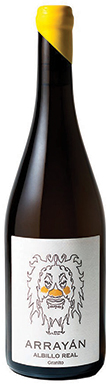

Arrayán's Cebreros Garnacha is bold and flooded with flavour. Its Albillo Real is full of character too: it's rich, and golden with honey and tropical...
2018
ArrayánCebreros

Orly Lumbreras Viñador, Sade, Castilla y Léon, Spain, 2018
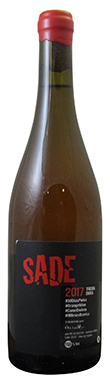
Sade shows that Albillo Real has potential as an orange wine. While this isn't aromatic it has plenty of texture, and that transforms itself into...
2018
Orly Lumbreras Viñador
Soto Manrique, Naranjas Azules Garnacha, Cebreros, Castilla y Léon, Spain, 2019
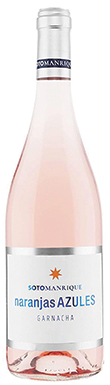
Soto Manrique has a fine and growing portfolio of single-vineyard wines, which are well worth exploring. For the time being, like a number of the...
2019
Soto ManriqueCebreros
Daniel Gómez Jiménez-Landi, El Reventón, Cebreros, Castilla y Léon, Spain, 2017
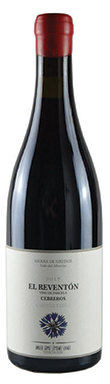
What to choose from Comando G's wines that are becoming DOP Cebreros with the team's new winery inside the DO? El Reventon, surely, from vineyards...
2017
Daniel Gómez Jiménez-LandiCebreros
Rico-Nuevo, Jirón de Niebla, Cebreros, Castilla y Léon, Spain, 2018
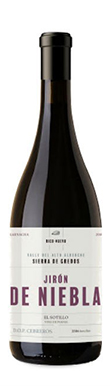
The epitome of the new Cebreros producer: starting from organic family vineyards in just 2018 and with energy and great advice is already racing ahead....
2018
Rico-NuevoCebreros
Península Vinicultores, Cebreros, Cebreros, Castilla y Léon, Spain, 2018
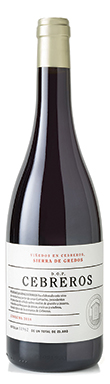
MWs Andreas Kubach and Sam Harrop are behind this multi-regional Spanish project. This may look pale, but it's plump with supple cherries in syrup, balanced...
2018
Península VinicultoresCebreros
Viñedos del Jorco, Las Enebradas, Castilla y Léon, Spain, 2017
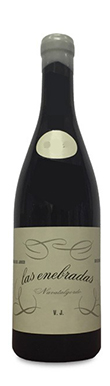
Attractively aromatic organic Garnacha, with equally appealing, expressive fruit in the mouth. Long and refreshing, very persistent, with the texture of the granite soil. My...
2017
Viñedos del Jorco
Compañía de Vinos Telmo Rodríguez, Pegaso Zeta, Cebreros, Castilla y Léon, Spain, 2018
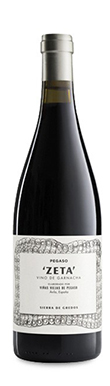
A fine, good value, way in to Cebreros from the man who kicked it all off, Telmo Rodríguez, with partner racing driver Carlos Sainz. It's...
2018
Compañía de Vinos Telmo RodríguezCebreros
Daniel Ramos, Kπ Amphora, Cebreros, Castilla y Léon, Spain, 2017
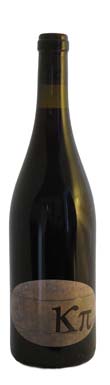
An amphora wine from Dani Ramos, held in 1,000-litre clay tinajas until the following summer, from 70-year-old vines. Very pale in colour but with a...
2017
Daniel RamosCebreros
Huellas del Tiétar, Relatos, Cebreros, Castilla y Léon, Spain, 2018
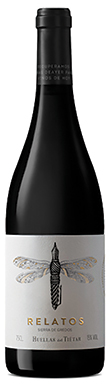
Starts bright and fresh with cherries, and chewy tannin. Notes of redcurrant jelly and bramble jam appear, followed by fennel and wild herbs. From 70-year-old...
2018
Huellas del TiétarCebreros
