Celebrating Sauvignon Blanc: A global guide
It’s one of the most popular and widely-planted white grape varieties - and with good reason, says Rebecca Gibb MW in her round-the-world guide to Sauvignon Blanc.


It’s Israel’s most-planted white grape and has been recommended as a cure for constipation in the past, but that’s not what has put Sauvignon Blanc in the number 11 spot in the world’s most-planted stakes. The stereotypical party-in-a-glass style, celebrating all things fresh and fruity, has made it one of the world’s most popular white grape varieties, and yet it is often treated with disdain by its makers and vendors.
In Australia and New Zealand, a number of producers whose livelihood relies on the success of this grape have disparaged it as ‘bitch diesel’, and that is a disservice to a variety that is able to express its place and attain finesse when treated with respect.
Scroll down for Rebecca’s 12 Sauvignon picks from around the world
Humble beginnings
Sauvignon Blanc’s roots can be traced back to the Loire Valley. In 1534, Chinon-born mathematician and writer François Rabelais mentioned it under the synonym Fiers, suggesting it was good for those experiencing slow bowel movements. However, it was another 200-odd years before any mention of it was made in Sancerre or Pouilly-sur-Loire, the two villages that are now synonymous with Sauvignon Blanc greatness.
Before that, Pinot Noir was king in Sancerre, while Pouilly growers churned out Chasselas for the Parisian fruit market until phylloxera marched through the area’s vineyards. Even so, Sauvignon’s future still wasn’t assured: in the immediate aftermath of phylloxera, lowly hybrids were popular. Yet, in the past century, this aromatic variety has slowly tightened its grip on the lands of the Central Loire Valley, where it has revealed its rightness and righteousness.
Sauvignon Blanc’s climb up the ladder of most popular grape varieties is a very recent phenomenon. In 1990, when the first bottles of Marlborough Sauvignon Blanc were trickling into the UK, it was the 25th most-planted variety, covering just 47,000ha of the Earth’s surface. Today, less than 30 years on, that figure has almost tripled to 123,000ha.
What has caused this ascent? Mimi Avery, brand ambassador for Bristol-based wine merchant Averys, whose father started importing New Zealand wine into the UK a year before the first commercial Sauvignon Blanc was released, says: ‘Sauvignon’s timing was a perfect storm. UK supermarkets had brought wine to the masses but whites were often sweet. New Zealand Sauvignon provided delicious fruitiness and no oak, unlike many Chardonnays. It was exactly what people wanted. As a result, Sauvignon Blanc from New Zealand – and the rest of the world – became more popular.’
On the edge
Sauvignon Blanc has found many places to call home, but it is in the coolest spots that it reveals its piercing fragrance and laser-like precision. The historic home of the variety, France, hosts the world’s greatest concentration of Sauvignon Blanc vines, at almost 30,000ha. About one-third of those vines are planted in the Loire Valley, home to Sancerre, Pouilly-Fumé and its satellites. But much like the playing style of the late rugby player Jonah Lomu, the Kiwis aren’t letting anything get in their way – including a 450-year headstart in the Sauvignon Olympics.
From the first Sauvignon Blanc vine planted in Marlborough in 1975, there are now more than 20,000ha of Sauvignon planted across New Zealand and it continues to spread, occupying every spare sliver of Marlborough dirt. While it does grow in warmer climes – 500ha in both India and Morocco are dedicated to the variety – its brilliance is dulled, the razor- sharp precision and dazzling fragrance muted.
Youth or maturity?
It’s true that most Sauvignon Blancs are best in their youth, when they exude fruity appeal and vivacity. But you needn’t rush to open the best examples. Mature Sauvignon often develops an appetising Chenin Blanc-like character with lanolin and almond flavours at seven or eight years old; while the 2006 Cloudy Bay currently exhibits Semillon-like lime notes and steeliness. And they can go on and on, says Arnaud Bourgeois of Henri Bourgeois. ‘We recently drank La Bourgeoise 1985. It had an amazing, smoky nose and honeyed, waxy flavours.’
France
The Loire
The historic home of Sauvignon Blanc and the reference point for New World winemakers seeking to benchmark their Sauvignon styles is surely Sancerre and Pouilly-Fumé.
The Central Loire vineyards, which include the satellites of Menetou-Salon, Quincy, Reuilly and friends, are dominated by Sauvignon Blanc, and this area accounts for around half of the land dedicated to this variety in the Loire. On the margins of viticultural possibility, Sauvignon takes time to reach its finest expression, which is a true reflection of its place rather than the grape. Its restrained yet tangy aromas offset by chalky, stony or smoky impressions, distinguish it from its New World counterparts.
Conscientious growers have been increasingly respectful of their sites in the past 30 years, moving away from conventional farming towards organic practices, lowering yields and waiting for ripeness beyond pure sugar ripeness. Arnaud Bourgeois of Henri Bourgeois says: ‘We are looking for elegance, for finesse. If you have a wine that had intense aromatics, that would cover the minerality. We press directly to have a terroir expression.’
Beyond Sancerre and its satellites, head westward along the Loire and there’s a hotbed of talented Sauvignon producers in the Touraine region. Many young winemakers are arriving, attacted by the lower cost of entry compared with Sancerre (€11,000 versus €160,000) and even Menetou-Salon (€75,000). Due to growing market demand for Sauvignon Blanc, the aromatic variety now represents more than two-fifths of the Touraine AP vineyard area. Touraine-Oisly and Touraine-Chenonceaux are two recent additions to the appellation roll call, whose rules include lower yields and an extended period on lees, and play host to a number of ambitious producers.
Five of the best Domaines
François Cotat; Didier Dagueneau; Alphonse Mellot; Vincent Pinard; Domaine Vacheron
Bordeaux
It is better known for its reds and sweet whites, but the dry Sauvignon Blancs of Bordeaux, often blended with Semillon and occasionally a splash of Muscadelle, have made huge strides since Denis Dubourdieu and his colleague focused their research efforts on the science of Sauvignon.
‘When I came into the wine trade in 1981,’ says wine consultant Richard Bampfield MW, ‘I remember selling generic white Bordeaux Blancs that were mainly Sauvignon Blanc. They were dull and grubby, but most of the whites at that time were pretty bad.’
From the 1990s onwards, improved vineyard practices and modern winemaking technology have allowed the Bordelais to make well-priced, fresh and fruity Sauvignons, but in the hands of Bordeaux A-listers, the variety reaches new heights. Tender loving care of this vigorous vine in the gravel-rich soils of Pessac- Léognan and the Left Bank, followed by barrel fermentation and maturation on lees, can elevate this sometimes unloved variety to greatness, exhibiting seductive power and elegance, drawing comparisons with Burgundy.
Five châteaux to seek out
Château Grand Village Les Champs Libres (Bordeaux Blanc); Château La Mission Haut-Brion (Pessac-Léognan); Château Haut-Brion (Pessac-Léognan); Domaine de Chevalier; Château Smith Haut Lafitte (Pessac-Léognan)
New Zealand
It is better to ask for forgiveness than permission, and that was exactly what Frank Yukich, a director of Montana Wines (now Brancott Estate), did when he secretly bought 1,200ha of land in Marlborough in 1973. Previously thought too cold to grow grapes, at the planting of the first vine he boldly claimed: ‘Wines from here will become world famous’.
His prediction was prophetic. After making some rookie errors, the first New Zealand Sauvignon Blanc vines were planted two years later and, in 1979, Montana delivered Marlborough’s debut Sauvignon Blanc. In just 40 years – a blink of the eye in the history of wine – Marlborough has become the largest Sauvignon Blanc-producing region in the world, famed for its distinctive green yet fruity style.
The ‘classic’ style of New Zealand Sauvignon Blanc is exuberant and instantly recognisable. The cool climate, high levels of UV radiation and low levels of pollution in New Zealand imbue Sauvignon Blanc with an unsullied purity and pulsating vibrancy that beg for minimal interference from winemakers.
That said, there is a growing crop of wines that seek to capture a more subtle and textural expression of their place through hand-harvesting, which minimises the thiols that give overt fruitiness, and drawing on techniques in the winery such as whole-bunch pressing, wild fermentation, oak and lees work. The next chapter in this short story is just beginning.
Five producers to try
Auntsfield (Marlborough); Dog Point (Marlborough); Eradus (Marlborough); Greywacke (Marlborough); Ata Rangi (Martinborough)
Chile
The Chilean wine community has made a beeline for the Pacific coast in search of cooler sites, and if pure, racy Sauvignon Blanc is your bag, then you should too. Whether it’s Leyda, Casablanca or coastal Colchagua, Sauvignon Blanc’s fragrance and freshness is preserved by the cooling influence of the Humboldt Current, which brings cold water – and cold air – north from the South Pacific along the Chilean coastline.
This country’s romance with Sauvignon Blanc is even more recent than New Zealand’s. Most of Chile’s Sauvignon was produced from the inferior variety Sauvignonasse until decent clonal material landed on its shores in the late 1980s. The first vine didn’t meet Leyda’s soil until 1998 but it quickly became clear that the combination of ambitious producers, quality clones and the moderating influence of morning mists and afternoon sea breezes would elevate Chilean Sauvignon Blanc.
An even more recent addition to Chile’s Sauvignon stable has been Paredones, the most westerly outpost of the Colchagua wine region. This large and established region is best known for its full-bodied reds, but in 2008, when the buzz was all about Leyda, Bío Bío and Patagonia, I spent a week in Colchagua and the compass was firmly pointed westward in search of cooler sites. Casa Silva staked an early claim in Paredones about 6km from the sea and made its first wine in 2010. Johnny Bingham of Jackson Nugent Vintners, which represents Casa Silva in the UK, explains the appeal of coastal Sauvignon Blanc in Chile: ‘They are powerful, salty wines, really intense, with electric lime and lemon flavours. They rage with beautiful acidity and they’re very much alive.’
Five wines to try
Casa Silva, Cool Coast Sauvignon Blanc (Colchagua); Casa Silva, Lago Ranco Sauvignon Blanc (Patagonia); Concha y Toro, Terrunyo Sauvignon Blanc (Casablanca); Ventisquero, Grey Sauvignon Blanc (Atacama); Matetic, EQ Coastal Sauvignon Blanc (Casablanca)
US
It isn’t the first variety that springs to mind when you think California wine, but the Golden State is the centre of US Sauvignon Blanc production and has been since it was first imported in the 1880s. Napa’s revered To Kalon vineyard is home to the country’s oldest Sauvignon vineyard. Planted by the late Robert Mondavi, who also gave birth to the moniker Fumé Blanc, the variety performs the role of warm-up act for a Napa winery’s main event: Cabernet Sauvignon. In the warmer parts of Cabernet country, the wines are full and rich, often with oak influence, while cooler areas such as Carneros – and the even cooler climes of Anderson Valley, Russian River and Santa Cruz – provide more refreshing, citrussy styles.
Three wines to try
Matthiasson (Napa Valley blend); Peter Michael, L’Après-Midi Sauvignon Blanc (Knights Valley); Cliff Lede, Sauvignon Blanc (Napa Valley)
South Africa
The first South African wine dates back to 1659, but at the start of the 21st century Sauvignon Blanc production was only a dribble: more than three-quarters of South Africa’s Sauvignon Blanc vines are less than 20 years old.
‘People forget that we are a very young country, it’s really only in the past five years we have worked out where Sauvignon Blanc works,’ says RJ Botha, winemaker at Kleine Zalze and chairman of Sauvignon Blanc South Africa, an association formed to improve quality and promote the variety. ‘Twenty years ago we planted everything: a bit of Merlot, a bit of Cabernet, a bit of Chenin, a bit of Sauvignon; we are now moving toward site-specific wines and figuring it out, planting the right cultivar on the right rootstock, in the right place.’
While Stellenbosch is home to the greatest concentration of Sauvignon Blanc plantings, the variety has dispersed like seeds in a stiff breeze. In search of cool conditions, it has found a home along the Western Cape’s coastline, from Elim, Africa’s southernmost tip near Cape Agulhas, to the northerly outpost of Lutzville. In Lutzville you’ll find one winery, Fryer’s Cove, just metres away from the Atlantic’s crashing waves.
South African Sauvignons have typically been clean, fruit-driven, stainless steel-fermented affairs with appealing grassy notes meeting guava and ripe peach. Now there is growing diversity not only in vineyard sites but also winemaking styles, with sensitively made barrel-fermented examples finding their way to our glasses.
Five wines to try
Bartho Eksteen Wijnskool, Houtskool (Hemel-en-Aarde); the entire range of Diemersdal’s Sauvignon Blancs (Durbanville); Iona Sauvignon Blanc (Elgin); Steenberg, The Black Swan Sauvignon Blanc (Constantia); Strandveld, Adamastor Sauvignon Blanc Semillon (Elim)
Australia
From Tasmania to Western Australia, Sauvignon Blanc has found the coolest pockets of the country’s wine regions and is now making everything from pristine, classic styles to left-of-centre skin contact, fermented in amphorae, low-sulphur wines. The variety has found a home in the cooling heights of the Adelaide Hills where tropical and herbal flavours meet in a rounded yet fresh style. Crisp and pure Semillon-Sauvignon Blanc blends come into their own in the cool, maritime Margaret River, where Sauvignon’s tropical fragrance meets the appetising grassy influence of Semillon aroma, while Western Australia’s affinity with the variety is further underlined in the regions of Great Southern.
Three wines to try
Pierro, Semillon-Sauvignon Blanc (Margaret River); Shaw+Smith, Sauvignon Blanc (Adelaide Hills); Jamsheed, Wandin Sauvignon Blanc (Yarra Valley)
Austria
Southern Styria (Südsteiermark), the home of Austrian Sauvignon Blanc, lies close to the border with Slovenia. Its rolling hills and steep slopes produce steely Sauvignon Blanc with laser-like precision.
Three wineries to discover
Weingut Tement; Weingut Gerngross; Weingut Wohlmoth
Rebecca’s mixed case: 12 Sauvignon Blanc wines from around the world
You may also like:
Must-try Sauvignon Blanc wines
New Zealand oaked Sauvignon Blanc: panel tasting results
Loire vs Marlborough Sauvignon Blanc: Can you tell the difference?
Henri Bourgeois, La Côte des Mont Damnés, Sancerre, Loire, France, 2017
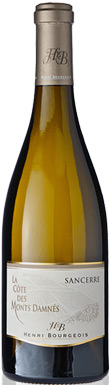

<p>The kimmeridgian marl of this renowned slope in Sancerre gives a textbook precision, purity and clarity. On the dense and focused mid-palate there's citrus, gooseberry and more, followed by a streak of acidity and a grippy, chalky conclusion.</p>
2017
Henri BourgeoisSancerre

Weingut Sattlerhof, Gamlitz, Südsteiermark, Steiermark, Austria, 2018
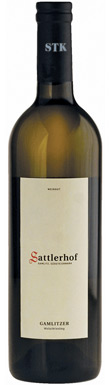
<p>This is a deeply satisfying organic Sauvignon that offers huge density with a lightness of touch. The wine has glacial purity and a distinct peppery spice to the flint, lemon and apple flavours. The acidity blossoms on the finish.</p>
2018
Weingut SattlerhofSüdsteiermark
Churton, Sauvignon Blanc, Marlborough, New Zealand, 2017
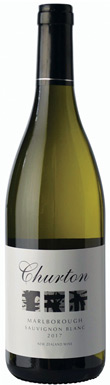
An outstanding wine in what was considered a difficult vintage. It's gorgeously textured with mellow aromas of apple skin, clementine, passionfruit and violet. Low yields and lots of care in the winery have produced an organic Sauvignon that's happy in its skin.
2017
Churton
Waterkloof, Circumstance Sauvignon Blanc, Stellenbosch, South Africa, 2018
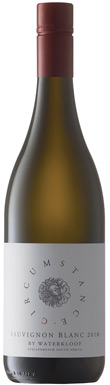
<p>This elevated, windy vineyard is farmed organically and biodynamically before fermenting spontaneously in old 600-litre barrels. It's full of grapefruit, white flowers and gooseberries, but this Sauvignon is less about aromas and more about the delightfully rich, silken texture that coats the mouth before a gentle wave of acidity refreshes the palate.</p>
2018
Waterkloof
Rafael Tirado, Laberinto, Maule Valley, Chile, 2018
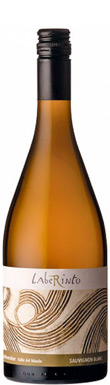
Hailing from low-yielding vines planted at 550m, green capsicum, mint and citrus aromas abound in this remarkably fresh, zesty Sauvignon. It offers impressive intensity and depth, plus a structured finish that draws out on the textural finish.
2018
Rafael Tirado
Lionel Gosseaume, Domaine de Pierre, Touraine-Oisly, Loire, France, 2017
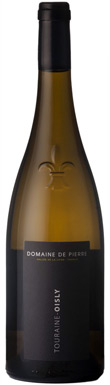
<p>An intense wine with huge concentration and mass, this is texturally impressive but for all that richness you do lose some of the vibrant Sauvignon fruit. There's still clear varietal character in its subtle yet piquant nettle and blackcurrant bud flavours and its sappy and chalky finish.</p>
2017
Lionel GosseaumeTouraine-Oisly
Koyle, Costa Cuarzo Sauvignon Blanc, Paredones, Colchagua Valley, Chile, 2018
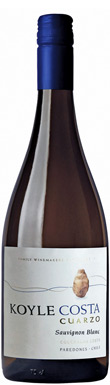
<p>This Sauvignon vineyard is 9km from the Pacific Ocean in the Paredones area of Colchagua, giving a fragrant, fresh white of crystalline purity. Floral with tropical fruit, it has lovely precision and a salty, medium-length finish. Incredible quality for the price.</p>
2018
KoyleParedones
Martin Wassmer, Jung & Wild, Baden, Germany, 2017
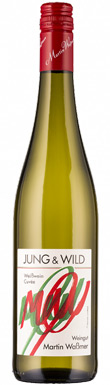
Young and wild as its name suggests, this is a pure, lime-crisp, fruit salad-like mouthful of summery joy. Light, bone dry and zesty, it's a satisfying alternative to Grüner and Albariño with moderate alcohol and great tension on the finish.
2017
Martin Wassmer
Wild Air, Sauvignon Blanc, Hemel-en-Aarde, Walker Bay, South Africa, 2018
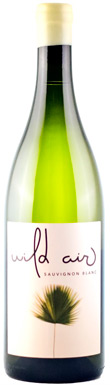
<p>This collaboration between Storm Wines and its UK importer, Indigo, has yielded a mellow, savoury, wild-fermented Sauvignon with a refreshing saline finish. The fruit is delightfully pure with a nutty, pastry-like influence weaving unobtrusively through the fruit. Satisfying and moreish.</p>
2018
Wild AirHemel-en-Aarde
Sidebar, Ritchie Vineyard Sauvignon Blanc, Sonoma County, Russian River Valley, California, USA, 2015
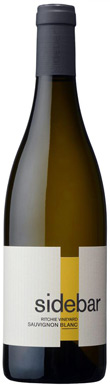
<p>A suave and appetising Sauvignon thanks to 40-year-old vines, whole-bunch pressing, fermentation in eggs and old barrels, and eight months on lees. It has a distinctive flint and lime streak on the satisfying finish and is starting to show some signs of development in its lanolin-like flavours.</p>
2015
SidebarSonoma County
Cullen, Amber, Margaret River, Western Australia, Australia, 2017
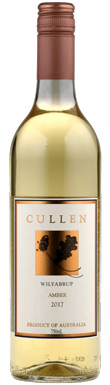
Biodynamically farmed and fermented on its skins, this has medicinal herb flavours not dissimilar to Campari. Deliciously textured and expansive in the mouth, it's a very successful orange wine with well-handled phenolics, although classic Sauvignon lovers will question its varietal character.
2017
CullenMargaret River
