Producer Profile: Pol Roger, plus tasting the 2013 Brut Vintage
Simon Field MW profiles a Champagne house with strong links to British aristocracy, and tastes the newly released 2013 Brut Vintage


Pol Roger at a glance
Established: 1849
Vineyards: 87ha, Vallée d’Epernay & Côtes de Blancs
Varieties Chardonnay, Pinot Noir, Pinot Meunier
Anglophile to its core, La Maison Pol Roger has long upheld the entente cordiale and although it may not be the only Champagne house with the crest of the Royal Warrant adorning its bottles, it does seem to maintain a privileged position. The fact that Pol was served at the royal weddings of William and Kate, Eugenie and Jack and even Harry and Meghan serves to underline the resilience of what can only be described as a special relationship.
Pol Roger is a négociant manipulant, that is to say it does buy in fruit (approximately half its requirements to make 1.8 million bottles a year), owning just over 92 hectares of prime sites throughout the region. Its style favours elegance and finesse above all else, long lees ageing and generous use of reserve wine taken as read, the equal proportions of the three grape varieties in the Brut Réserve deferential to the values of balance in style and an equanimity of outlook.
Such an outlook is personified by the jovial Hubert de Billy, the great great grandson of the eponymous Pol and a more than worthy ambassador for the fifth generation. Founded in Ay in 1849, the company soon moved to Epernay, where it is now based in suitable splendour along the Avenue de Champagne (famously described by Churchill as ‘ the world’s most drinkable address’ and now, appropriately, renamed as No1 Rue Winston Churchill) ), the family legacy secured and, of late, bolstered by the commercial acumen lent by ‘outsiders’, firstly Patrice Noyelle and latterly Laurent D’Harcourt.
The philosophy remains unchanged, however, with no inclination to expand production, rather qualitative refinements, exemplified by the complete renovation of the winery between 2001 and 2011. Stainless steel abounds now and vinification underlines an aspiration to achieve purity, with temperature control and ‘débourbage à froid’ (cold settling) fundamental, thereafter a dosage regime which preserves Maurice Pol Roger’s long-standing nod to the English market and its preference for drier styles. When the building works ‘unearthed’ some of the lost bottles which had been entombed by the collapsing of the cellars a century before ( in 1900 to be precise) there was great excitement as, with no lack of fanfare, wines from the 1880s were sampled. All tasting rather good it has to be said, if somewhat on the mature side!
The Churchill connection
No profile of Pol Roger is complete without further reference to Sir Winston Churchill and his love affair with this particular wine, sealed, it seems, by a luncheon at the British Embassy in Paris in 1944 where he formed a platonic attachment to Odette de Pol Roger, thereafter synecdochally transferred to an insistence on Pol Roger above all other Champagnes. It is rumoured that he drank an impressive 42,000 bottles from 1908 until his death in 1965, at a far from negligible average of two bottles a day. It didn’t seem to do him much harm! On the contrary, many or most will say. The posthumous naming of the deluxe cuvée in his honour ( the 1965 released in magnum 10 years after his death) and the long maintained tradition of the mourning black foil, have served not only to invigorate the story but also to underline the reputation of the house. Cuvée Sir Winston Churchill is one of the great Champagnes, albeit from the more powerful and assertive end of the spectrum. Appropriately enough, it seems.
Otherwise the range has developed steadily over the years, vintage wines always celebrated, even if the Brut Réserve (aka White Foil by tradition) is the key volume driver. The Vintage Rosé was introduced in 1961 and thereafter the range has been bolstered by a vintage Blanc de Blancs, a Rich Demi Sec, and, in 2007, a zero-dosage wine, very well named as Pure. The reputation of the La Maison Pol Roger as the most drinkable address in the world has been carefully nurtured, and the fact that one is as likely to be greeted by the Union Jack as the Tricolore in the courtyard underlines a philosophy which has been vindicated both stylistically and commercially.
New release: Brut Vintage 2013
2013 was famously late in Champagne; late budding, late flowering …late everything. It is instructive indeed that while 2020 has been the earliest harvest ever in the region, with all the fruit safely secured by the end of August, in 2013 the job was not completed until 9 October. Quite a difference, and surely this difference has some bearing on the style of the wines that are made? Well, yes and no. Firstly it’s safe to say that Pol will not declare a vintage unless the fruit merits such an accolade; it is pertinent that there will, for example, be no 2014 and no 2017; also, for that matter, that their prestige label, Sir Winston Churchill, will, a few years down the line, also incarnate in 2013. So La Maison is clearly on-side, pleased it seems to have produced a wine that demonstrably differs from the powerful and gregarious 2012. By comparison, 2013 is far leaner and more reticent; it is what the French would describe as ‘un vin de contemplation’.
No change, however, in the blend (60/40 Pinot Noir/Chardonnay) or in the vinification (stainless steel with a full malolactic) nor, for that matter, in the ageing regime on the yeast. The 2013 was disgorged in December 2019 and has a far from atypical dosage of 8 g/L. As always, there were two settlings (the second débourbage à froid key to maintain the tight structure and crisp aromatic) and remuage by hand, a dying art in most of Champagne it seems. All the parcels have been vinified separately and are made up exclusively of grand and premier cru fruit, with 30% of the former and 70% of the latter.
Hubert de Billy, ever effervescent representing the fifth generation of the family, is a great admirer of the wine. Complexity is key, he states, citing that both the Pinot Noir and Chardonnay differ radically depending on provenance. The Pinots from Ambonnay and Bouzy, for example, both of which face east, are wonderfully elegant, whereas those sourced from north-facing Chigny-les-Roses and Vrigny, lend more body and power. In the same vein, the Chardonnays are from the great crus of the Côte des Blancs (Chouilly, Vertus and Cramant), all bequeathing great elegance, with some coming from the village of Cuis, where the grapes ripen later and add tension and nervosité to the blend. Vinified separately, they all descant eloquently in the final blend, with seven years to gain composure and grow in stature. When asked to compare the 2013 with its forebears, both Hubert and Laurent D’Harcourt, the Président of Pol Roger, have little hesitation in electing 1998, an undervalued year which has come into its own, to put it mildly, in the intervening decades. 2013 looks set fair for a similarly happy evolution….
Simon Field MW tastes the newly released Brut Vintage 2013, plus the 2012 and a selection of NVs
View all of Decanter’s Pol Roger tasting notes
Pol Roger, Brut Vintage, Champagne, France, 2013
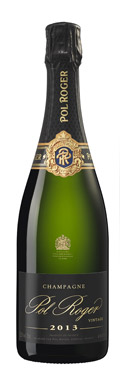

Flaxen straw, with a whisper of rare gold, subtlety writ large on the nose, with orchard fruit, verbena and a discreet hint of almond and cashew evidenced. The palate, with air, transforms sourdough into pastry, green apples into spicy quince and kumquat, with spring flowers and shortbread in support. Preserved salted lemons, and a whisper of cashew and buttermilk, restraint and finesse above all else but the potential to grow and prosper is underwritten by a firm structure and an impressive purity of fruit.
2013
Pol Roger

Pol Roger, Brut Vintage, Champagne, France, 2012
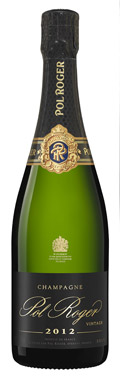
As usual the vintage is a 60/40 blend of Pinot Noir and Chardonnay, but, unsurprisingly in such a superb Pinot year as 2012, the dark fruits are in the ascendant, evidenced initially by the burnished gold colour, then by a nose which is rich and gently savoury and finally by a resplendent palate which rehearses encyclopaedic appraisal of all the virtues of this great region, in a year when the climate has elicited dramatic tension to propel the bubbles. Plum, stone fruit, kumquat, gingerbread and toffee apple challenge and inspire in turn; the finish, as usual with Pol, has a saline purity to leaven the indulgence that has gone before it and to ensure a soft, satisfying landing.
2012
Pol Roger
Pol Roger, Brut Réserve, Champagne, France
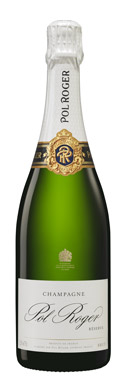
Richly biscuity on the nose, with steamed rice, fresh pear and citrus blossom complexity. Creamy mousse dissolves into red apple peel, lemon and stone fruits, with a depth of honeyed biscuits. The Reserve NV from Pol Roger is a blend of base wines from at least three vintages. With 6 months of post-disgorgement ageing, the wine is ready to enjoy now.
Pol Roger
Pol Roger, Pure, Champagne, France
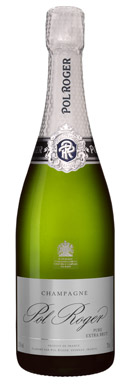
<p>The three Champagne varieties are blended here in equal proportion, and without the addition of any sweetening dosage - hence the name, Pure. A dignified shimmering colour; glints of pewter beyond the green gold; then spiral staircase of aromatics, ascending gracefully from notes of sourdough, quince and flint to a garland of spring flowers and soft hazelnut, the extra yeast ageing subtle yet persuasive. The palate is, as one would expect, given the name, a pure delight; orchard and citric fruit, hints of spice and white chocolate, the generosity bequeathed from the quality of the fruit itself, its inherent ripeness and the alchemy of ageing on yeast. Very fine on the finish too!</p>
Pol Roger
Pol Roger, Rich, Champagne, France
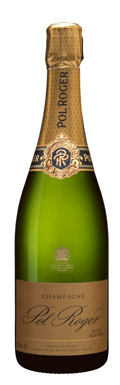
<p>Launched in 2001, the Rich cuvée sits between sec and demi-sec in its sweetness, with 34 g/L of sugar bestowing rich notes of tarte tatin and sour honey, but far from overwhelming in its indulgence. A hard category to get right this, especially as most Champagnes rely more and more on natural ripeness, and have, as a result, lowered their dosage. Pol, needless to say, is spot on; the wine is very complete in its own right, but, most importantly, gastronomically intelligent and versatile. A generous 25% of reserve wine underlines the seriousness of intent, confirming this aspiration through the sheer depth and complexity of flavour on display.</p>
Pol Roger
