
What has Gran Selezione done for Chianti?


Monty Waldin reports on the debate around Chianti Classico’s top-tier Gran Selezione classification, which is still raging four years after the first releases, and suggests several wines to try...
In February 2014 the first wines labelled under Chianti Classico’s newly created top-level tier of Gran Selezione were released, from the 2010 vintage.
Gran Selezione’s introduction was controversial, to say the least, given that no fewer than 19 different iterations of red Tuscan wines bearing the word ‘Chianti’ already existed.
The onus, one might think, was on Chianti Classico’s Gran Selezione – funded partly by the wine-growers, but mainly by EU subsidies – to demonstrate its clear points of difference from the two existing tiers below it; namely Chianti Classico Normale at the base of the quality pyramid, and Chianti Classico Riserva, which now finds itself in the middle.
Save yourself the eye-watering pain of examining reams of regulations looking for substantive technical wine-growing or winemaking differences between the Chianti Classico trio. There are none.
Scroll down to see Monty’s top Gran Selezione wines to try
Chianti by numbers
Chianti is made up of eight regions: Chianti, Chianti Colli Aretini, Chianti Colli Fiorentini, Chianti Colli Senesi, Chianti Colline Pisane, Chianti Montalbano, Chianti Montespertoli and Chianti Rùfina.
Each of these has a riserva category – so that’s 16 possible names to differentiate between on your wine label already – plus a single Chianti Superiore category (17), plus three types of Chianti Classico: normale, Riserva and now Gran Selezione (20).
The 71,800ha of the Chianti Classico zone covers nine towns: the entire territories of Castellina, Gaiole, Greve and Radda, and parts of the territories of Barberino Val d’Elsa, Castelnuovo Berardenga, Poggibonsi, San Casciano Val di Pesa and Tavarnelle Val di Pesa.
All three styles come from an identical area – nine towns between Siena and Florence, of which more below; identical grapes (80%-100% Sangiovese, 20% other Tuscan or French grapes); identical maximum yields; and potentially identical winemaking and ageing techniques.
Technical differences between bottled Chianti Classico, Chianti Classico Riserva and Chianti Classico Gran Selezione are all but non-existent – unless the next time you wander into a wine store you specifically ask for a wine with a dry extract level of 26g/l (Chianti Classico Gran Selezione) rather than one with only 25g/l (Chianti Classico Riserva), or even – heaven forfend – one with only 24g/l (Chianti Classico).

To me as a wine lover, the best part of the winemaking side is that no wines in any of the three categories need see any wood. Oak ageing is optional – hooray!
Allowing 100% unoaked, 100% Sangiovese Chianti Classico Gran Selezione creates the potential to make what can be the most pure, complex and compelling Sangiovese wines on the planet (yes, my friends in Montalcino of Brunello fame, where lashings of oak are mandatory, you read that right).
However, as outlined above, the ‘no oak required’ option already existed for both Chianti Classico and Chianti Classico Riserva.
I see really only one substantive aspect to Gran Selezione that makes it unique and which Giovanni Manetti, of the much-respected family-owned Fontodi winery and vice-president of the Consorzio Vino Chianti Classico (wine-growers’ council) elucidates: ‘Gran Selezione can be made only from grapes grown on the property -‘integralmente prodotto’- whose name appears on the label. By contrast, Chianti Classico can be made from bought-in grapes or bought-in bulk wines.’

Adding value
Bulk wine prices for Chianti Classico are three times lower than those for Italy’s other red-wine titans of Brunello di Montalcino, Barolo and Amarone della Valpolicella.
Chianti Classico’s market under-valuation is great news for savvy wine buyers and drinkers, and stems from Chianti Classico being often (understandably) muddled in consumers’ minds with basic Chianti wines. This is despite Chianti Classico coming from 20% lower-yielding vines compared to Chianti.
And in terms of its history, Chianti Classico has pedigree, having been first officially defined as a region in 1716, more than 150 years before Brunello di Montalcino even existed, for example.
As mentioned, only nine towns qualify for Chianti Classico and therefore potential ‘Gran Selezione’ wine status. In contrast, a full nine pages of A4 paper are needed to list the town boundaries of the lesser Chianti zone.

So can Gran Selezione be seen as attempting to give Chianti Classico – or the estate-grown and bottled version of it at least – some due market recognition? Apparently not, or not so far anyway, given that only 7% of Chianti Classico’s production is estimated to be bottled as Gran Selezione.
Critics say Gran Selezione is devalued by allowing some wineries to label batches of several hundred thousand bottles at a time as such; but as Château Latour makes several hundred thousand bottles each year, then big is not automatically bad.
The fact that precise data regarding the success or otherwise of the Gran Selezione category appears to be confidential (despite its creation having benefitted from sizeable EU funds aimed at promoting the farming sector) is an irritant to the likes of Paolo Cianferoni of the Caparsa winery in Radda.
‘Gran Selezione was needless; an extra layer of confusion created by marketing people hoping to help Chianti Classico out of a sales crisis,’ Cianferoni states. ‘Gran Selezione was designed to tempt back those producers who switched from labelling their wine as Chianti Classico to labelling them as “Toscana Rosso” instead, when Bordeaux-influenced Chianti-style wines were in fashion.
‘My best wine at Caparsa is labelled Chianti Classico Riserva and won’t become Gran Selezione. Adding value to Chianti Classico should have been so much simpler. Just allow producers to put the name of the village the wine comes from on the label. They do this in Burgundy and it seems to work rather well there. Why can’t we do it here, too?’

Terroir-free
The allusion to Burgundy is a frequent Chianti Classico refrain, one usually made by smaller, terroir-driven producers like Monte Bernardi’s Michael Schmelzer. ‘Chianti Classico’s Sangiovese and Burgundy’s Pinot Noir vineyards are the same size,’ he says. ‘We can’t imagine every Pinot Noir leaving the Côte d’Or just being called “Burgundy” – but that’s what we do in Chianti Classico. Every wine leaving Chianti Classico, be it a Riserva or a Gran Selezione, is still just a Chianti Classico.
‘On sales trips I get told, “We love the wines but we already have three Chianti Classicos on the list.” You can’t imagine someone saying “I already have three Bordeaux, or three Burgundies – I don’t need any more.” Barolo lovers actively seek out the differences in Barolos from the communes of, say, La Morra, Castiglione Falletto and Serralunga d’Alba. But, as things stand, Chianti Classico’s producers can’t officially articulate the differences between a wine from any of the region’s nine towns,’ he adds.
Both Schmelzer and Roberto Stucchi Prinetti of Badia a Coltibuono in Gaiole would go even further. Stucchi says, ‘Rather than making the Chianti Classico pyramid higher with Gran Selezione, it would have made more sense to have the exact geographic mention of where the grapes came from on the label. Each main Chianti Classico commune has individual terroirs, around hamlets such as Monti in Gaiole, and Lamole or Panzano which are very different parts of Greve, and so on.’
Another sticking point Stucchi Prinetti identifies ‘is that you do not have to declare at harvest that a specific lot of grapes will become a Gran Selezione, so in the end it’s just the tasting panel that chooses just before bottling what can be labelled as such.’

This tasting panel, appointed by the Consorzio Vino Chianti Classico, is fully independent. Yet debates rage about whether the panel favours modern-style wines – very bright fruit, plumped up with a bit of Merlot and sprinkled with vanilla from barrel-ageing – or more traditional, grainier and more obviously Sangiovese wines whose fruit is slower to emerge.
Do I love Chianti Classico? Yes, it is one of the world’s great red wines, and still hugely undervalued compared to Brunello or Barolo. The best have mouthwatering, high-wire fruit and deft, savoury richness. But given that the rules for Chianti Classico and Chianti Classico Gran Selezione are exactly the same, to all intents and purposes, it is impossible to comment on any differences. The argument that Gran Selezione has allowed producers to sell the same wines for a higher price requires statistics and infallable blind tasters.
In my experience Gran Selezione can provide Chianti Classico fans with a representative range of styles, whether 100% Tuscan grapes or Tuscan-French blends. Another thing to remember: the rules allow wines made prior to the introduction of Gran Selezione to be bottled as such – Isole e Olena, for example, released a Gran Selezione 2006.
The term may mean ‘great selection’, but the only problem is that the people running the show appear ambivalent about making it easier to dig deeper into Chianti Classico’s truly thrilling ‘Gran Selezione’ of world-class micro-terroirs. It’ll happen one day. It has to.
Monty Waldin is a wine writer, author and the DWWA Regional Chair for Tuscany
Monty’s top Gran Selezione wines to try:
Related content:
Bitesize guide to Chianti Classico Gran Selezione

The making of Montalcino
Should Brunello be made more like a Burgundy or a Bordeaux?

Sangiovese wine quiz – Test your knowledge
Fontodi, Vigna del Sorbo, Chianti Classico, Tuscany, Italy, 2013
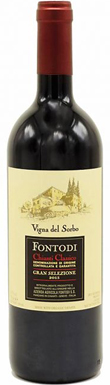

Giovanni Manetti used to add 10% Cabernet Sauvignon to this. He grubbed those vines up, leaving his flagship a pure, richly scented 100% Sangiovese with...
2013
FontodiChianti Classico

Isole e Olena, Chianti Classico, Tuscany, Italy, 2010
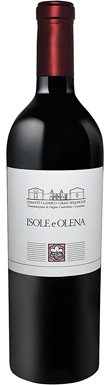
Paolo de Marchi’s blend of 80% Sangiovese, 12% Cabernet Franc and 8% Syrah from a five-star vintage. Very rich, very young (still) and very layered....
2010
Isole e OlenaChianti Classico
Castello di Volpaia, Il Puro, Chianti Classico, Tuscany, Italy, 2011
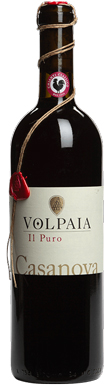
From a relatively cool site in Chianti Classico’s high centre, but on quick-to-warm sandy soil. The result is a Sangiovese whose lushness and crunchiness meld...
2011
Castello di VolpaiaChianti Classico
I Fabbri, Chianti Classico, Tuscany, Italy, 2011
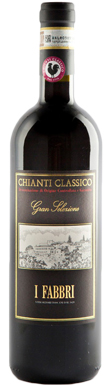
Susanna Grassi’s wines show lovely tannic fluidity, allowing finely tuned cherry-violet Sangiovese fruit – typical of the Lamole sub-zone of Greve in Chianti from which...
2011
I FabbriChianti Classico
Casaloste, Don Vincenzo, Chianti Classico, Tuscany, Italy, 2010
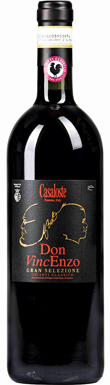
Giovanni Battista d’Orsi is known for a rich, mouthfilling interpretation of Chianti Classico from a hotspot in Panzano. Like dark chocolate with a vanilla and...
2010
CasalosteChianti Classico
Rocca di Castagnoli, Stielle, Chianti Classico, Tuscany, Italy, 2013
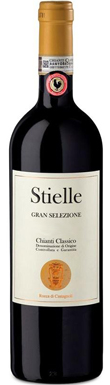
A crisp 100% Sangiovese selected from the best lots from a large estate in (relatively cool) Gaiole, whose wines are becoming brighter and more precise....
2013
Rocca di CastagnoliChianti Classico
Villa Trasqua, Nerento, Chianti Classico, Tuscany, Italy, 2011
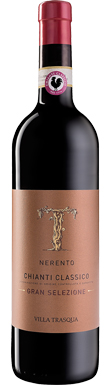
Wine made from 80% Sangiovese and 20% Colorino and Malvasia Nera. Bright, rich, smooth dark fruit with an agreeable lick of oak from barrel-ageing. This...
2011
Villa TrasquaChianti Classico
Castello di Albola, Chianti Classico, Tuscany, Italy, 2013
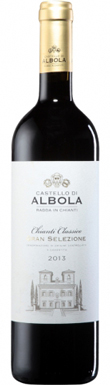
The Zonin family is successfully fine-tuning its Sangiovese, creating a juicy style with no little depth that is an ideal starting point for those new...
2013
Castello di AlbolaChianti Classico
Fontodi, Vigna del Sorbo, Chianti Classico, Tuscany, Italy, 2013
Giovanni Manetti used to add 10% Cabernet Sauvignon to this. He grubbed those vines up, leaving his flagship a pure, richly scented 100% Sangiovese with...
2013
FontodiChianti Classico
Isole e Olena, Chianti Classico, Tuscany, Italy, 2010
Paolo de Marchi’s blend of 80% Sangiovese, 12% Cabernet Franc and 8% Syrah from a five-star vintage. Very rich, very young (still) and very layered....
2010
Isole e OlenaChianti Classico
Castello di Volpaia, Il Puro, Chianti Classico, Tuscany, Italy, 2011
From a relatively cool site in Chianti Classico’s high centre, but on quick-to-warm sandy soil. The result is a Sangiovese whose lushness and crunchiness meld...
2011
Castello di VolpaiaChianti Classico
I Fabbri, Chianti Classico, Tuscany, Italy, 2011
Susanna Grassi’s wines show lovely tannic fluidity, allowing finely tuned cherry-violet Sangiovese fruit – typical of the Lamole sub-zone of Greve in Chianti from which...
2011
I FabbriChianti Classico
Casaloste, Don Vincenzo, Chianti Classico, Tuscany, Italy, 2010
Giovanni Battista d’Orsi is known for a rich, mouthfilling interpretation of Chianti Classico from a hotspot in Panzano. Like dark chocolate with a vanilla and...
2010
CasalosteChianti Classico
Rocca di Castagnoli, Stielle, Chianti Classico, Tuscany, Italy, 2013
A crisp 100% Sangiovese selected from the best lots from a large estate in (relatively cool) Gaiole, whose wines are becoming brighter and more precise....
2013
Rocca di CastagnoliChianti Classico
Villa Trasqua, Nerento, Chianti Classico, Tuscany, Italy, 2011
Wine made from 80% Sangiovese and 20% Colorino and Malvasia Nera. Bright, rich, smooth dark fruit with an agreeable lick of oak from barrel-ageing. This...
2011
Villa TrasquaChianti Classico
Castello di Albola, Chianti Classico, Tuscany, Italy, 2013
The Zonin family is successfully fine-tuning its Sangiovese, creating a juicy style with no little depth that is an ideal starting point for those new...
2013
Castello di AlbolaChianti Classico
