
The latest on Chilean Carmenere – Peter Richards MW


Just a few decades on since it was first formally recognised in Chile's vineyards, Carmenere is still asking a lot of questions of the country's wine growers. Peter Richards MW assesses the progress of this enigmatic grape variety
Carmenere in Chile
Percentage of overall Chilean vineyard 8%
Growth in plantings (2005-2015) +58%
Volume produced (2016) 61.2 million litres
Preferred soil types Well-drained with low to moderate fertility
Best-suited climate Warm with moderating influences and a long ripening season
Top producers Caliterra, Carmen, Casa Silva, Concha y Toro, De Martino, Errázuriz, Falernia, J Bouchon, Lapostolle, Pérez Cruz, Tamaya, Terranoble, Undurraga, Ventisquero
Scroll down to see wine reviews
In October 2011, a seminal event took place. Held in London, it was a vertical tasting of De Martino’s iconic Carmenere, going back to its very first vintage: 1996. Unexpectedly, the event turned into something of a confessional. Long-term winemaker Marcelo Retamal virtually bared his soul as the elegant early wines veered into super-ripe, powerhouse proportions before the 2010 vintage signalled a return to freshness and purity. ‘I was in a dark place in my winemaking,’ admitted an evidently chastened Retamal at one stage.
Co-owner Sebastian De Martino focused on the bigger picture: ‘The different styles reflect our ambition to discover what we stand for as wine producers. These Carmeneres illustrate the search for our identity.’ Retamal added: ‘More than a tasting of Carmenere, this represents the evolution of the Chilean wine industry. It’s a process; we’ve been learning. Now we see the right way to go.’
Carmenere, it’s fair to say, is a grape variety that provokes a reaction. Often such reactions are conflicted or polarised. Some love it; some hate it; some remain unmoved. In Chile, there are winemakers who consider it at best a bit-part player, good for blending only; others argue strongly that it can stand alone as a terroir-specific, truly noble variety; there are those who say Carmenere can do both. Where most people agree is that Chilean Carmenere remains a work in progress – a fascinating story still in the telling.
Carmenere’s unique history is part of the reason for this. For many years, the variety – closely related to Cabernet Franc – was prized in southwest France, particularly bordeaux, for its deep colour, distinctive aromas and roundness of structure. but then it performed an astonishing vanishing act.
Lost identity
On the one hand, Carmenere almost disappeared from bordeaux after phylloxera struck in the late-19th century. Desperate growers were reluctant to replant a late- ripening variety prone to unreliable yields. In the meantime, it had been planted elsewhere in the wine-growing world, from northern Italy to China. Newly wealthy Chileans, enriched by a commodities boom, had come to bordeaux in the mid-19th century in search of vines to improve their wines back home, and Carmenere was popular among them. In all these locations, for various obscure reasons, Carmenere somehow got lost in the varietal mix. In Italy, it became known as Black Bordeaux or Old Cabernet, in China as Cabernet Gernischt or Shelongzhu, and in Chile as Merlot (or Merlot Chileno).
The big reveal didn’t come until 1994. French ampelographer Jean-Michel Boursiquot was visiting Chile and was invited to inspect a Merlot vineyard owned by Viña Carmen. ‘I wasn’t at all expecting what happened next,’ explains Boursiquot, who immediately recognised that the vineyard wasn’t Merlot. ‘The problem was identifying what it was: it only took me one or two minutes, but it seemed like an eternity.’
Fellow French ampelographer Claude Valat had previously noticed that the Chilean Merlot vineyard wasn’t entirely pure, but Boursiquot’s inspired identification, subsequently proven via DNA analysis, led to much of Chile’s Merlot vineyard being reclassified as Carmenere – a process that remains ongoing. Apart from anything else, it provided a rationale as to why Chilean ‘Merlot’ had proved so distinctive.
Work in progress
The interim years, as the De Martino tasting so starkly showed, have seen much debate and applied research. Some wanted to champion Carmenere as a rallying point for Chilean producers: a distinctive variety to be prioritised akin to Argentina’s Malbec. Others urged caution, research and an accent on diversity rather than primacy. It’s the latter argument that has largely won out and, slowly, a diverse range of styles is starting to emerge from across the country, both in blends and single-varietal wines. Results have been mixed, as is the nature of any learning curve, but the trajectory of Chilean Carmenere is certainly an intriguing one.
‘We Chileans tend to hyperventilate easily,’ muses Rodrigo Soto, head winemaker at Veramonte, referring to a cultural obsession with novelty, symptomatic of which was the initial championing of Carmenere, swiftly followed by a procession of other trendy varieties including Syrah, Carignan and País. ‘We need to be wiser,’ he says, ‘and to understand where real quality and character come from: experience, confidence, good viticultural practices – and time.’
The insistence on the virtues of time and patience with Carmenere is a common theme. Soto notes how old vines (and thus responsible viticulture) are needed to produce the best wines. Tamaya owner René Merino insists: ‘Carmenere is still a work in progress – 21 vintages is not enough in wine years to say we have mastered it.’ He notes that the ‘biggest challenge is still in the vineyard’ – in other words, understanding where Carmenere works best and why, and then how to coax the best wine from it. ‘I believe Carmenere is the most difficult variety to make in Chile,’ ponders Retamal. ‘It may take a generational change to understand it properly.’

Branching out
For some time in Chile, it seemed as if there were only two stylistic paradigms for Carmenere. One was unripe and virulently green. The other was rich, opulent, buxom: a wine of outrageous curves and bountiful splendours. Nowadays, that picture is becoming increasingly nuanced as we see Carmeneres majoring on natural scent, complexity and tension, rather than being harvested unripe or relying on contrived heft. There is more varietal character in evidence and less overt winemaking intervention such as heavy extraction or new oak.
Crucial within this evolutionary process has been the focus on terroir.
Take climate. Initially, it was assumed that, because Carmenere is a naturally late-ripening variety, it needed the warmest sites. Yet these, especially in warm vintages, can produce excessively alcoholic, overripe styles. Now, wine-growers tend to seek out warm climates but with moderating influences, in order to retain freshness and varietal purity while minimising the risk of late-season rain.
One example of this is Casa Silva’s Los Lingues estate in the foothills of the Andes, wherein Colchagua’s warm climate is tempered by cooling mountain breezes, producing naturally balanced wines. ‘If you plant in the right place like Los Lingues, you can get Carmenere that is both ripe and fresh, with the spicy aromas and flavours that are part of its DNA,’ comments Mario Pablo Silva.
Similarly, much debate has centred on the correct soils for Carmenere. The original thinking was that deep alluvial soils on valley floors worked best: for good drainage but with some clay helping to retain moisture, enabling the vines to continue functioning until late in the season. Yet some excellent Carmeneres are now emerging from decidedly different soil types all across the country, including thin, degraded granitic soils on hillsides. This is boosting diversity and challenging preconceptions in most welcome fashion. The one consensus is that Carmenere doesn’t work in fertile soils, which produce excessive canopies and unripe fruit. Beyond this, it’s all to play for. ‘With Carmenere, you can get great wine off a great site, but for other sites it’s just not worth it – there’s no point forcing nature,’ says Concha y Toro’s Marcelo Papa.
All to play for
Colchagua and Cachapoal remain the heartlands for Carmenere in Chile, but this picture looks set to diversify as the likes of Maipo, Aconcagua, Limarí and Elqui to the north, and Curicó and Maule to the south all make successful Carmenere in a range of styles. Given Chile’s naturally prolific diversity of soils and climates, it’s just as much about individual sites and growers’ approaches as it is the broader regions.
A similar logic applies to the blending versus solo varietal argument. If Carmenere can be said to have two key natural states, they would be either a leafy, refreshing and restrained style, or the one (more commonly found) that errs on the side of plushness, succulence and inky dark fruit. Both renditions, some winemakers argue, benefit from blending – either to flesh things out or to provide backbone and structure – with Cabernet Sauvignon being the most common blending partner, but the likes of Syrah, Merlot and even País and Carignan also providing effective complements.
Others maintain that Carmenere can stand alone – and there are already some great Chilean wines in existence to demonstrate this – but that its true potential will only become clear as the variety continues to be better understood.
Time will tell. As Retamal comments: ‘When it comes to Carmenere, you can’t rule anything out.’ In the meantime, Carmenere can be enjoyed in an increasingly impressive range of styles and formats – one conclusion from the 2016 Decanter World Wine Awards (of which I am Regional Chair for Chile) was that Carmenere is producing better and more consistent wines, across a range of styles, than it ever has before.
One thing’s for sure: given the intriguing twists and turns in its history to date, it’s a brave drinker who considers Carmenere’s future easily predictable.
Richards’ pick of Chilean Carmenere:
Terranoble, CA2 Carmenere, Colchagua Valley, Chile, 2011
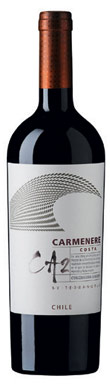

Terranoble is one of Chile’s consistently best Carmenere producers, and this is its finest rendition: complex and intense, with notes of roasted peppers, soy, bitter...
2011
Terranoble

Domaine William Fèvre, Espino Carmenere, Pirque, Maipo Valley, Chile, 2011
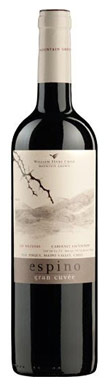
A deliberately restrained style, grown high in the Andean foothills of Maipo. This has aged delightfully and is now showing the potential of mountain grown...
2011
Domaine William FèvrePirque
J Bouchon, Canto Sur, Maule Valley, Chile, 2016
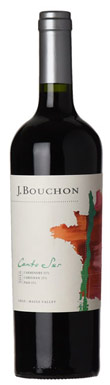
This cement-fermented blend of Carmenere with 25% each of Carignan and País is floral, juicy and spicy, with raspberry and black cherry fruit and sappy,...
2016
J Bouchon
Perez Cruz, Limited Edition Carmenere, Maipo Valley, Chile, 2014
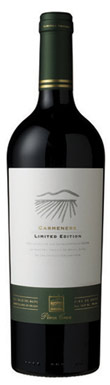
A serious, site-specific take on Carmenere, the Alto Maipo terroir marking it with scents of eucalyptus and dried fig while the flavour profile is succulent,...
2014
Perez Cruz
Caliterra, Tributo Carmenere, Colchagua Valley, Chile, 2014
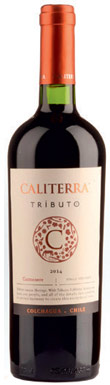
92
Another bright and upbeat expression of Carmenere that exhibits ample notes of fresh cherries, roasted pepper and tea leaf. Good succulent flavour and character.
2014
Caliterra
Terranoble, Gran Reserva Carmenere, Maule Valley, Chile, 2012
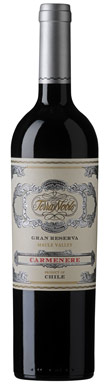
Earthy and leafy, minty and dark-fruited: this is Chilean Carmenere with a swagger. Has lots of glossy fruit with distinctly savoury, meaty inflections, along with...
2012
Terranoble
Falernia, Reserva Carmenere, Elqui Valley, Chile, 2015
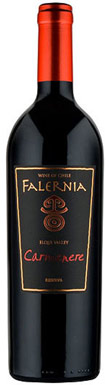
91
A unique style of Carmenere, made using an ‘appassimento’ technique, which incorporates a proportion of late-harvested grapes that have been allowed to dry naturally on the vine. Opulent, heart-warming and spicy with bittersweet flavours of rich dark chocolate, raisins and spiced plum.
2015
Falernia
Tamaya, Reserva Carmenere, Limarí Valley, Chile, 2014
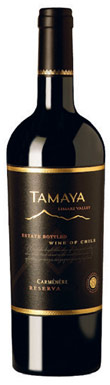
Juicy dark fruit, like puréed cassis, is infused with scents of tea leaf and chargrilled peppers. Soft-textured and refreshing.
2014
Tamaya
Errazuriz, Max Reserva Carmenere, Aconcagua Valley, Chile, 2014
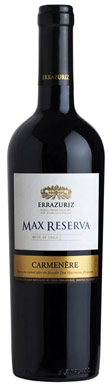
A powerful, sturdy Carmenere style with plenty of generous cassis, mint-choc and roasted herbal notes typical of Aconcagua. Impressive in a richer context.
2014
Errazuriz
Concha y Toro, Casillero del Diablo Carmenere, Central Valley, Chile, 2015
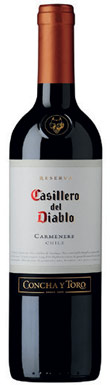
89
Friendly, juicy, refreshing and varietal: a consistently great value style. Cherry and sweet spices, with leafy hints: light, supple, not super-complex. Spot-on.
2015
Concha y Toro
Casa Silva, Colección Carmenere, Colchagua Valley, Chile, 2016
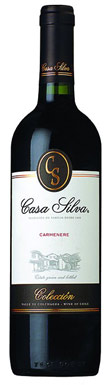
Lively and fresh, this is an unashamedly fruit-forward Carmenere that has leafy and peppery notes too. Good value in a lighter style.
2016
Casa Silva
