
Corbières Reds: Panel tasting results
From an appellation that’s been unpredictable in the past, our judges found these Languedoc reds full of character and interest, with value to be found in all parts of the region.


Justin Howard-Sneyd MW, Andrew Jefford and Frederic Marti tasted 55 wines with two outstanding and 15 highly recommended.
Entry criteria: Producers and UK agents were invited to submit their latest-release AP reds from the Corbières region
The verdict
This was certainly the most successful Corbières tasting I’ve ever done,’ opened Andrew Jefford. Despite not having high expectations, commenting that in the past ‘the outstanding wines have been intermittent rather than a regular feature’, he said: ‘Well under a quarter of the wines could be described as disappointing in some way or another, or even average, so it was a really exciting tasting.’
‘I found these Corbières to be well balanced, with real energy and bite’ – Frederic Marti
Justin Howard-Sneyd MW agreed: ‘I feel we tasted some top-quality wines. We ended up with a group of seven wines that really stood out, and the three that we rated Outstanding (see below) were the ones that we all agreed were most worthy of that accolade.’ Frederic Marti was ‘surprised and impressed at the overall quality’, highlighting the ‘expressive, fruit-forward styles’ and overall ‘brightness’ of the wines.
Scroll down to see top wine tasting notes & scores
‘I had the preconceived idea that the wines would be a bit alcoholic, a bit rich and warm on the palate,’ Marti said. But I found them to be well balanced and well managed, with real energy and bite.’ In terms of wine styles, Jefford said the Corbières region is ‘so big it’s hard to generalise’, though essentially it rises in the west, where wines benefit from the freshness brought by higher altitudes, while wines from the lower-lying vineyards in the east are broader and more opulently ripe.
The variation in style was also picked up by Marti, who highlighted the ‘duality’ of the tasting. ‘There was a noticeable difference in the old-school, richer, more flamboyant style of winemaking and the modern, lighter-touch, more refined styles,’ he said, though he added that ‘all the wines, even at the rich end, were still balanced and drinkable’.
With respect to vintages, the judges were unanimous in their praise for the 2018s, lauding their ‘youthful, fruity expression’ and ‘immediate drinkability’. ‘I was expecting to find more from 2017 that were really exciting, but the 2018s were slightly overshadowing them,’ said Howard-Sneyd, while Jefford advocated to ‘drink them as young as possible’.
Marti also suggested to drink now; ‘For me, I’m really happy. I come from the area and sometimes it’s difficult to find wines that are so accessible, approachable and drinkable, which is something I was a bit concerned about. I thought there would be chewy tannins, high alcohol and wines that were hard to drink, but I found the complete opposite’.
Value-wise, Howard-Sneyd said: ‘It’s not an expensive appellation, and a lot of Corbières can be found that are characterful and very affordable. Compared to Australian Shiraz or Argentinian Malbec, or any other big, individual style of red, I think you can get a lot more wine for your money.’
Howard-Sneyd continued: ‘Not every one’s a winner, but it’s a good appellation to look at for characterful, quality, interesting wines in that £10-£15 price bracket.’ It’s a region which ‘should appeal to people who are a bit more adventurous, who want to get off that beaten track and explore’, he added. ‘Even if there’s the occasional disappointment, there are some absolute heights to encourage you to keep on exploring.’
If any further endorsement were needed to go out and buy these Corbières wines, Marti hinted that they may soon appear on the wine lists under his management at the five-star 45 Park Lane hotel in London: ‘I can’t wait to see the names and the prices, because I’d like to get some of these wines on my list now!’
Discussion copy by Georgie Hindle.
See all wines from the panel tasting here
The scores
55 wines tasted
Exceptional 0
Outstanding 3
Highly Recommended 18
Recommended 31
Commended 3
Fair 0
Poor 0
Faulty 0
About Corbières
This rugged Languedoc landscape is familiar by name to many wine lovers, but the sprawling nature of the region and its varied wine styles take time to understand. Andrew Jefford reports…
Corbières is the Langueodc’s sphinx: enormous, haunting and enigmatic. I first went there more than 20 years ago and it seemed an excitingly wild, promising wine landscape: rugged, geologically and topographically chaotic, sparsely inhabited, full of savage allure. Every time I tasted a range of Corbières, I seemed to get a glimpse of that grandeur: unique, unbridled, now austere, now flamboyant. Just a glimpse.
I remember climbing up to the Cathar castle of Quéribus, high above a ridge dividing two valleys. The valley to your south is that of the Roussillon’s Agly: you can clearly see the town of Maury from the vastness. To the north is Languedoc: Corbières and the beautiful village of Cucugnan. Less than 10km separate the two. I tasted the local wines. They were shockingly different, given the geographical proximity. Why?
Corbières’ girth is a challenge. In terms of surface under vines, this Aude appellation is the giant of the Languedoc and the fourth largest appellation in France. It’s had its AP since 1985, but market progress has been slow. Prices are modest (the region recently vaunted the fact that some 46% of its red wine now sells for more than €5 a bottle). It’s hard to make great wine for modest prices. Good wine and great value, yes – but great wine demands effort and sacrifice which modest prices can never adequately reward.
Corbières: The facts
Wine styles: Red 88%, Rosé 9%, White 3%
Production: About 390,000hl, depending on the vintage
Area under vine: 10,600ha
Producers: 1,210 growers, 23 cooperatives, 221 private cellars
Appellation: AP since 1985
Exports: 30% (largest markets China and Germany)
Grapes: Red & Rosé – Carignan, Syrah, Grenache, Mourvèdre, Cinsault, Lladoner Pelut, Piquepoul Noir, Terret Noir;
Grapes: White – Grenache Blanc, Macabeu, Bourboulenc (locally called ‘Malvoisie’), Marsanne, Roussanne, Rolle (Vermentino), Clairette, Piquepoul, Terret Blanc
Corbières Boutenac
Production: (red only) 6,000hl
Area under vine: 2,668ha classified; 1,500ha under vine; 165ha in production
Producers: Three cooperatives, 28 private cellars
Appellation: AP since 2005
Grapes: Carignan (30%-50% of blends), Grenache, Mourvèdre
(Source: CIVL)
Corbières: Know your vintages
2018: A mild, wet spring was followed by a hot, dry and often windy summer, with cool nights in September. Most harvested a top-quality crop, but storms on 15 October damaged vineyards, particularly near Narbonne.
2017: April frosts after a very mild late winter and early spring cut yields, but for those whose vineyards came through unscathed, quality was good.
2016: The driest Languedoc summer since 1944 reduced the crop and led to some raisining, but higher vineyards fared well, with wines of freshness and poise.
2015: After a cold winter and spring, summer was hot and dry, aided by August storms. A good vintage, though not as good as the three that followed.
2014: A very dry spring was followed by hail in Corbières in July, and stormy conditions after that, with some September flooding. A difficult year.
Older vintages: The high-quality wines of 2005 and 2010 are worth a look.
What, too, should be the model? Setting aside the cru appellation of Boutenac (which in some ways is a showcase for old-vine Carignan), the styles of the different sectors of Corbières are very different. Close to Narbonne and down towards Sigean along the coast, you can produce wines of flesh and voluptuousness. (Parts of Boutenac are the same.) The further you go towards the south and west, though, the higher the altitude; indeed the 200m that separate lower-lying Maury from higher-sited Cucugnan surely accounts for some of the stylistic difference I was first struck by.
When I wrote The New France back in 2002, there was a plan to create 11 crus rather than just one; that would have helped our understanding. It didn’t happen. There are rumours, though, that we will see a Corbières-Durban before long, and a Corbières-Villages appellation, too: welcome develo
pments. It’s still there, anyway; still beautiful, still mysterious, still huge, still offering glimpses of grandeur (see the results of our tasting). Follow them up, and we may see more; and enjoy the value as you go.
Top scoring red Corbières
See all wines from the panel tasting here
The judges
Justin Howard-Sneyd MW
In 2012 Howard-Sneyd founded The Hive Wine Consulting, after heading up the wine teams at both Direct Wines and Waitrose, and now works as a consultant globally. He is a DWWA joint Regional Chair for Languedoc-Roussillon, and makes wine with his family and partners at the 4ha Domaine of the Bee estate in Roussillon.
Andrew Jefford
Jefford has been writing about wine since the 1980s, winning many awards. He is a contributing editor to Decanter magazine and writes a widely followed blog for Decanter Premium. After working as a senior research fellow at Adelaide University from 2009-2010, he now lives with his family in Languedoc, France.
Frederic Marti
Marti is director of wines at five-star 45 Park Lane in London. Born and raised in the south of France, he began as a waiter, working up through Michelin-starred restaurants including El Bulli in Spain and Le Crillon in Paris, before being appointed to his first head sommelier role at Pollen Street Social in London in 2013.
Cave d’Embres-et-Castelmaure, Les Hauts de Castelmaure, Corbieres, Languedoc-Roussillon, France, 2018
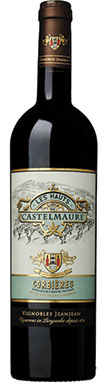

Embres-et-Castelmaure is a tiny village in Corbières with about 150 residents, all of whom are grape-growing families and many are members of the local cooperative,...
2018
Cave d’Embres-et-CastelmaureCorbieres

Château Saint-Estève, H de M, Corbieres, Languedoc-Roussillon, France, 2017
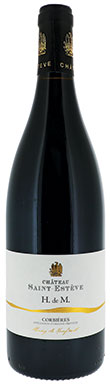
Château Saint-Esteve owes its name to the Chapel of the Virgin built near the abundant spring that still provides the estate with its water. This...
2017
Château Saint-EstèveCorbieres
Domaine Serres Mazard, Cuvée Henri Serres, Corbieres, Languedoc-Roussillon, France, 2017
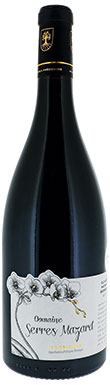
The Mazard family has a legacy of winemaking dating back to 1545 in the Corbières region. In 1975 it joined a local cooperative of growers...
2017
Domaine Serres MazardCorbieres
Château Ollieux Romanis, Atal Sia, Corbieres, Boutenac, Languedoc-Roussillon, France, 2016
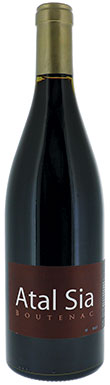
Hugely impressive aromas of black fruits, bergamot, honey and lavender; beautifully pure and perfumed with a fresh, elegant core.
2016
Château Ollieux RomanisCorbieres
Château d’Aussières, Corbieres, Languedoc-Roussillon, France, 2017
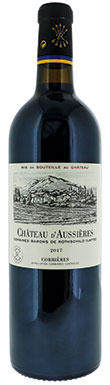
A delicious purity of blackcurrant fruit interwoven with jasmine, wild plum, thyme and lush creamy oak. Mouthwateringly complex and exciting.
2017
Château d’AussièresCorbieres
Château Cascadais, Corbieres, Languedoc-Roussillon, France, 2016
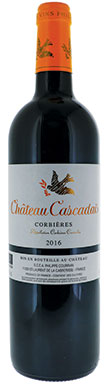
Full of flamboyance, this broad, generous style is a heady combination of liquorice, menthol, sweet oak and lush fruit.
2016
Château CascadaisCorbieres
Château Fabre Gasparets, Corbieres, Boutenac, Languedoc-Roussillon, France, 2016
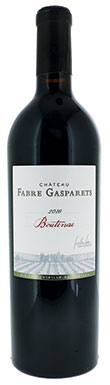
A delightful fruit basket of cherries, strawberries and plums; the rich, full palate is offset by a lively acid freshness.
2016
Château Fabre GasparetsCorbieres
Gérard Bertrand, La Forge, Corbieres, Boutenac, Languedoc-Roussillon, France, 2017
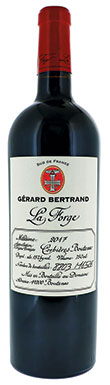
A veritable beast! Layer upon layer of blackberry, charred oak, chocolate and savoury olive. Very powerful and concentrated.
2017
Gérard BertrandCorbieres
Cave d’Embres-et-Castelmaure, Grande Cuvée, Corbieres, Languedoc-Roussillon, France, 2017
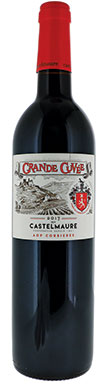
An intrigue of graceful fruit and floral notes interwoven with a star anise and dark plum sauce richness.
2017
Cave d’Embres-et-CastelmaureCorbieres
Cellier des Demoiselles, Château de Durfort, Corbieres, Languedoc-Roussillon, France, 2017
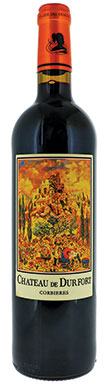
A bustling blend of dark, leafy forest fruit, spiced rum, chocolate and vanilla oak. Lively, vibrant and exuberant.
2017
Cellier des DemoisellesCorbieres
Château Camplong, Grande Réserve, Corbieres, Languedoc-Roussillon, France, 2018
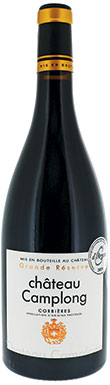
Big, plush plum and sweet bramble flavours contrast with a rustic savoury note; rounded and ripe with a fresh finish.
2018
Château CamplongCorbieres
Chateau Spencer la Pujade, Le P'tit Spencer, Corbieres, Languedoc-Roussillon, France, 2018
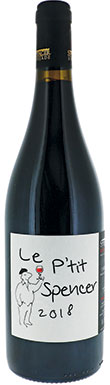
Oozing with sweet black fruit and exotic tobacco spice notes. Reminiscent of a garrigue in winter after rainfall.
2018
Chateau Spencer la PujadeCorbieres
Laurent Miquel, Château Auzines Les Garrigues, Corbieres, Languedoc-Roussillon, France, 2017
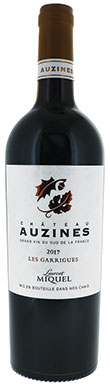
An abundance of boisterous plums and cherries mingled with savoury olive and thyme notes. Close-textured and rewarding.
2017
Laurent MiquelCorbieres
Château Fontareche, 1682, Corbieres, Languedoc-Roussillon, France, 2018
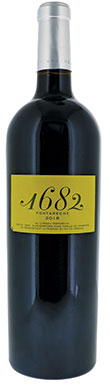
Opulent layers of raspberry compote, vanilla, orange peel and lifted herbal characters with generous tannins and a lush, mouthfilling texture.
2018
Château FontarecheCorbieres
Les Celliers d'Orfée, Ego in Terra, Corbieres, Languedoc-Roussillon, France, 2018
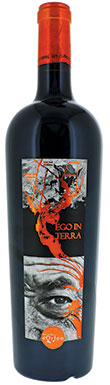
Beautifully rich and aromatic with lush sweet fruit, ample tannins and an underlying salty twist cutting through. Very well made.
2018
Les Celliers d'OrféeCorbieres
Château Pech-Latt, La Chapelle, Corbieres, Languedoc-Roussillon, France, 2018
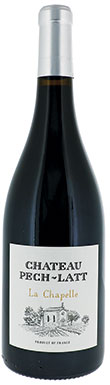
Deep, mouthfilling, beautifully pure Syrah-led fruits, an undertone of warmed stones and a herbal sweetness. Enticing and smooth.
2018
Château Pech-LattCorbieres
Château Vaugelas, Le V, Corbieres, Languedoc-Roussillon, France, 2014
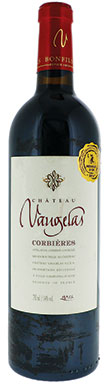
Refined and elegant with subtle new oak and mellow blackberry fruit; a successfully aged example of a cooler vintage in Corbières .
2014
Château VaugelasCorbieres
Famille Bonnafous, Domaine Aquilan, Corbieres, Languedoc-Roussillon, France, 2018
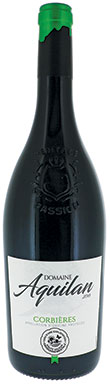
Inviting spiced plum and gentle bramble fruit with a backbone of old-vine fruit concentration; long, pure and sustained.
2018
Famille BonnafousCorbieres
Château Ardolou, Corbieres, Languedoc-Roussillon, France, 2019
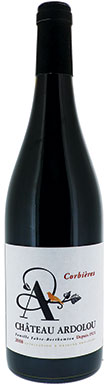
A perfume of black cherries and plums with a slatey edge and well-furnished, soft tannins. Moreish and fresh.
2019
Château ArdolouCorbieres
Château de Caraguilhes, Prestige, Corbieres, Languedoc-Roussillon, France, 2018
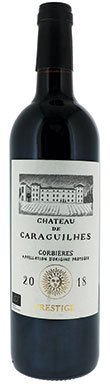
Lovely singing fruit, plush and generous with lots of textured layers and a soft, rounded structure. Polished and long.
2018
Château de CaraguilhesCorbieres
Château Montfin, Vincent, Corbieres, Languedoc-Roussillon, France, 2018
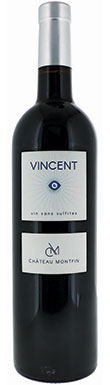
Juicy redcurrant, ripe strawberry underpinned by a thyme-infused, rustic core; a harmonious and very typical style of Corbières .
2018
Château MontfinCorbieres
