
Tasting South American wine history: The ‘Criolla’ revival


The oldest grape varieties in South America have been sidelined for the past hundred years, but a new generation is now reclaiming its lost winemaking heritage as Criolla varieties re-emerge from the shadows. Amanda Barnes has the inside story...
When the Spanish first conquered the Americas in the 1500s, they brought the holy trinity of cultivars – olive trees, wheat and grapevines. Whether planted as sticks or seeds, the first grapes to grow were known as the Criolla, or Mission, varieties: a select handful of varieties picked for their highyielding and resilient nature, and destined to conquer the New World.
Of these founding varieties, which included Moscatel, Pedro Ximénez and Torontel, the most important was a red grape commonly known as Listán Prieto in Spain, Mission in the US, País in Chile, Criolla Chica in Argentina and some 45 other synonyms in-between.
Scroll down for Barnes’ top 10 South American Criolla wines to try
The foundations of South America’s wine industry were built on these early Criolla varieties as viticulture spread upwards from Mexico to the US, and southwards to Peru, Chile, Bolivia, Argentina and beyond. Crosses spawned South America’s first native grape varieties – including Argentina’s Torrontés – with more than 100 Criolla varieties identified in South America today.
Forgotten patrimony
In the mid-1800s the first French varieties arrived on the continent and plantations of Criolla varieties have been in decline ever since, replaced by international varieties or relegated to bulk wine, juice and table grape production.
Criolla: what does it mean?
Criolla (or Criollo in masculine form) is a term that was coined in the colonial era for people, animals or plants of Spanish (or sometimes European) descent, developed or born in Latin America.
Among its many other meanings, Criolla is used to refer to a set of grape varieties that were brought from Spain and planted in the Americas during the colonisation. Criolla varieties today also include an extensive family of crossings between these original varieties.
According to a study by the University of Santiago, in 1833 the finest Criolla variety, Listán Prieto, accounted for more than 90% of Chile’s and Argentina’s vineyards.
Today it is just 7% and 1% respectively. It, and the other Criolla varieties, have similarly fallen into severe decline across the rest of the Americas.
Incidentally, following phylloxera, Listán Prieto has all but disappeared from its native Spain – with only a dozen hectares surviving in the phylloxera-free haven of the Canaries.
The only remaining stronghold for Listán Prieto is in Chile, where 9,600ha of vines (locally called País) can be found piecemeal in the properties of some 6,000 growers, mostly in the southern regions of Maule, Itata and Bío Bío.
It is here, where grapes are cheap and land plentiful, that replanting didn’t happen to the same extent as in other regions, leaving a treasure trove of old vines.
Most País vines are more than 100 years old (planted before the landslide of French varieties) and some vineyards date back to the late-1500s – a fact that enchanted a new wave of winemakers coming into Chile.
Pipeño revival
Growers never stopped making their own wines – their Pipeño, made from País or white Criolla varieties.
Named after the large ‘pipes’ (local raulí wood barrels) they were vinified in, Pipeño is synonymous with artisanal methods and proportions and is usually sold from a back door or roadside, and almost always by the jug.
Tradition here didn’t die, it just got sidelined. As the Bordeaux influence took its grip over Chile during the latter half of the 1900s, Pipeño was shunned as a poor man’s beverage.
Interestingly it is two foreigners – two French men – who have been among the greatest advocates for the revindication of Pipeño and thrust it into the limelight.
Burgundy-bred Louis-Antoine Luyt started working with the underappreciated centenarian País vines in 2007. Mentored by Morgon’s great Marcel Lapierre, Luyt made it his mission to reinstate not only the vines but also the traditional use of zarada (a bamboo destemmer), grape-stomping and fermentation in raulí pipes.
His wines were a hit in Europe’s natural wine scene, opening the export market and setting a benchmark for this little-known (but widely grown) variety.
An element of carbonic maceration is common in Luyt’s wines, and this light and juicy direction is the same as that taken by another French expat, David Marcel, for his Aupa Pipeño in 2012.
Sold in beer bottles, Aupa emphasised to the local market that this wine should be drunk young and chilled – celebrating Pipeño as Chile’s equivalent of Beaujolais Nouveau.
The radical re-evaluation of Pipeño ignited a spark in the industry and several winemakers are driving a grass-roots movement to reclaim the patrimony of País in the smallholdings of the south.
José Luis Gómez Bastías, Juan José Ledesma, Leo Erazo, Manuel Moraga Gutiérrez, Mauricio González, Renán Cancino and Roberto Henríquez are at the forefront of producing artisanal, grower País and Criolla wines, from both red and white varieties.
The bigger picture
País has always been a large-scale variety in Chile, and there has simultaneously been a significant movement to readopt País into the commercial mainstream.
In 2006, Spanish vigneron and Chile entrepreneur Miguel Torres was asked by Chile’s foreign affairs minister to look into making quality wine from the surplus of País vines in the south that were being replaced by industrial forests.
Torres’ proposition was to make sparkling País using the traditional method, somewhat akin to Cava, for which he had a deft winemaking team in place.
Today Torres produces 30,000 cases of sparkling País and its Fairtrade rosé is the biggest selling País in the world. But the team also came up with a light and juicy carbonic maceration red (Reserva de Pueblo) and other more complex blends. Finding a use for País, as it turns out, was not an issue.
‘The major challenge is actually finding vines with quality potential,’ says winemaker Fernando Almeda.
‘Slopes with granitic poor soil conditions and ocean influence are important, in order to get balanced yield, maintain freshness and achieve ripe tannins.’
The rediscovery of País also marks Chile’s departure from high-octane red wines with ripe fruit concentration and significant oak ageing, towards a more sensitive approach.
‘País is a great grape to grow – super-low maintenance – but País is not an easy wine to make in the cellar,’ explains Derek Mossman Knapp of Garage Wine Co. ‘If you are too rough, it becomes harsh and tannic; too much time on the skins and it tightens up very quickly.’
Julio Bouchon Sr, of Bouchon Family Wines, had been making País for more than 30 years with little satisfaction. ‘I admit I did it badly. I wanted to make a French wine – with colour, body and structure. The result was bitter. The new generation have made the switch.’
That generation includes his son, Julio Bouchon Jr, who says, ‘País has nothing to do with the Bordeaux winemaking style. We have to respect the grape with low intervention.’
Bouchon’s winemaker Christian Sepúlveda adds: ‘We try to be very gentle with the extraction…to show that País doesn’t have rustic tannins – the structure is elegant.’ Winemakers today are treating País less like Bordeaux and more like Pinot Noir.
Uniting South America
There is a Criolla revival happening on the other side of the Andes too, but Argentina’s Criolla gene pool is more diverse, with a greater spread and quantity of white and red Criolla varieties.
Some 75,000ha of vineyards planted with Criolla varieties survive today, accounting for more than a third of the national total – however, the Criolla varieties account for less than 5% of Argentina’s varietal or premium wine production, mainly as Torrontés.
Part of the problem is that the finest red Criolla grape, Listán Prieto (aka Criolla Chica), has dwindled to less than 360ha today, superseded by lower quality varieties such as Cereza. Criolla varieties are rarely planted as single varieties, meaning they either have to be vinified as field blends or require careful selection in the vineyards (to make a single-variety Criolla wine).
Site selection is, however, what is driving the current excitement about Criolla in Argentina. ‘Criolla Chica is a variety capable of expressing places, climates, soils and people, while maintaining its personality intact,’ says Sebastián Zuccardi, who has been producing Cara Sur Criolla Chica from high-altitude Barreal since 2014.
‘It has great winemaking attributes, not only for the quality of the wines you can make, but also for its high yield.’
Historically Criolla varieties were favoured for their generous yield and today winemakers are falling for their sensorial charms too.
‘Criolla grapes yield four times more than a fine grape would,’ explains Cadus winemaker Santiago Mayorga. ‘They were a boon in the 1970s when people were drinking 90 litres per capita.
‘Today people are looking for quality and terroir-driven wines. With precise vinification we can achieve an interesting wine – pure, subtle and fresh with some earthiness.’
Argentina’s winemakers are embracing the different dimension Criolla varieties offer – as white, red and orange wines – adoptees across the country including Cadus, Cara Sur, Durigutti, El Esteco, Ernesto Catena, Paso a Paso, Passionate Wines, Trivento and Vallisto.
Criolla is also taking winemakers further afield. Chile’s Luyt is vinifying Criolla varieties in Mexico (Bichi) and in Argentina, Matías Michelini is making a Criolla Grande wine in Uco Valley and working with Criolla varieties in Peru (Mimo).
‘Criolla [Grande] is a noble variety which makes juicy and fresh wines,’ enthuses Michelini. ‘It’s a variety we need to develop – it could become important for the true character of Latin American wine.’
Test of time
As consumers look for wines with identity, the Criolla varieties offer the most authentic insight into the history of South American viticulture. They could also hold the key to the future, not only in the glass but in the ground too.
Investment is happening in both private and public research institutes in Chile and Argentina, mapping out the DNA of some Criolla varieties and using sensorial analysis to identify the regional expressions – which have long been recognised by the growers and humble drinkers of Pipeño wines.
These old vines have stood the test of time because they are so well adapted – the skins are resistant, the wood is hardy and the vine can survive in drought.
País rootstocks are being increasingly chosen in Chile for their resistance to the margarodes scale insect, and suitability for dry farming. Going back to its Criolla roots could well be South America’s best option to face the challenges of climate change.
The movement is underway, but there is a long way to go. Centenarian vines are being torn out as small growers struggle to make ends meet and have to sell grapes for bulk – in Maule, País can sell for as little as £0.05/kg, compared to £0.40 for Cabernet Sauvignon.
‘País is a social issue – it only exists living alongside local people in the countryside,’ says winemaker Roberto Henríquez.
‘A new wine can become a niche, but there’s a lot of País planted and I’m not sure the world is ready to drink that much País! That’s the challenge, and making sure it really does improve the quality of life for local farmers.’
A growing legion of winemakers in South America are joining the cause, convinced that Criolla wines are not only the true heritage of South America, but worthy champions of its future. Only time will tell if the market catches on in the same way – before it’s too late.
See Barnes’ top 10 South American Criolla wines to try
You might also like:
Chilean Pinot Noir: panel tasting results
Argentinian Malbec blends: panel tasting results
South American wine trends: From the sommeliers
Miguel Torres, Estelado Organic Extra Brut, Secano Interior, Bío Bío Valley, Chile, 2015
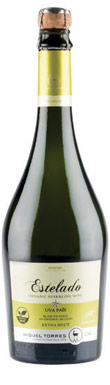

This golden blanc de noirs País is Torres Chile’s latest innovation following on from its bestseller brut rosé. It’s crisp and linear in character, with...
2015
Miguel TorresSecano Interior

Roberto Henríquez, Rivera del Notro Blanco, Itata Valley, Chile, 2017
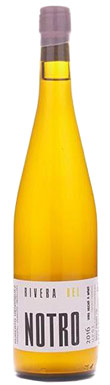
Wonderfully aromatic, honey-coloured old-vine blend: Criolla varieties Moscatel and Corinto with a touch of Semillon. Dried flowers, hay and peach aromas, full but fresh.
2017
Roberto Henríquez
J Bouchon, Salvaje Blanco País, Maule Valley, Chile, 2017
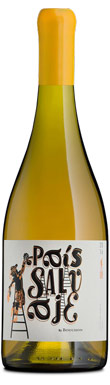
This artisanal white País is sourced from wild 100-year-old vines. It’s a textural wine with bright citrus, apple and pear notes and a long, mouthwatering...
2017
J Bouchon
Garage Wine Co, Single Ferment Series Phoenix, Secano Interior, Bío Bío Valley, Chile, 2017
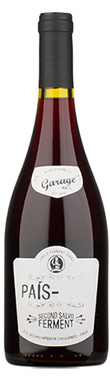
An innovative blend of 86% País and 14% Carignan, with grip and tannin making it a great foodie white. This special en primeur bottling series...
2017
Garage Wine CoSecano Interior
A Los Viñateros Bravos, Volcánico País, Itata Valley, Chile, 2015
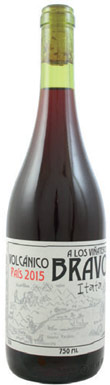
From centenarian vines on volcanic soils. Forest herbs and red berry aromas, finesse and fine-grained tannins on the palate. Leo Erazo’s label with independent growers...
2015
A Los Viñateros Bravos
Cara Sur, Criolla, Calingasta Valley, San Juan, Argentina, 2016
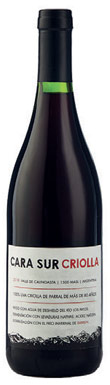
The Cara Sur wines helped to put Argentinian Criolla on the map and this rarity, which is a 100% Criolla Chica, comes from 80-year-old vines...
2016
Cara SurCalingasta Valley
Roberto Henríquez, Santa Cruz de Coya País, Bío Bío Valley, Chile, 2017
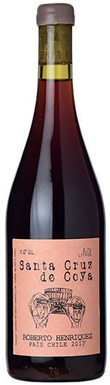
Sourced from 200-year-old vines which are grown on Henríquez’s own 3ha vineyard in Bío Bío, where he works with old raulí wood barrels to achieve...
2017
Roberto Henríquez
Cadus, Signature Series Criolla, Uco Valley, Mendoza, Argentina, 2017
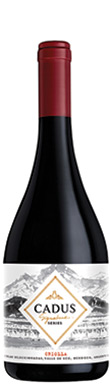
Made for the first time in 2017 from a pergola vineyard planted in 1946, this thrilling Criolla is spicy, peppery and scented with rose petals,...
2017
CadusUco Valley
Clos des Fous, Pour Ma Gueule, Itata Valley, Chile, 2016
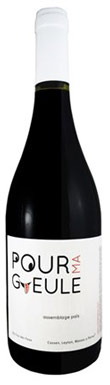
This País blend proves the great potential of Chile’s old-vine blends. Translating from the French as ‘for my gob’, the juicy black cherry aromas make...
2016
Clos des Fous
J Bouchon, Las Mercedes Singular País, Maule Valley, Chile, 2016
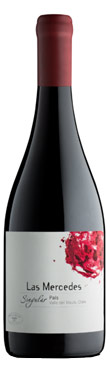
A sprightly País with bright and juicy notes of cherry, rosehip and raspberry tart and a crunchy, aromatic finish. A fabulously fresh new direction for...
2016
J Bouchon
